Trigonal Bipyramidal Geometry Molecular Model
SKU: 68823W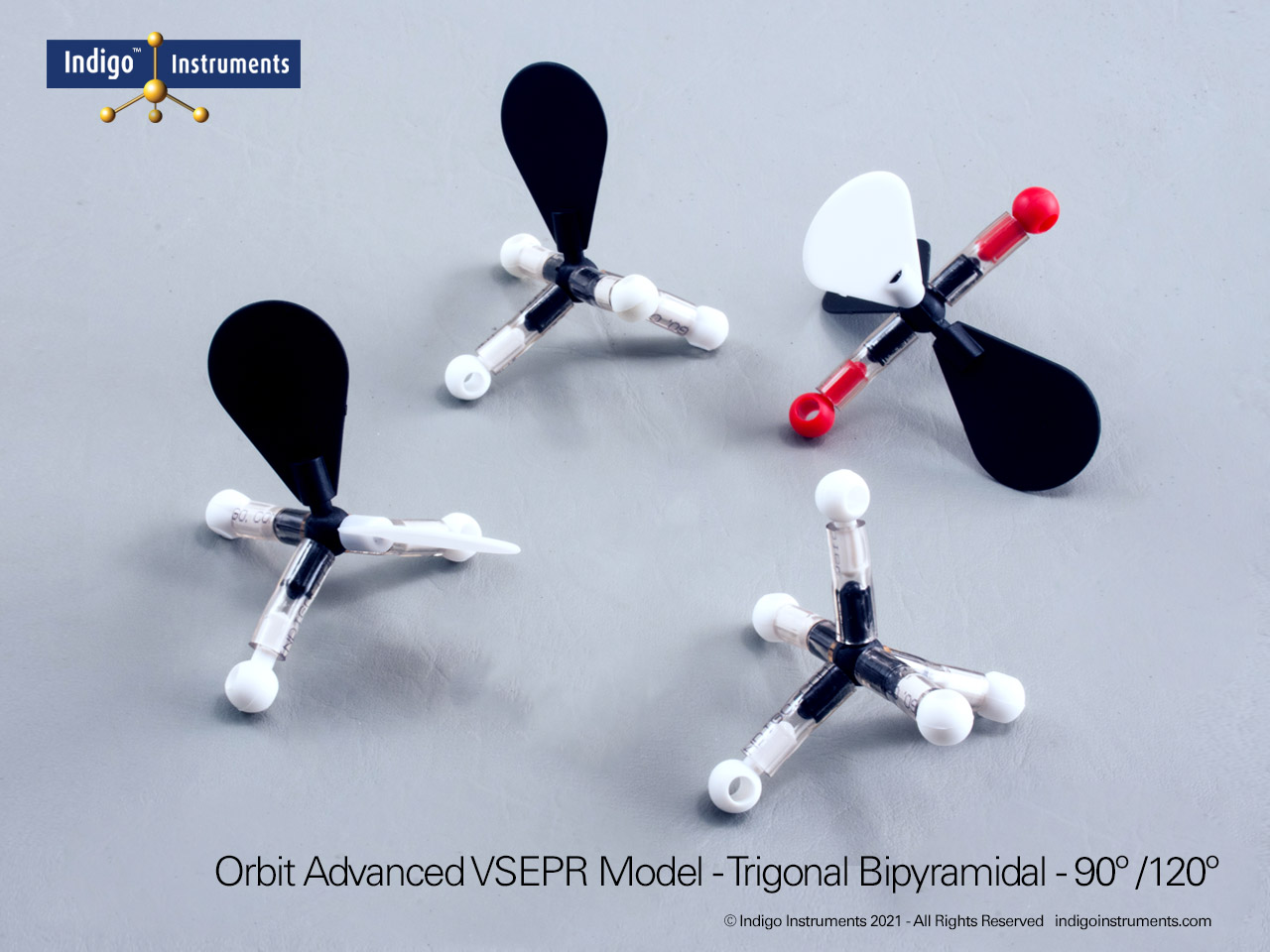
Buy the Indigo® 68823W VSEPR Model Kit and build all four AX5 molecular geometries simultaneously. Get a hands-on grasp of trigonal bipyramidal shapes that no textbook diagram can match.
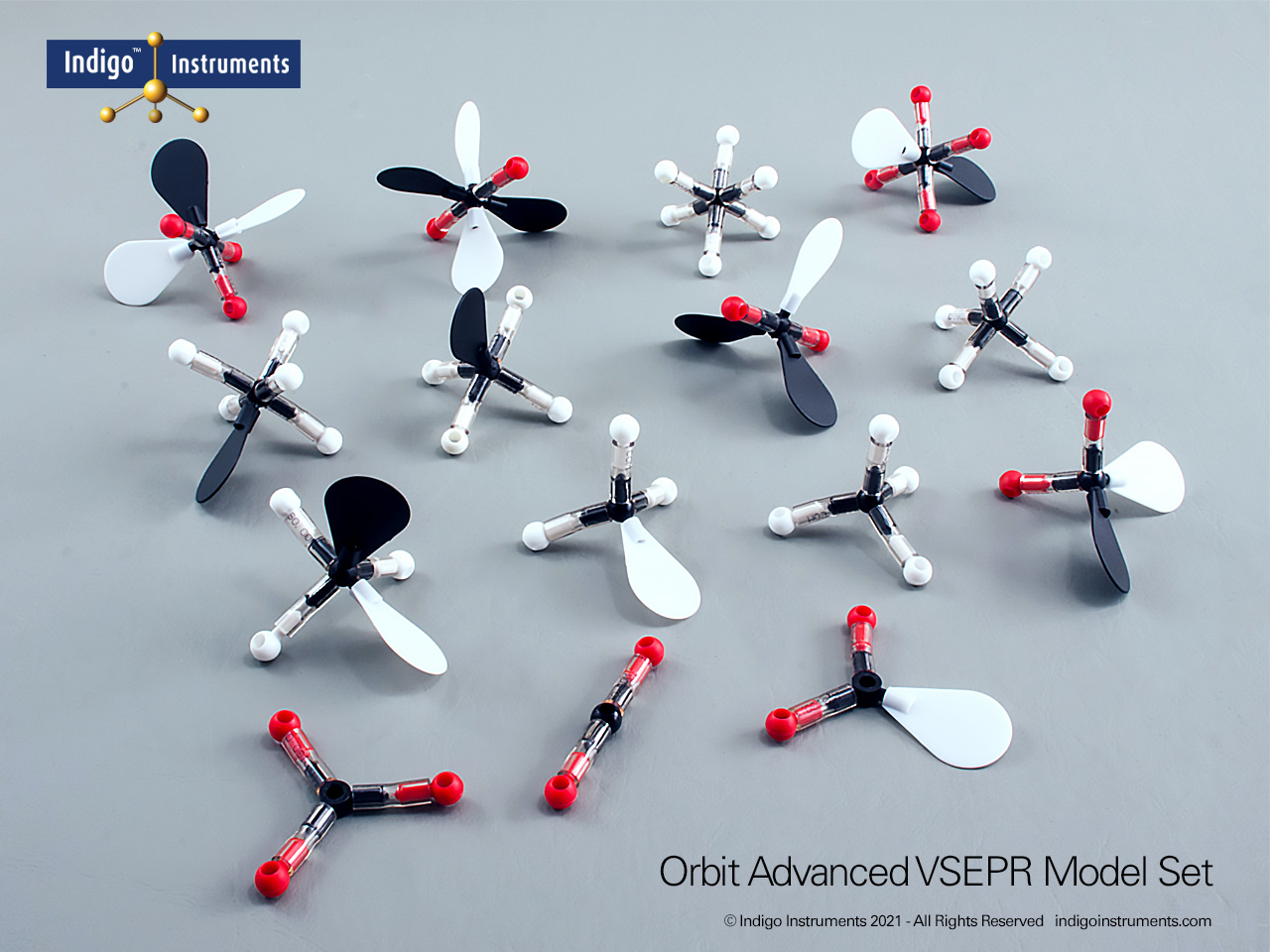
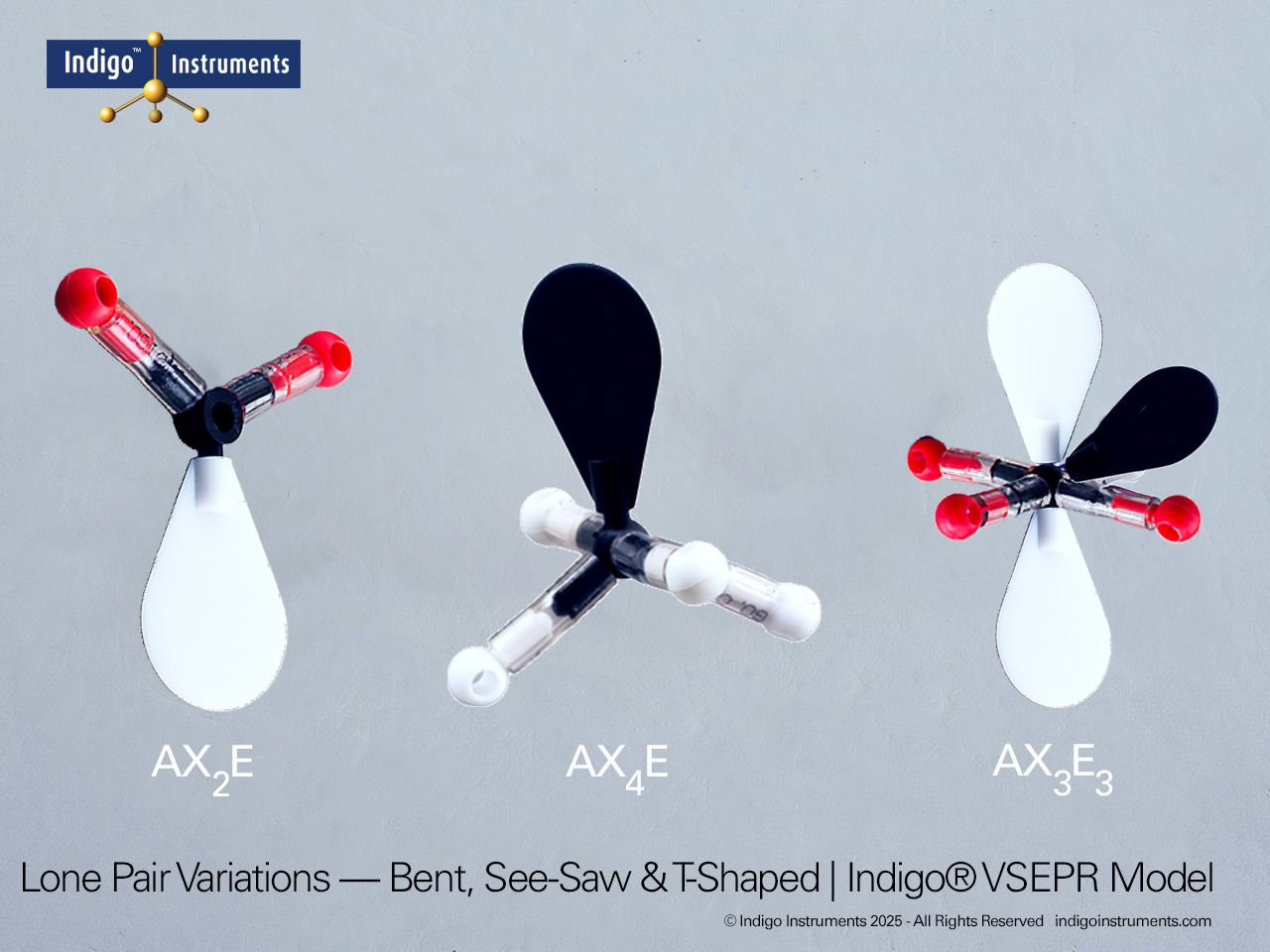
Understanding trigonal bipyramidal geometry can challenge spatial reasoning. The Indigo® 68823W VSEPR Model Kit has enough parts to build all four AX5 variants: trigonal bipyramidal, seesaw, T-shaped, and linear, at once. Turn an abstract progression into a physical, side-by-side comparison. Tutors can guide students through the full AX5 series by substituting bonding atoms with lone pairs. The black trigonal bipyramidal central atom accommodates both univalent peripheral atoms and lone pair paddles interchangeably, keeping the focus on geometry rather than identity. The two color lone pair paddles add a further layer of clarity. In the T-shaped and seesaw configurations, contrasting paddle colors make it immediately visible that both lone pairs occupy equatorial positions, an important spatial relationship difficult to convey on a flat page.
Why Use the Indigo® 68823W VSEPR Theory Model Kit?
The Indigo® 68823W VSEPR Model Kit supports instruction in VSEPR theory, molecular geometry, electron pair repulsion, and hypervalent bonding across general chemistry and first-year university courses. It covers all AX5 electron geometries: AX5 trigonal bipyramidal (PF5, PCl5), AX4E seesaw (SF4), AX3E2 T-shaped (ClF3), and AX2E3 linear (XeF2). It is compatible with university chemistry curricula and hands-on molecular modelling activities and equally suited to lecture demonstration, small group tutorial, and independent study.
Learning Outcomes Table
| Learning Outcome | Description |
|---|---|
| Identify Trigonal Bipyramidal Geometry | Recognize five bonding domains arranged with 90° and 120° bond angles around a central atom. |
| Distinguish Axial and Equatorial Positions | Understand differences in bond orientation and repulsion strength in the AX5 shape. |
| Relate Geometry to Real Molecules | Apply VSEPR concepts to PF5, PCl5, and similar compounds. |
| Explore Lone Pair Effects | Investigate how one or more lone pairs lead to see-saw, T-shaped, or linear derivatives. |
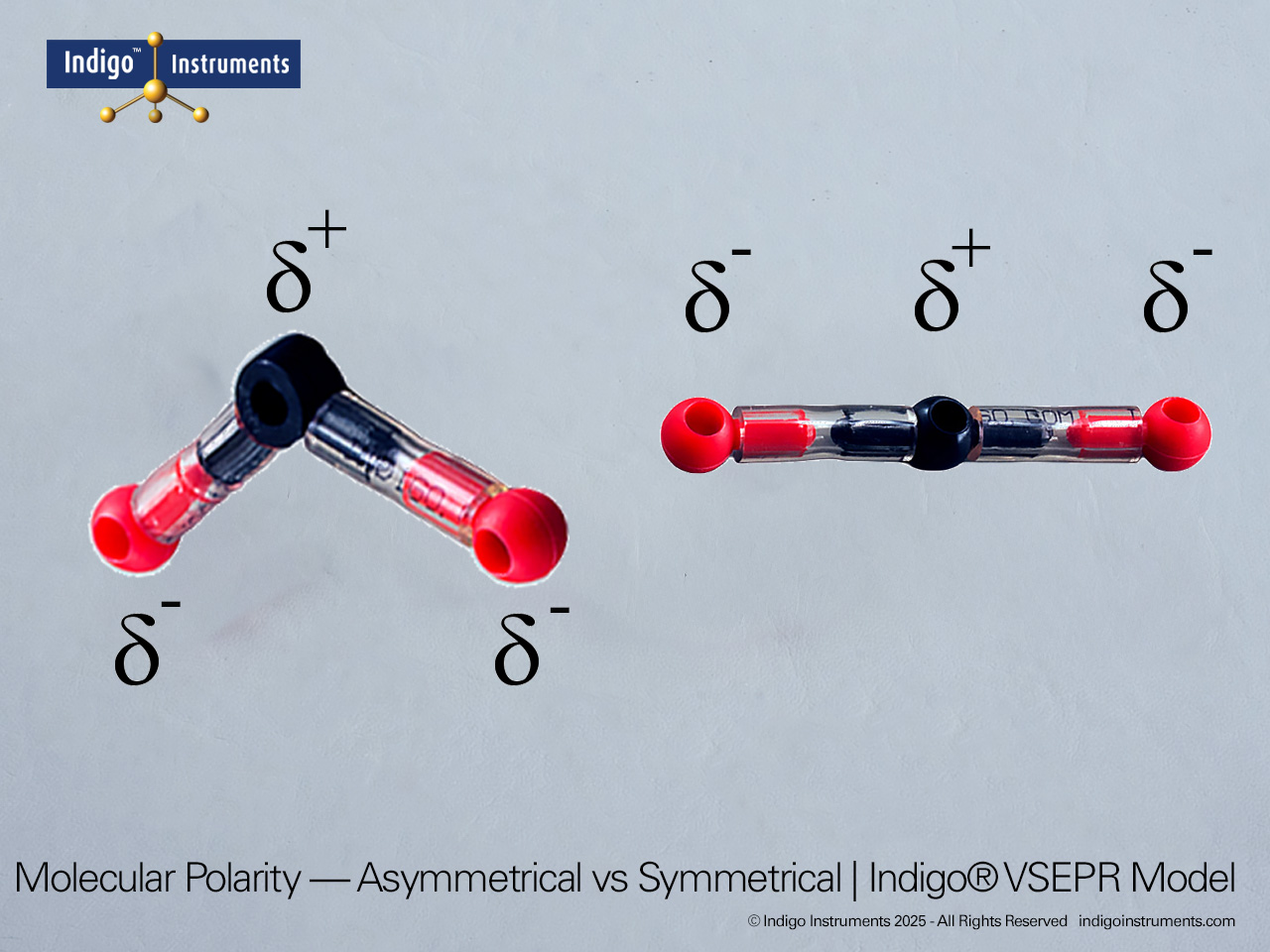
| Connect Shape and Polarity | Predict how molecular symmetry affects dipole moments and polarity in related structures. |