Advanced VSEPR Theory Molecular Model Kit

SKU: 68823W
$19.95USD or lower Each

Save More When You Buy More!
Quantity1+2+ 3+ 10+ 
Price for each$19.95USD$19.70USD$19.45USD$18.95USD
Your savings - 1.25%2.51%5.01%
Qty:

Explore 15 molecular geometries with Indigo®’s VSEPR theory model kit. Perfect for chemistry classes & labs studying shape, polarity, and bonding theory.

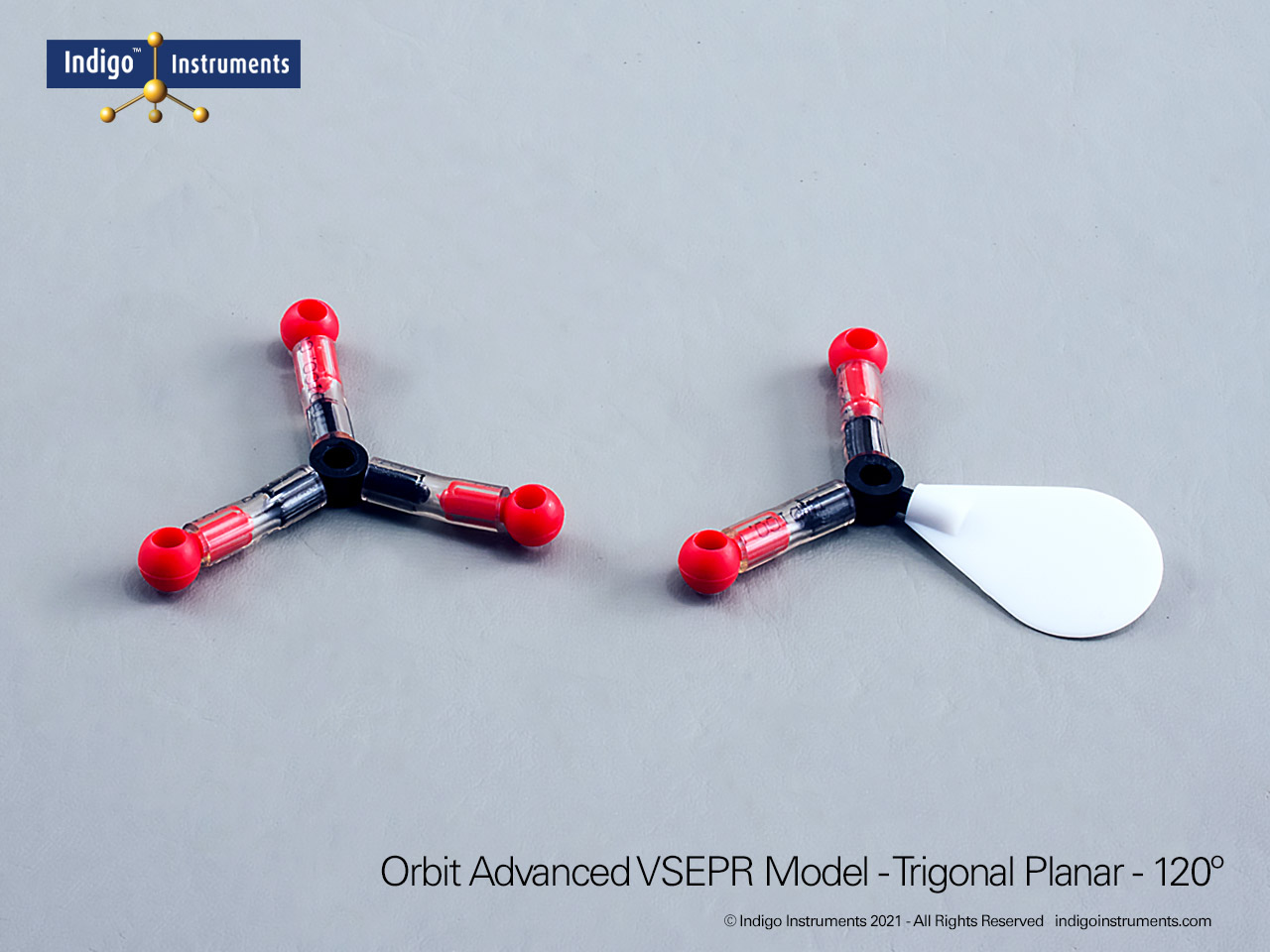
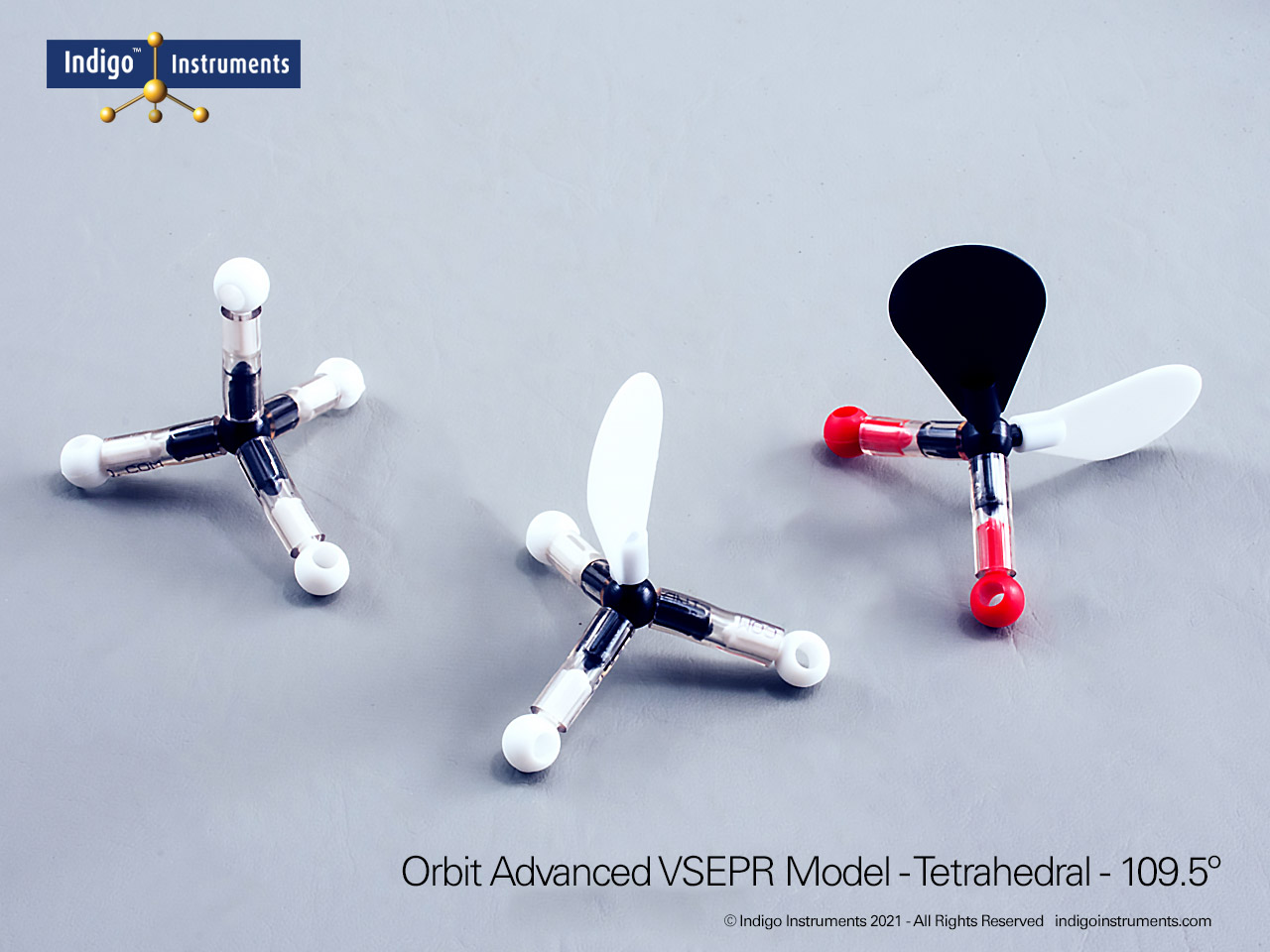
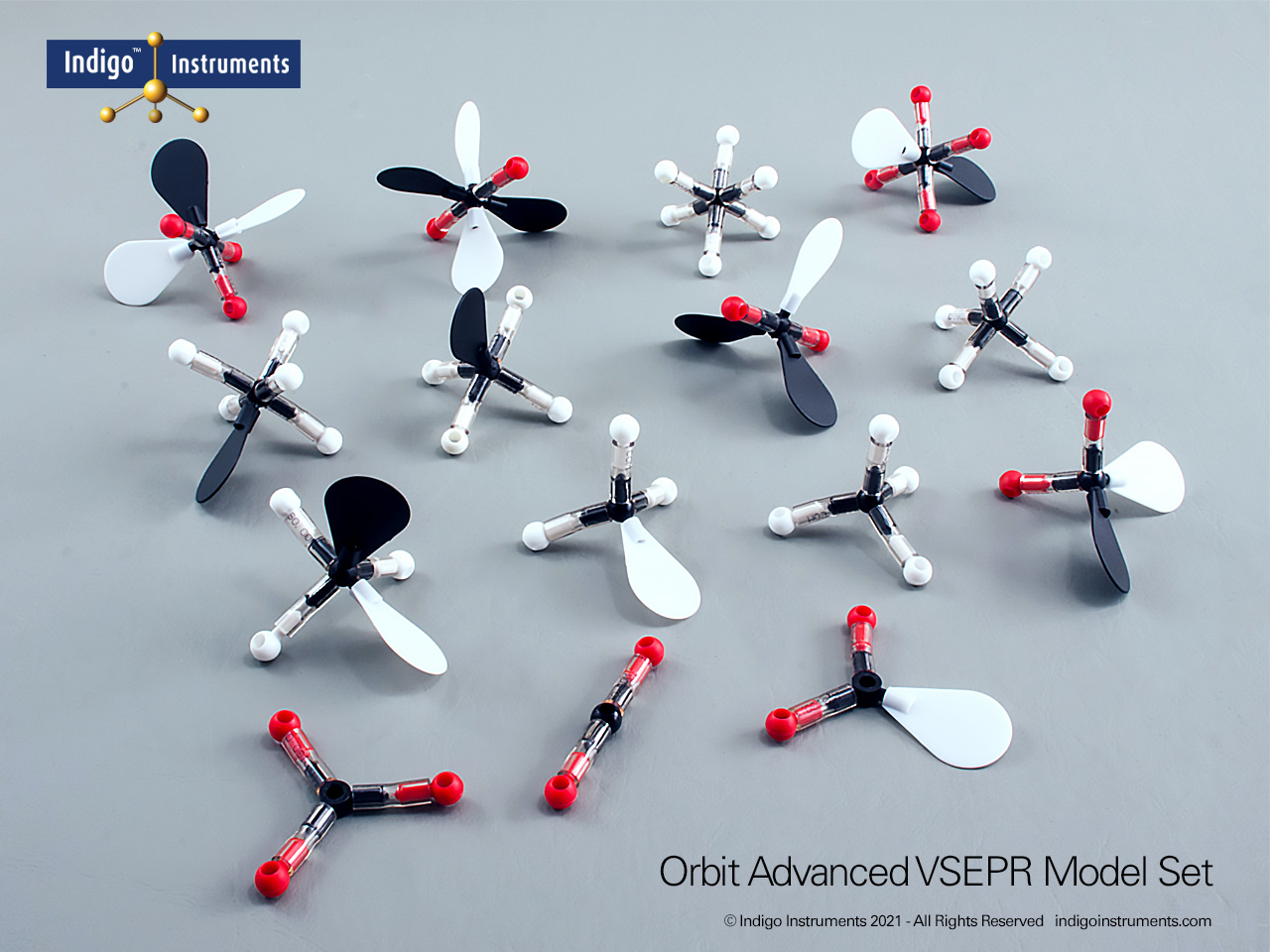
The Indigo®’s VSEPR theory model kit lets you visualize how electron-pair repulsion determines 3-D molecular structure. This advanced teaching kit shows fifteen distinct geometries, linear through octahedral, demonstrating how lone pairs and multiple bonds alter bond angles and molecular shape. Built from durable, autoclavable components, it’s ideal for advanced high-school and university chemistry courses exploring bonding, hybridization, and polarity.

The Indigo® VSEPR model kit helps students move beyond flat Lewis structures to hands-on 3D learning. Each molecular geometry model clearly shows how electron pair repulsion defines shape, linear, bent, trigonal planar, tetrahedral, trigonal bipyramidal, and octahedral. This molecular geometry kit is widely used in general chemistry and AP chemistry labs to illustrate bonding and polarity concepts that are difficult to visualize on paper. Whether you teach molecular shape, hybridization, or electron domain theory, this VSEPR model kit offers a durable, reusable way to demonstrate real molecular structures in three dimensions.

Learning Outcomes Table: 68823W VSEPR Model Kit

Learning Goal Description Activity Example Assessment Idea
Identify electron and molecular geometries Distinguish between linear, trigonal planar, tetrahedral, trigonal bipyramidal, and octahedral arrangements. Assemble each geometry and label bonding vs. lone pairs using different colored lobes. Students match 3D models to Lewis structures or written molecular formulas.
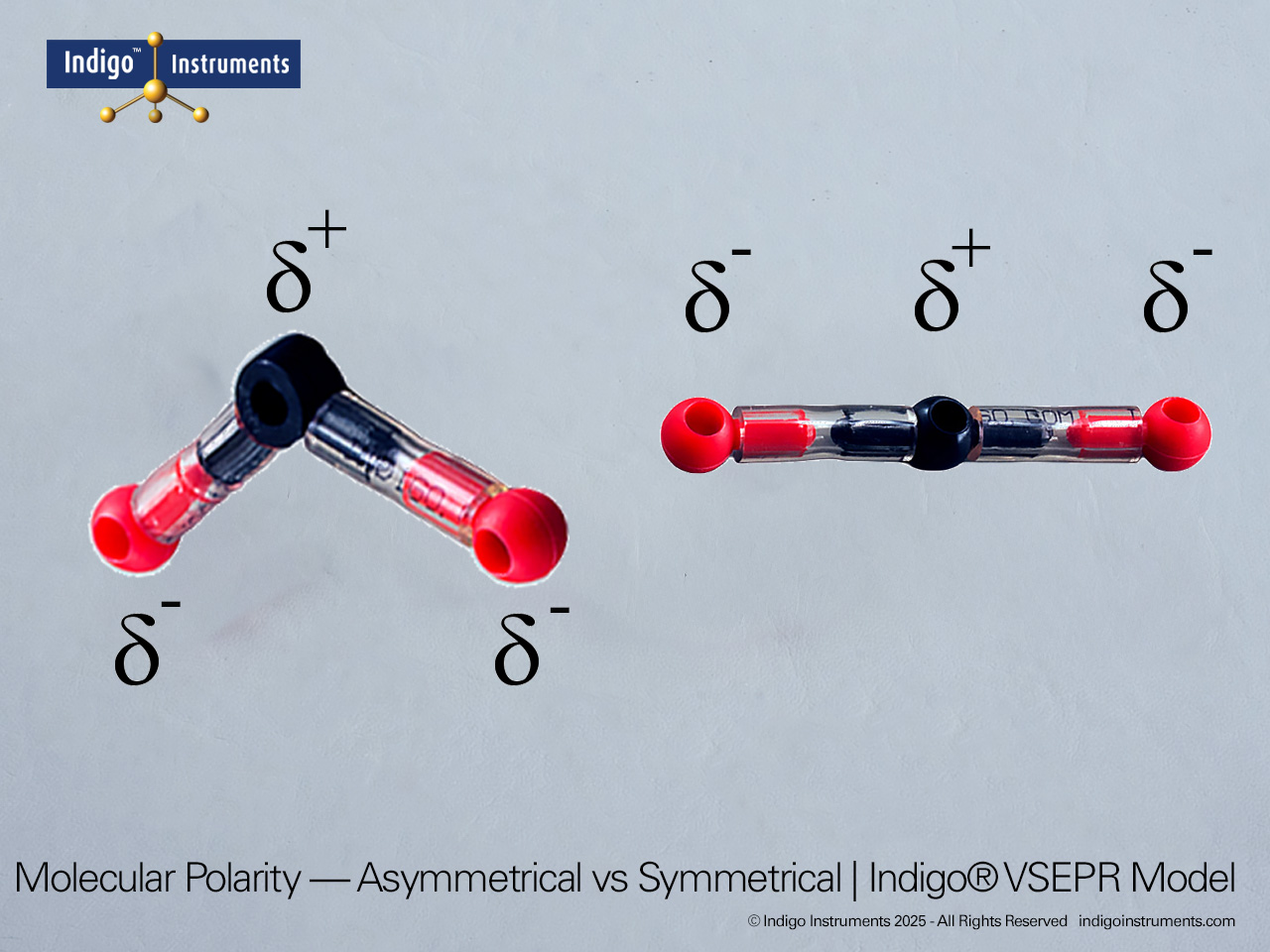
Predict bond angles and molecular polarity Use spatial arrangement to explain deviations from ideal angles due to lone pairs. Compare tetrahedral CH?, trigonal pyramidal NH?, and bent H?O models. Written short answer: “Explain why H?O is polar but CO? is not.”
Relate VSEPR theory to hybridization Visualize sp, sp², and sp³ hybrid orbitals within each geometry type. Build examples using linear (sp), trigonal planar (sp²), and tetrahedral (sp³) central atoms. Label each model’s hybridization and justify with electron domain count.
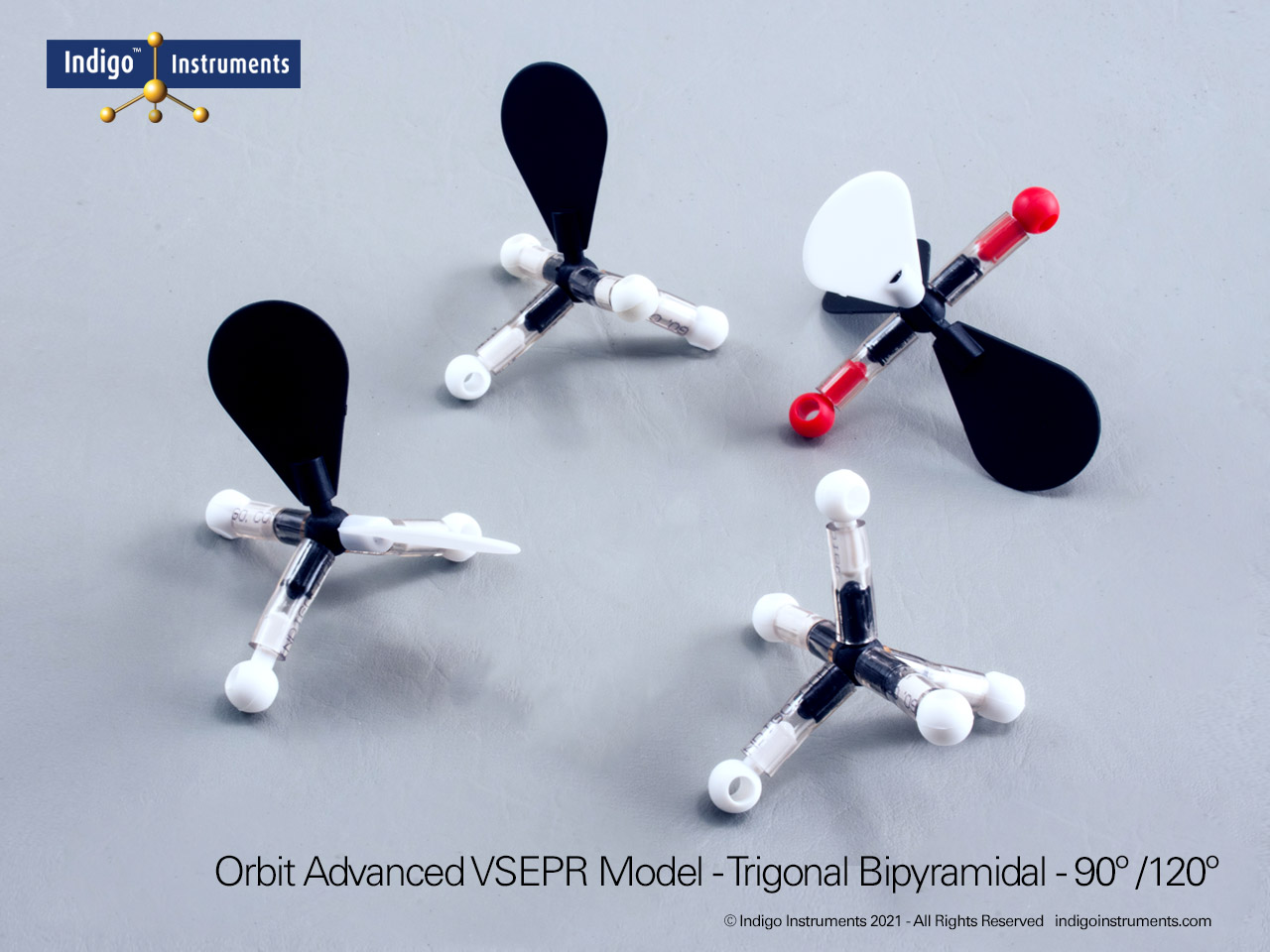
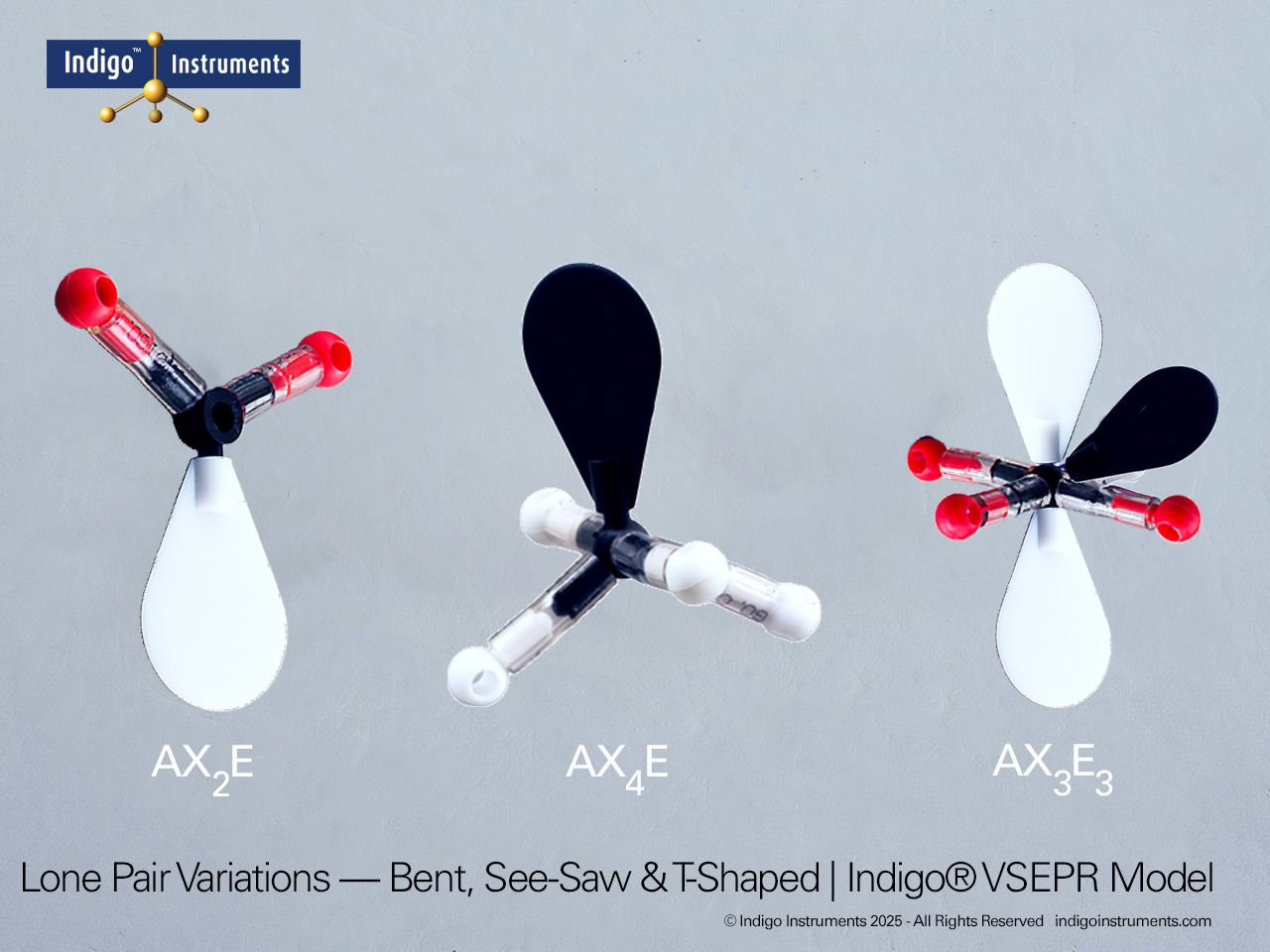
Differentiate molecular and electronic geometry Recognize that lone pairs alter molecular shape but not the underlying electron-domain geometry. Construct SF?, ClF?, and XeF? to see trigonal bipyramidal variations. Worksheet: draw both electronic and molecular geometries for given molecules.
Connect model visualization to real molecules Relate abstract models to real chemical examples relevant to daily life and lab work. Assign real compounds (CO?, NH?, SF?) for teams to model and present. Group presentations comparing predicted vs. experimental bond angles.
Details

Educational Value Table Framework (EVTF)

Concept Description Activity Learning Link
Electron Domain Repulsion Understand how electron pairs, bonding and non-bonding, determine molecular geometry. Build and compare linear, trigonal planar, tetrahedral, trigonal bipyramidal, and octahedral models. VSEPR Theory; Lewis structures; molecular shapes.
Lone Pair Effects See how lone pairs compress bond angles and create shape variations (e.g., bent, trigonal pyramidal). Assemble variants with 1-3 lone pairs and compare predicted vs. observed geometries. Hybridization; electron density mapping.
Polarity and Molecular Shape Relate shape to dipole moment and molecular polarity. Use polar and non-polar examples to predict intermolecular forces. Chemical bonding; physical properties.
Expanded & Reduced Octets Illustrate trigonal bipyramidal and octahedral geometries for elements with d-orbital participation. Model SF4, ClF3, XeF4, etc., to visualize real compounds. Valence shell expansion; bonding exceptions.
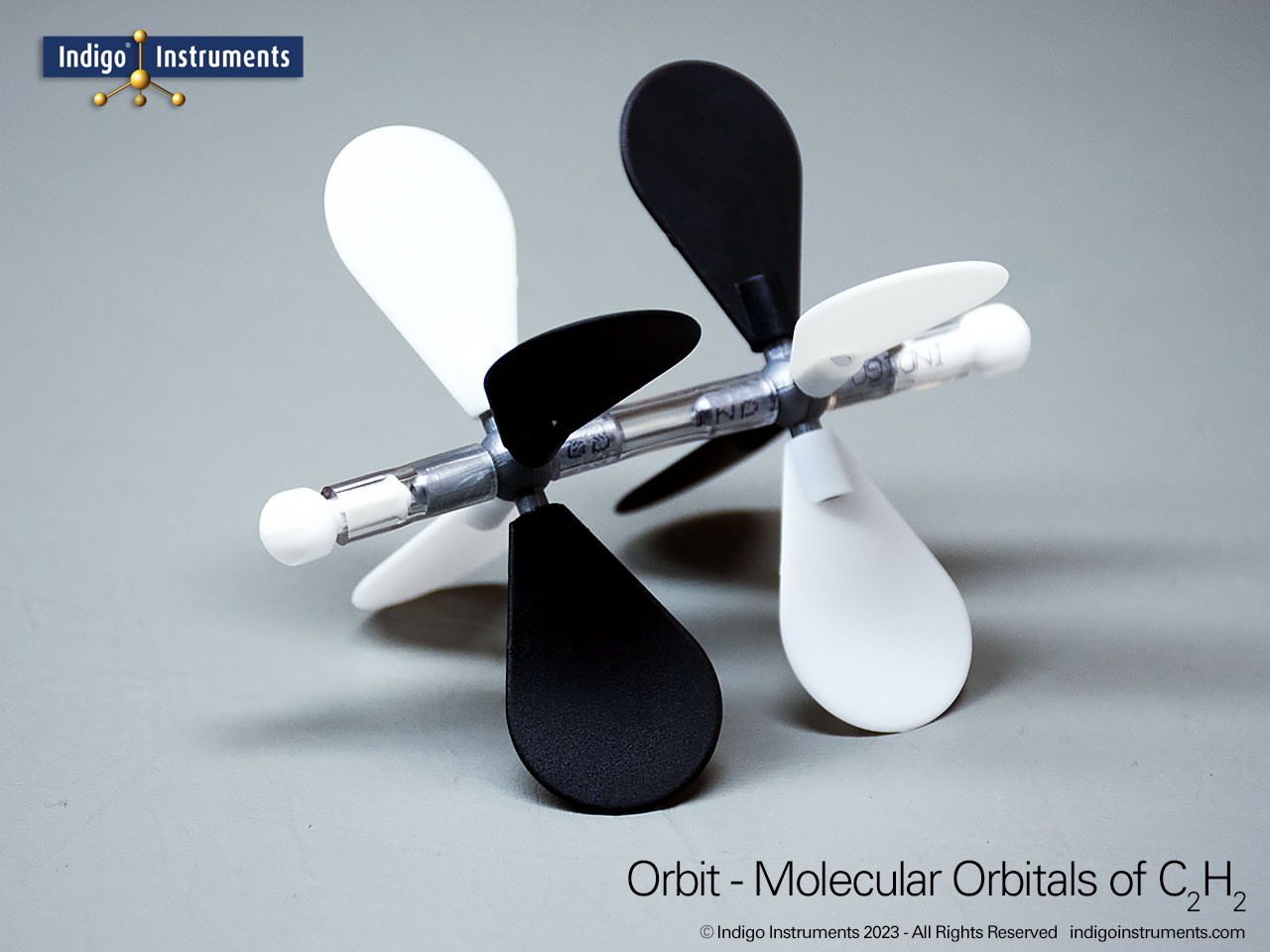
Unsaturated Systems Show π-bond alignment and orbital orientation in alkenes and alkynes. Construct ethene and acetylene using the kit plus optional extra octahedral atoms. Organic chemistry; hybridization of sp2 and sp orbitals.
Related information or images
Parts
Specifications

See Parts list for details. Additional pieces can be bought separately from the Orbit Components page.

Reviews ()
Review This Product Now!


Frequently Asked Questions

FAQ for Advanced VSEPR Theory Molecular Model Kit

The Indigo® VSEPR kit includes 15 molecular geometry models representing all common electron pair arrangements, linear through octahedral, along with multiple examples showing the effects of lone pairs on molecular shape.

This model kit is ideal for senior high school chemistry and introductory college courses. It helps visualize electron domain geometry, hybridization, and polarity concepts aligned with most AP and first-year curricula.

Unlike basic classroom kits that show one or two geometries, the Indigo® advanced set lets you build all major VSEPR shapes at once for comparison and discussion, ideal for lab demonstrations and group learning.

Yes. All components are autoclavable and made of durable, high-quality plastic that withstands repeated assembly, disassembly, and sterilization, perfect for multi-year classroom use.