Tetrahedral Geometry Molecular Model
SKU: 68823W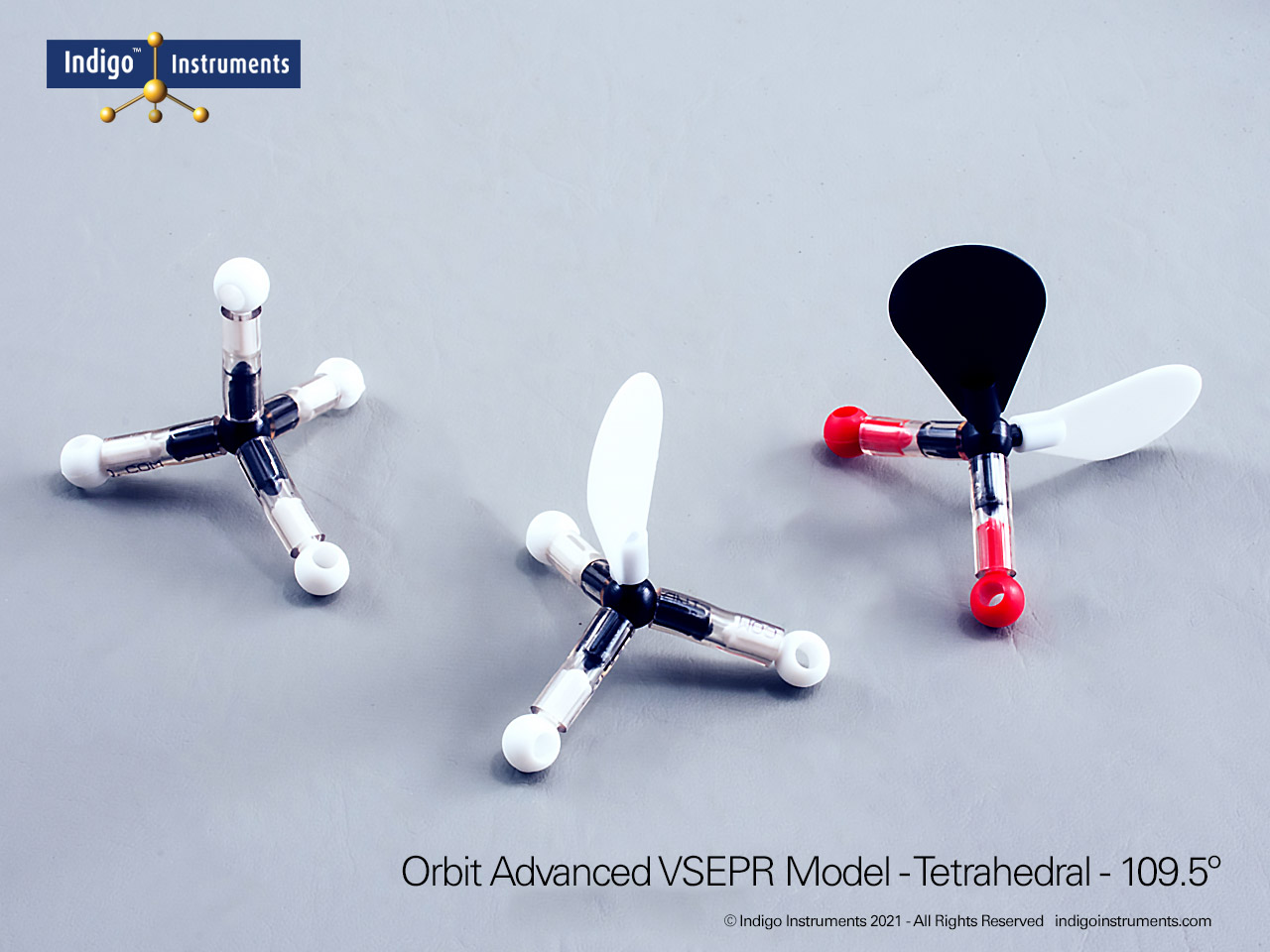
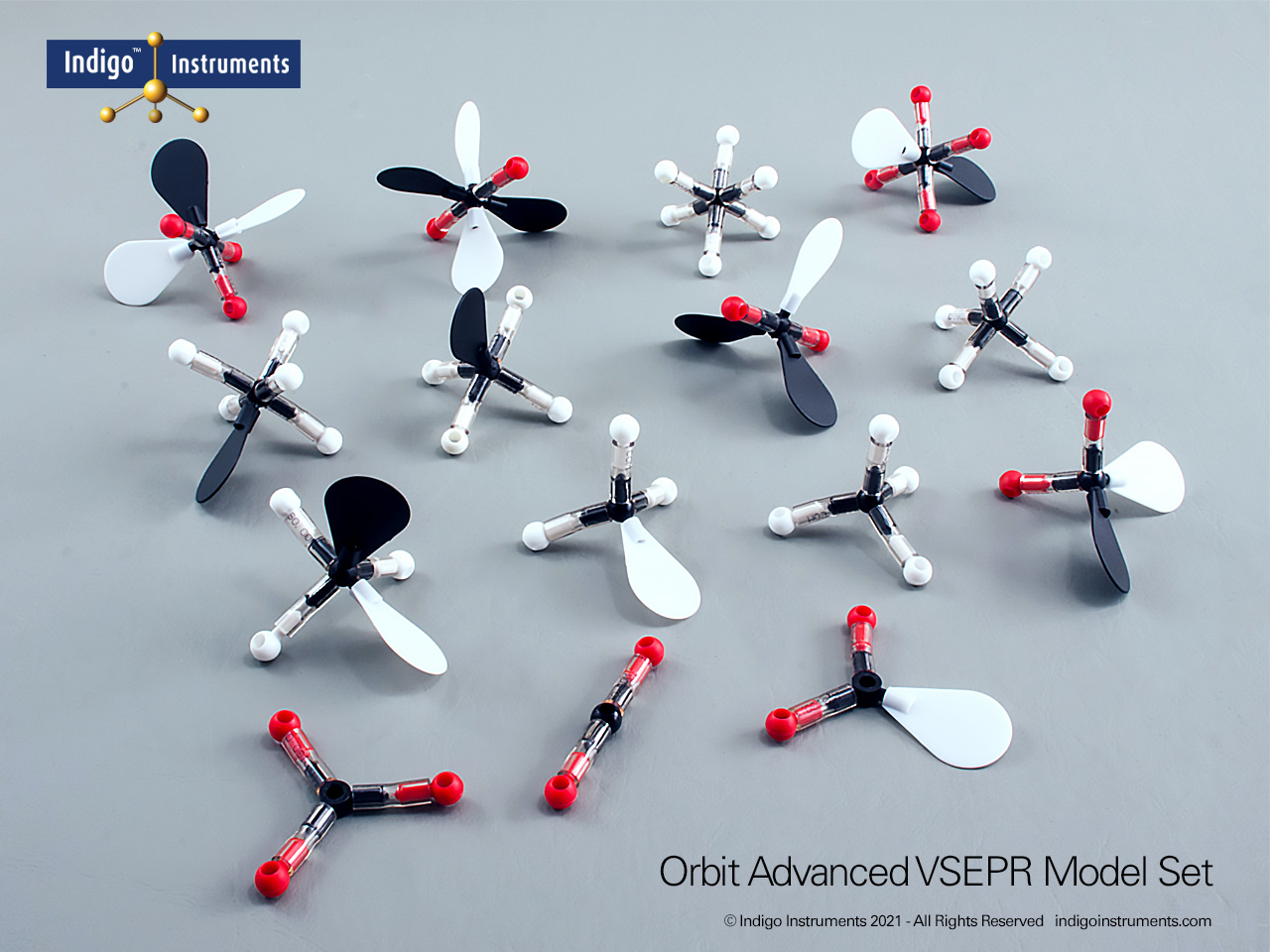
The Indigo® 68823W VSEPR Theory Model Kit can simultaneously build tetrahedral, trigonal pyramidal, and bent geometry so tutors can compare CH4, NH3, and H2O lone pair distortions side by side.
The tetrahedral shape is at the heart of VSEPR theory. Methane, ammonia, and water are three of the most important molecules in all of chemistry, and all three share the same underlying electron geometry while producing three distinctly different molecular shapes. The Indigo® 68823W VSEPR Theory Model Kit includes three tetrahedral central atoms to build AX4, AX3E, and AX2E2 configurations simultaneously. Students can see CH4, NH3, and H2O & their respective geometry distortions as each lone pair displaces a bonding atom. The two colors of lone pair paddles reinforce this further. In the bent geometry of H2O, the contrasting paddles make it clear both lone pairs are present. Their combined repulsion accounts for the H-O-H angle's being below the ideal 109.5°.
Why Use the Indigo® 68823W VSEPR Theory Model Kit?
The Indigo® 68823W VSEPR Theory Model Kit complements instruction in tetrahedral molecular geometry, VSEPR theory, electron domain repulsion, bond angle compression, and molecular polarity across general chemistry and first-year university courses. It covers all three principal AX4 electron geometries: AX4 tetrahedral (CH4, CCl4), AX3E trigonal pyramidal (NH3), and AX2E2 bent (H2O). The kit also supports lessons on sp3 hybridization, dipole moments, hydrogen bonding, and molecular polarity prediction. Compatible with high school advanced chemistry, introductory organic chemistry, and university general chemistry curricula, it is equally suited to lecture demonstration, small group tutorial, and independent study.
Learning Outcomes Table
| Learning Outcome | Activity | Concept Reinforced | Curricular Link |
|---|---|---|---|
| Recognize tetrahedral geometry and ideal bond angles. | Assemble an AX? structure and measure ~109.5° angles. | Electron pairs repel equally, forming 3D symmetry. | High school: molecular shape and VSEPR basics. |
| Demonstrate lone pair distortion on geometry. | Build AX3E and AX2E2 structures to observe compressed angles. | Lone pairs exert greater repulsion than bonding pairs. | College: hybridization and molecular polarity. |
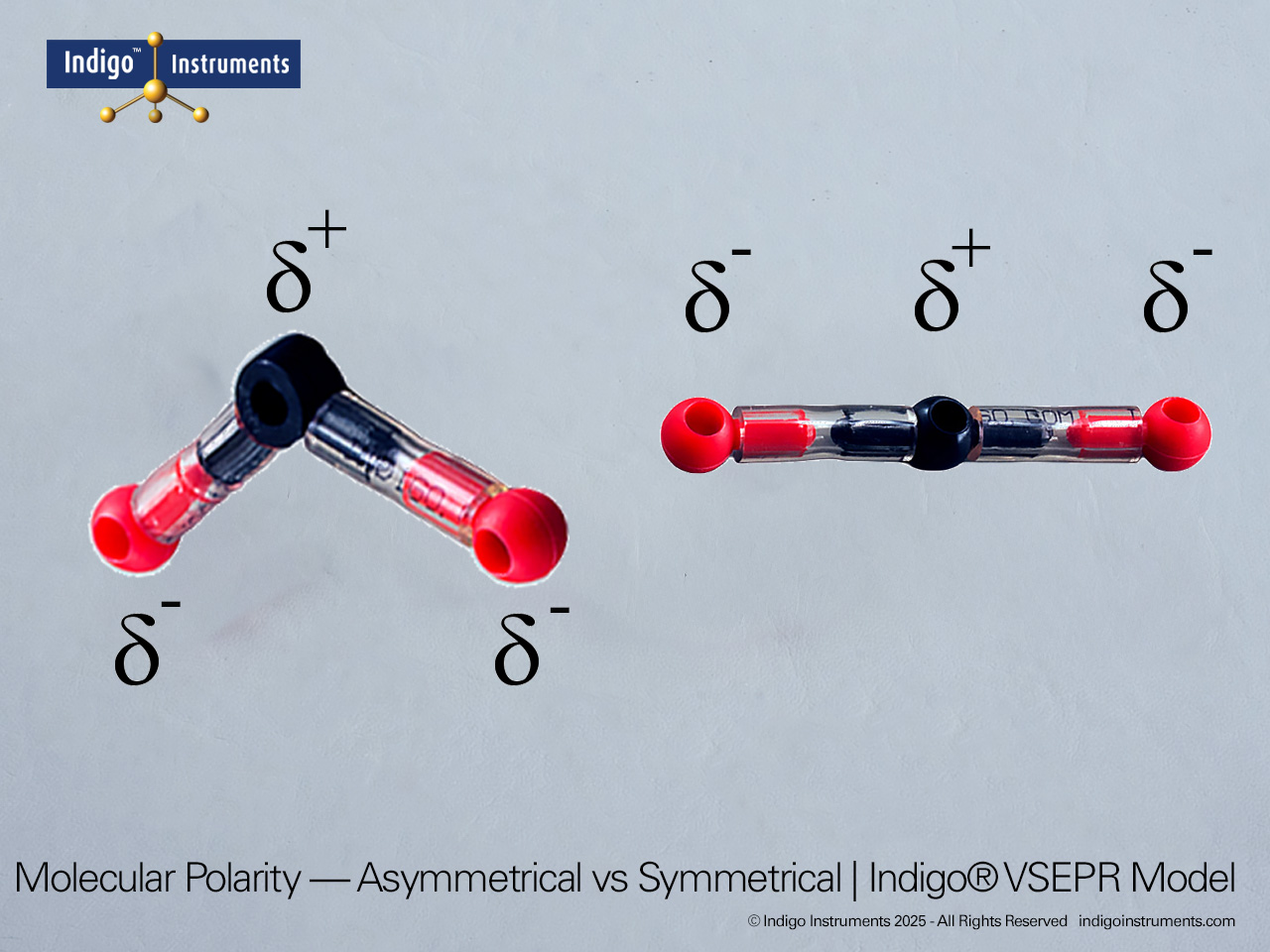
| Correlate molecular shape with polarity and reactivity. | Compare CH4 (non-polar) vs. NH3 and H2O (polar). | Bond dipoles and geometry determine molecular polarity. | Organic & general chemistry: intermolecular forces. |