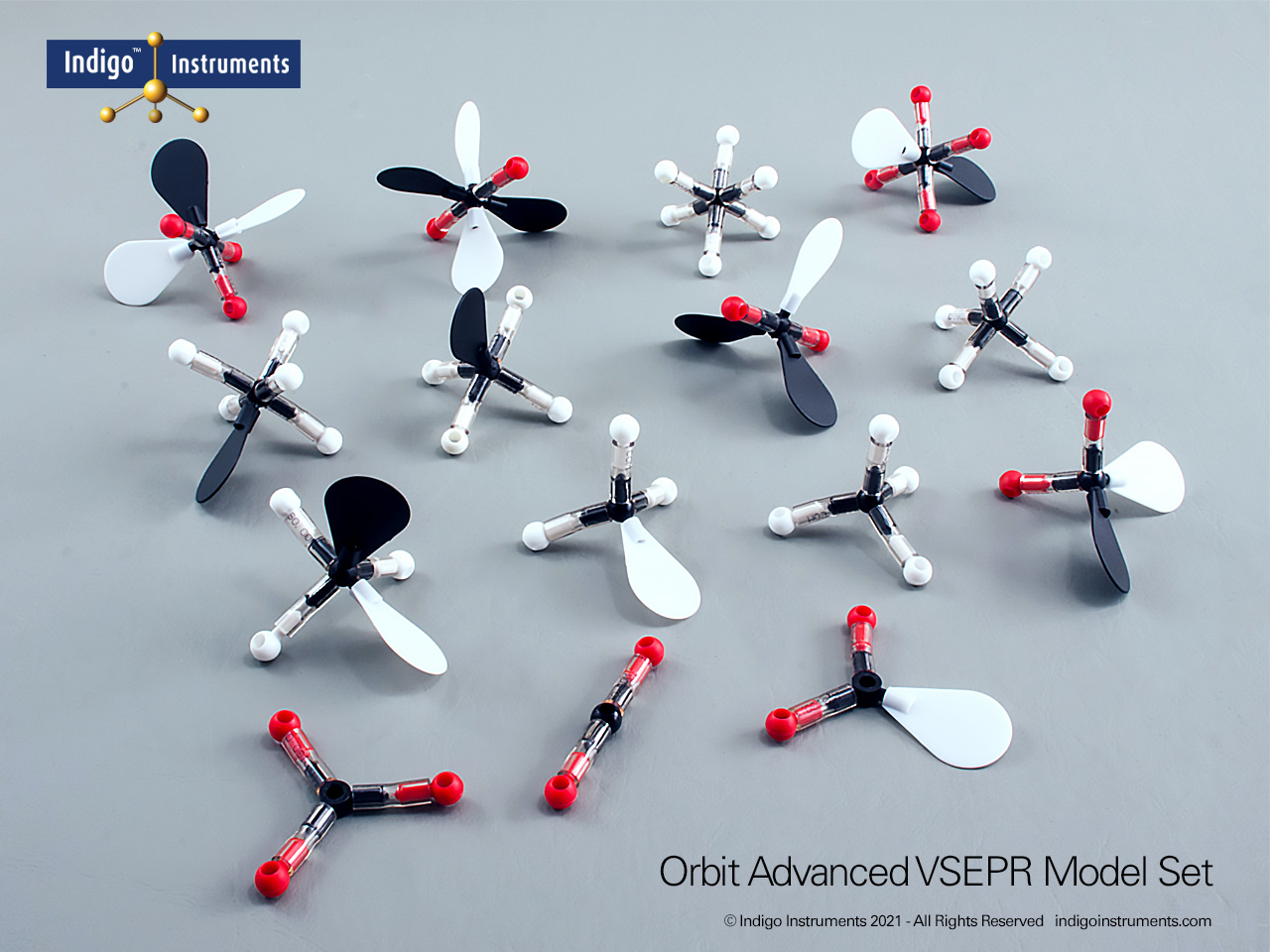
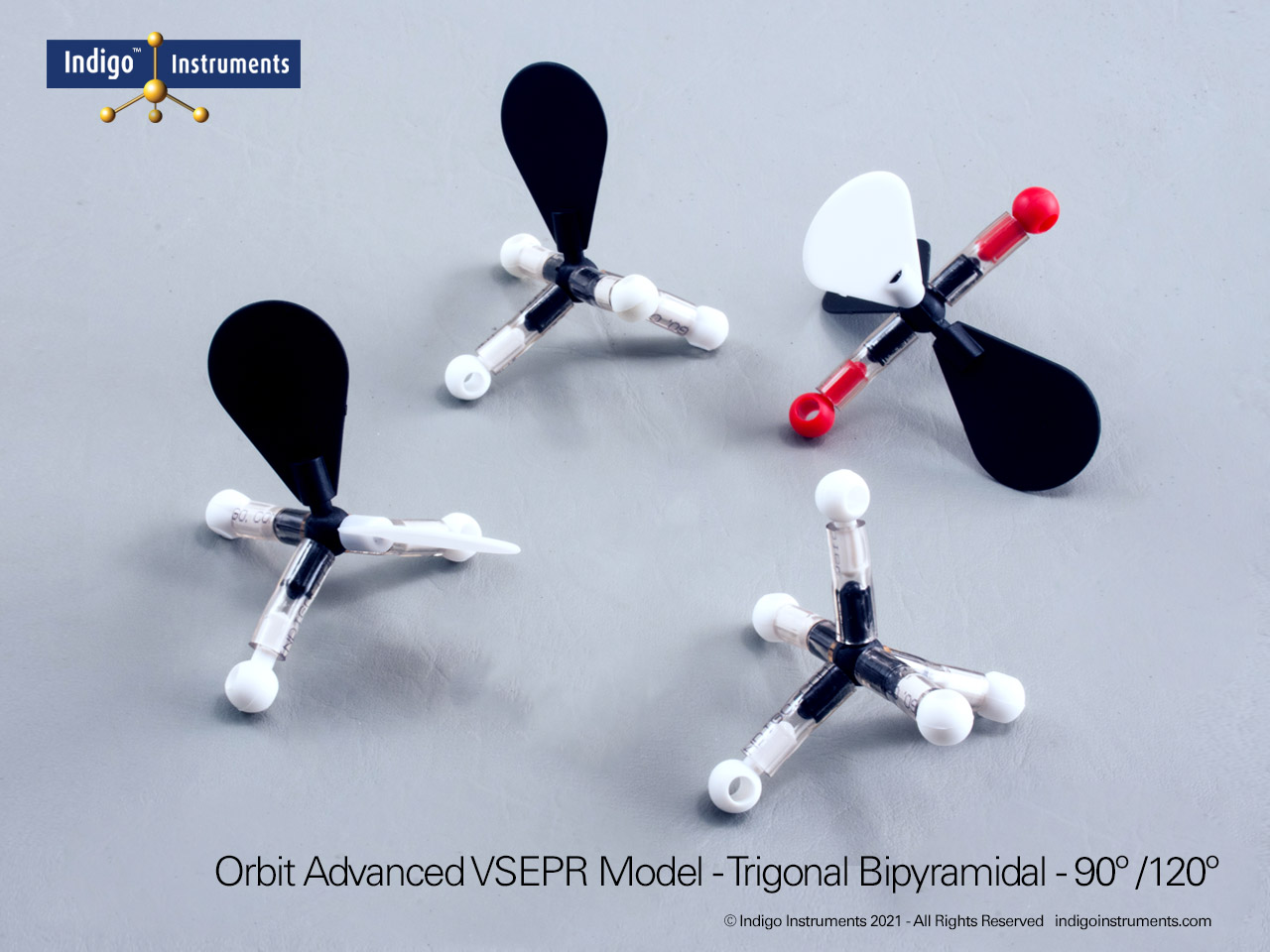
Examine octahedral molecular geometry using the Indigo® VSEPR model kit. Build AX6 structures like SF6 to visualize 90° bond angles and molecular symmetry.
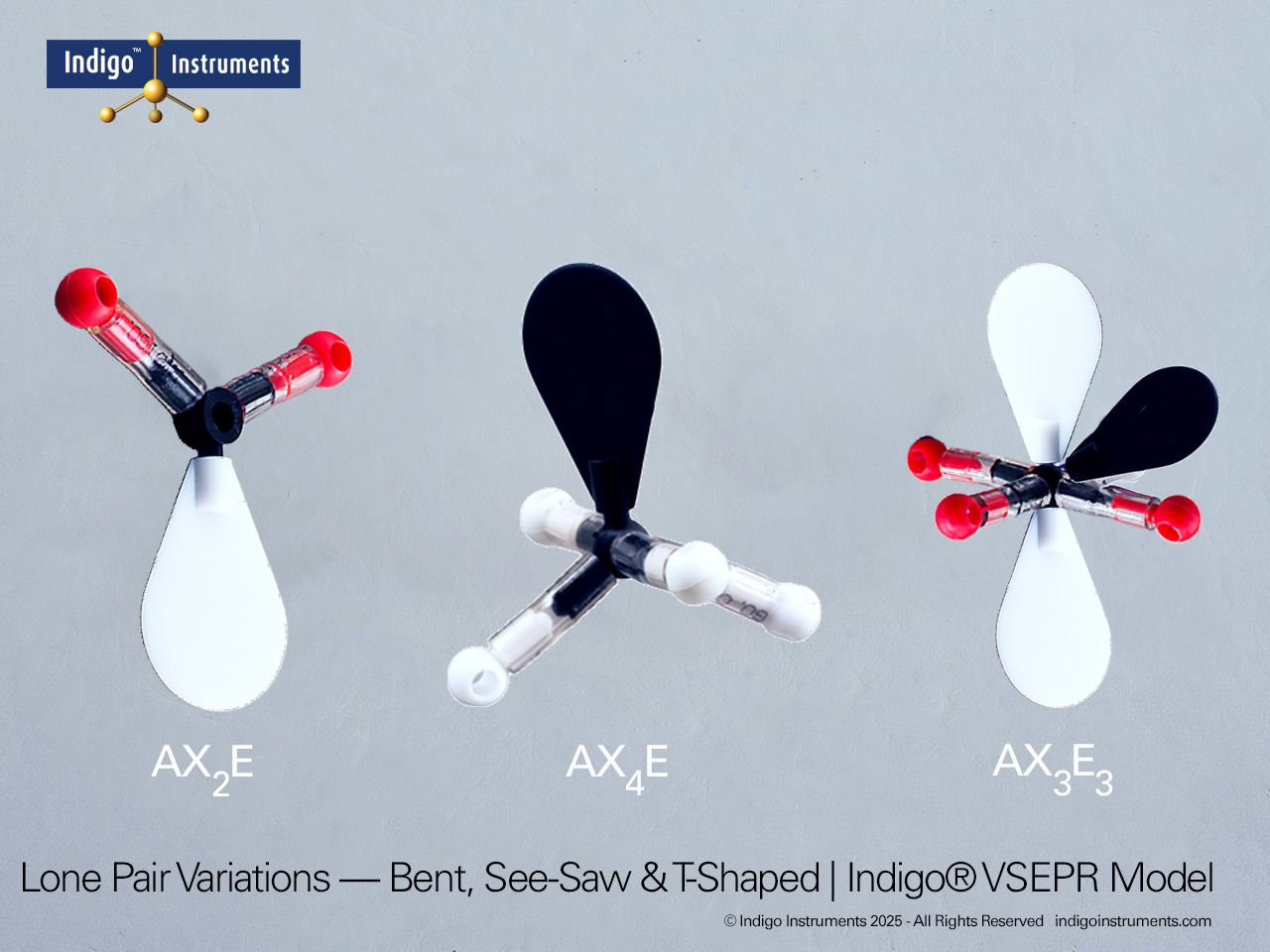
Use the Indigo® VSEPR theory model kit to help visualize the various forms of octahedral molecular geometry. AX6 is the simplest octahedral shape with no lone pairs as seen in sulfur hexafluoride (SF6) . Or, you can build AX5E, the square pyramidal shape with one lone pair as seen in bromine pentafluoride (BrF5) & iodine pentafluoride (IF5). Lastly, there is AX4E2, which is square planar with two lone pairs that occupy opposite positions at 180° as seen in xenon tetrafluoride (XeF4). This model kit can also build the T-shaped AX3E3 and linear AX2E4 but there are no known molecules of these shapes.
Each of the three AX6 configurations produces measurably distinct bond angles and geometries. The fully bonded AX6 arrangement (SF6) is the most symmetrical molecule in VSEPR theory, with all bond angles at exactly 90° and 180°. Every fluorine atom experiences identical repulsion forces, making sulfur hexafluoride an ideal starting point for understanding octahedral geometry. Its remarkable chemical inertness also makes it one of the most industrially significant molecules in this family.
Replacing one axial bonding atom with a lone pair gives the square pyramidal geometry of BrF5 or IF5 (AX5E). The lone pair occupies one axial position and compresses the four equatorial bond angles from 90° to approximately 84.8°, while pushing the four equatorial atoms slightly downward. The resulting shape resembles a square base with a single atom at the apex. This geometry is obvious when viewing the model from the side.
The square planar geometry of XeF4 (AX4E2) has two lone pairs at both axial positions directly opposite each other at 180°. This minimizes lone pair repulsion and produces a perfectly flat molecule with all four fluorine atoms at exactly 90° to each other.
As with XeF2 in the AX5 family, XeF4 invites the question of why a noble gas bonds at all? This connects VSEPR theory to expanded octets, formal charge, and the broader limitations of the octet rule. The two different colored paddles make opposing lone pair arrangements particularly clear. One color above, the other 180° below, which explains why ther resulting square planar and not see-saw.
Indigo Instruments has held inventory of genuine Cochranes of Oxford (Orbit) parts for 30+ years (See Skeletal (Orbit/Minit)). You can customize or replenish any model we have ever sold.
The parts listed on this page are for the entire kit, not the molecules(s) shown. You can augment this geometry with additional pieces listed on the Orbit Components page.