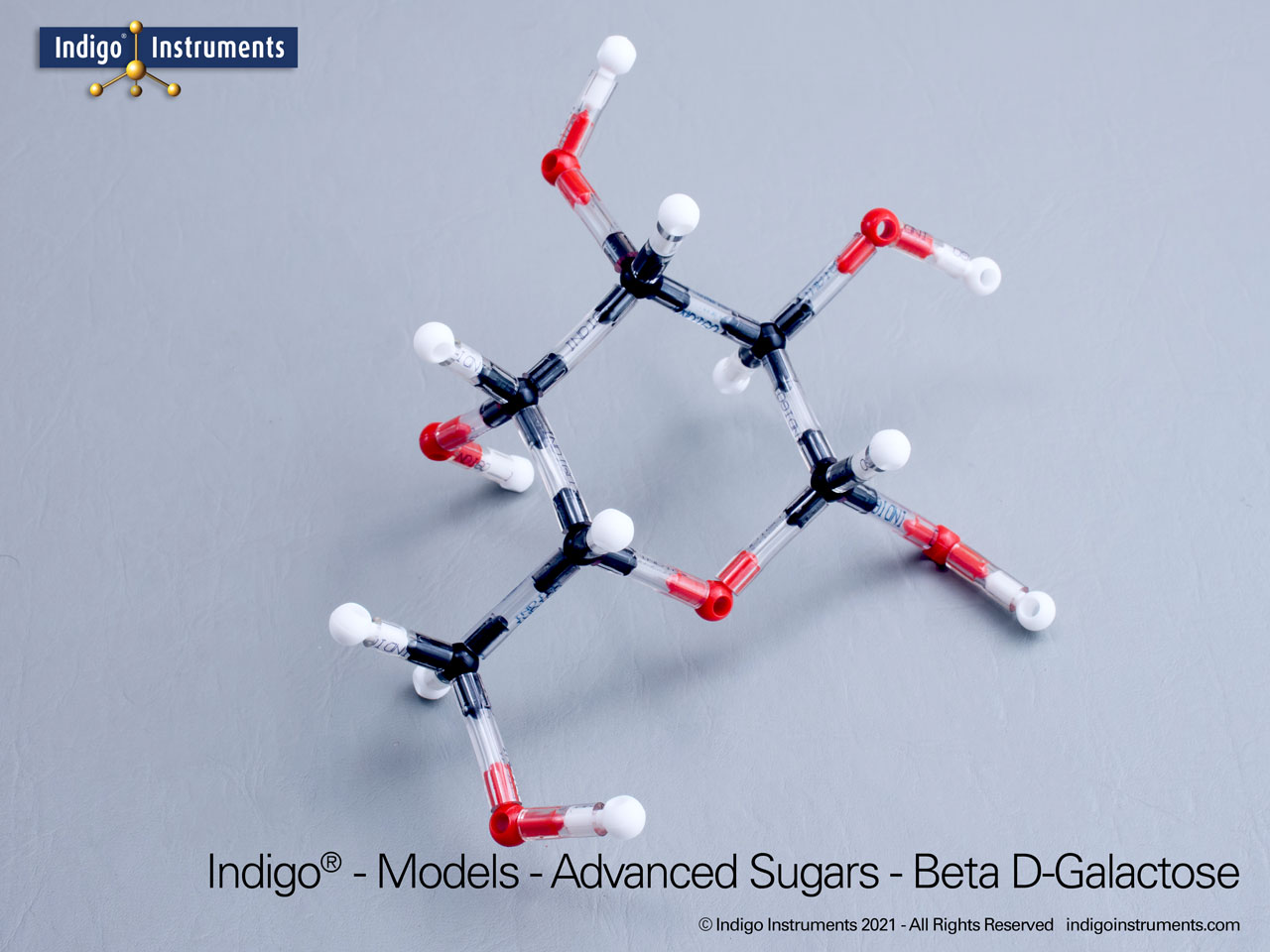
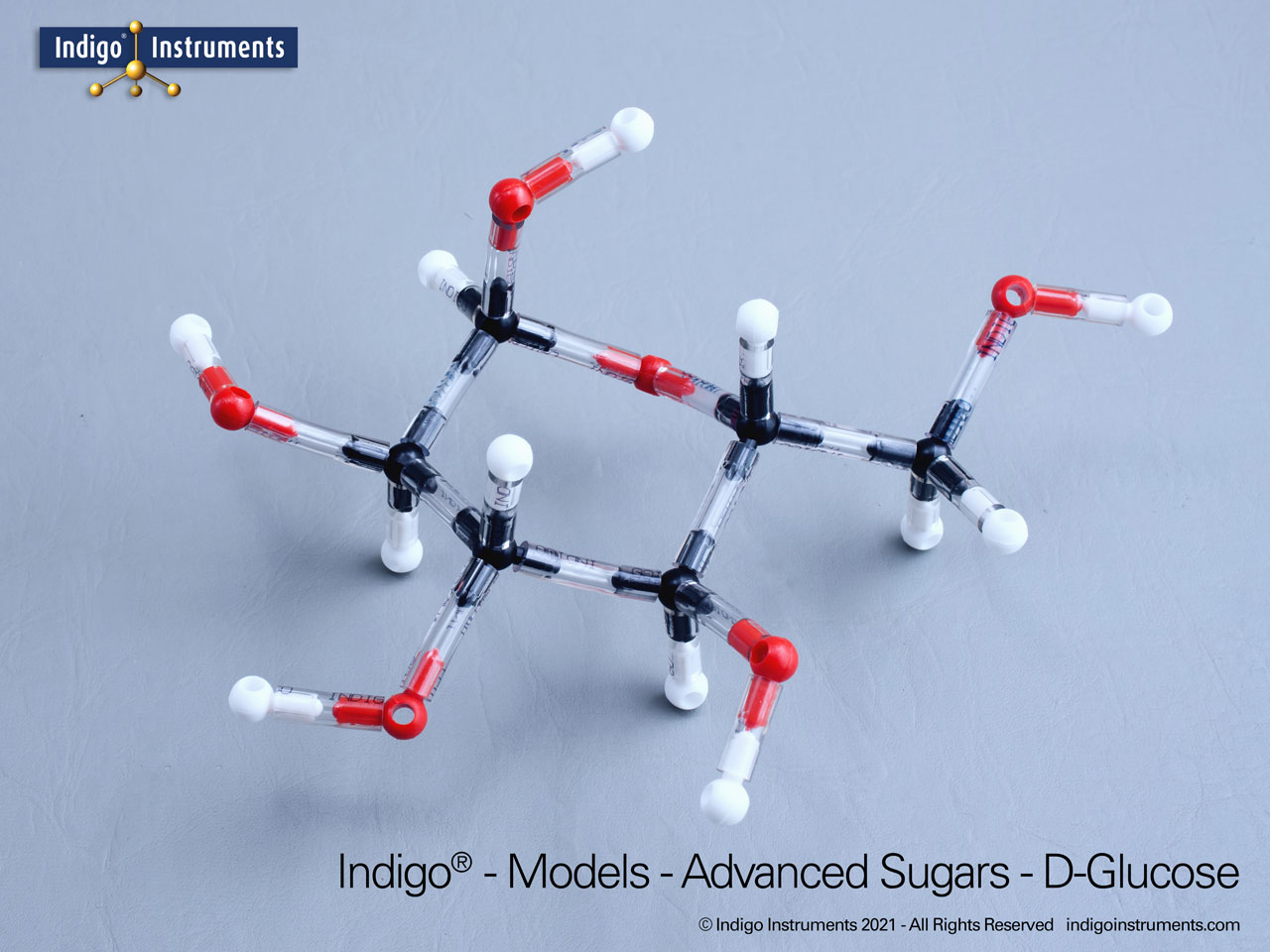
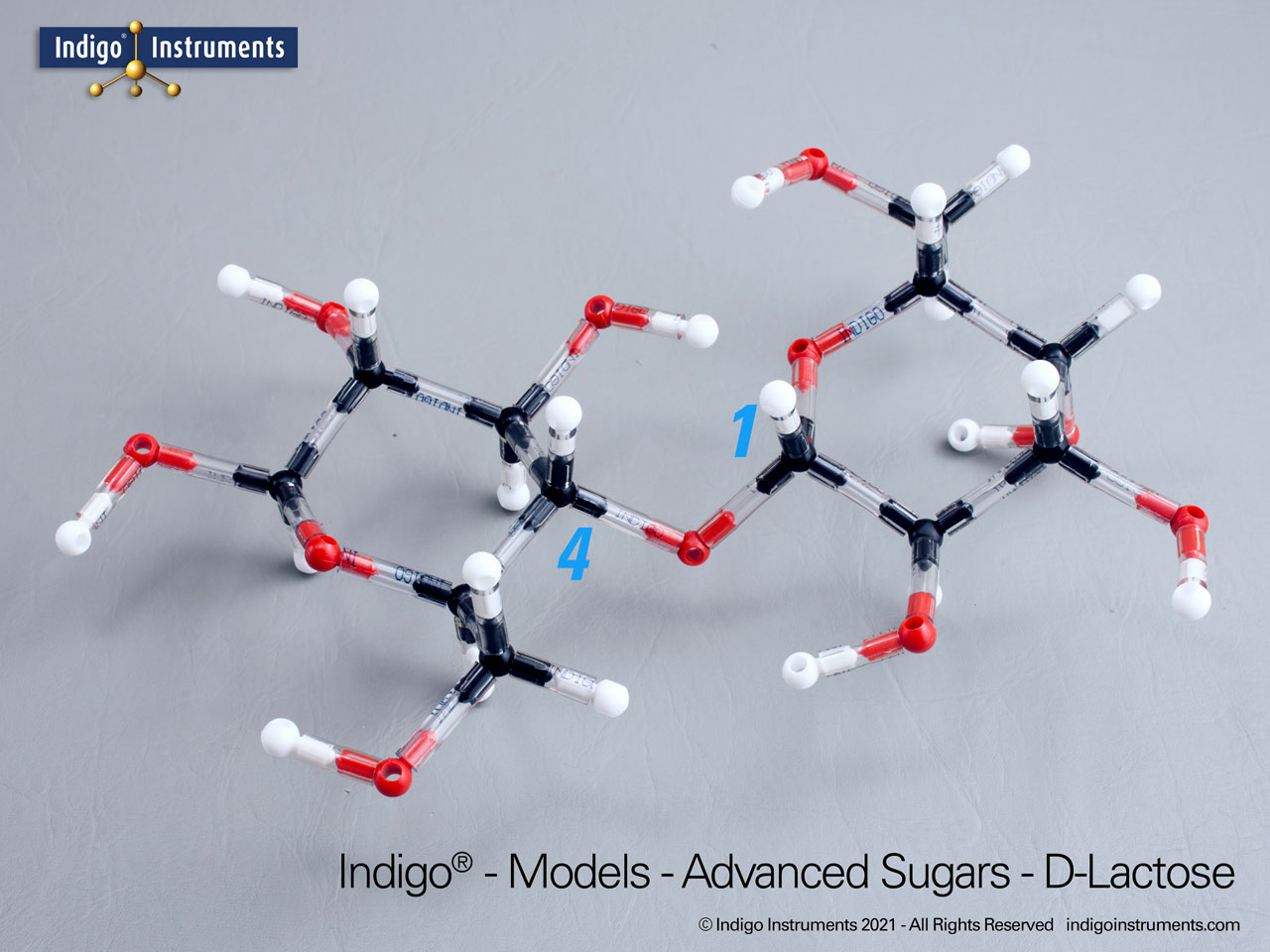
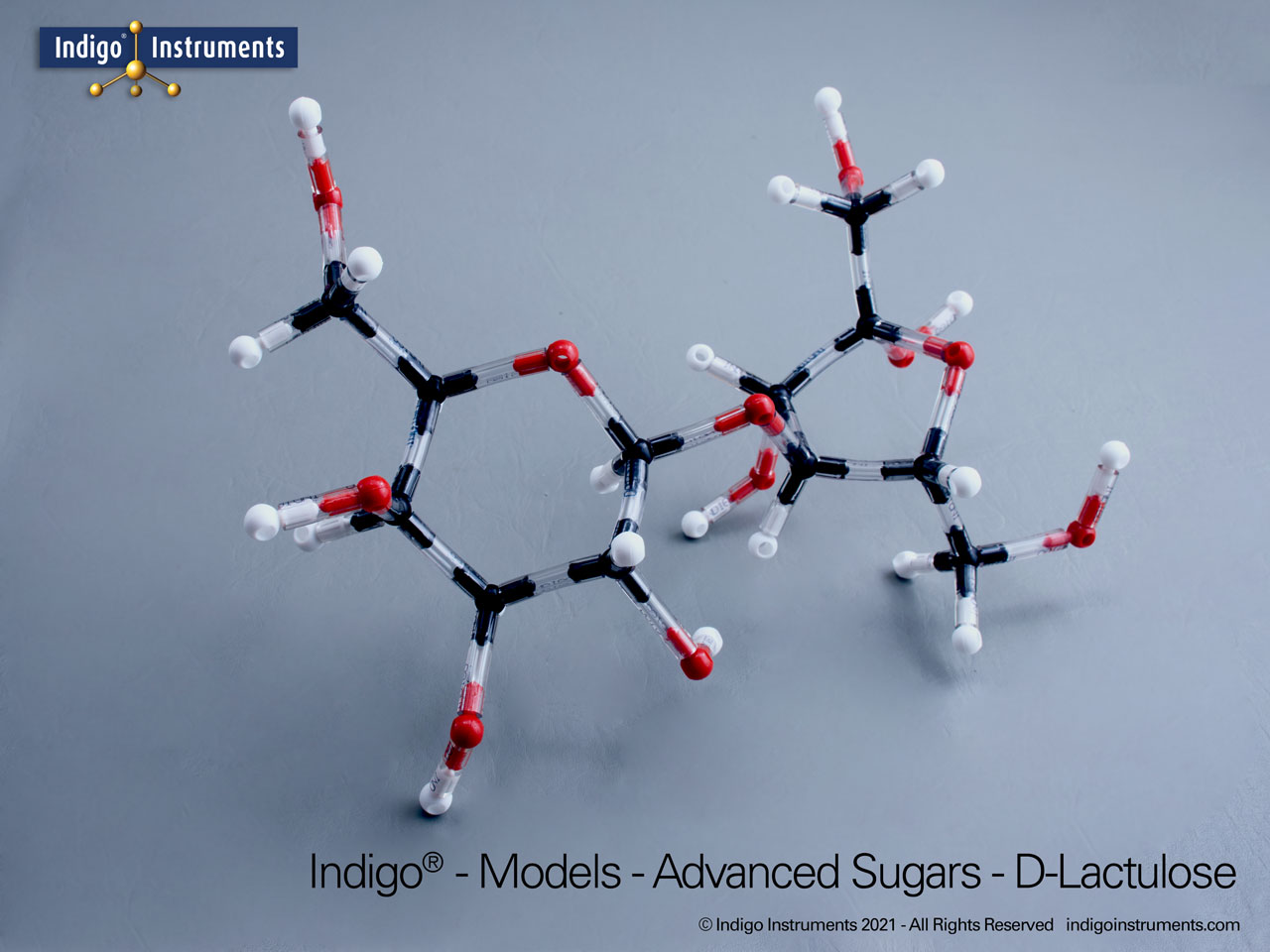
Galactose (beta-d-galactose) is the ring or pyranose form which combines with glucose to from the disaccharide lactose, or milk sugar. If you compare this structure to beta-d-glucose, the only difference is the position of the "OH" group at the carbon 4 position.
Lactose intolerance is sometimes confused with galactosemia, a genetic disorder caused by insufficient amounts of an enzyme known as galactose-1-phosphate uridyltransferase. This results in the accumulation of intermediates such as galactose-1-phosphate that can cause liver damage & cataracts.
Use our 3D Molecular Model Builder set to "Orbit-flexible" style to compare galactose in its linear or 6 member ring forms. Enter galactose for the linear molecule & alpha-d-galactopyranose or beta-d-galactopyranose to view 6 member rings.
Beta-D-galactose, when cleaved from lactose is broken down by the enzyme beta-galactosidase, which is crucial for the digestion of lactose (milk sugar), especially in mammals. It is the inability to digest galactose that is at the root of lactose intolerance where individuals lack sufficient beta-galactosidase activity.
Galactose is converted in the liver via the Leloir pathway to glucose-1-phosphate & the glucose-6-phosphate. It then participates in glycolysis or gluconeogenesis for energy production or glucose synthesis respectively. Galactose is essential for synthesizing glycoproteins and glycolipids needed in cell membrane structure and signalling. It is also used to produce proteoglycans needed in connective tissues & cartilage.
Indigo Instruments has held inventory of genuine Cochranes of Oxford (Orbit) parts for 30+ years (See Skeletal (Orbit/Minit)) that are compatible with every molecular model we have sold since day 1. This level of quality may appear expensive but no parts support from other vendors costs even more.
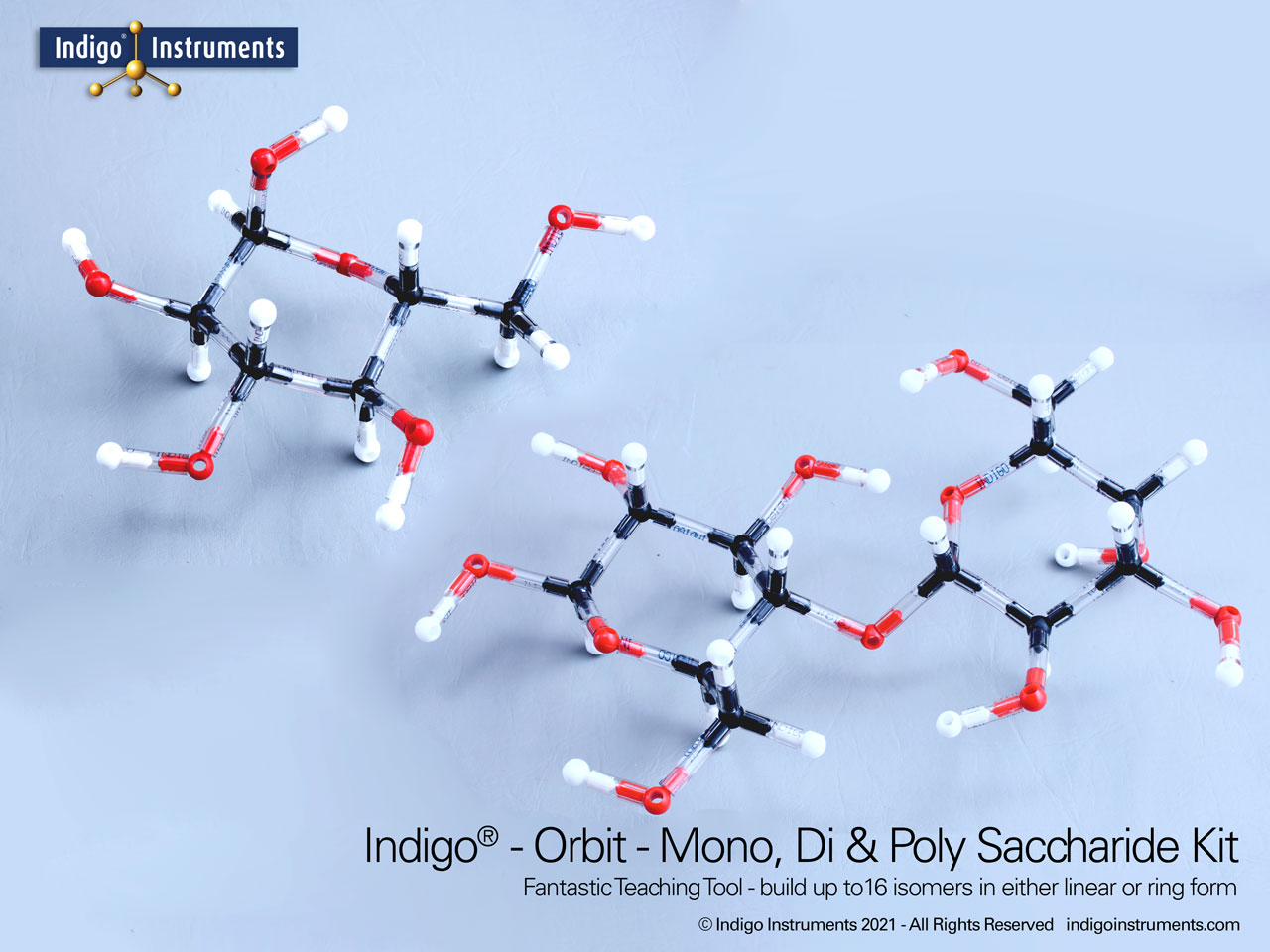
You can also build galactose with our advanced student organic chemistry model set or the class organic chemistry model set.
You can build any 6 carbon sugar ring with our AtoMag magnetic molecular model. Quickly change the position of any oxygen atom to show different structural isomers.
| P/N | Description | QTY |
|---|---|---|
| 68186-20 | Wobbly bond, 20mm, each | 225 |
| 68186-30 | Wobbly bond, 30mm, each | 250 |
| 68216C | Atom, Orbit, H "a", white, 1 prong | 200 |
| 68218C | Atom, Orbit, O "a", red, 1 prong | 3 |
| 68230C | Atom, Orbit, O "d", 110 degree, red | 100 |
| 68241C | Atom, Orbit, C "j", planar: 120-120-120, black | 3 |
| 68242C | Atom, Orbit, N "j", planar: 120-120-120, blue | 3 |
| 68244C | Atom, Orbit, C "k", tetrahedral, black | 100 |
| 68267C | Atom, Orbit "x", double/triple bond peg/insert | 6 |
| 68366 | Orbit bonds, opaque, 20mm, 15/bundle | 1 |