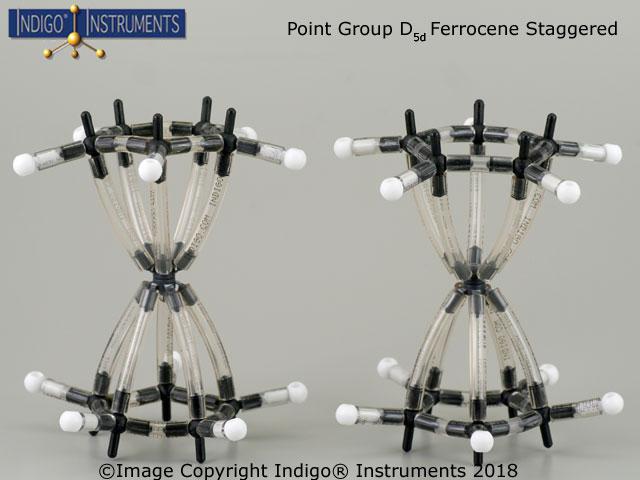
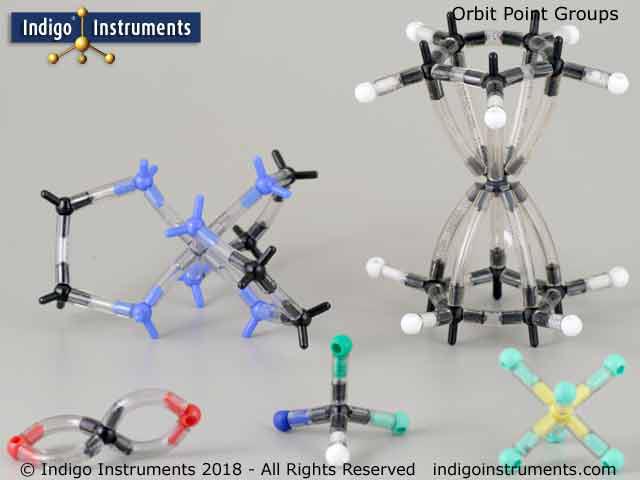
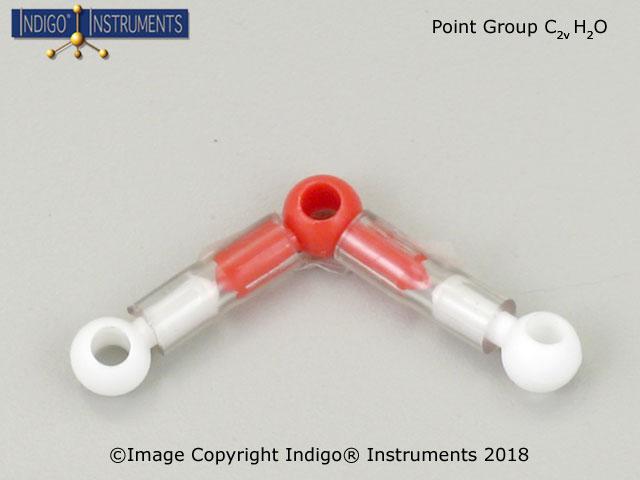
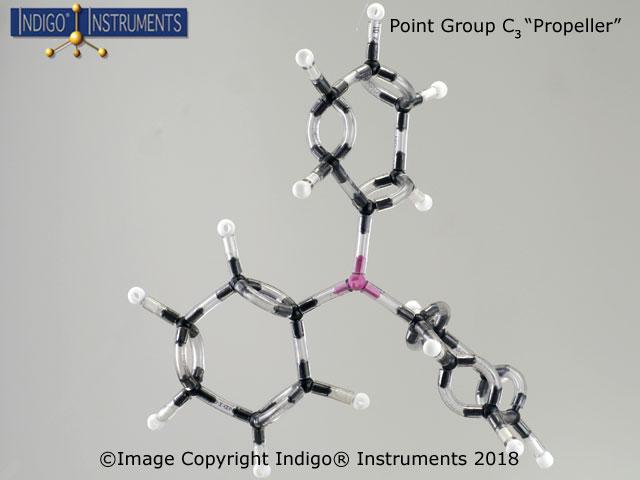
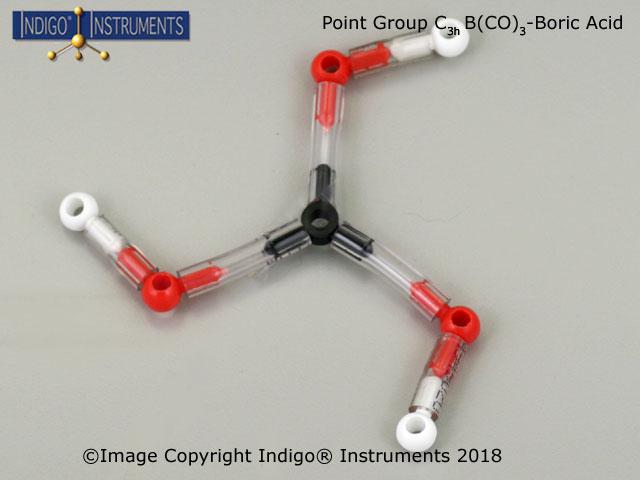
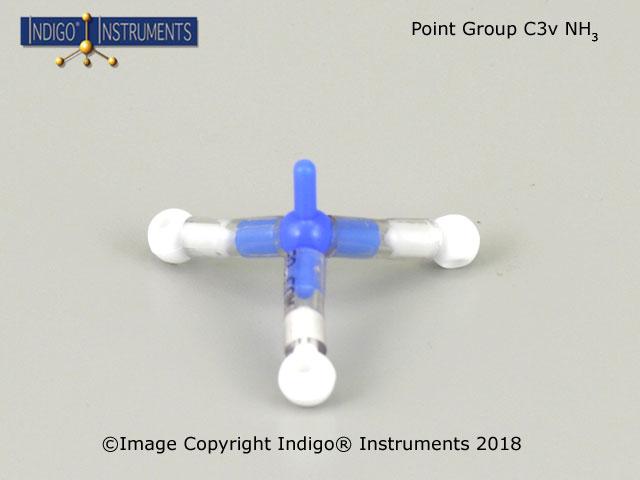
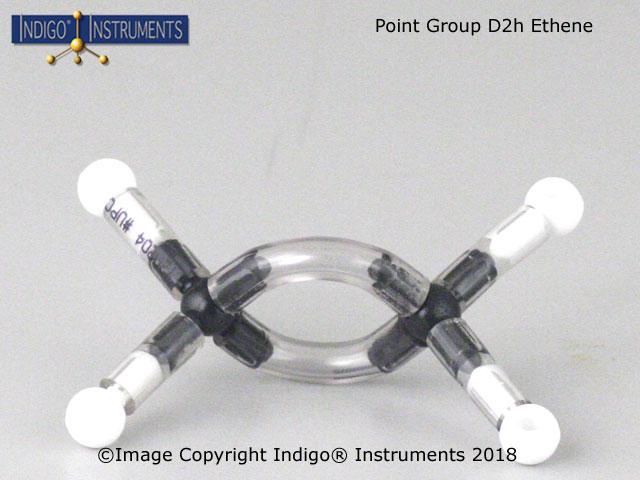
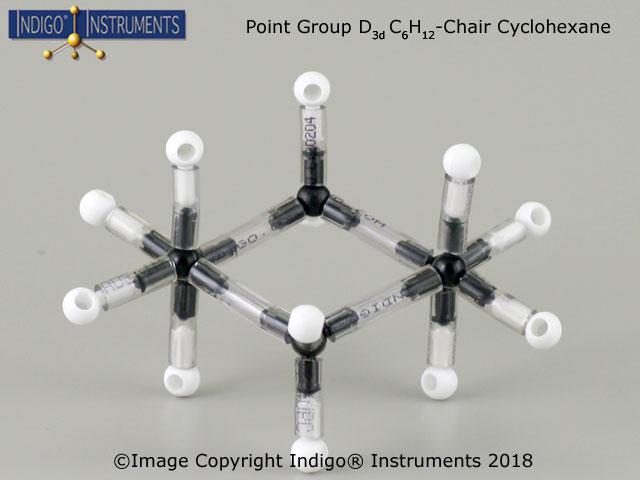
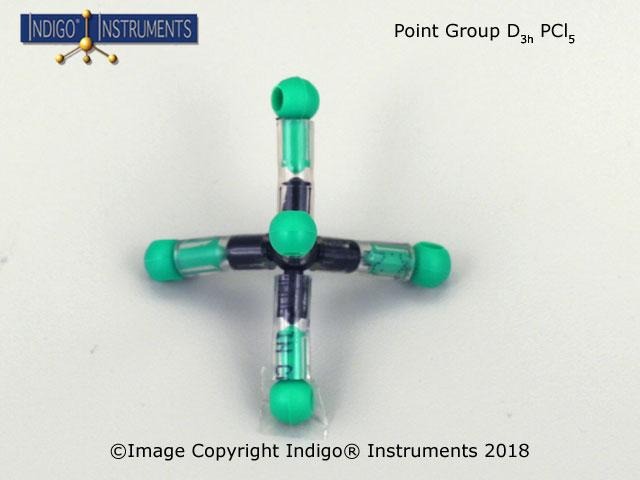
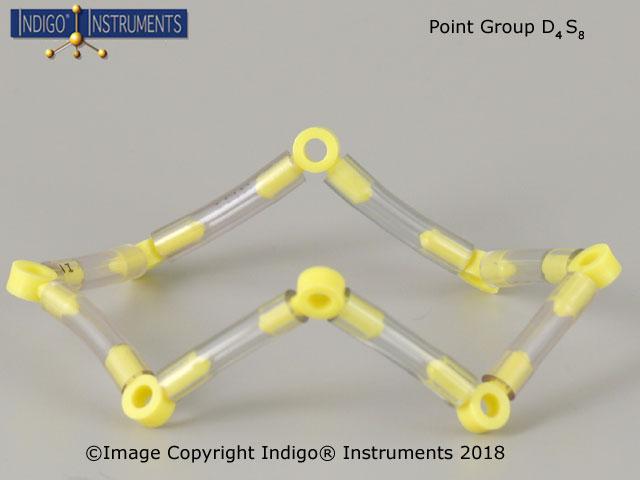
Build the staggered conformation of ferrocene with the Indigo® 68821W point group molecular model kit to demonstrate D5d inversion symmetry and σd mirror plane reflections. This model kit is ideal for symmetry, organometallic chemistry, and inorganic chemistry courses.
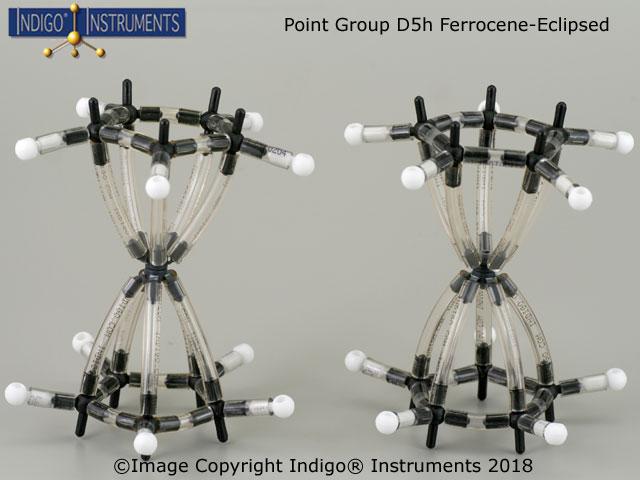
The Indigo® 68821W model kit builds the staggered conformation of ferrocene, Fe(C5H5)2, as an example of the D5d point group. The model identifies all symmetry elements. This includes the identity operation E, the principal C5 axis, and the centers of both cyclopentadienyl rings. It also shows four additional C5 rotations, five perpendicular C2 axes, five dihedral mirror planes σd bisecting opposite C-C bonds on both rings, the improper rotation axis S10 and a center of inversion i. Other D5d molecules include staggered ruthenocene and staggered osmocene, Os(C5H5)2.
Indigo Instruments has maintained a substantial inventory of genuine Cochranes of Oxford (Orbit) parts for 30+ years that are compatible with every molecular model kit we have sold since day 1. This level of quality may appear expensive but no parts support from other vendors costs even more.
The D5d cannot be built with any of the following: Orbit 68845NV organic chemistry model kit, the advanced Orbit 68827W Chemistry Structures Molecular Model Set & the 68847W Class Organic-Inorganic Molecular Model set.
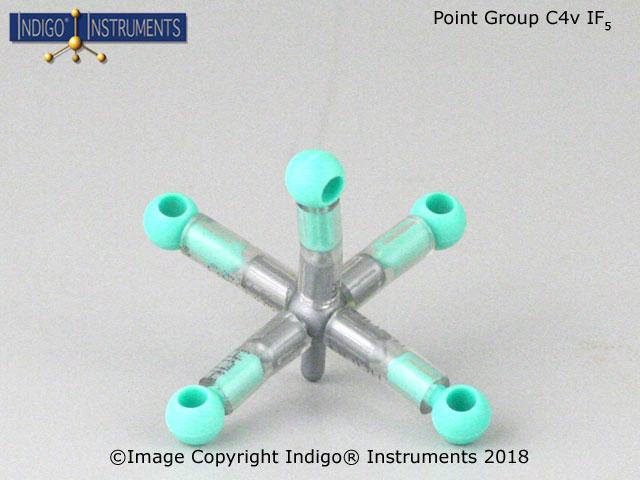
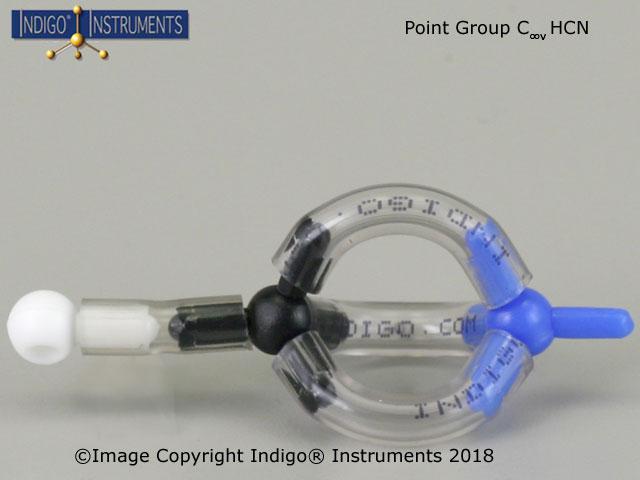
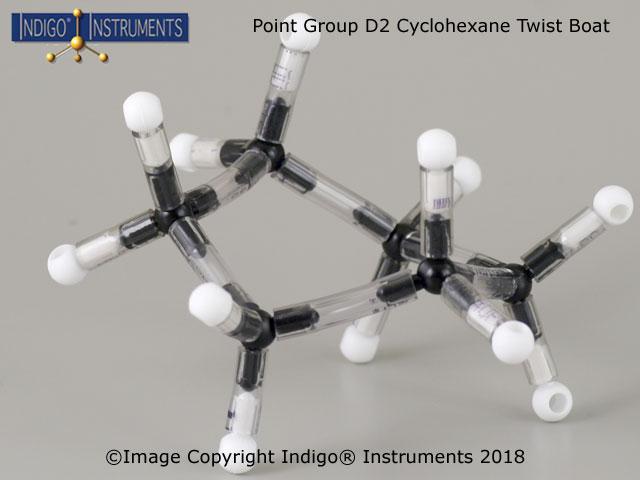
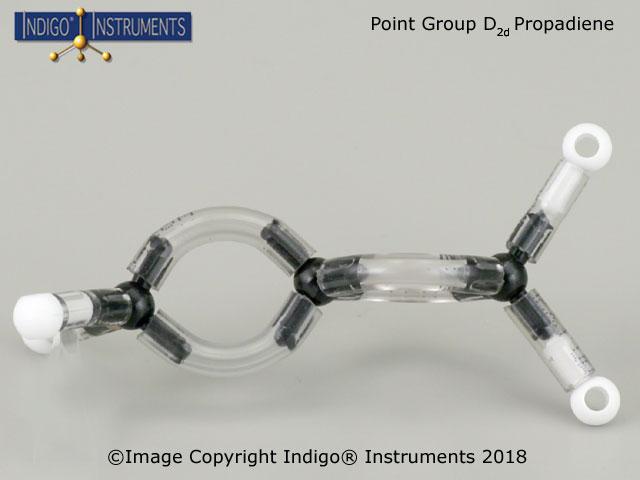
Note that the image show ferrocene in the staggered configuration; the point group set only includes enough parts to build one ferrocene model.
Here is a technical paper on "All Metal Sandwiches"
| P/N | Description | QTY |
|---|---|---|
| 68186-20 | Wobbly bond, 20mm, each | 104 |
| 68186-25 | Wobbly bond, 25mm, each | 10 |
| 68186-30 | Wobbly bond, 30mm, each | 52 |
| 68186-35 | Wobbly bond, 35mm, each | 39 |
| 68186-50 | Wobbly bond, 50mm, each | 10 |
| 68216C | Atom, Orbit, H "a", white, 1 prong | 95 |
| 68217C | Atom, Orbit, N "a", blue, 1 prong | 2 |
| 68219C | Atom, Orbit, F "a", light green, 1 prong | 15 |
| 68221C | Atom, Orbit, Cl "a", green, 1 prong | 16 |
| 68228C | Atom, Orbit, S "c", 100 degree, yellow | 8 |
| 68230C | Atom, Orbit, O "d", 110 degree, red | 8 |
| 68241C | Atom, Orbit, C "j", planar: 120-120-120, black | 1 |
| 68244C | Atom, Orbit, C "k", tetrahedral, black | 50 |
| 68245C | Atom, Orbit, N "k", tetrahedral, blue | 8 |
| 68247C | Atom, Orbit, P "k", tetrahedral, purple | 1 |
| 68255C | Atom, Orbit, S "l", octahedral, yellow | 1 |
| 68258C | Atom, Orbit "l", octahedral, grey | 3 |
| 68259C | Atom, Orbit, C "m", trigonal bipyramidal, black | 11 |
| 68505C | 2 |
This model set has the flexibility needed to teach symmetry point groups effectively, as well as modeling metal coordination complexes. Some atoms have holes perpendicular to their main bonds, allowing for modeling H-bonds or electrostatic interactions. Construction-wise, atoms pieces are smaller relative to the bond pieces, emphasizing the relative space taken up by orbitals compared to nuclei. However, this can also make it difficult to change molecular structure quickly. Indigo Instruments customer service was also very helpful in processing my order quickly and completing forms required by my institution for requisition.
Thanks for the feedback. It is an unusual set & the only one we know of that can build ferrocene.