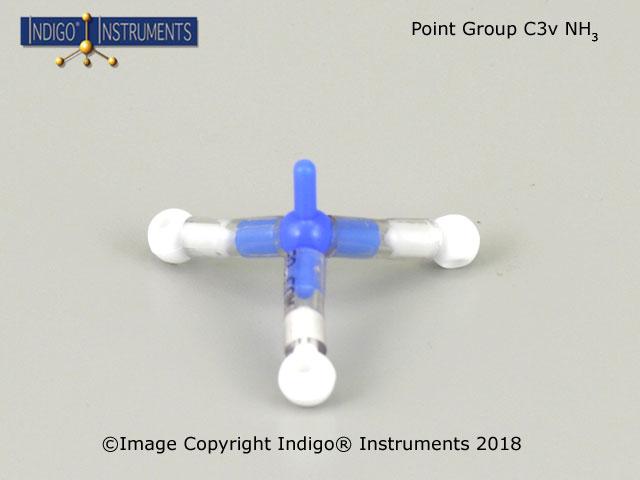
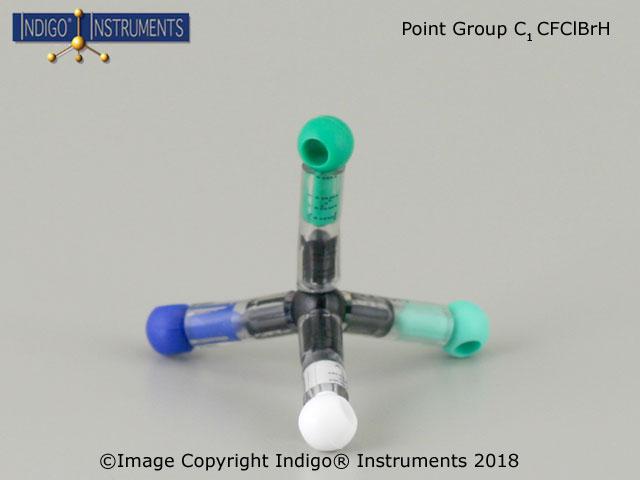
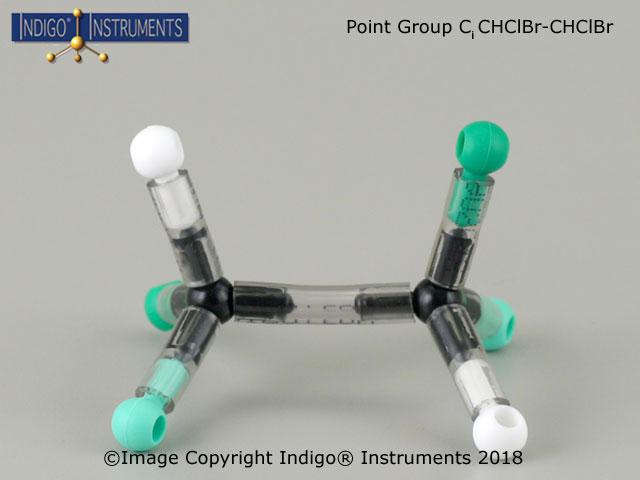
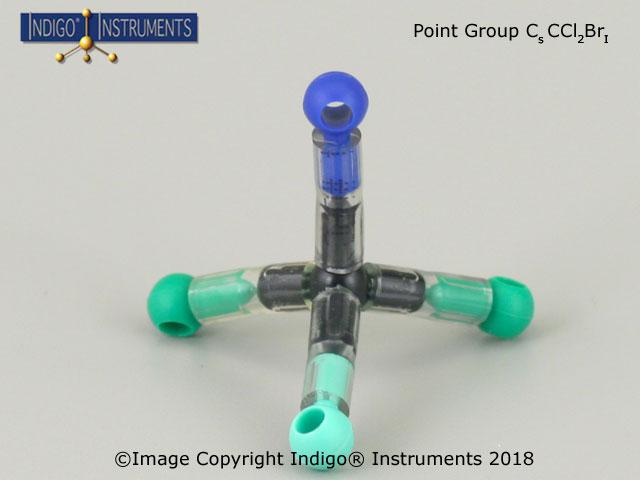
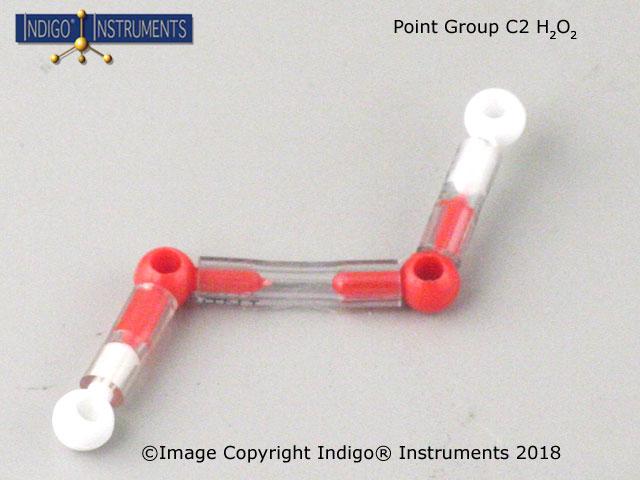
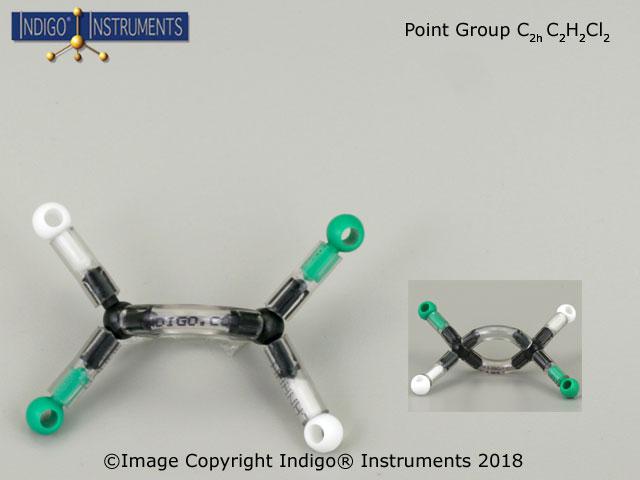
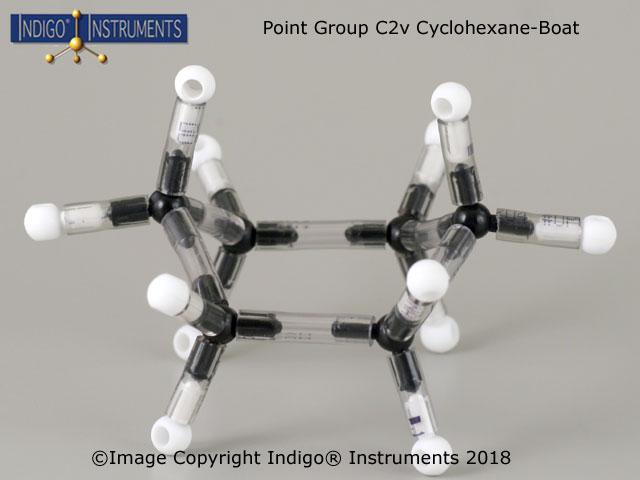
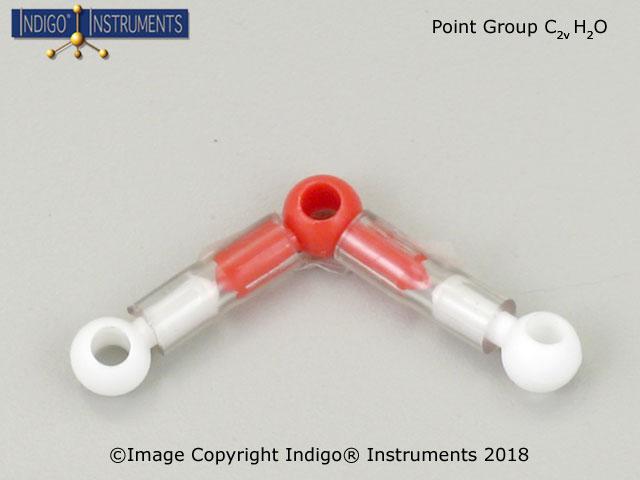
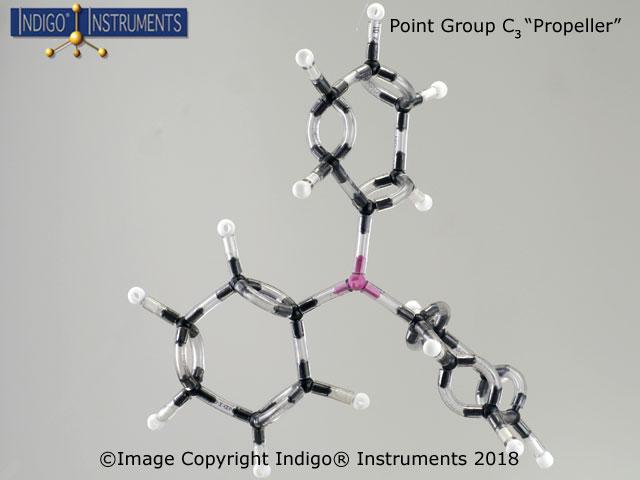
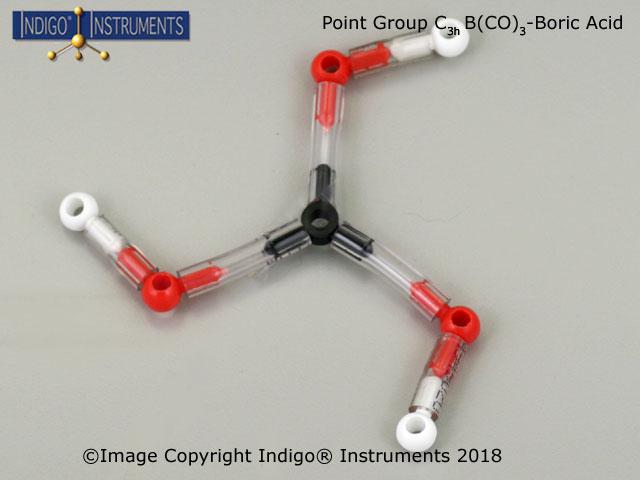
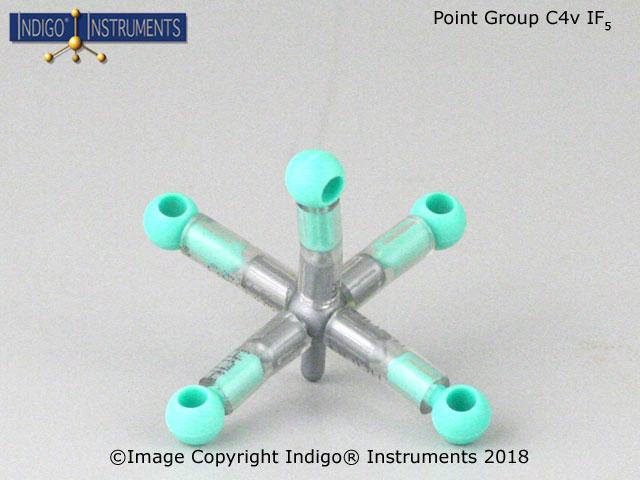
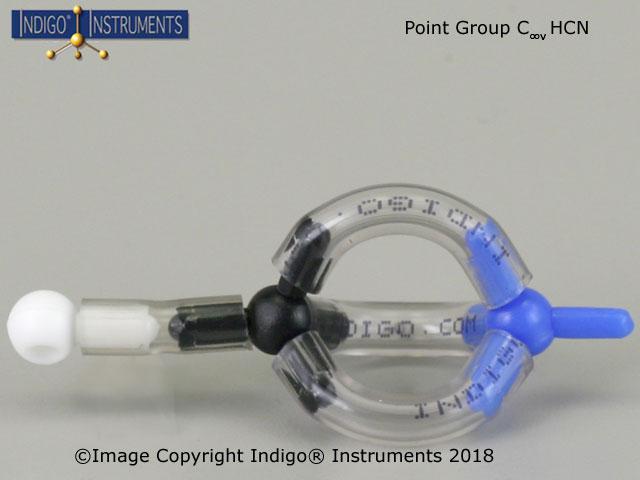
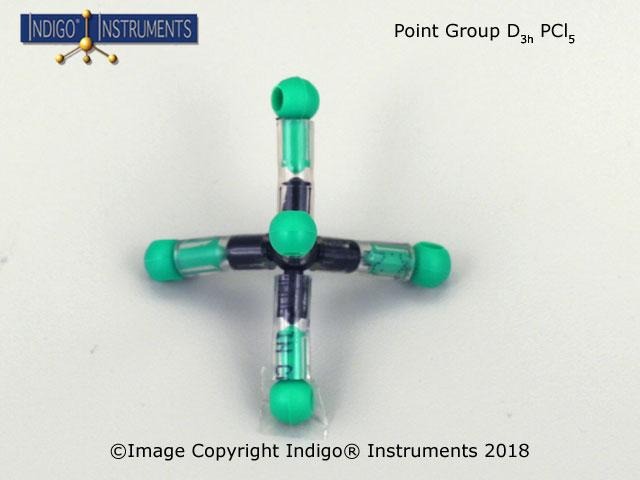
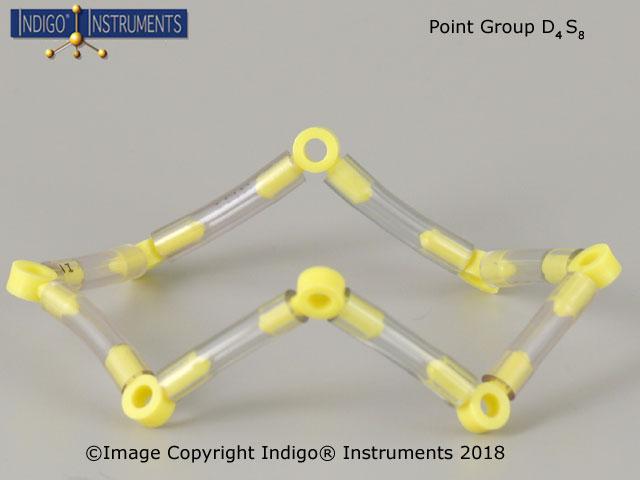
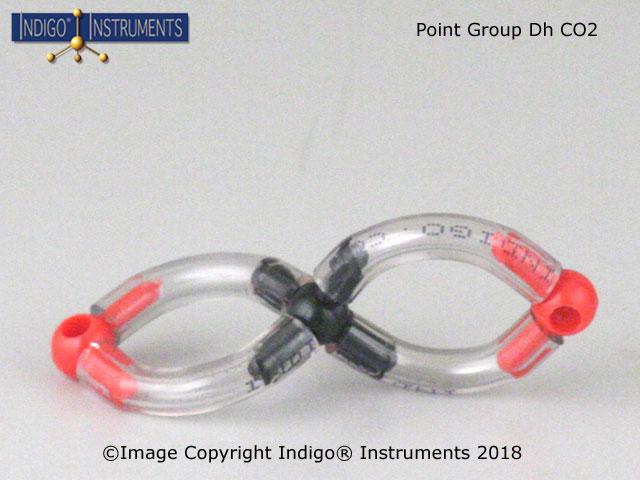
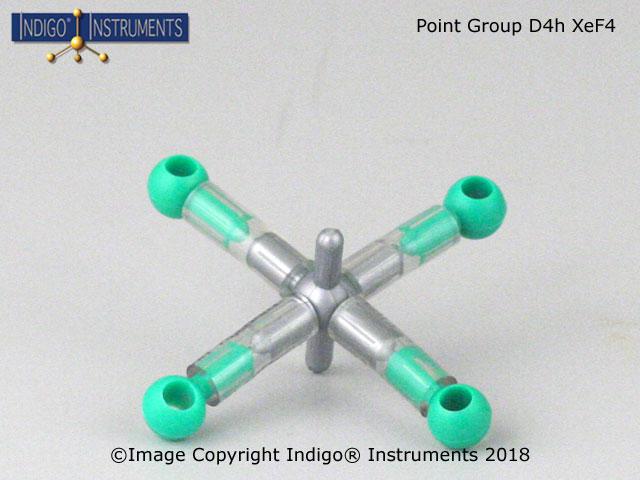
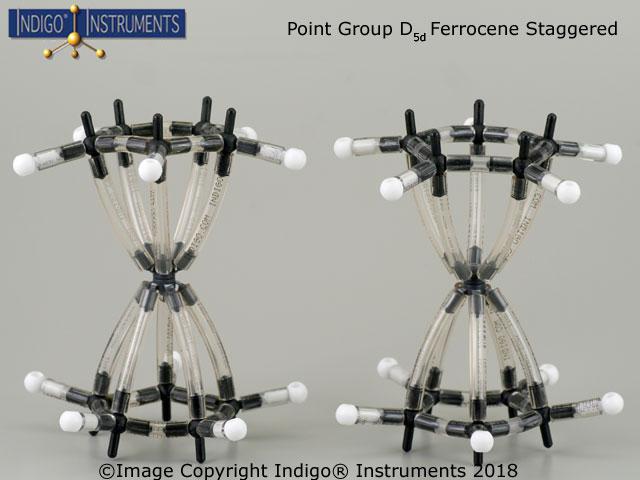
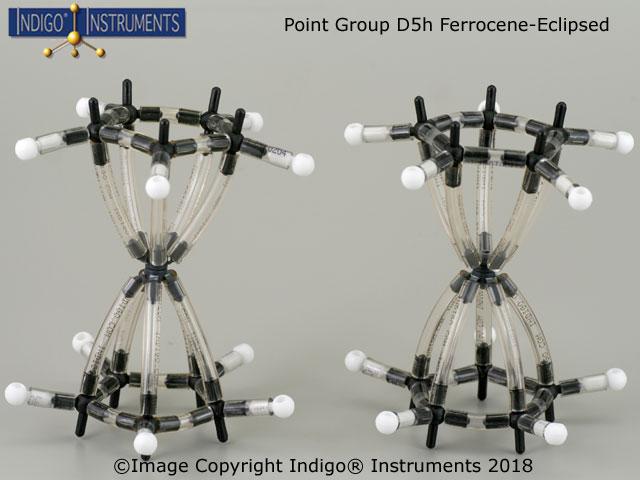
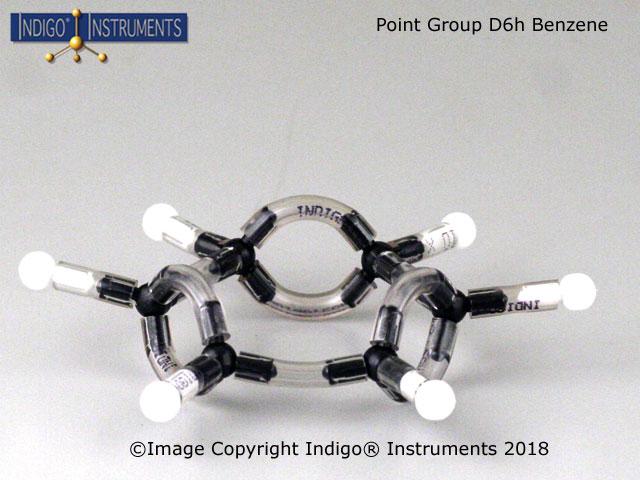
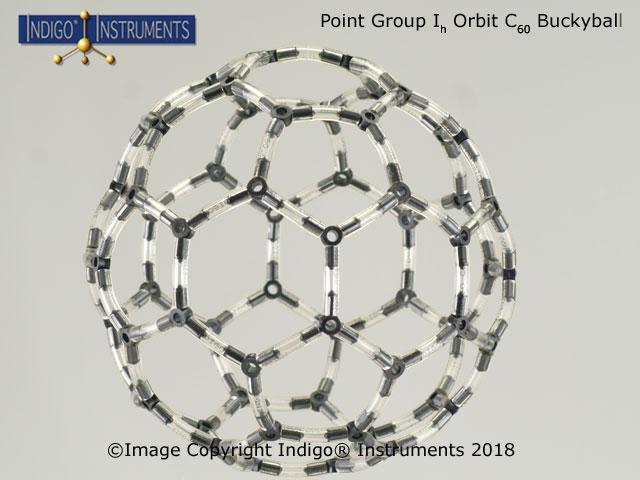
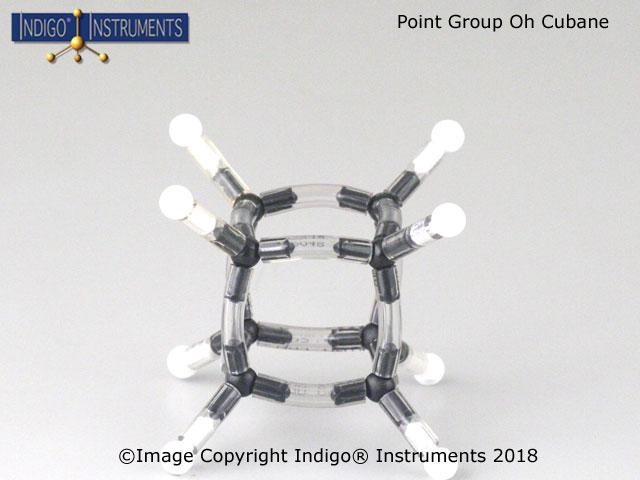
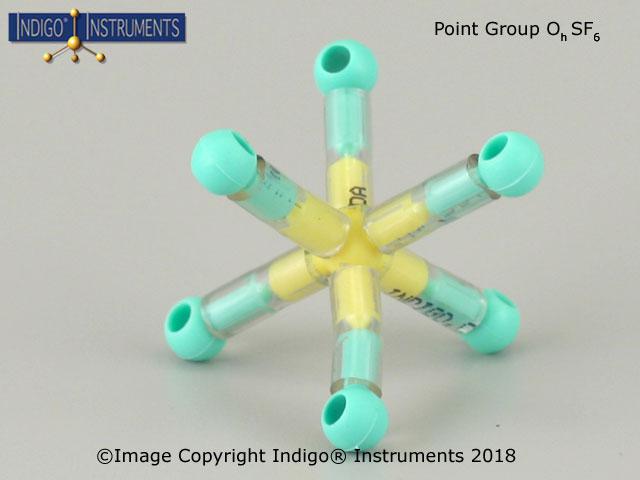
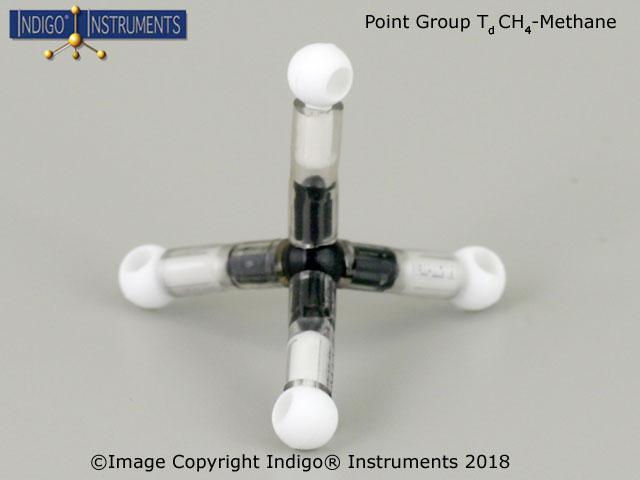
Build ammonia, NH3, with the Indigo® 68821W point group molecular model kit to demonstrate C3v point group symmetry, trigonal pyramidal geometry, and σv mirror plane reflections. Ideal for symmetry, group theory, and inorganic chemistry courses.
The Indigo® 68821W model kit builds ammonia, NH3, as an example of the C3v point group. The model identifies all six symmetry elements. The identity operation E; the principal C3 rotation axis through the nitrogen atom and center of the hydrogen triangle; two C3 rotations; and three vertical mirror planes σv each through the nitrogen atom and one hydrogen atom. Other C3v molecules include phosphine (PH3), arsine (AsH3), chlorosilane (SiH3Cl), methyl bromide (CH3Br), and phosphorus oxychloride (POCl3).
Indigo Instruments has held inventory of genuine Cochranes of Oxford (Orbit) parts for 30+ years. We can augment or replenish any molecular model set/kit we have sold since day 1!
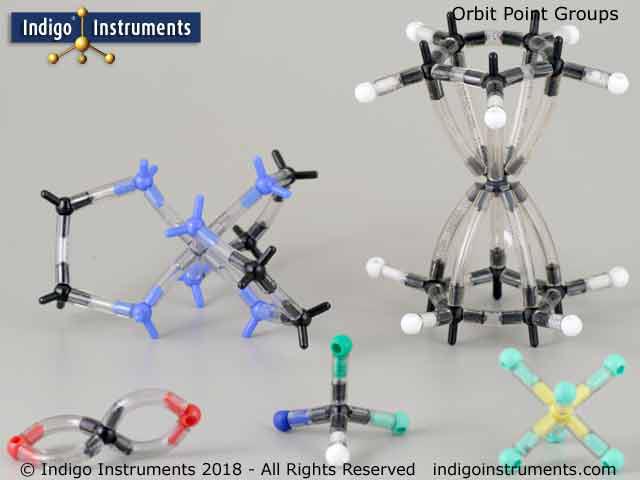
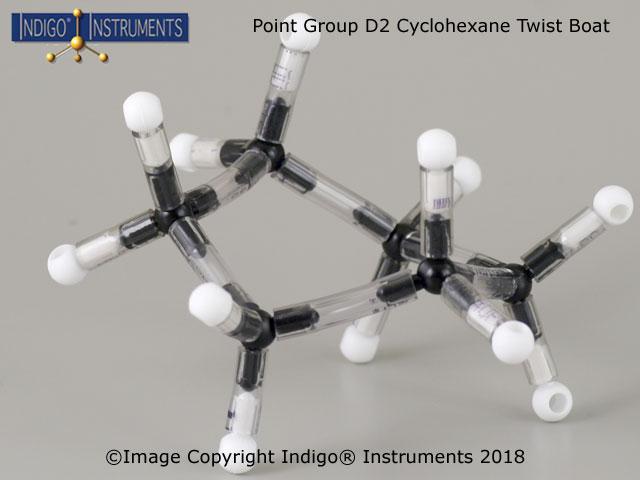
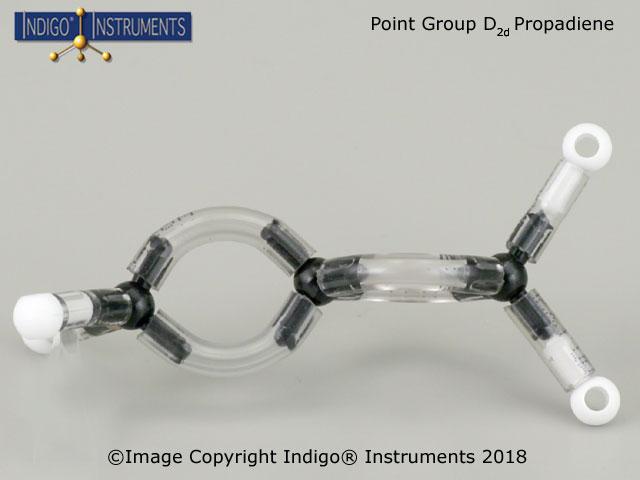
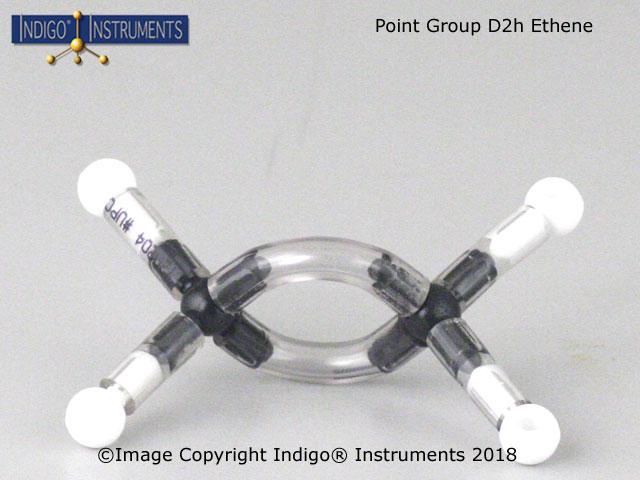
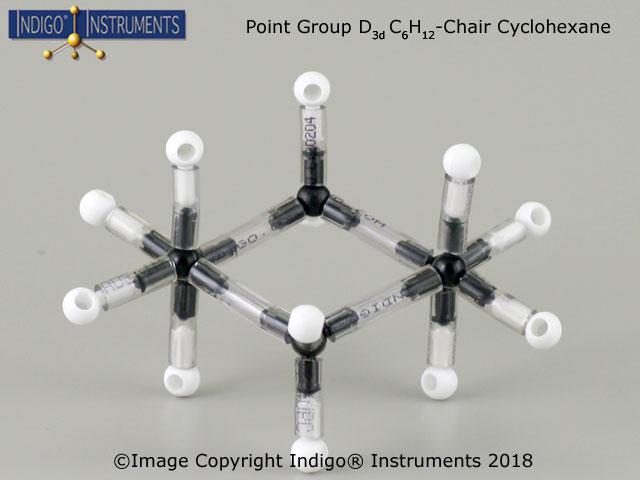
The 68845NV Foundation (basic) chemistry model set and the 68827W chemistry advanced organic chemistry molecular model set can build some of the point groups shown above as can the 68847W class organic-inorganic molecular model set. These sets can be customized for other courses in inorganic chemistry & biochemistry. Contact us with your details. Minimum order quantities may apply.
Note: the parts listed below apply to the entire kit not the specific model referred to on this page.
| P/N | Description | QTY |
|---|---|---|
| 68186-20 | Wobbly bond, 20mm, each | 104 |
| 68186-25 | Wobbly bond, 25mm, each | 10 |
| 68186-30 | Wobbly bond, 30mm, each | 52 |
| 68186-35 | Wobbly bond, 35mm, each | 39 |
| 68186-50 | Wobbly bond, 50mm, each | 10 |
| 68216C | Atom, Orbit, H "a", white, 1 prong | 95 |
| 68217C | Atom, Orbit, N "a", blue, 1 prong | 2 |
| 68219C | Atom, Orbit, F "a", light green, 1 prong | 15 |
| 68221C | Atom, Orbit, Cl "a", green, 1 prong | 16 |
| 68228C | Atom, Orbit, S "c", 100 degree, yellow | 8 |
| 68230C | Atom, Orbit, O "d", 110 degree, red | 8 |
| 68241C | Atom, Orbit, C "j", planar: 120-120-120, black | 1 |
| 68244C | Atom, Orbit, C "k", tetrahedral, black | 50 |
| 68245C | Atom, Orbit, N "k", tetrahedral, blue | 8 |
| 68247C | Atom, Orbit, P "k", tetrahedral, purple | 1 |
| 68255C | Atom, Orbit, S "l", octahedral, yellow | 1 |
| 68258C | Atom, Orbit "l", octahedral, grey | 3 |
| 68259C | Atom, Orbit, C "m", trigonal bipyramidal, black | 11 |
| 68505C | 2 |
Many thanks to Alyssa Doue of Mt. St. Vincent University in Halifax, Nova Scotia who says: "I've built the point groups and they're awesome!" Click on her Google Review for more.
This model set has the flexibility needed to teach symmetry point groups effectively, as well as modeling metal coordination complexes. Some atoms have holes perpendicular to their main bonds, allowing for modeling H-bonds or electrostatic interactions. Construction-wise, atoms pieces are smaller relative to the bond pieces, emphasizing the relative space taken up by orbitals compared to nuclei. However, this can also make it difficult to change molecular structure quickly. Indigo Instruments customer service was also very helpful in processing my order quickly and completing forms required by my institution for requisition.
Thanks for the feedback. It is an unusual set & the only one we know of that can build ferrocene.