NaCl Ionic Lattice Structure Model

SKU: 68791W
$54.95USD Each

Qty:

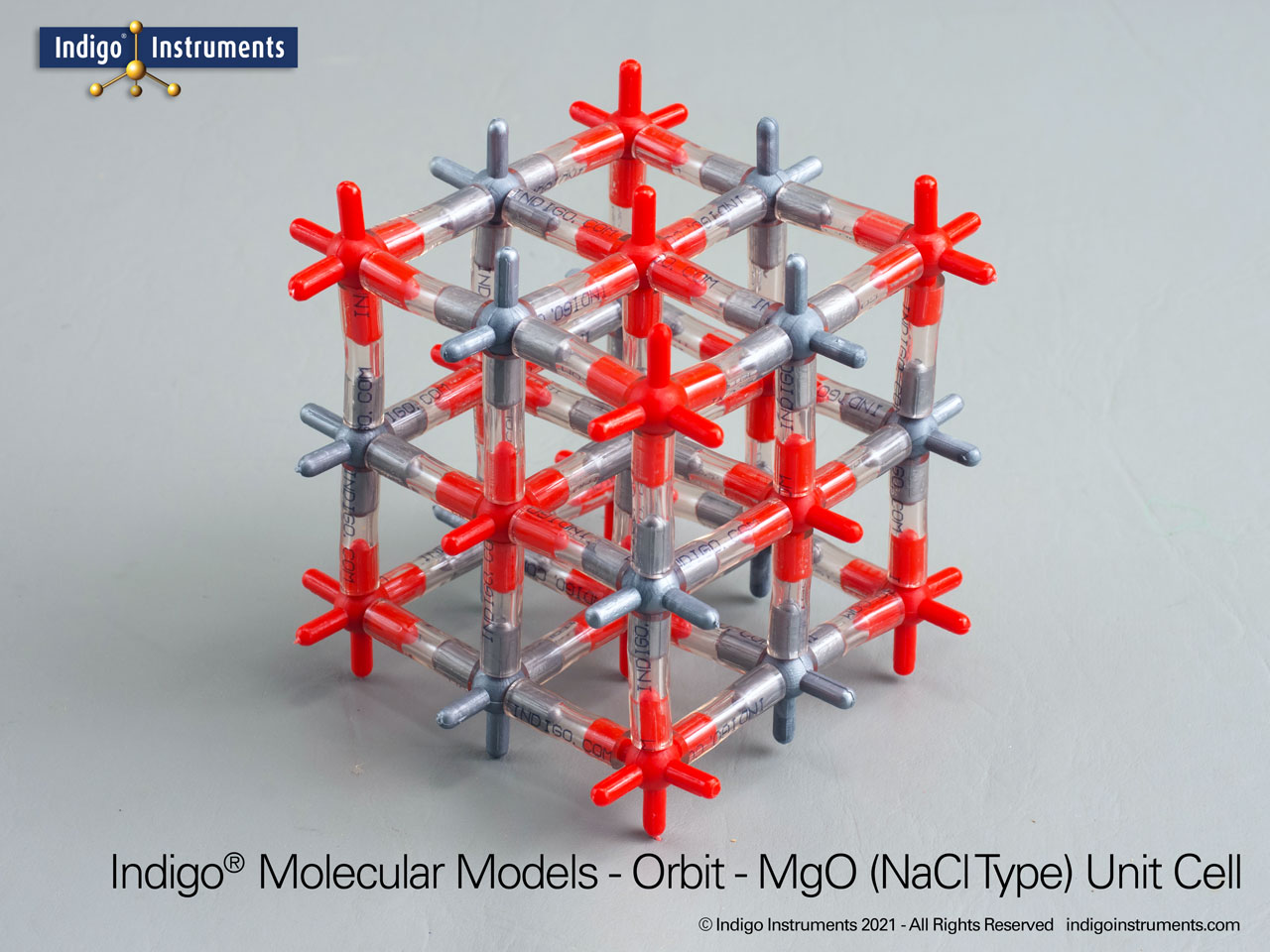
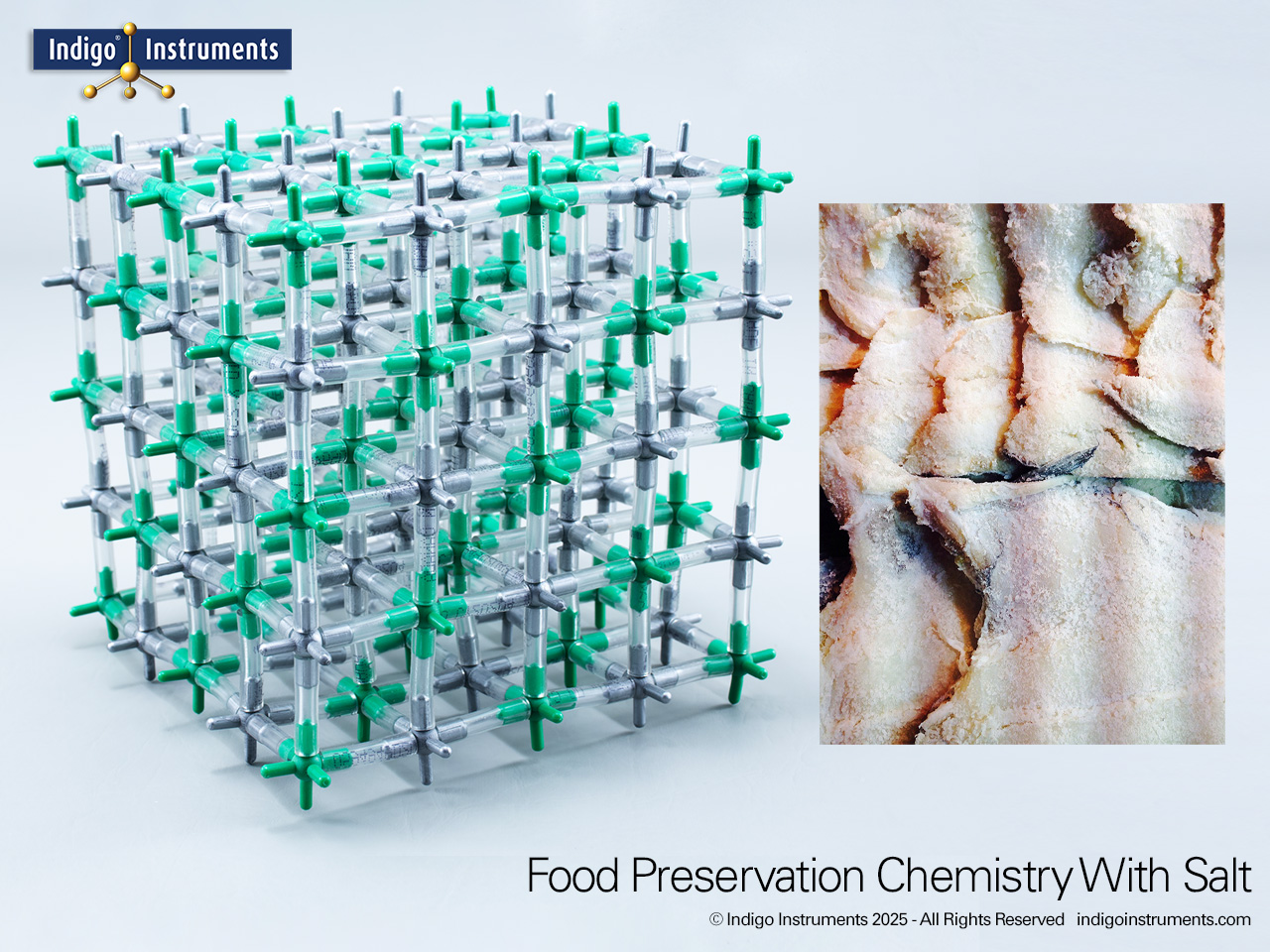
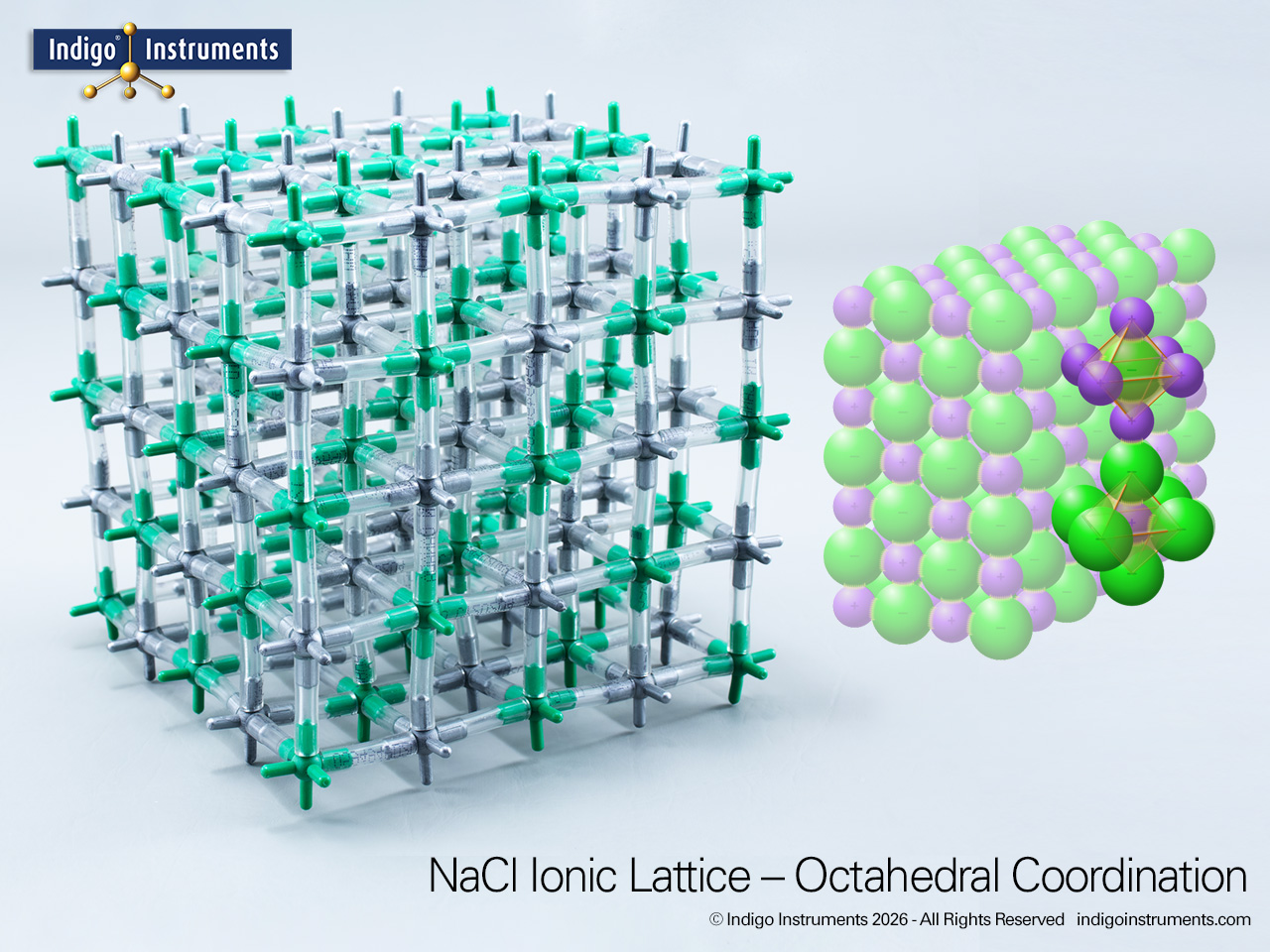
Use the Indigo® NaCl ionic lattice model to visualize cubic crystal structure, coordination number, lattice defects and see how atomic-scale geometry defines macroscopic crystal properties. Ideal for chemistry and materials science education.

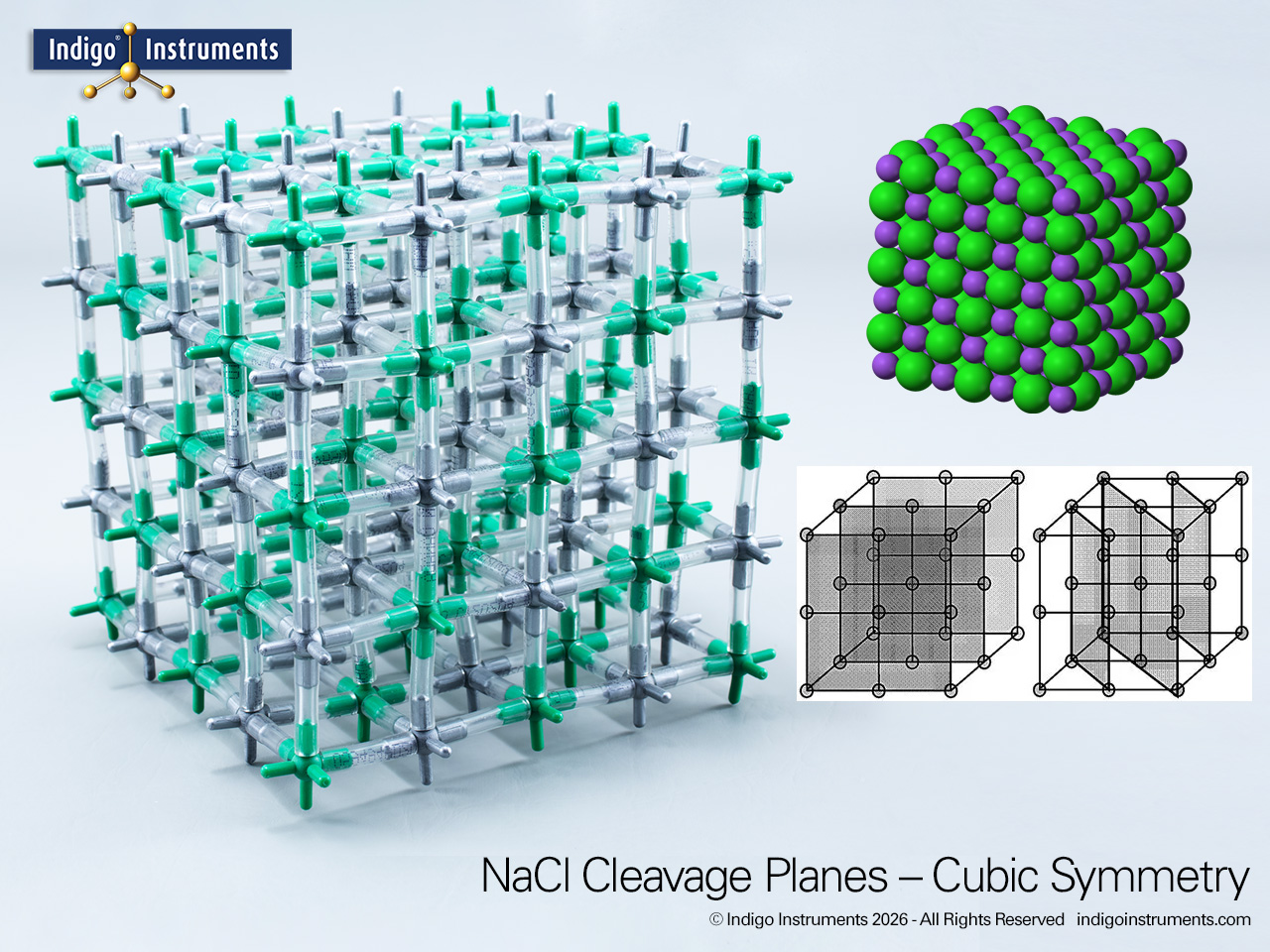
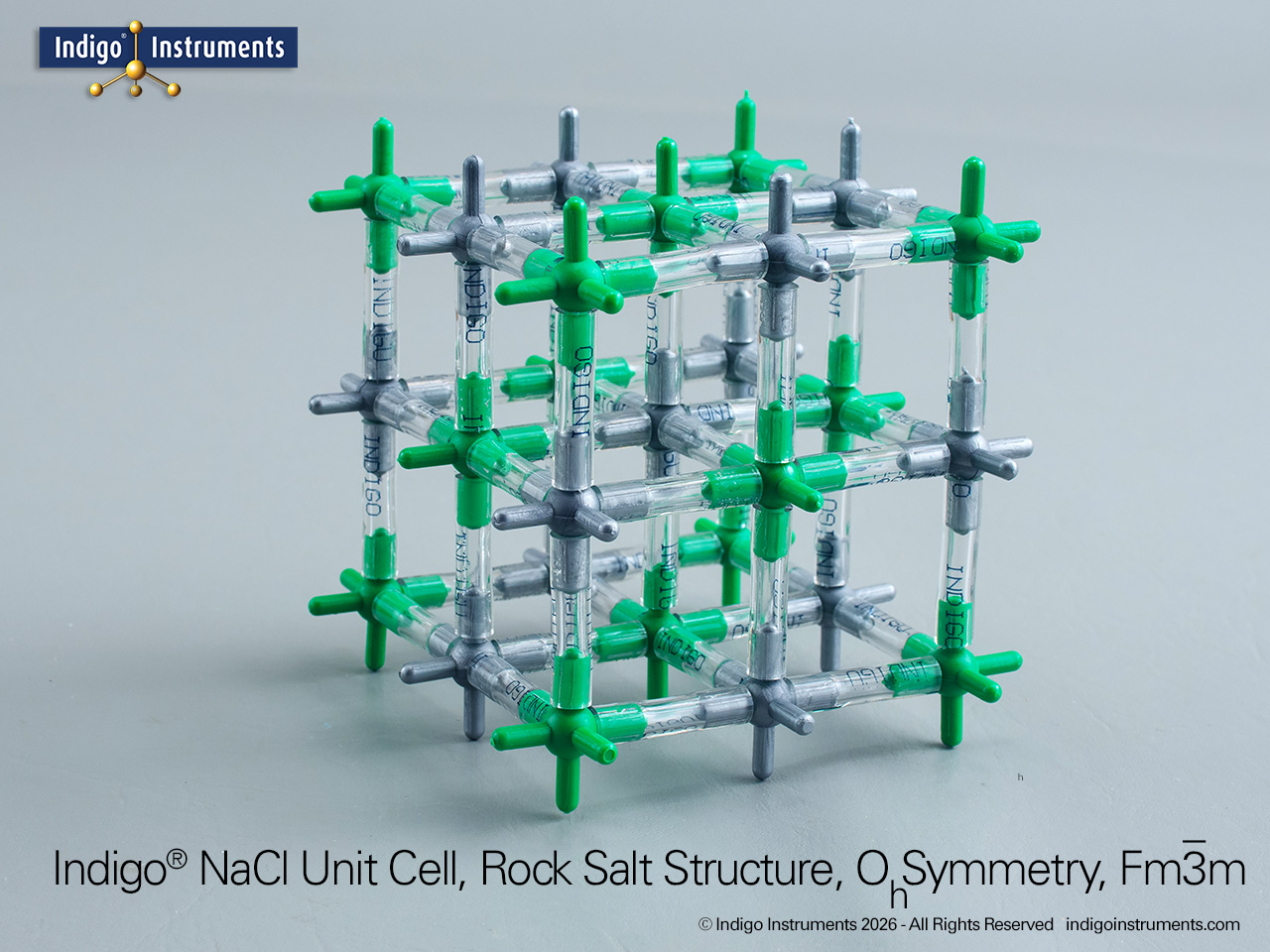
The sodium chloride (NaCl) ionic lattice is an example of a face-centered cubic (FCC) crystal formed by alternating Na+ and Cl- ions. Each ion is surrounded by six of opposite charge producing octahedral coordination found in many simple salts. The resulting cubic symmetry explains the distinctive right-angle cleavage seen in table salt crystals and demonstrates how electrostatic forces and geometric packing govern lattice stability. Building or manipulating this model makes the concept of ionic bonding and coordination geometry tangible for students in chemistry, mineralogy, and materials science.

Indigo Instruments has held inventory of genuine Cochranes of Oxford (Orbit) parts for 30+ years (See Skeletal (Orbit/Minit)) that are compatible with every molecular model we have sold since day 1. This level of quality may appear expensive but no parts support from other vendors costs even more.

Details
Concept Description Activity Learning Link
Ionic Crystal Structure Na+ and Cl ions form a face-centered cubic (FCC) lattice where each ion is surrounded by six of opposite charge, giving a 1:1 stoichiometry and a highly ordered structure. Assemble a cubic unit cell using alternating colors to represent cations and anions; highlight repeating octahedral coordination. Reinforces the relationship between ionic size, charge balance, and lattice geometry.
Coordination Number Each ion in NaCl has a coordination number of 6, corresponding to octahedral geometry. This contrasts with structures like CsCl (coordination 8). Count nearest neighbors for both ion types in a model; compare with other cubic ionic lattices. Links geometric packing to ionic radius ratios and lattice stability.
Lattice Planes & Cleavage The crystal cleaves along (100) planes where electrostatic balance is maintained; visible as cubic fragments in macroscopic NaCl crystals. Use model layers to visualize (100) and (111) planes; simulate displacement to show cleavage behavior. Connects atomic-level arrangement to macroscopic crystal properties.
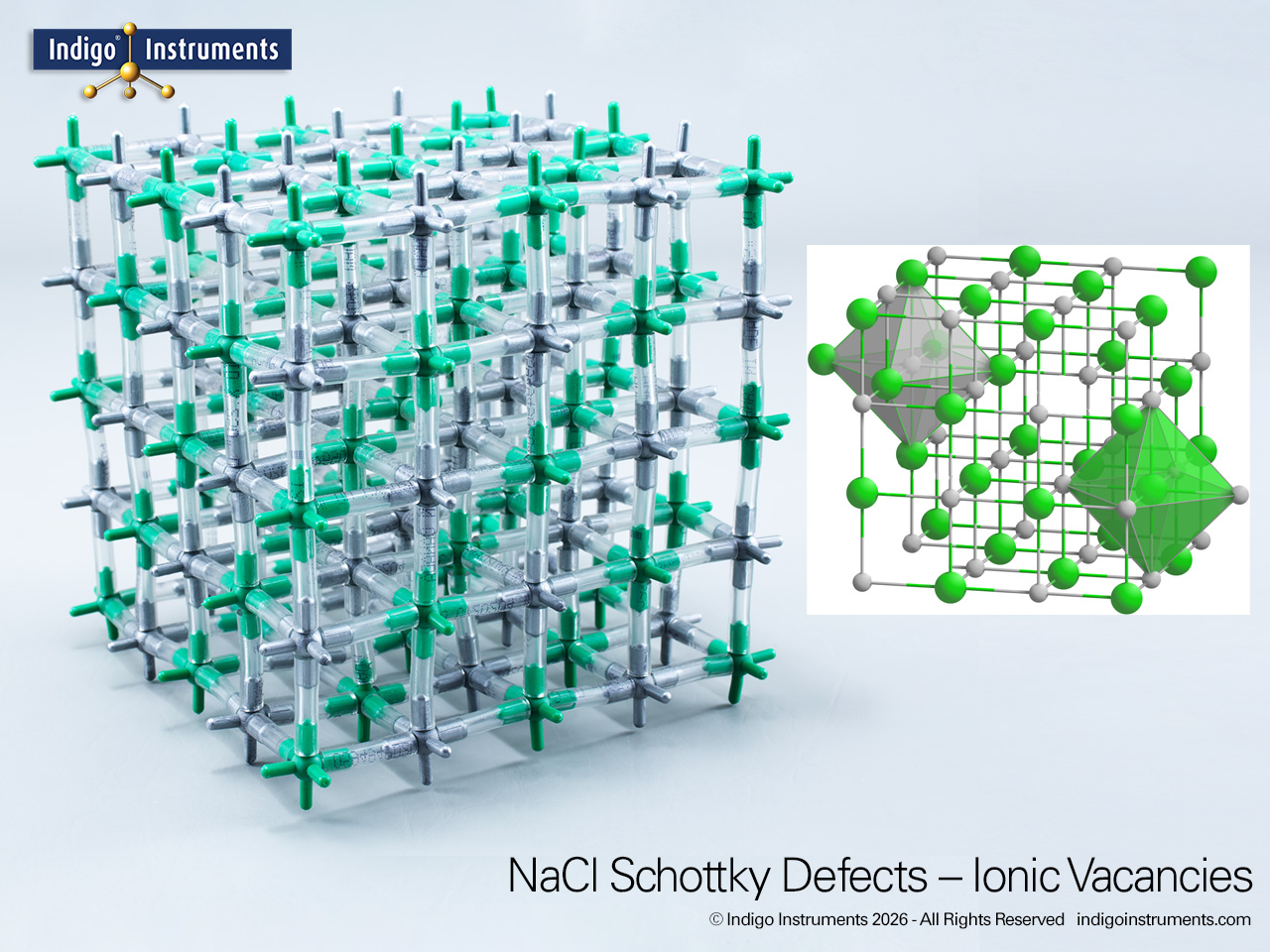
Defect Structures Vacancies (Schottky) and interstitials (Frenkel) disturb perfect periodicity, influencing conductivity and diffusion. Remove or reposition ions to simulate point defects; discuss how these modify local charge balance and density. Illustrates the role of defects in real solids and ionic mobility.
Electrostatic Forces Lattice stability results from the sum of long-range Coulombic attractions and short-range repulsions between ions. Discuss the effect of changing ionic charge or size; calculate lattice energy trends using the Born–Landé equation. Connects to quantitative models of crystal energy and melting point trends across alkali halides.
Related information or images
Parts
Reviews ()
Review This Product Now!