NaCl Crystal Lattice Structure Model

SKU: 68791W
$54.95USD Each

Qty:

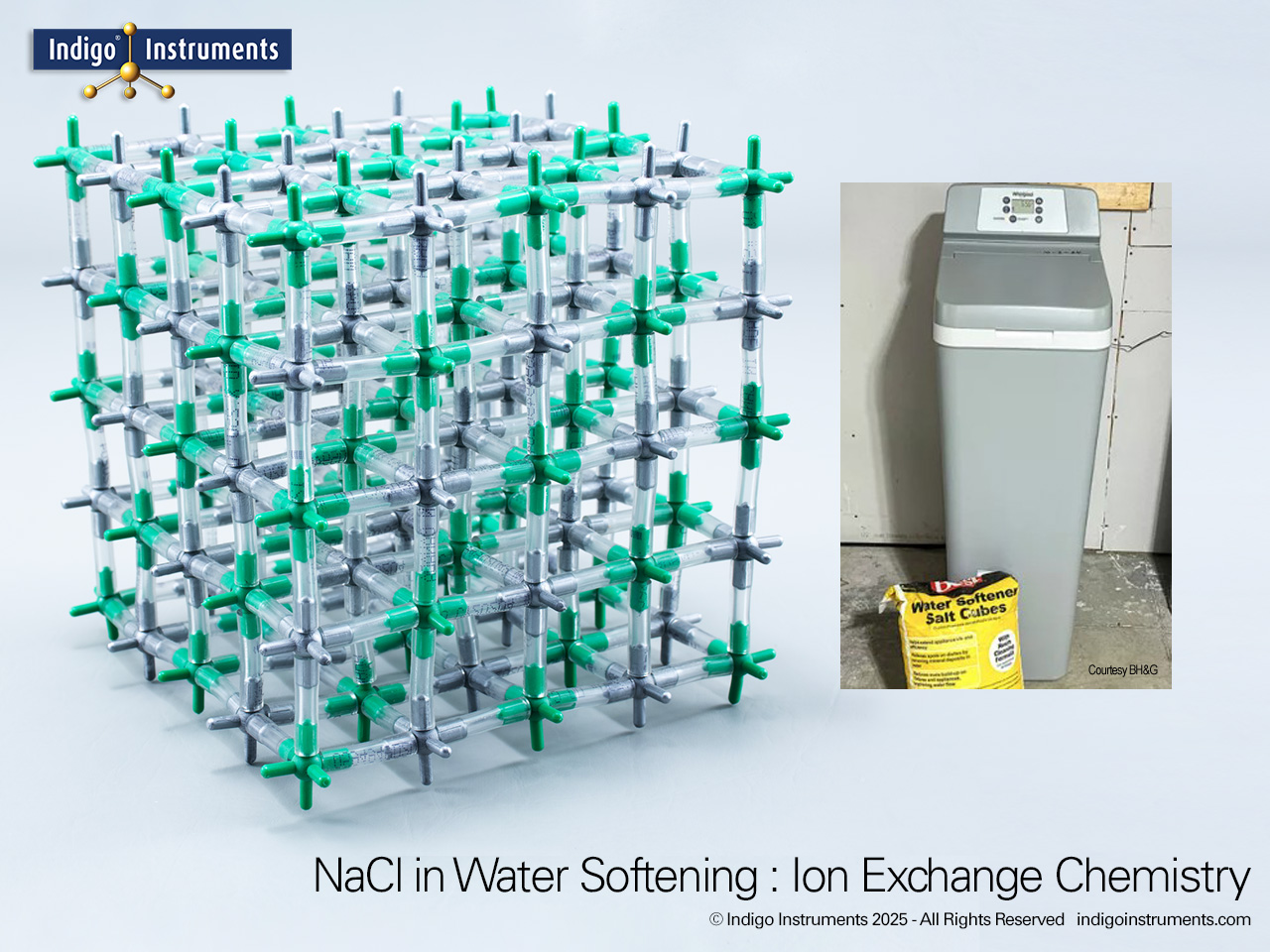
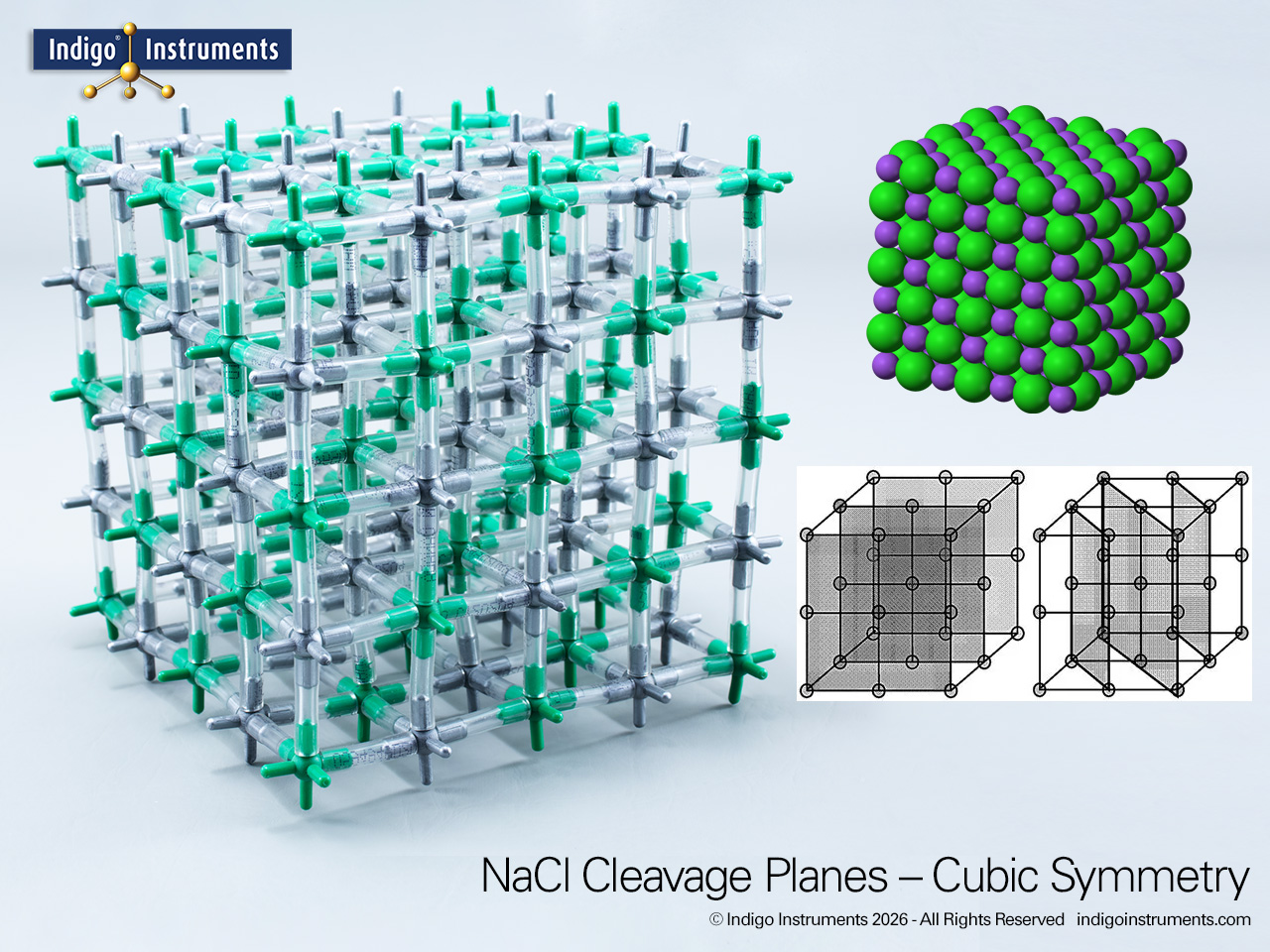
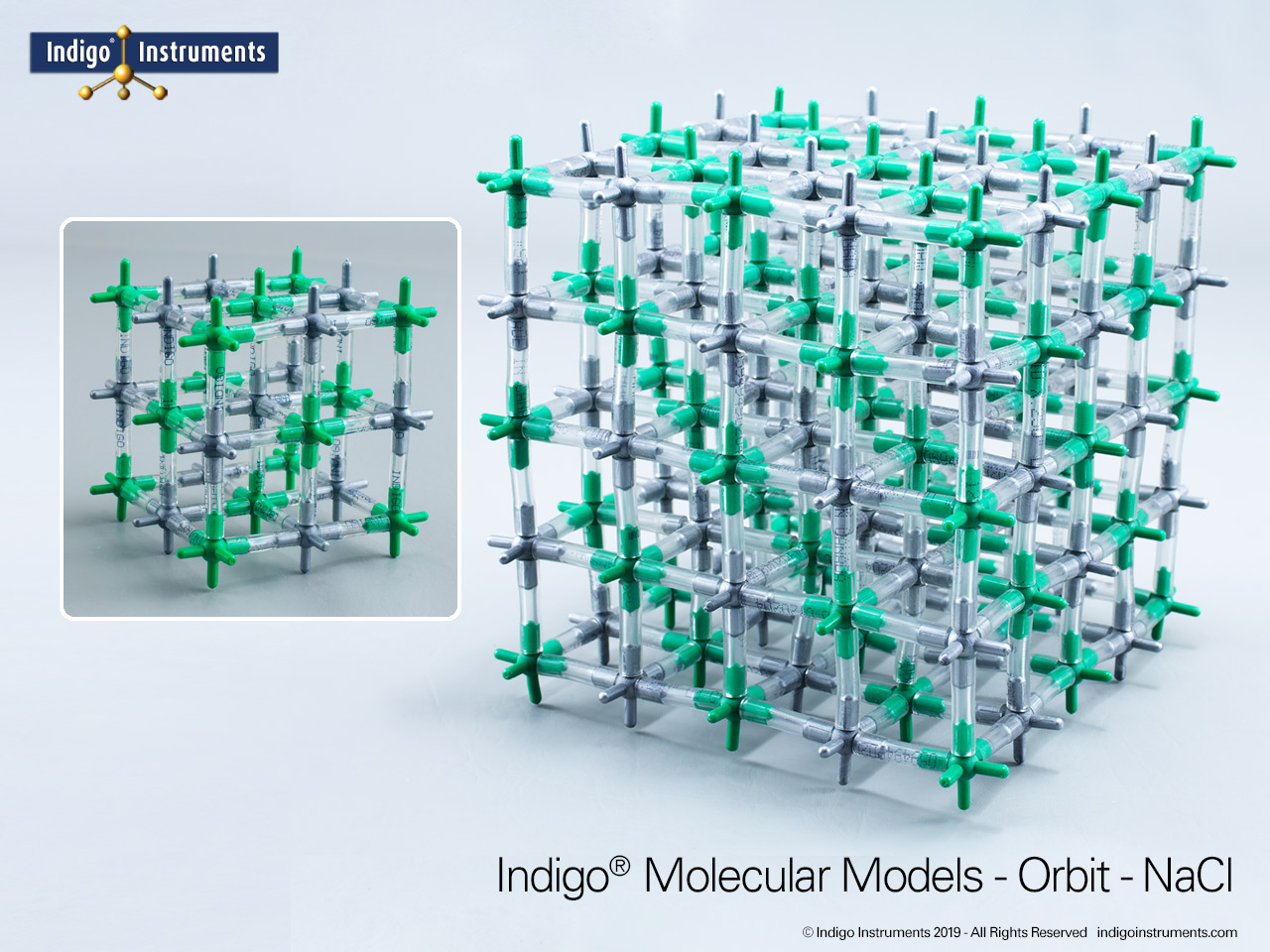
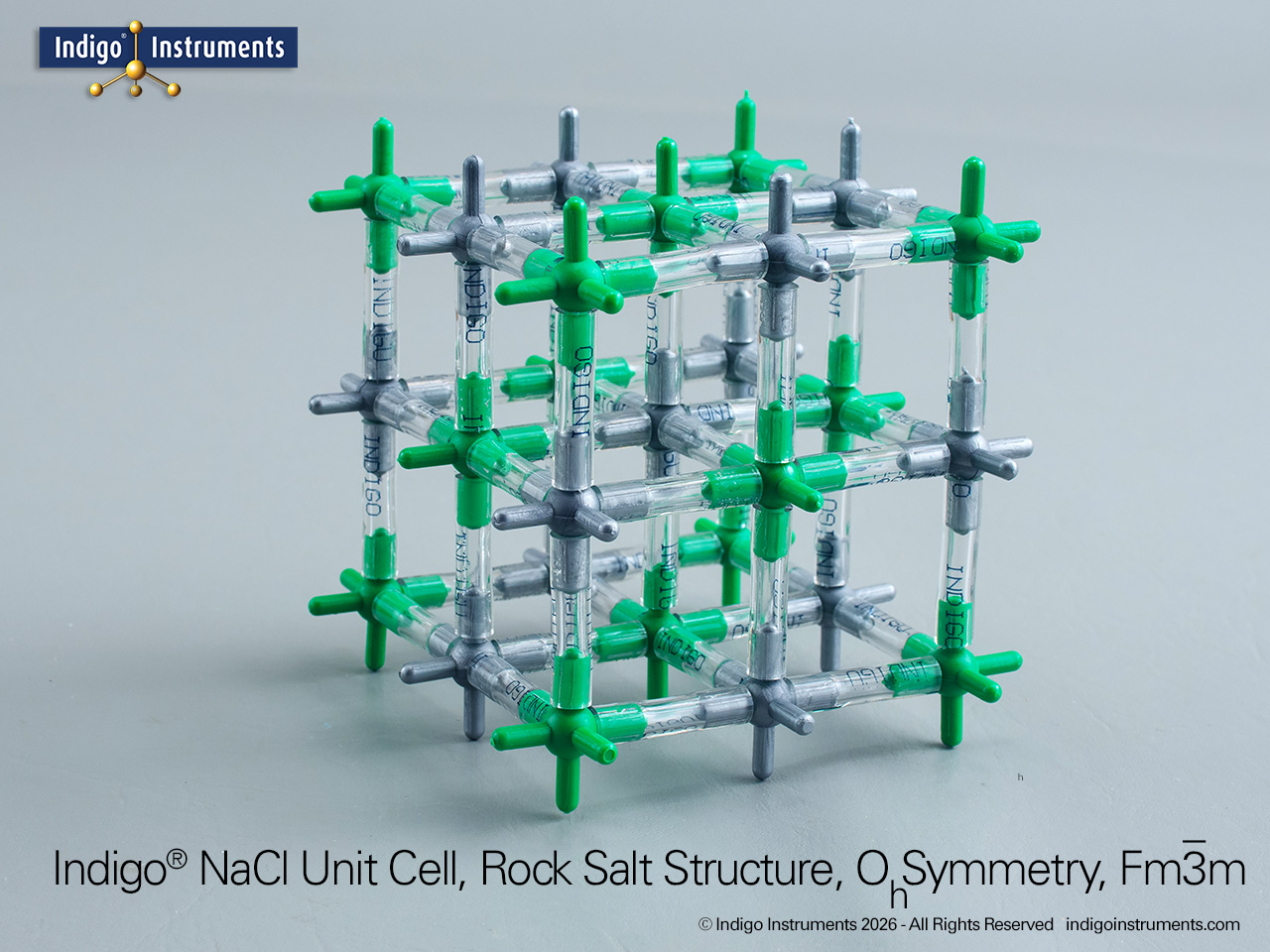
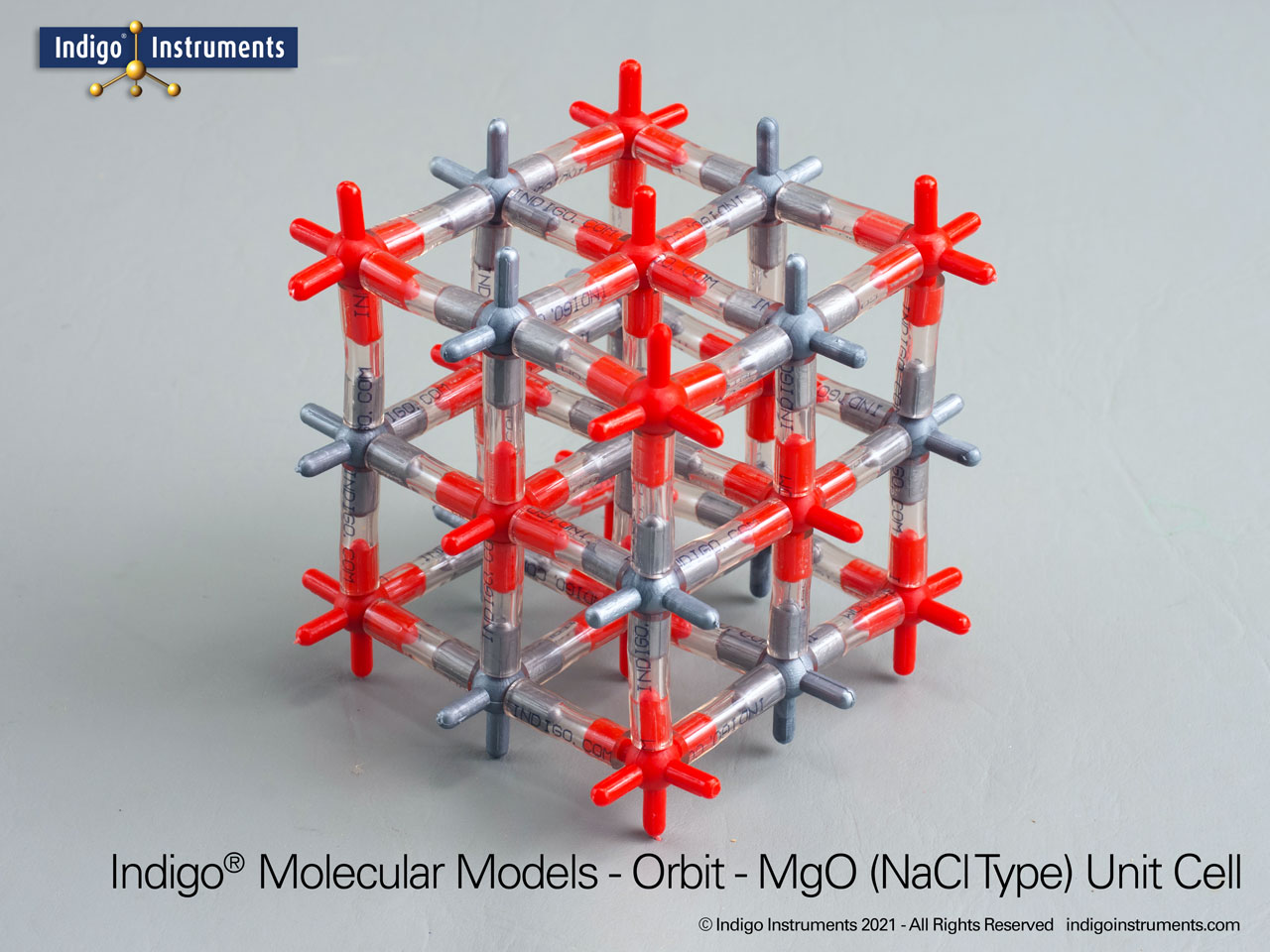
Explore the sodium chloride crystal lattice with this Indigo® NaCl molecular model. It shows the rock salt FCC structure for use in teaching to chemistry, physics, geology, and materials science students.

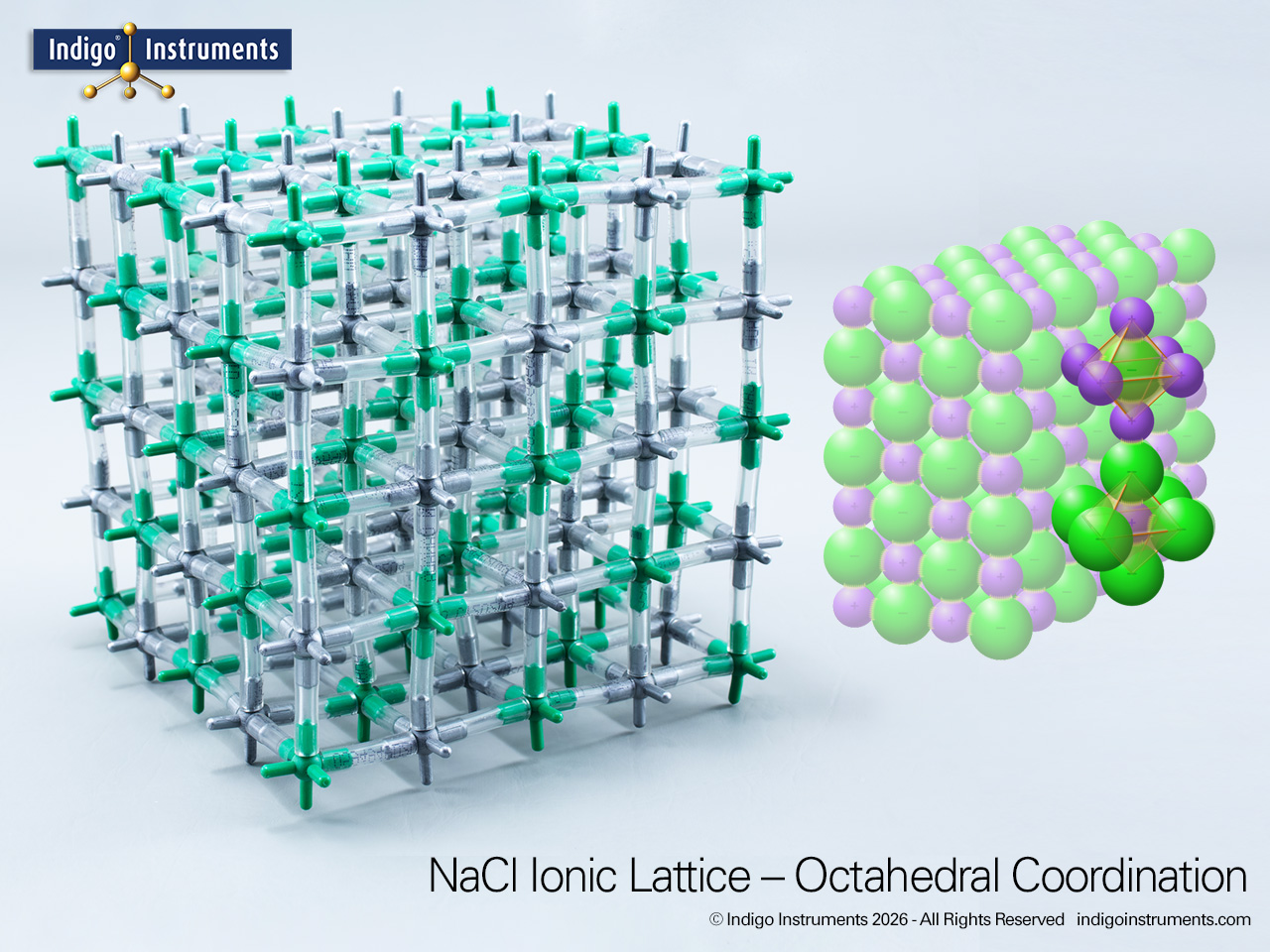
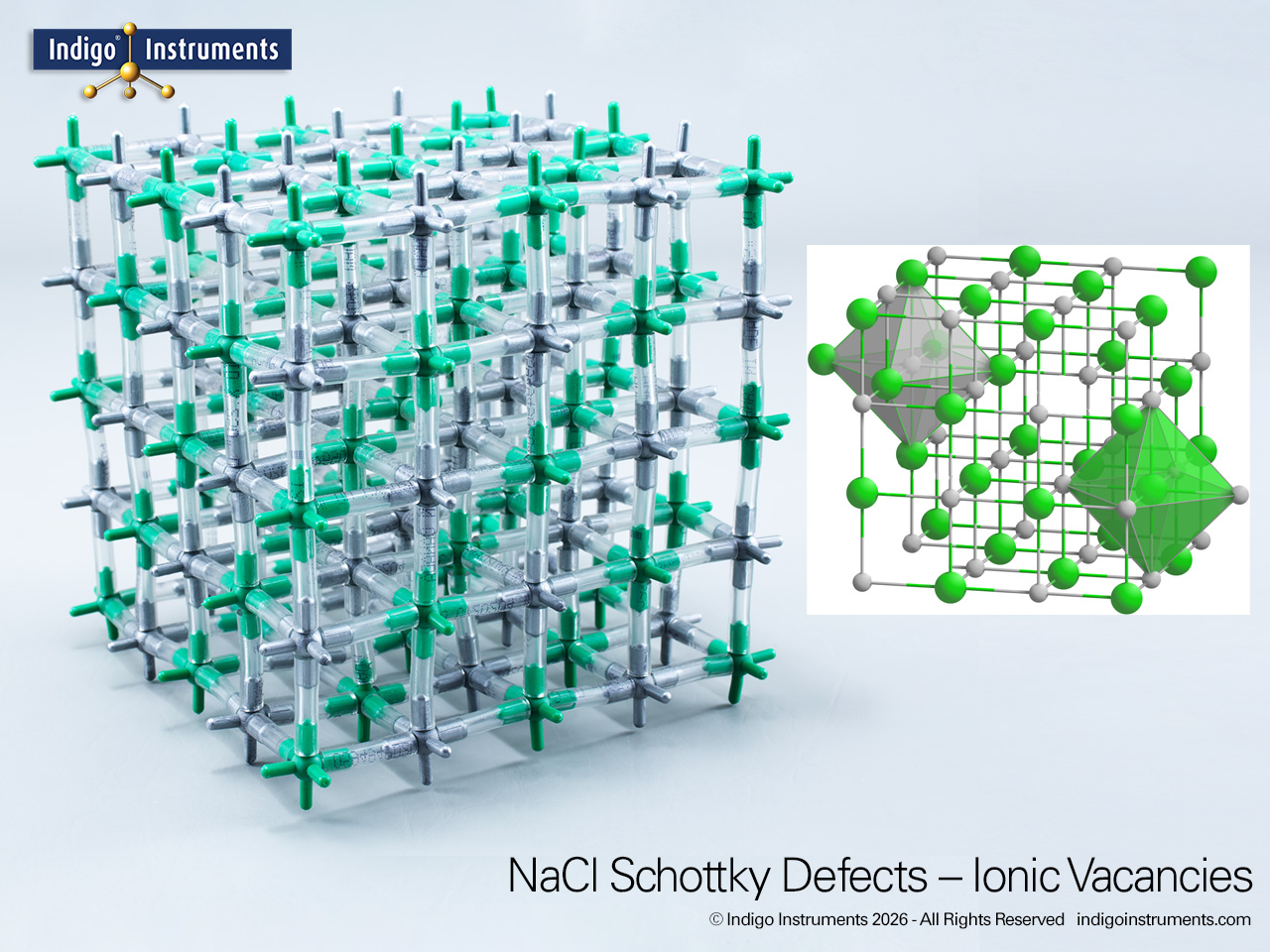
The Indigo® NaCl crystal lattice model demonstrates one of the most important examples of the face-centered cubic (FCC) crystal system. Sodium and chloride ions alternate in three dimensions, showing the repeating ionic arrangement that underlies table salt and countless other halide minerals. This model helps students visualize ionic bonding, lattice energy, and how structural packing influences physical properties such as hardness, solubility, and melting point.

Whether you searched for NaCl FCC lattice model, rock salt crystal structure teaching kit, or ionic solid crystal models, you'll find that this Indigo® NaCl molecular model kit supports deeper learning across multiple disciplines. Chemistry students use it to compare ionic vs. covalent solids, while physics and materials science courses employ it to explore packing efficiency, coordination numbers, and defect sites. In geology, the model illustrates halite, the mineral form of NaCl, and connects crystallography to real-world rock formations, sedimentary processes, and natural resource importance. With its larger 5×5×5 lattice (nearly twice the atoms of many competitor kits) and clear vinyl bonds, the model delivers a striking classroom display at a lower cost—offering exceptional value for teaching and demonstration.

Why NaCl Is Important (Social & Commercial Relevance)

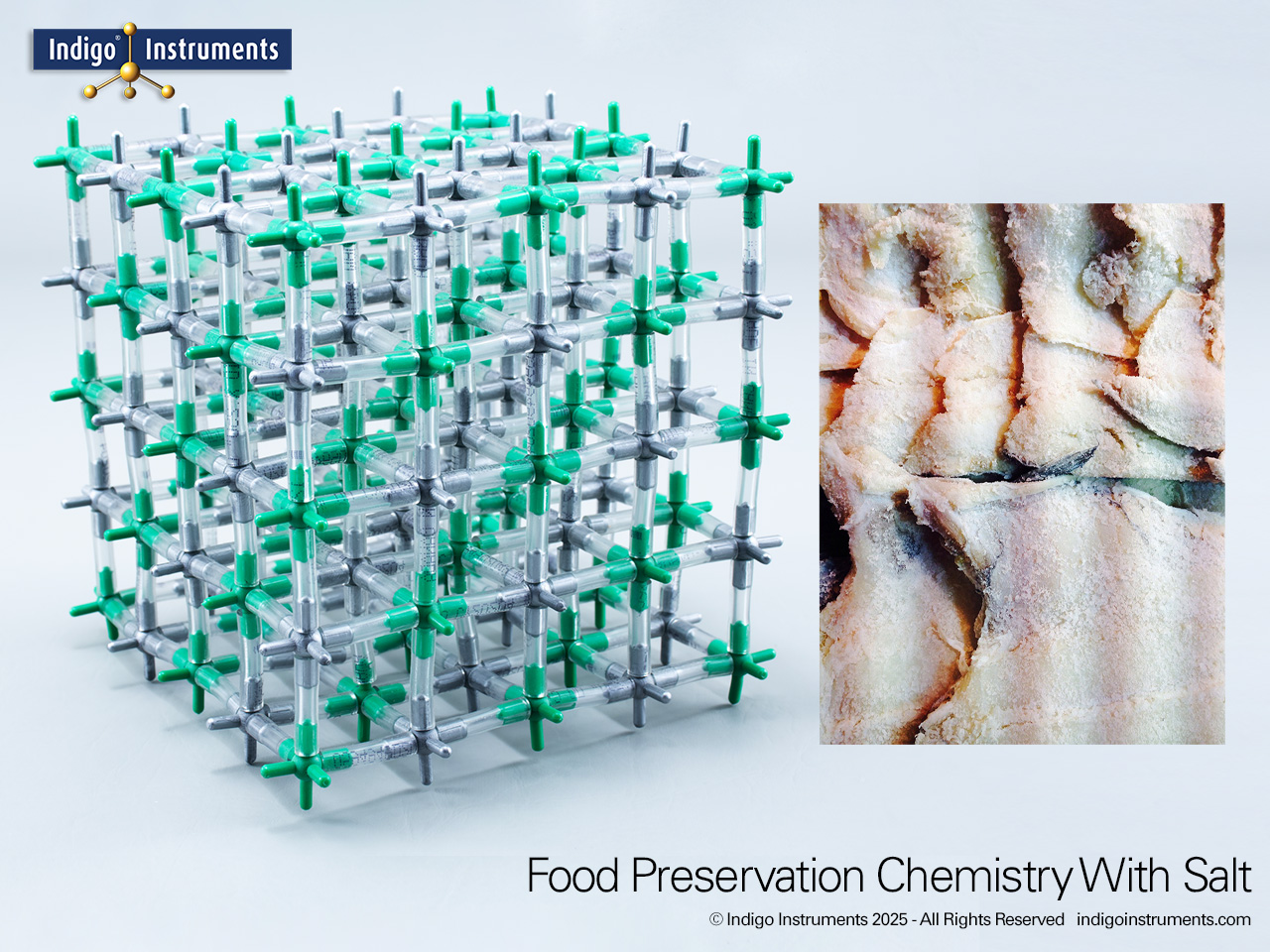
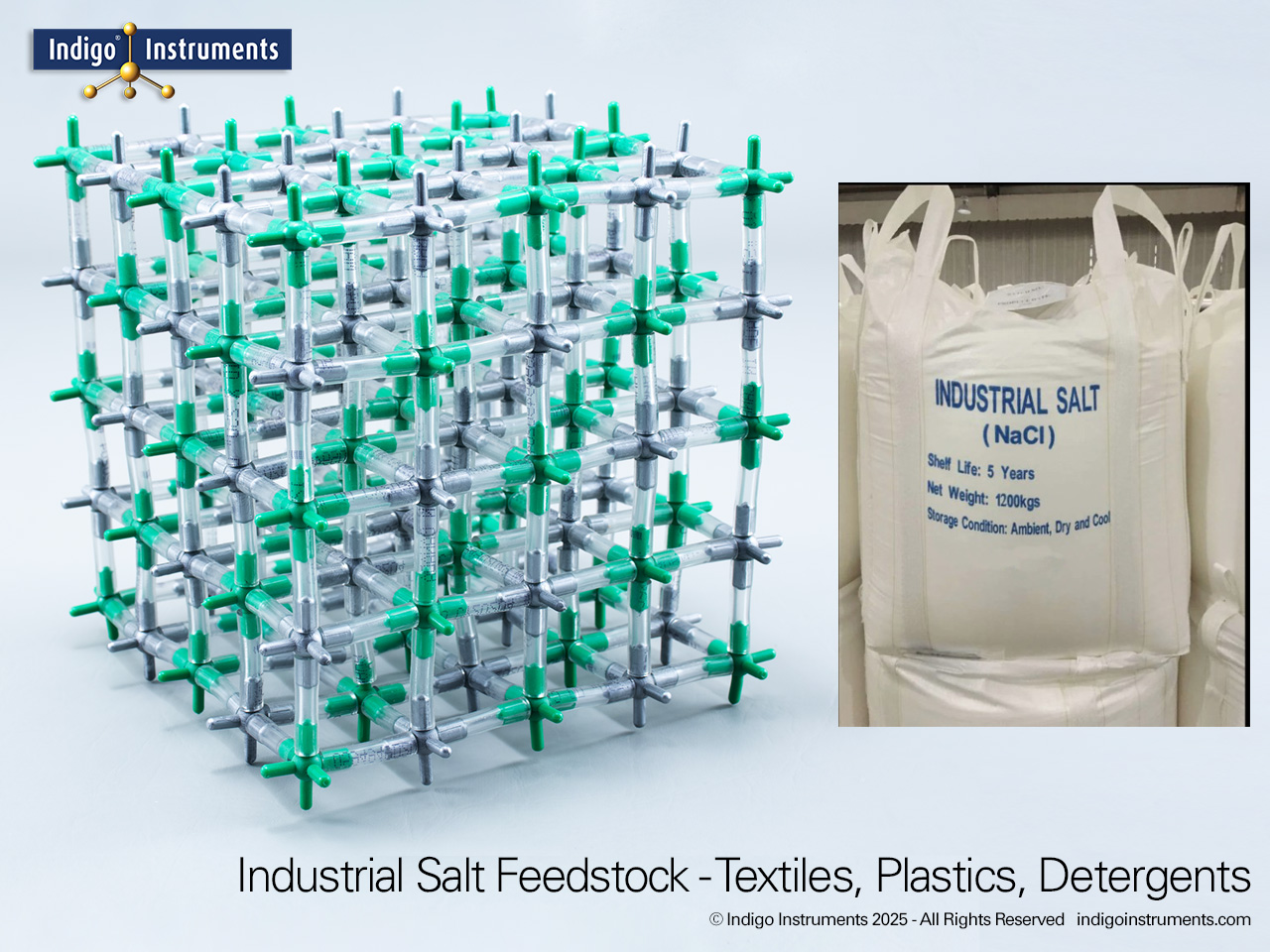
Sodium chloride is not only a teaching model for ionic crystals but also a mineral of enormous global importance. As halite, it forms extensive rock salt deposits essential for food preservation, de-icing, and chemical industries. NaCl is the starting point for chlorine and sodium hydroxide production, which underpin modern manufacturing and water treatment.

Indigo Instruments has held inventory of genuine Cochranes of Oxford (Orbit) parts for 30+ years (See Skeletal (Orbit/Minit)) that are compatible with every molecular model we have sold since day 1. This level of quality may appear expensive but no parts support from other vendors costs even more.
Indigo Instruments has held inventory of genuine Cochranes of Oxford (Orbit) parts for 30+ years (See Skeletal (Orbit/Minit)) that are compatible with every molecular model we have sold since day 1. This level of quality may appear expensive but no parts support from other vendors costs even more.

Details

Learning Outcomes Using an NaCl Crystal Lattice Model

Chemistry Focus Physics / Materials Science Focus Geology Focus
Understand ionic bonding and lattice energy in ionic solids. Visualize FCC packing, coordination numbers, and lattice defects. Identify NaCl as halite, the rock salt mineral, in crystal form.
Compare NaCl to other ionic solids like CsCl or ZnS. Explore X-ray diffraction and crystal symmetry applications. Relate microscopic crystal structure to macroscopic rock properties.
Relate structure to physical properties such as melting point and solubility. Connect structure to conductivity and mechanical behavior of solids. Understand how evaporite deposits form halite beds globally.

One of NaCl's many uses is discussed in: What is Sodium Chloride? Gatorade; Really? The blog also shows different model styles including the very large classroom NaCl molecular model.

You can also build this model as Molymod NaCl or the Indigo® AtoMag NaCl-chemical vapor deposition.

Related information or images
Parts
Reviews ()
Review This Product Now!


Frequently Asked Questions

FAQ for NaCl Crystal Lattice Structure Model

NaCl adopts the face-centered cubic (FCC) lattice, also known as the rock salt structure. Each sodium ion is surrounded by six chloride ions and vice versa, giving a coordination number of six.

In geology, crystalline NaCl occurs as halite, commonly known as rock salt. It often forms in evaporite deposits where ancient seas have dried up, leaving large salt beds.

Because it illustrates key concepts such as ionic bonding, lattice energy, FCC packing, and coordination number. It also provides a benchmark for comparing other structures like CsCl or ZnS.

The strong electrostatic forces between ions give NaCl a high melting point, brittleness, and solubility in water. These can all be explained directly from its crystal structure.

Beyond table salt, NaCl is essential for food preservation, de-icing roads, chemical manufacturing (chlorine, NaOH), water softening, and industrial brines. Its abundance and versatility make it a cornerstone of modern society.