NaCl Clevage Planes Model

SKU: 68791W
$54.95USD Each

Qty:

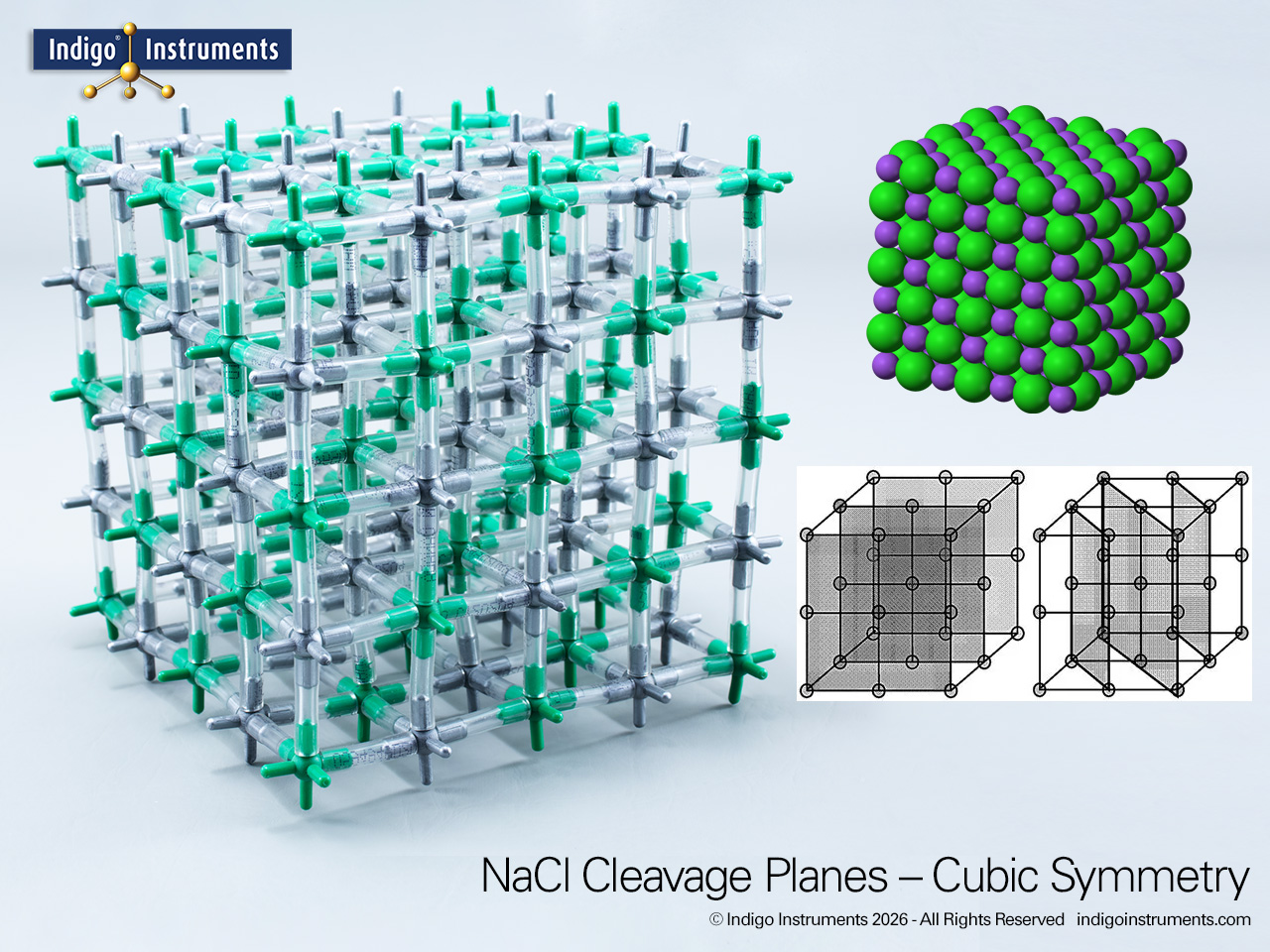
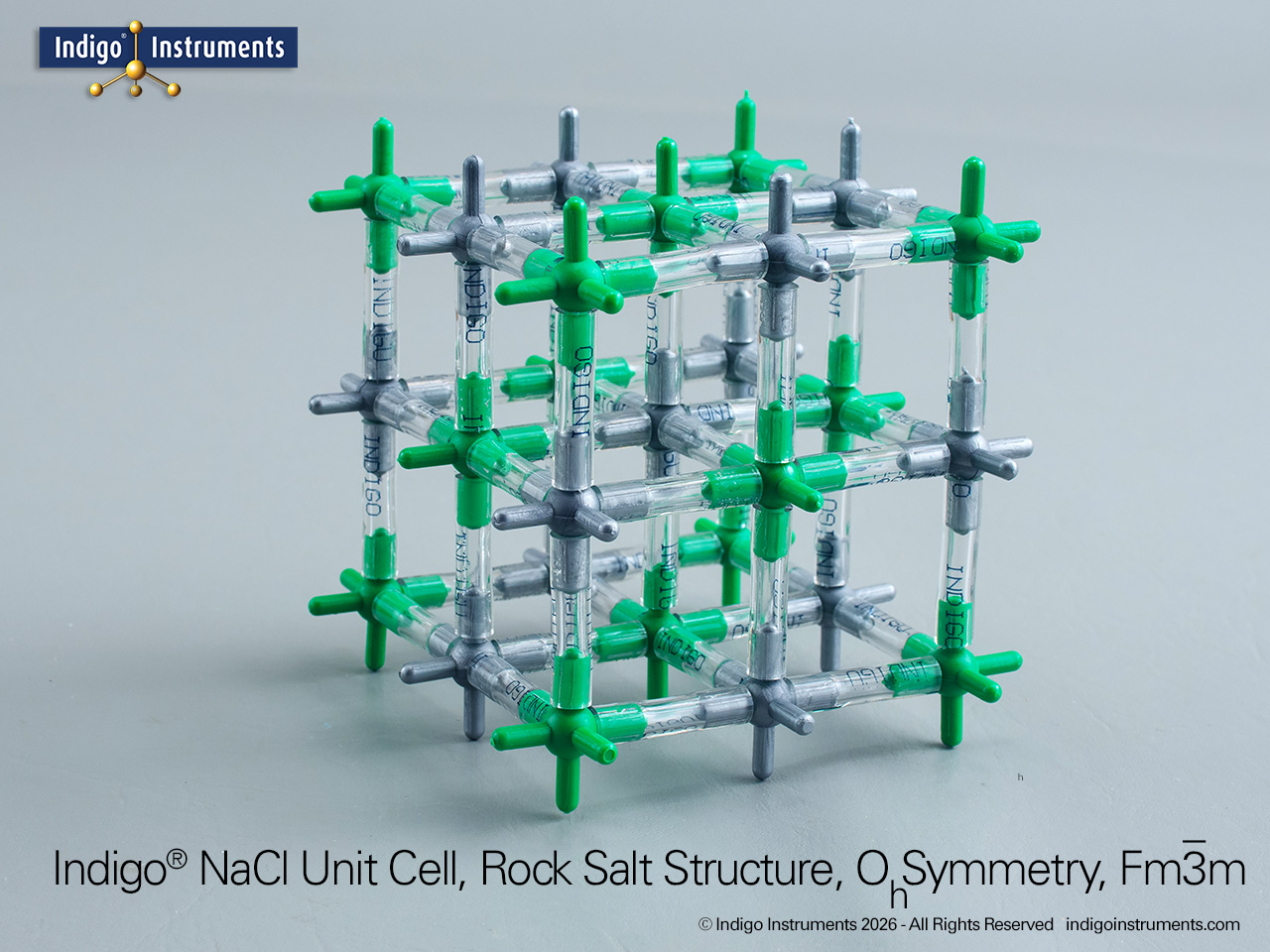
Examine NaCl cleavage planes and learn how ionic arrangement and lattice symmetry determine crystal fracture with an Indigo® NaCl molecular model; ideal for crystallography and chemistry education.

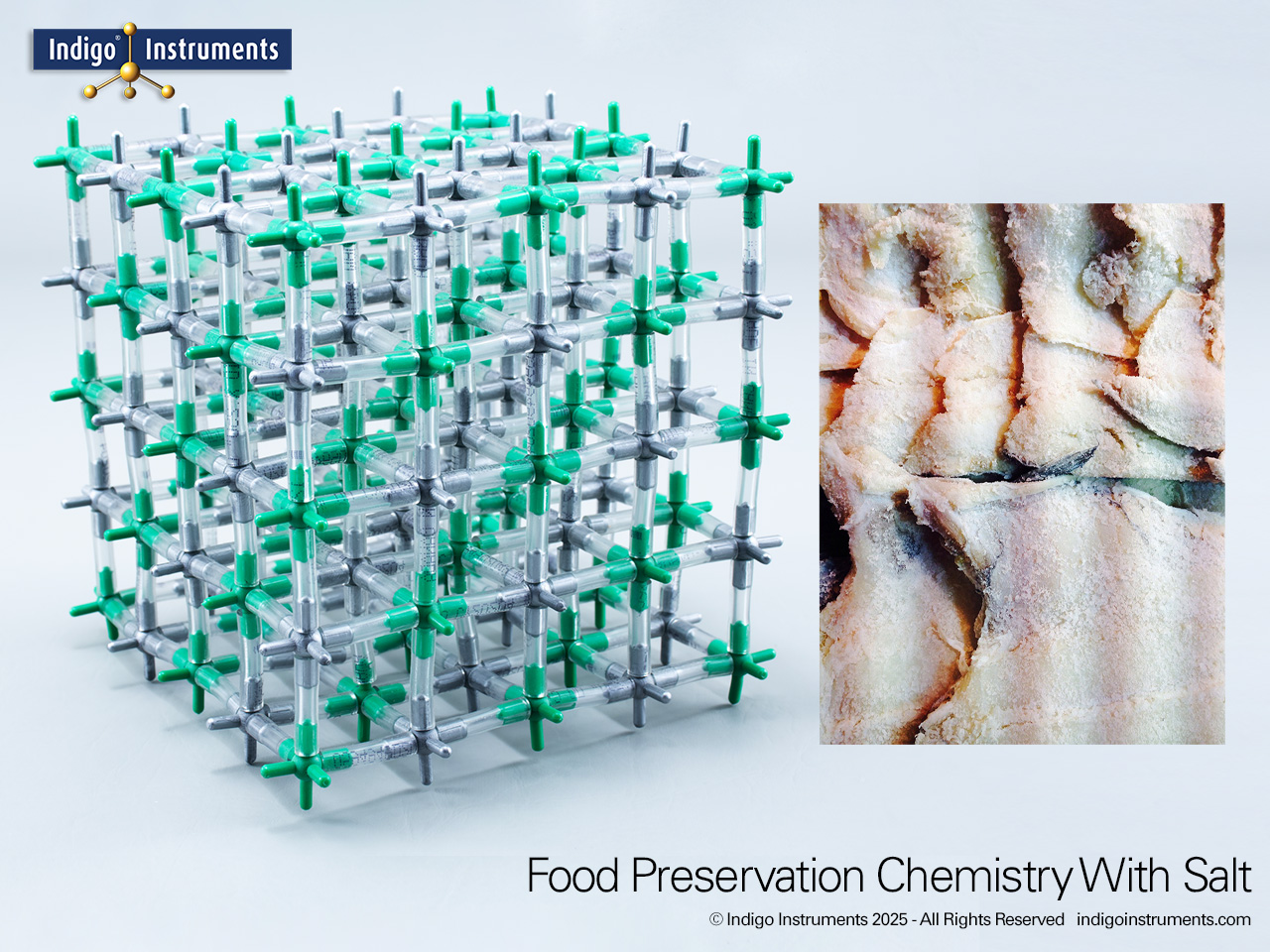
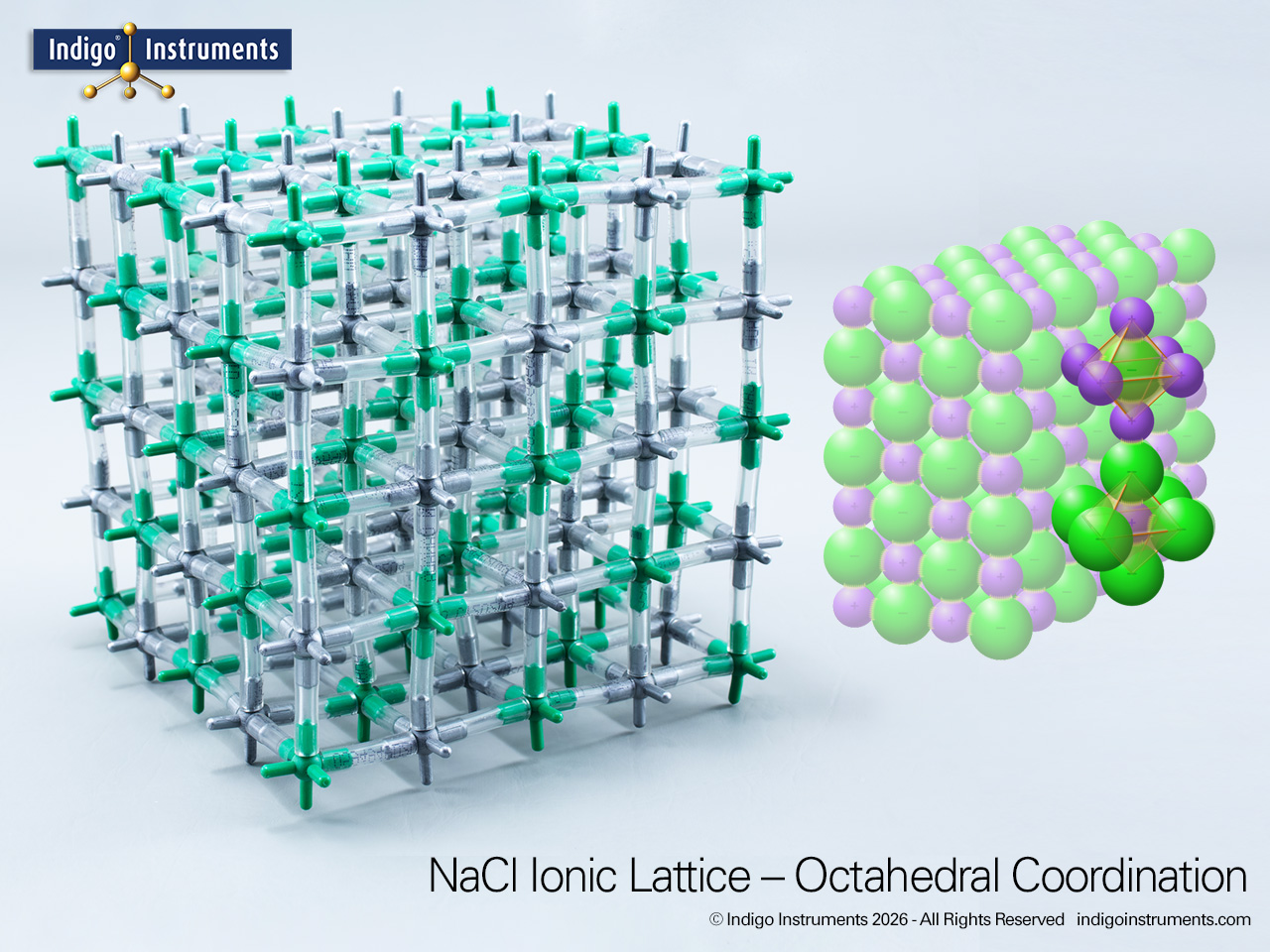
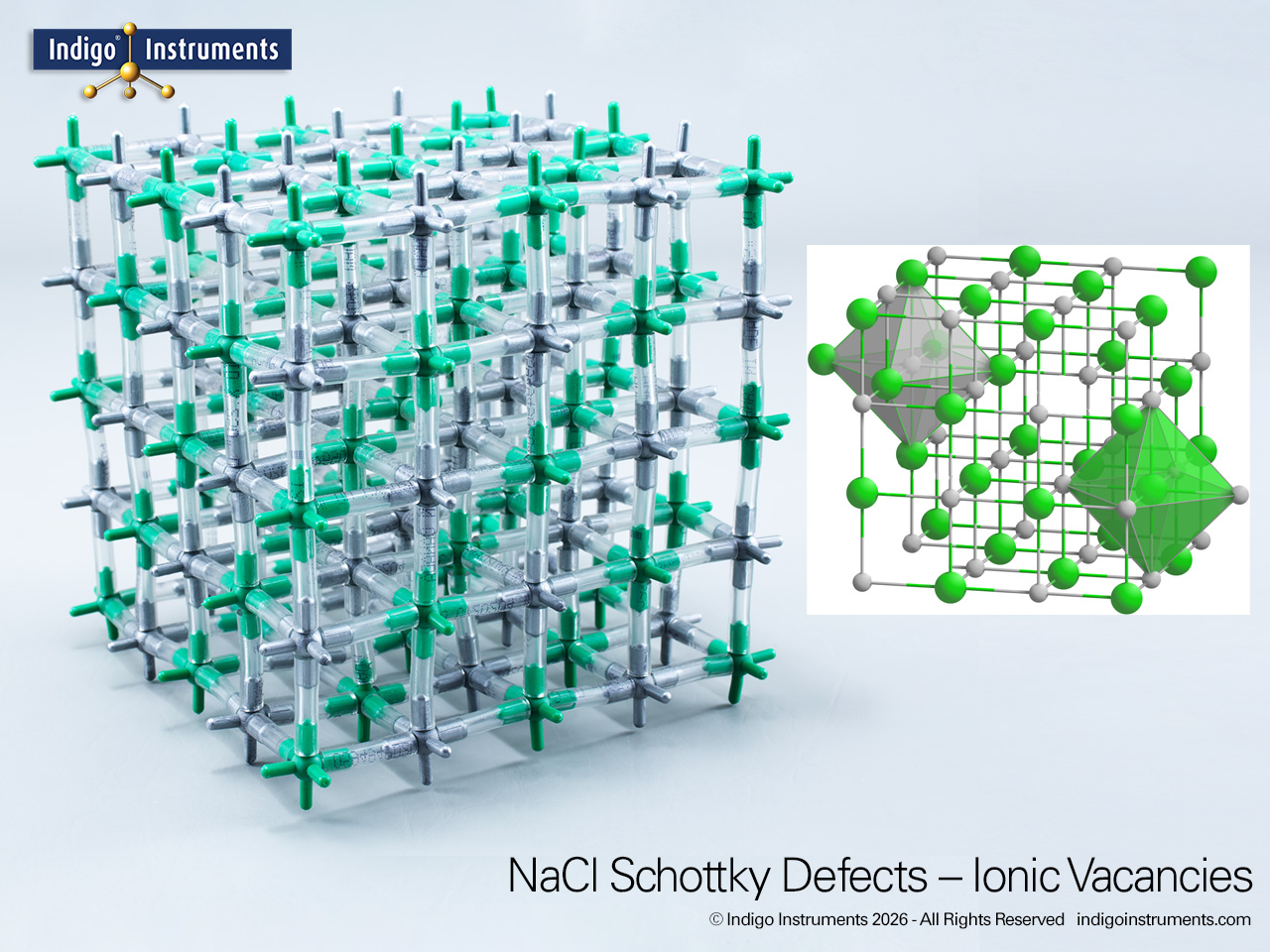
The cleavage planes of sodium chloride (NaCl) reveal the underlying symmetry of its ionic lattice. When struck or stressed, NaCl crystals break cleanly along (100) planes, where each cleavage maintains charge balance by separating layers of Na+ and Cl- ions. These planes correspond to the cube faces of the crystal and reflect the highly ordered face-centered cubic (FCC) arrangement of alternating ions. Demonstrating cleavage with a 5x5x5 atom Indigo® sodium chloride molecular model makes it easy to visualize how electrostatic forces and geometry govern the physical properties of ionic solids.

Indigo Instruments has held inventory of genuine Cochranes of Oxford (Orbit) parts for 30+ years (See Skeletal (Orbit/Minit)) that are compatible with every molecular model we have sold since day 1. This level of quality may appear expensive but no parts support from other vendors costs even more.

Details

EVTF: Educational Value Table Framework

Concept Description Activity Learning Link
Crystal Symmetry NaCl’s face-centered cubic lattice produces identical axes along x, y, and z, giving cubic symmetry and equivalent cleavage directions. Rotate the lattice model to show that all three axes are equivalent; identify cube faces corresponding to (100) planes. Connects lattice symmetry to macroscopic crystal morphology.
(100) Cleavage Plane Cleavage occurs along planes that separate alternating layers of Na+ and Cl ions with minimal electrostatic disruption. Use a model to insert a clear divider through a (100) layer; note that ions of the same charge never meet across the plane. Shows how atomic arrangement determines fracture direction and shape.
(111) Plane Orientation The (111) plane cuts diagonally through the cube, intersecting both ion types; cleavage is less favorable due to charge repulsion. Demonstrate this by slicing the model along a diagonal plane and observing alternating charges across the cut. Reinforces the link between lattice orientation and bond disruption energy.
Electrostatic Balance Stable cleavage planes maintain charge neutrality and minimize Coulombic repulsion, explaining why NaCl fractures predictably. Discuss what happens if like-charged ions are forced into alignment across a plane; relate to crystal brittleness. Illustrates how microscopic ionic forces dictate macroscopic mechanical behavior.
Comparative Crystal Habits Other minerals show different cleavage behaviors due to lower symmetry or covalent bonding patterns. Compare NaCl’s cubic model with a hexagonal or rhombohedral structure to observe how symmetry affects fracture angles. Links ionic crystal concepts to broader mineralogical and materials science studies.

One of NaCl's many uses is discussed in: What is Sodium Chloride? Gatorade; Really? The blog also shows different model styles including the very large classroom NaCl molecular model.

Related information or images
Parts
Reviews ()
Review This Product Now!