Measure sulfite levels in white wine easily with Indigo® sulfite test strips. Ideal for low-sulfite, organic, and sulfite-free winemakers. Learn how SO2 protects wine, how pH affects required sulfite additions, and how to manage sulfite sensitivity.
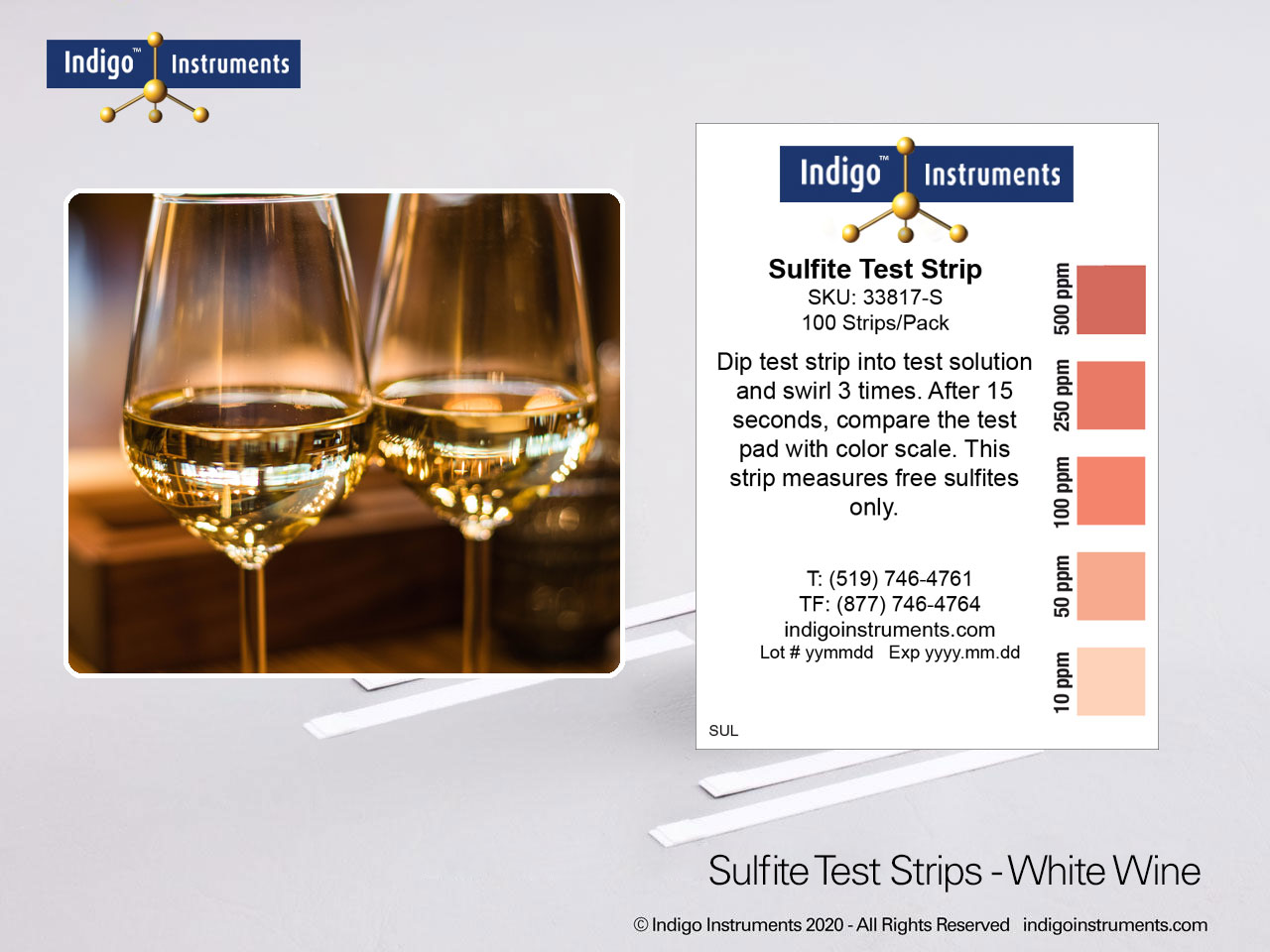
Sulfites (SO2) play an essential role in stabilizing white wine by preventing oxidation, suppressing spoilage yeast, and preserving fresh fruit aromas. While wines naturally produce small amounts of sulfur dioxide during fermentation, most winemakers add potassium metabisulfite to achieve reliable protection. White wine in particular is sensitive to browning and flavor loss, which is why controlling sulfite levels is critical. With no color interference, Indigo® sulfite test strips provide a simple and reliable way to confirm SO2 concentration during production, bottling, or for evaluating commercial “low-sulfite” or “no-sulfite-added” wines.
If you make your own white wine or want to verify sulfite levels in commercial bottles, Indigo® sulfite test strips give you fast, accurate results without complex equipment. Pair them with our pH 3-6 test strips for confident SO2 management at every stage.
We've been selling sulfite test strips since 2007. Buy fully documented Indigo® sulfite test strips,100 strips/vial with a guaranteed 3 year shelf life (dated back from expiration date "yyyy.mm.dd").
SO2 prevents oxidation and inhibits spoilage organisms, helping maintain aroma and color.
Test sulfite levels at fermentation, racking, and bottling.
Relates to wine chemistry, oxidation reactions, and microbiological stability.
pH-Dependent SO2 Effectiveness
Lower pH increases antimicrobial activity, reducing the amount of free SO2 needed.
Measure wine pH and compare required SO2 targets for pH 3.0-3.8.
Connects acidity to molecular SO2 fraction and wine preservation.
Verifying “Low-Sulfite” Claims
Commercial and homemade wines vary widely in total sulfites despite label claims.
Use test strips to compare sulfite concentrations across sample wines.
Supports consumer awareness and regulatory understanding.
Understanding Sulfite Sensitivity
Some individuals experience reactions to elevated sulfite levels.
Measure wines marketed for sulfite-sensitive consumers.
Links wine chemistry to human exposure and tolerance.
Free vs. Bound Sulfites in White Wine
Both free and bound sulfites occur in white wine, but only free SO2 contributes to freshness, microbial control, and potential sensitivity reactions. During fermentation, yeast naturally produces small amounts of bound sulfites. These are chemically attached to other molecules, remain stable, and do not trigger sulfite intolerance symptoms.
In contrast, free sulfites remain chemically active. They protect wine from oxidation and spoilage, but excessive levels may provoke reactions in sulfite-sensitive individuals. When testing white wine with strip-based methods, it is primarily the free sulfite fraction that is measured.
Sulfite Limits in Organic White Wine
Organic certification standards restrict the use of added sulfites. For example, current regulations allow:
Maximum 100 mg/L total sulfites in organic wine
No more than 35 mg/L free sulfites at bottling
These limits align well with the mid-range detection band of our sulfite test strips (approx. 10-100 ppm), making them useful for confirming whether a white wine stays within guideline ranges.
Why This Matters for Home and Small-Scale Winemakers
Understanding the balance between free and bound sulfites helps winemakers adjust SO2 additions accurately which is especially important when working with high-acid white wines. Excessive SO2 can lead to harsh aromas, while insufficient levels increase the risk of oxidation. Indigo® sulfite strip tests provide a simple way to monitor SO2 without laboratory equipment.
Related information or images
Sulfite Test Strips 50/Vial
Frozen Vegetables
Seafood
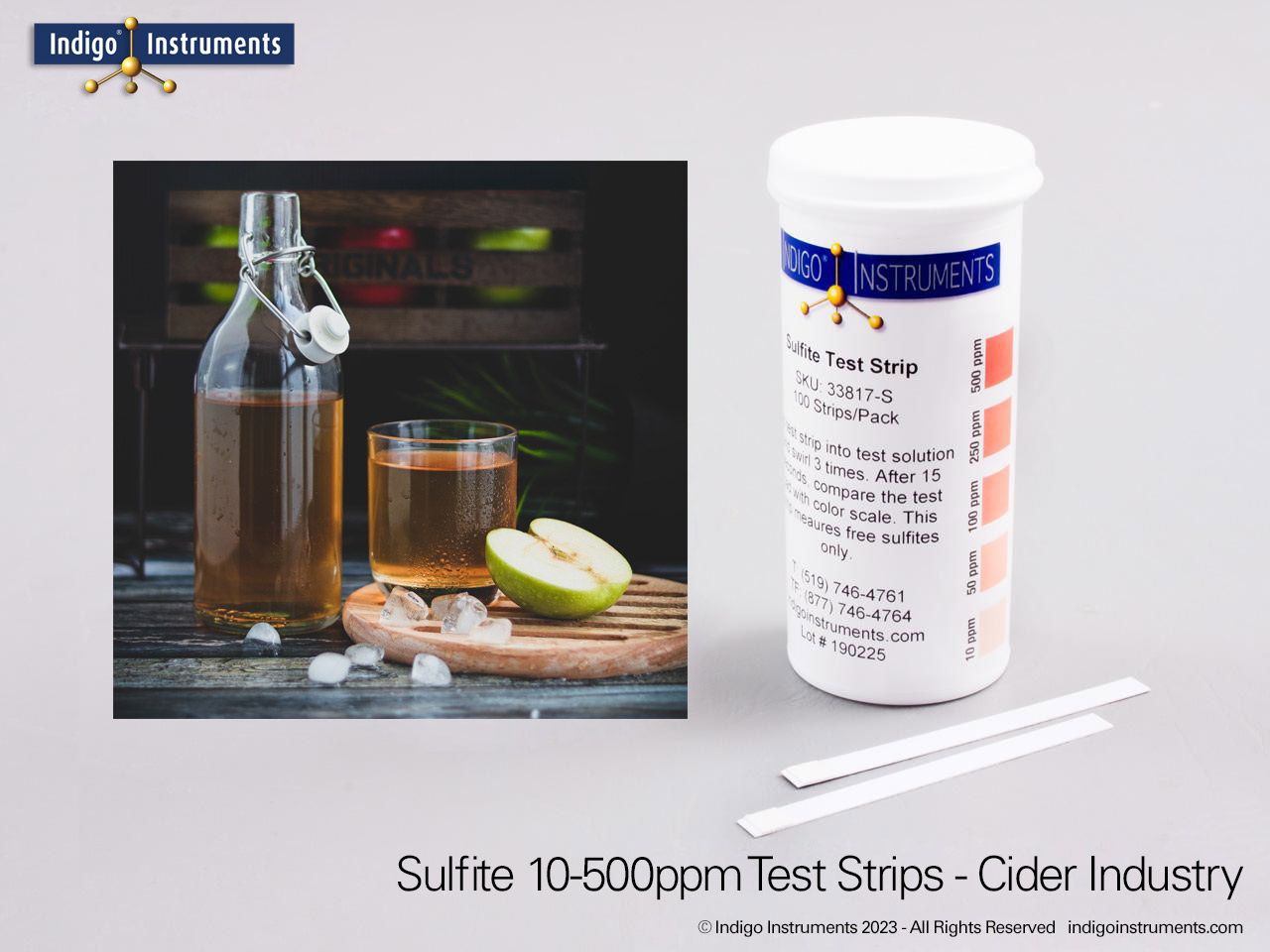
Cider Preservative
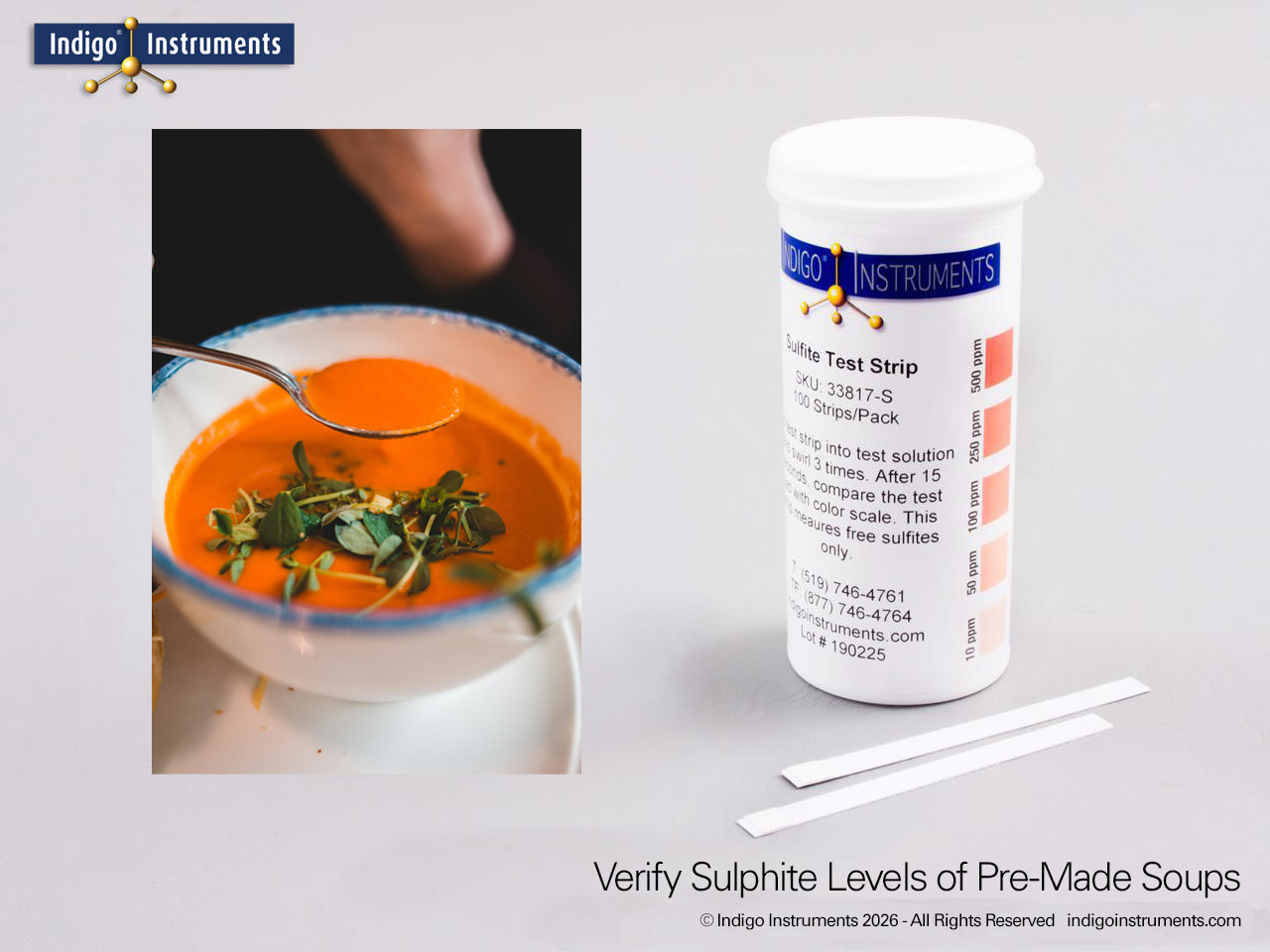
Prepared Soups
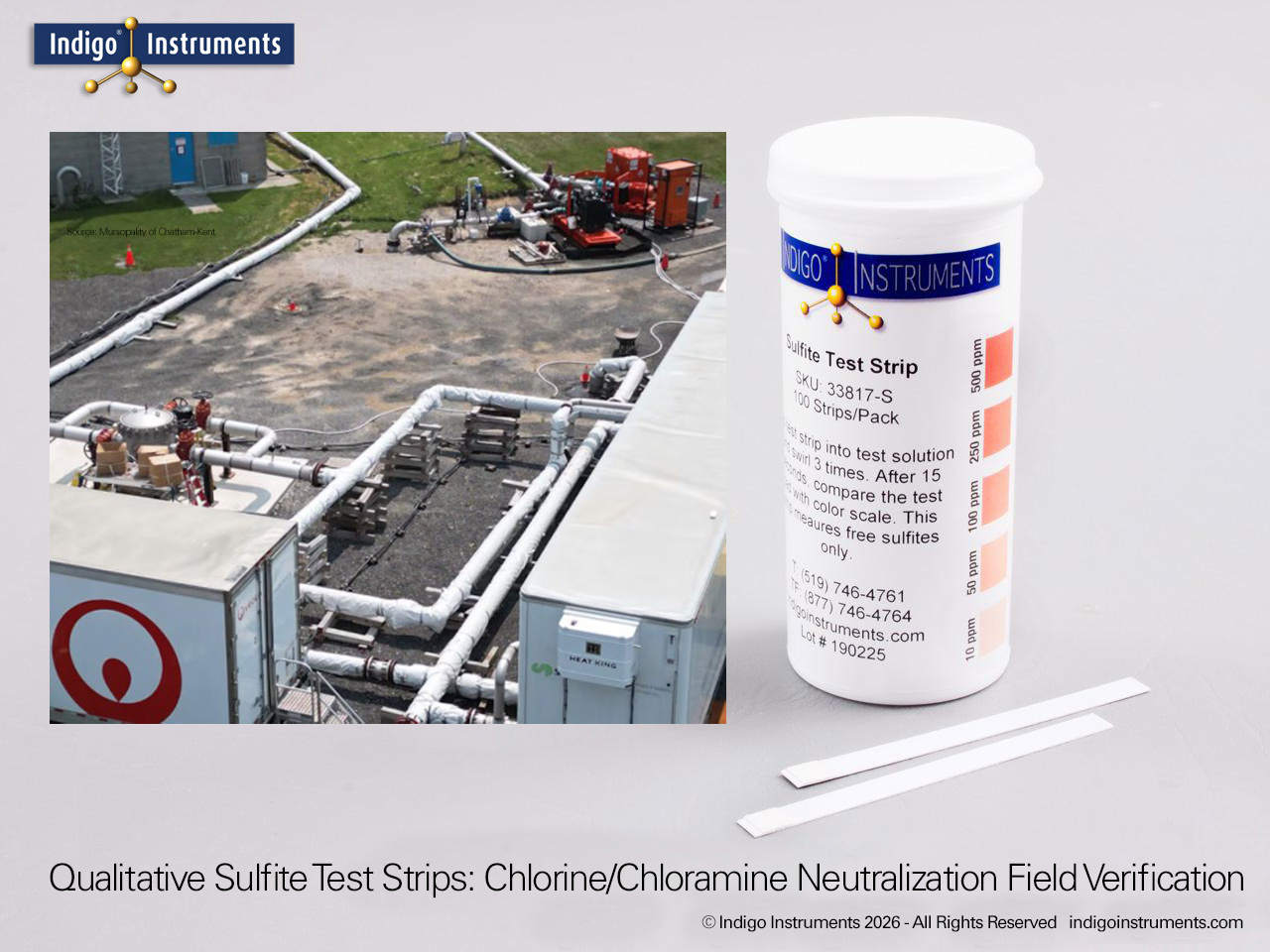
Water Treatment
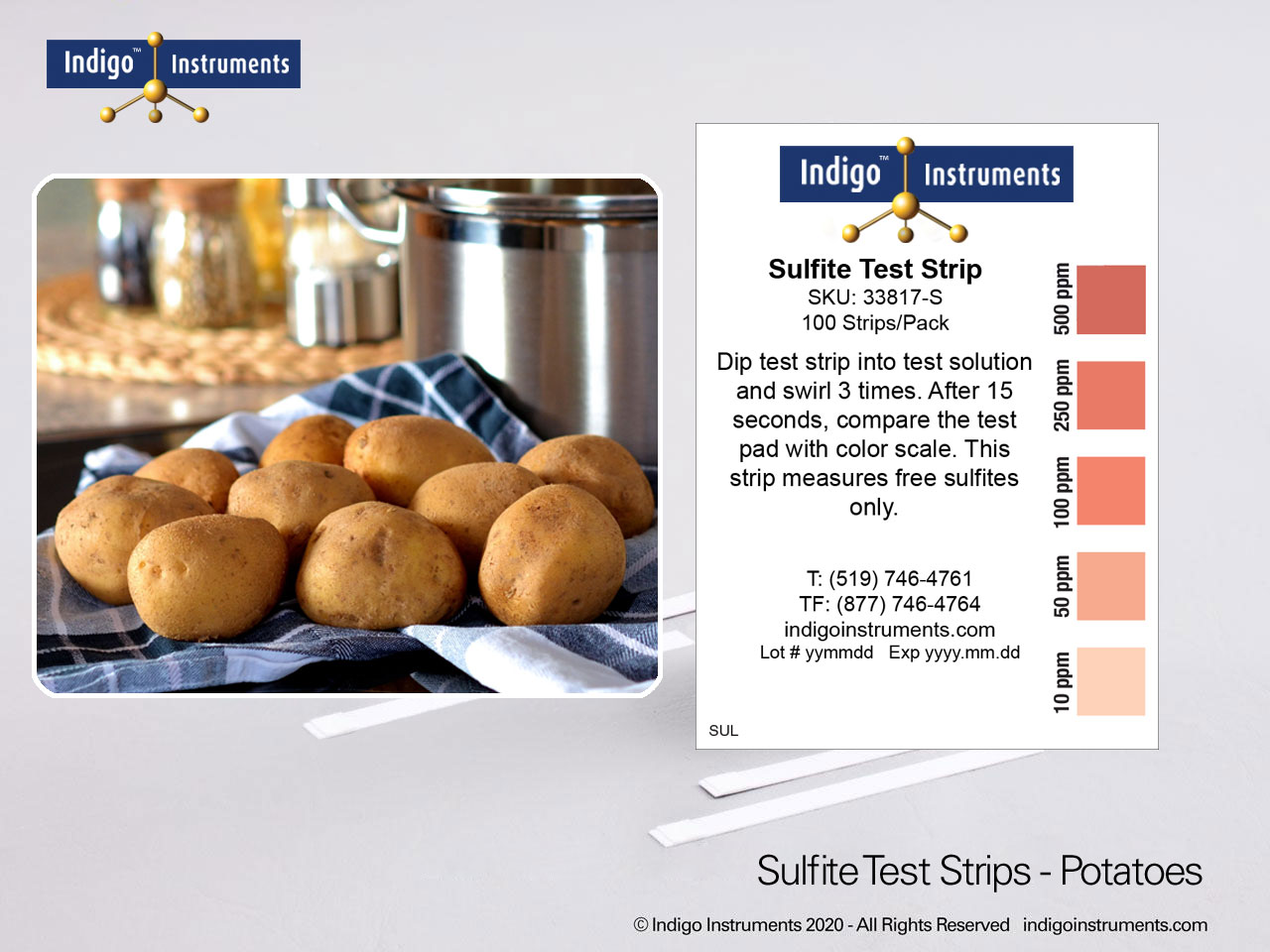
Potatoes
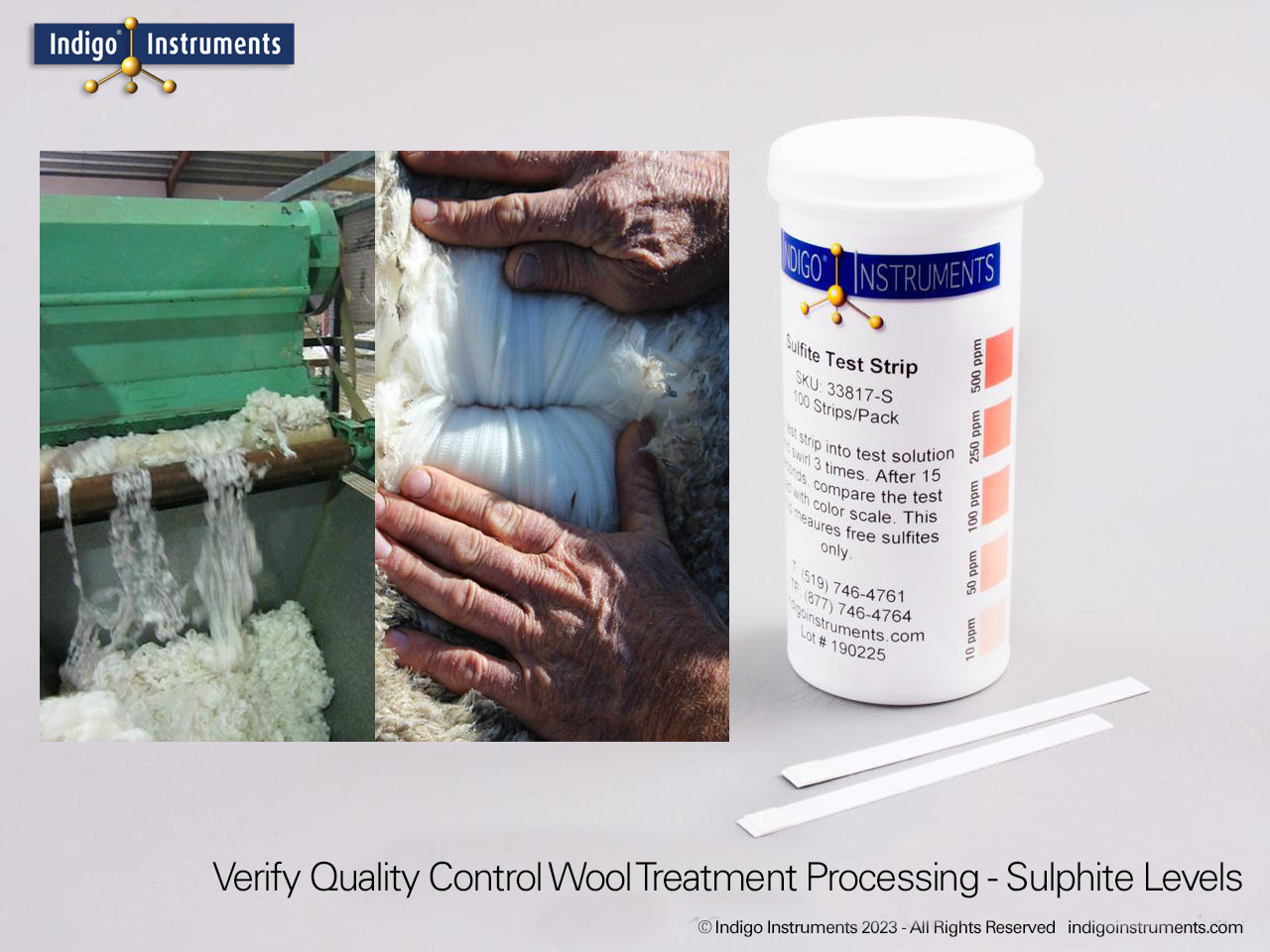
Wool
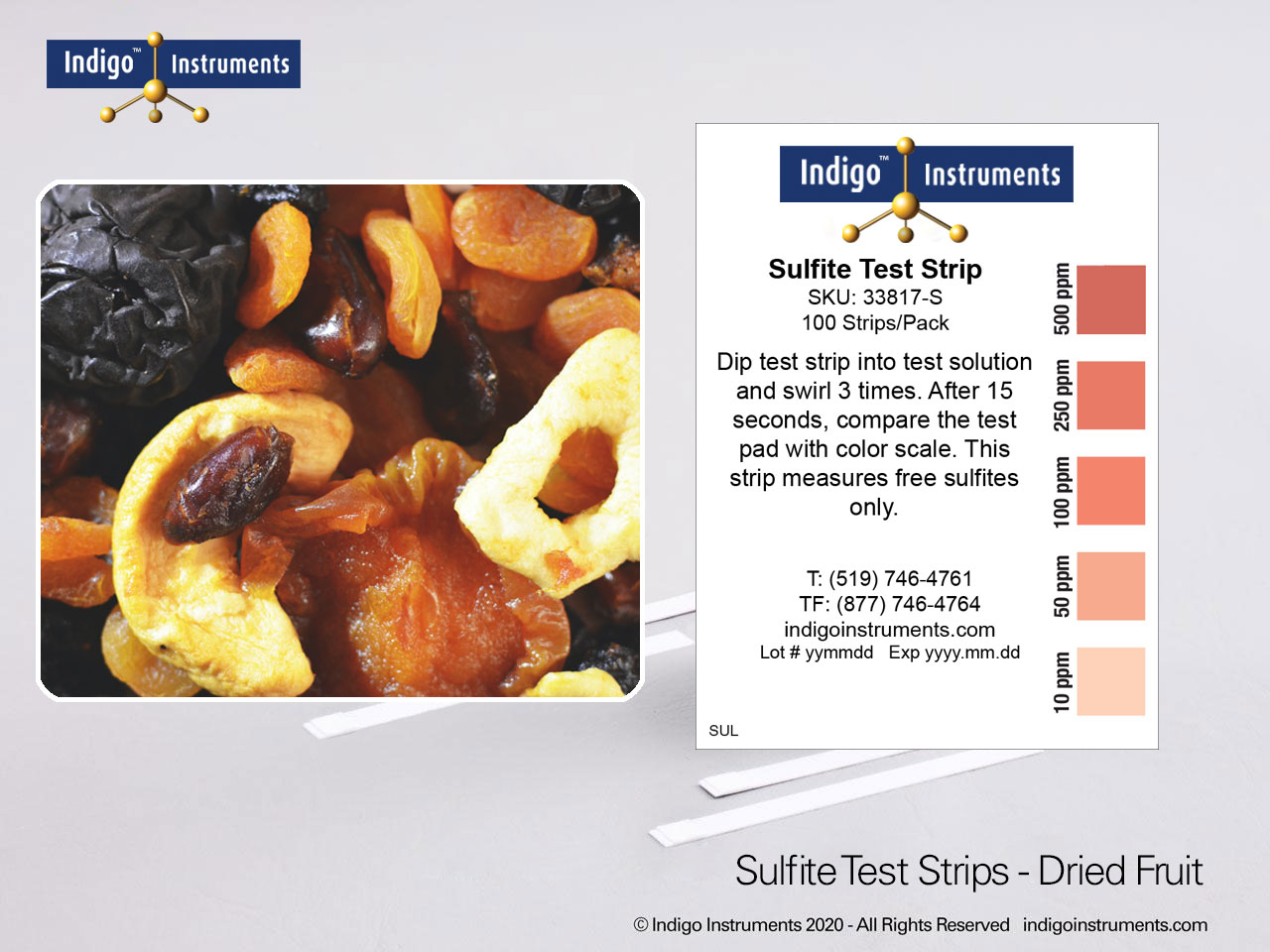
Dried Fruit
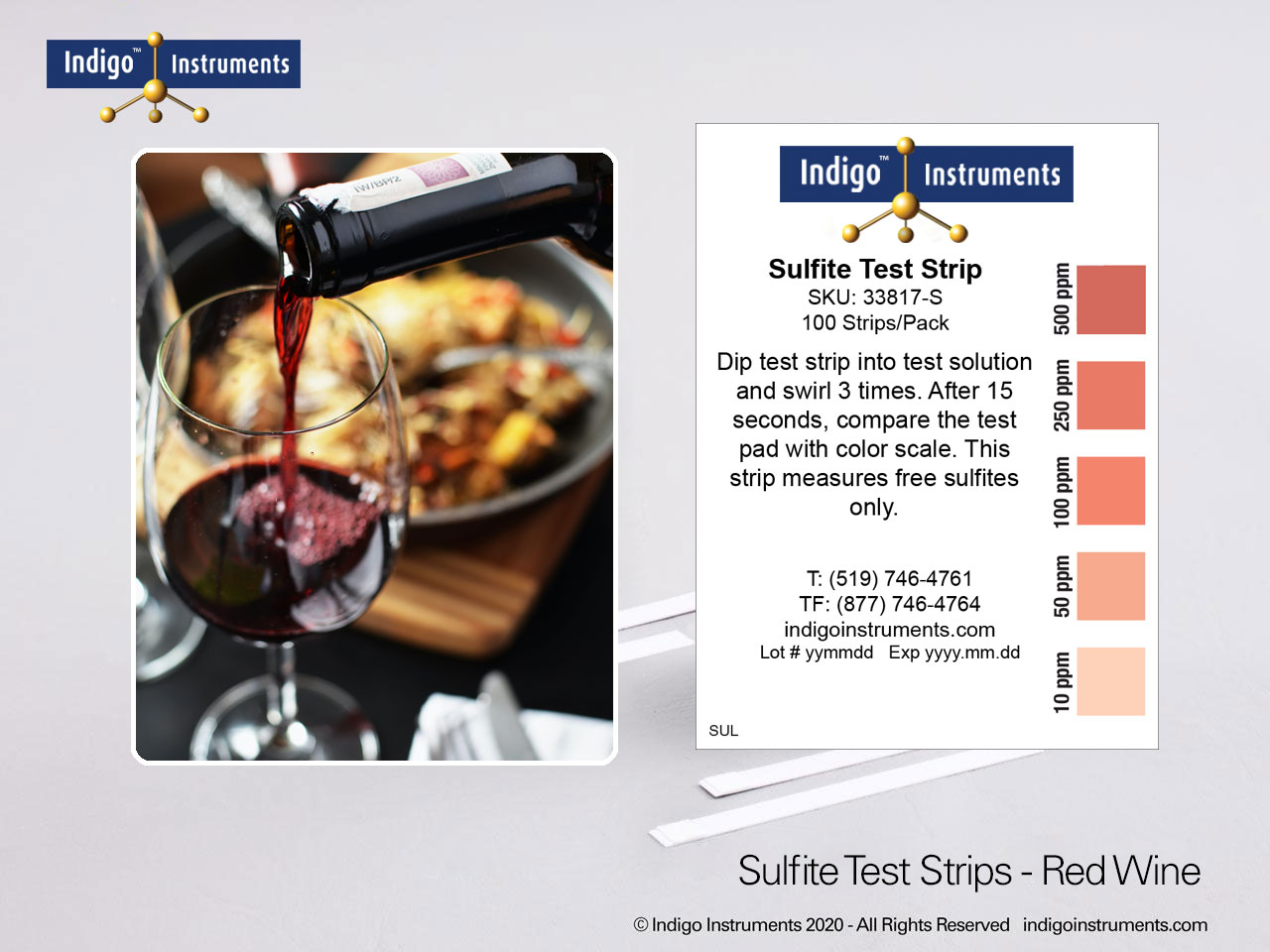
Wine-Red
Specifications
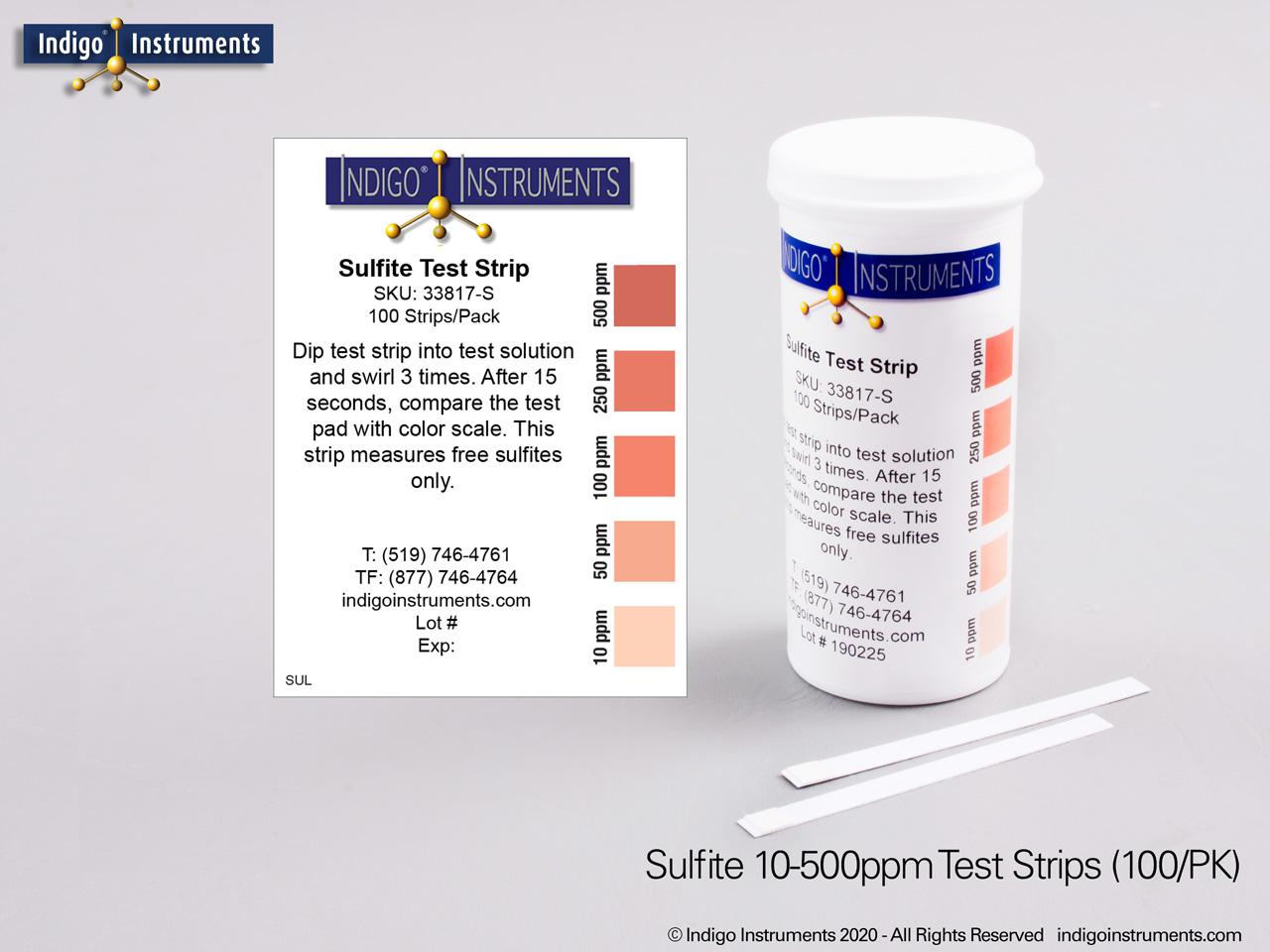
Indigo® sulfite test strips indicate the presence of sulfite ion in increments of 10, 50, 100, 250, and 500ppm after 15 seconds.
The number of strips (50) vial is approximate.
These strips have a guaranteed shelf of 3 years from date of manufacture (indicated by expiration date)
Vial must be kept tightly sealed & kept at typical room temperatures.
Strips test for: sulfite, bisulfite and metabisulfite
Documentation
A Certificate of Conformance is available on request after shipment. Indigo® sulfite test strips are made in USA & calibrated with NIST standards.
Test Strip Documentation
Stability Statement
Certificate of Analysis
SDS
Reviews (2)
2023-10-27
Test strips worked as described, including the red wine citric acid method. I first did some comparisons using sulfites in water. Dipping the strips and the citric acid method gave the same result, albeit a little lower than expected. Solution was mixed to 100 ppm and both strips showed about 75. Used a similar technique on red wine, although dipping does not work. Wine with no sulfites showed zero. Added and got similar readings to the water results. Thanks for the great product and the citric acid trick.
2021-01-22
Great place for a hard to find product. Excellent price! Quick shipping.

Thanks for letting us know. This might interest you since you are in quality control: Can 10ppm of Sulfite & Quat Really Mean Zero?