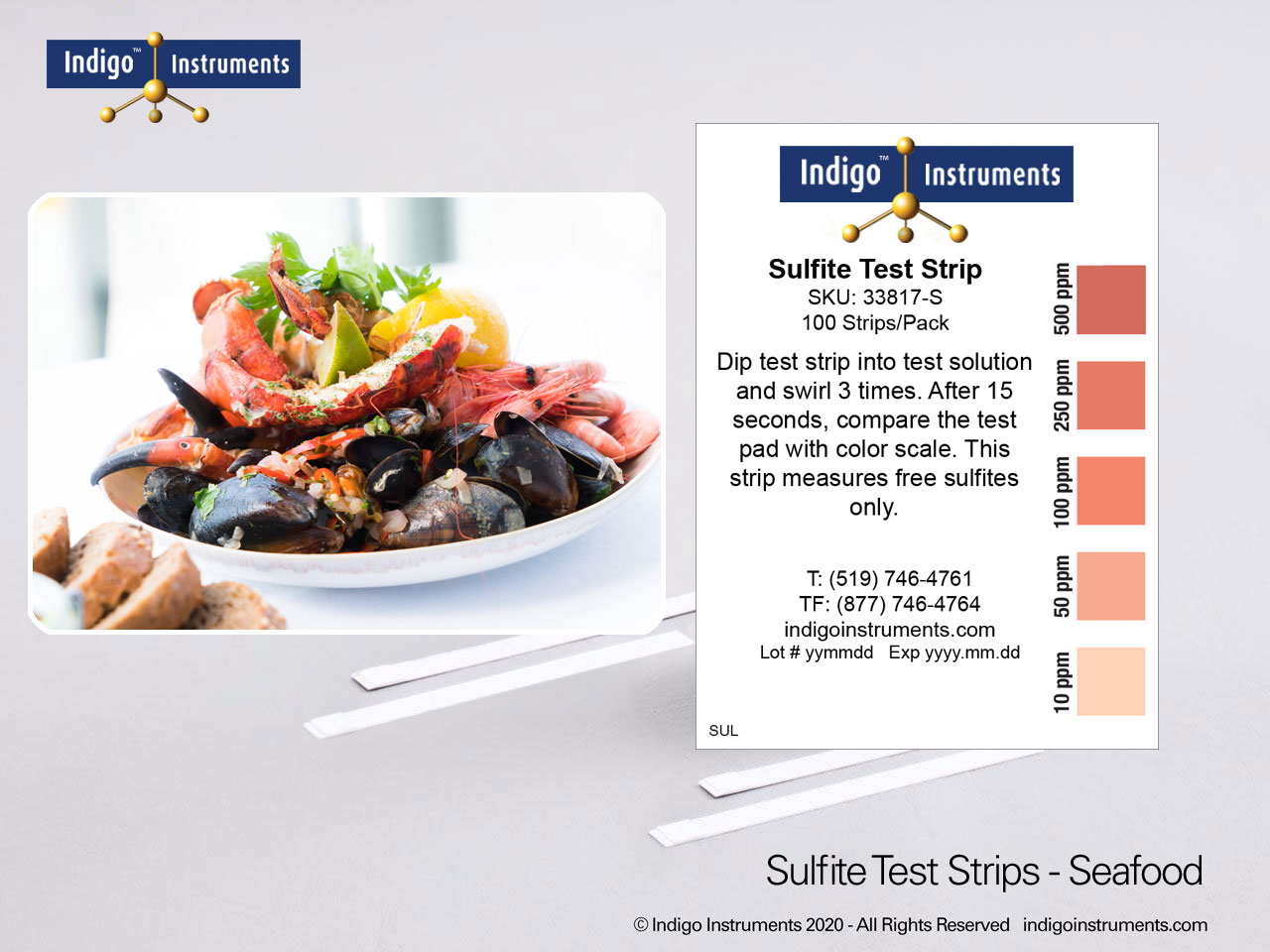
Check shrimp and seafood for sulfites using Indigo® sulfite test strips. Detect free sulfite on surfaces, prevent browning, and verify proper labelling.
Sulfites are widely used in the seafood industry, especially on shrimp, to slow bacterial growth and prevent enzymatic browning after peeling. Because sulfites can remain on the surface of seafood, chefs, food processors, inspectors, and consumers sometimes need to verify whether sulfite is present. Indigo® sulfite test strips provide a fast way to detect free sulfite directly on seafood surfaces at levels as low as ~10 ppm.
We've been selling sulfite test strips since 2007. Buy fully documented Indigo® sulfite test strips,100 strips/vial with a guaranteed 3 year shelf life (dated back from expiration date "yyyy.mm.dd").
The presence of sulfites may be listed on food labels as: sulfur dioxide, potassium bisulfite, potassium metabisulfite, sodium bisulfite, sodium metabisulfite, or sodium sulfite.
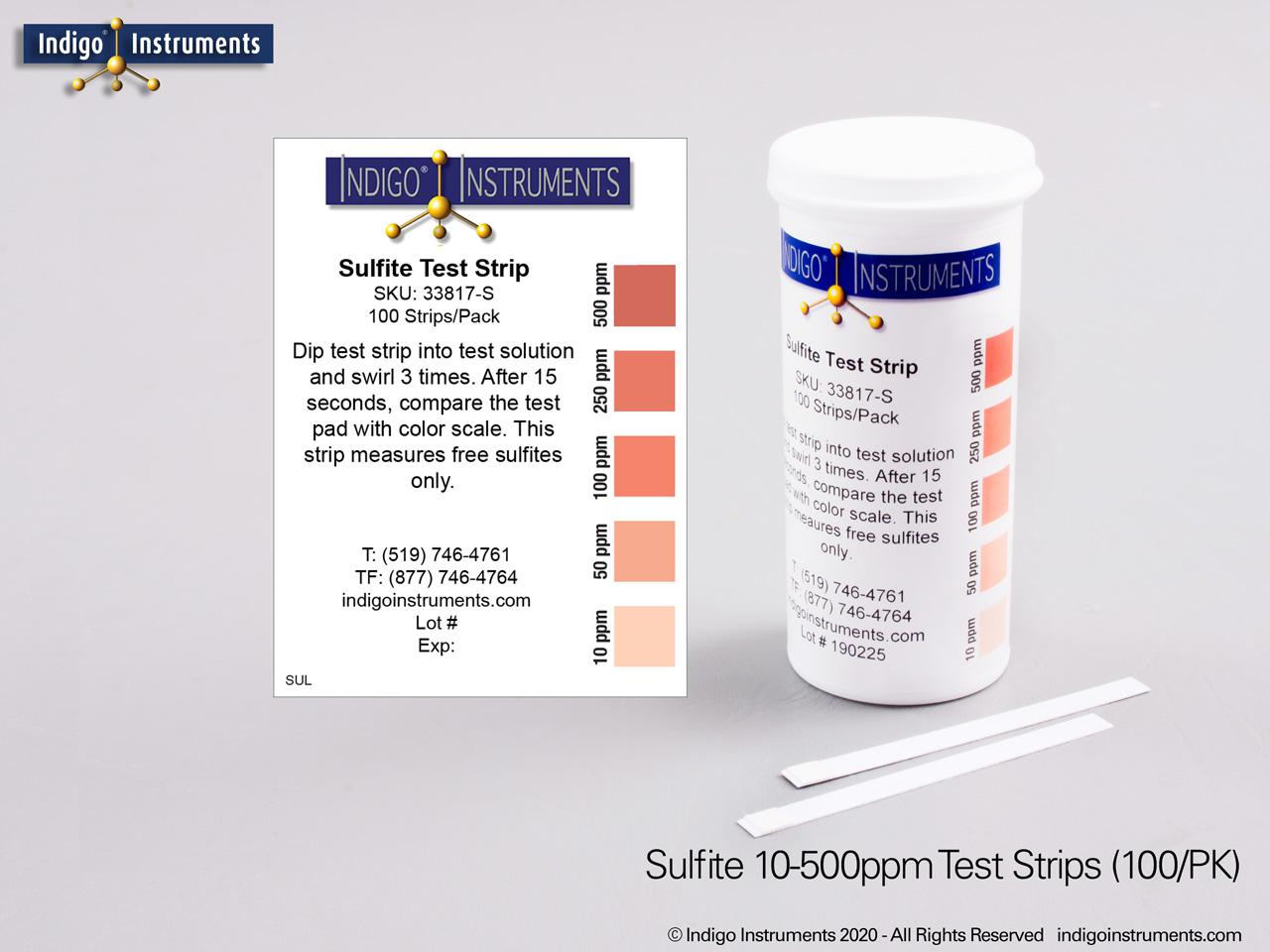
If free sulfite is present above 10ppm, the pad will change color. Read more in our blog on what the 10ppm level really means. For those interested in the chemistry of how these strips work, please refer to this pdf which explains the theory of how free sulfite is detected.
Related information or images
Sulfite Test Strips 50/Vial
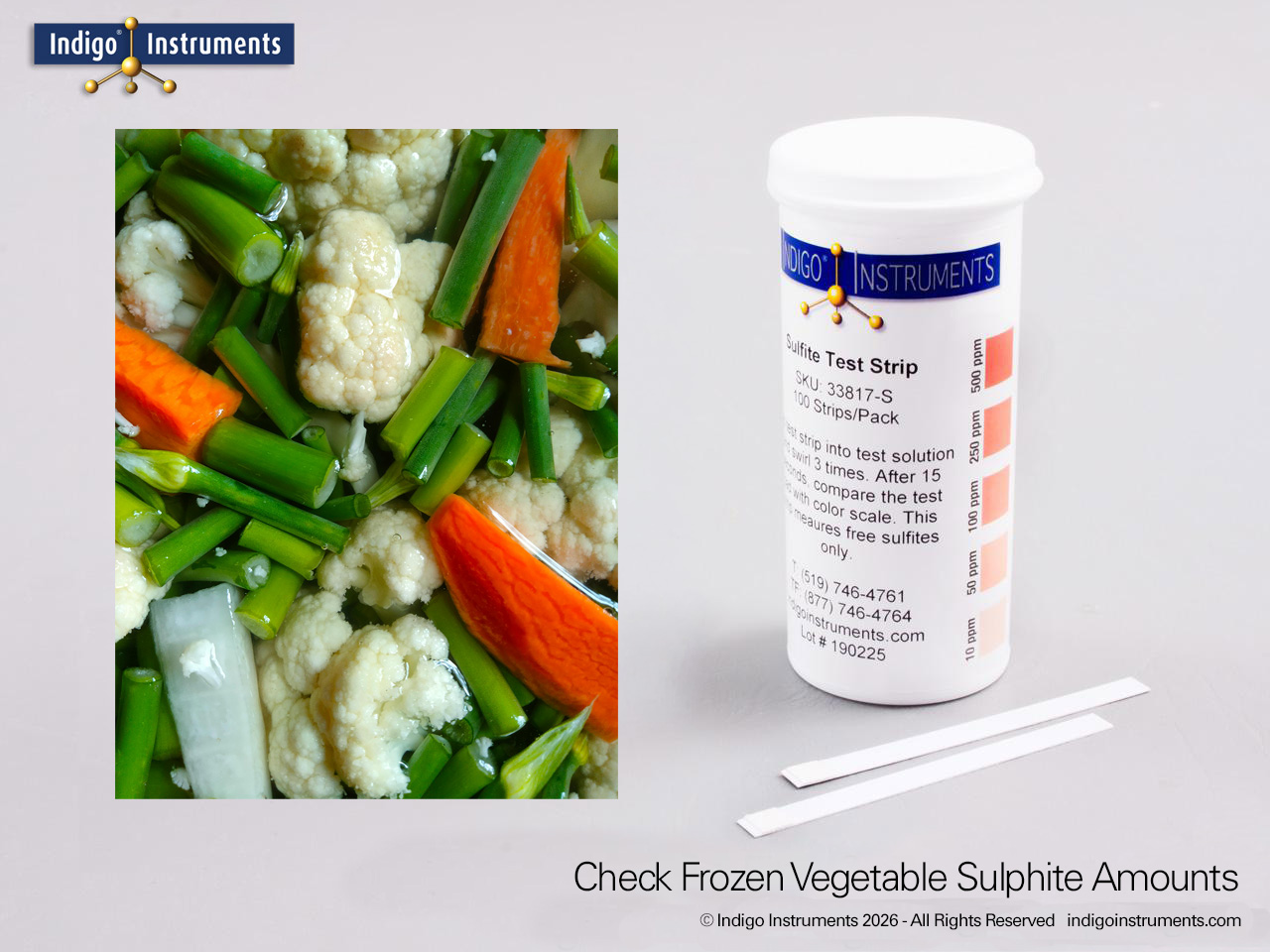
Frozen Vegetables
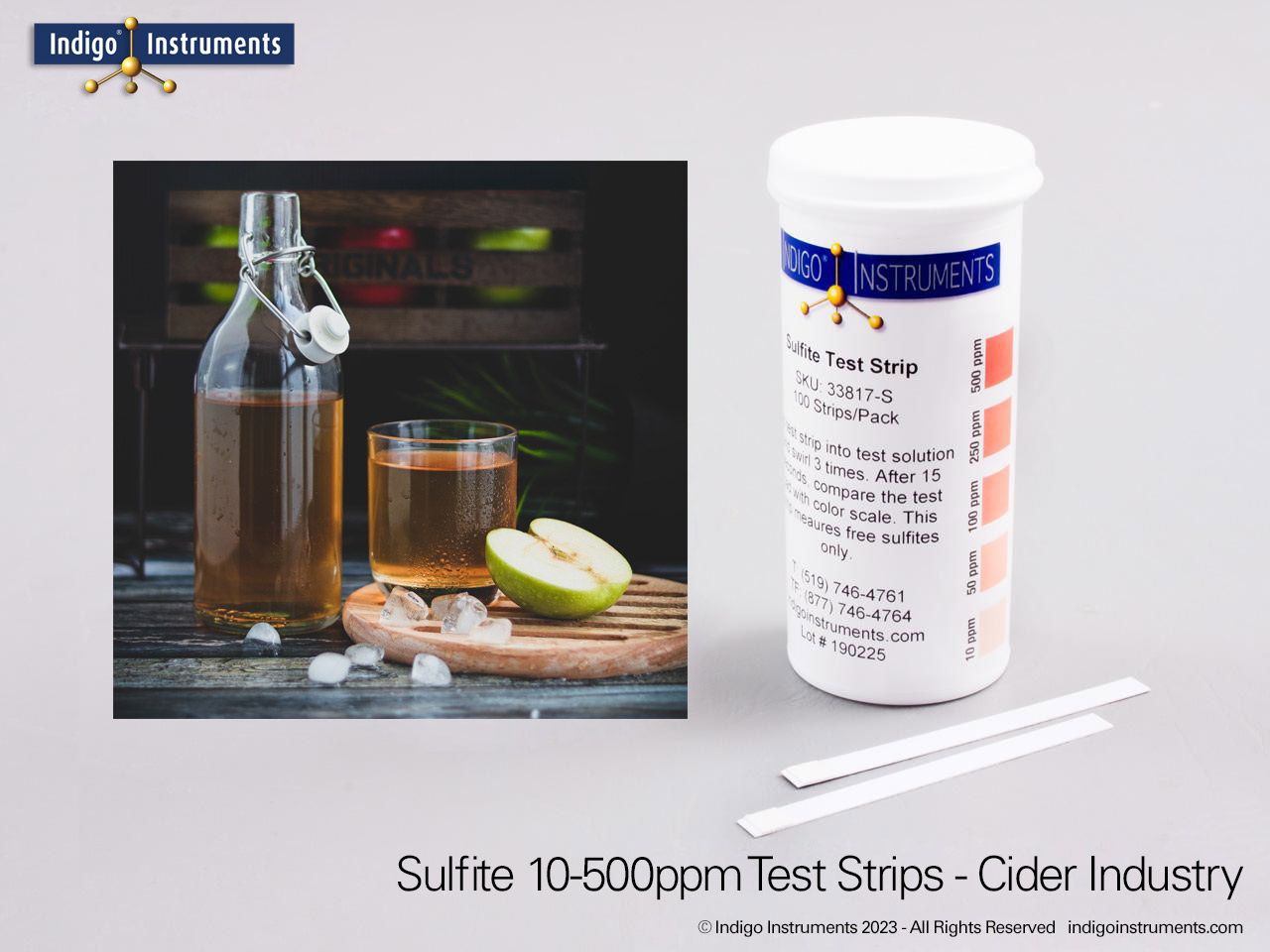
Cider Preservative
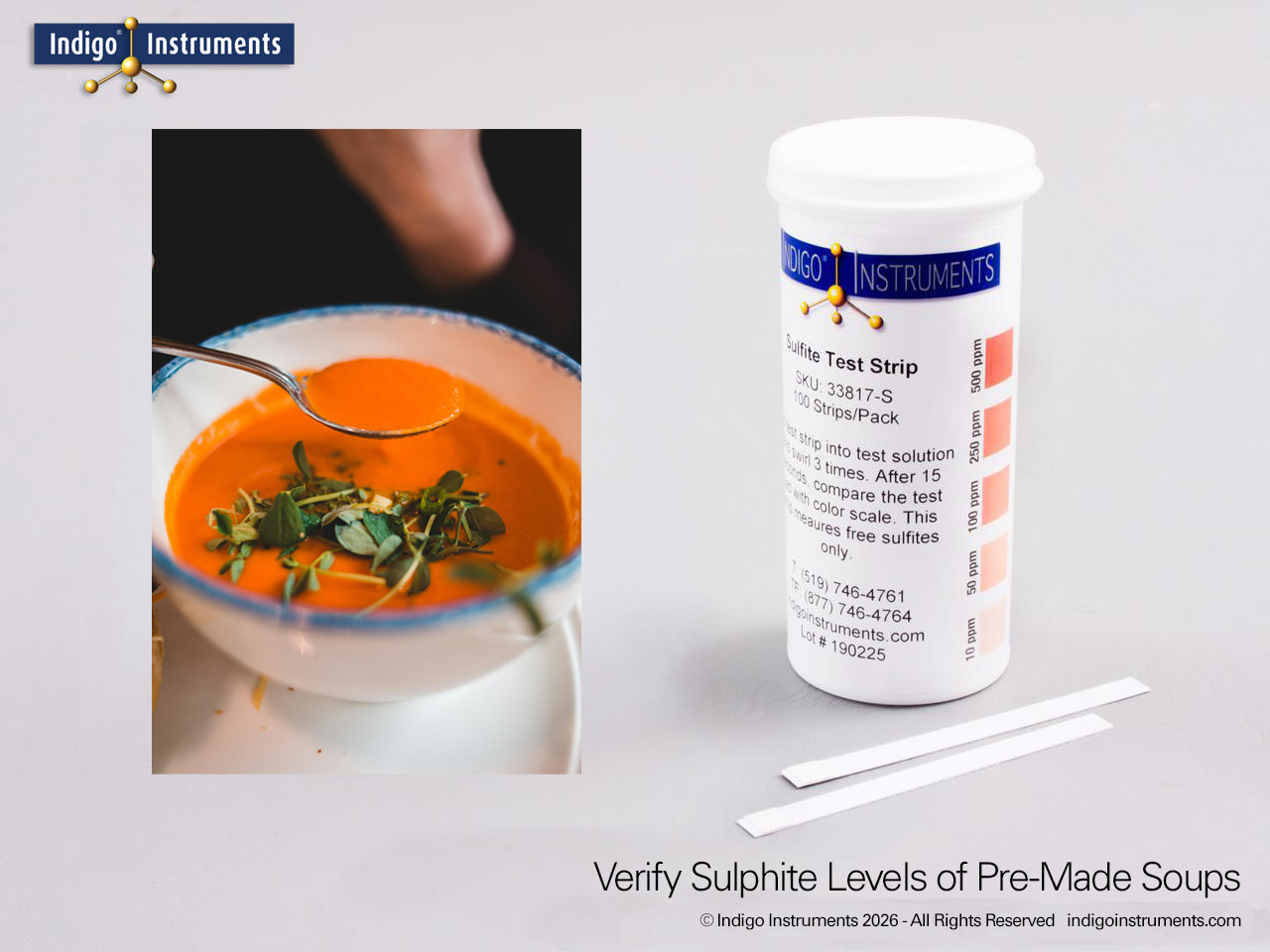
Prepared Soups
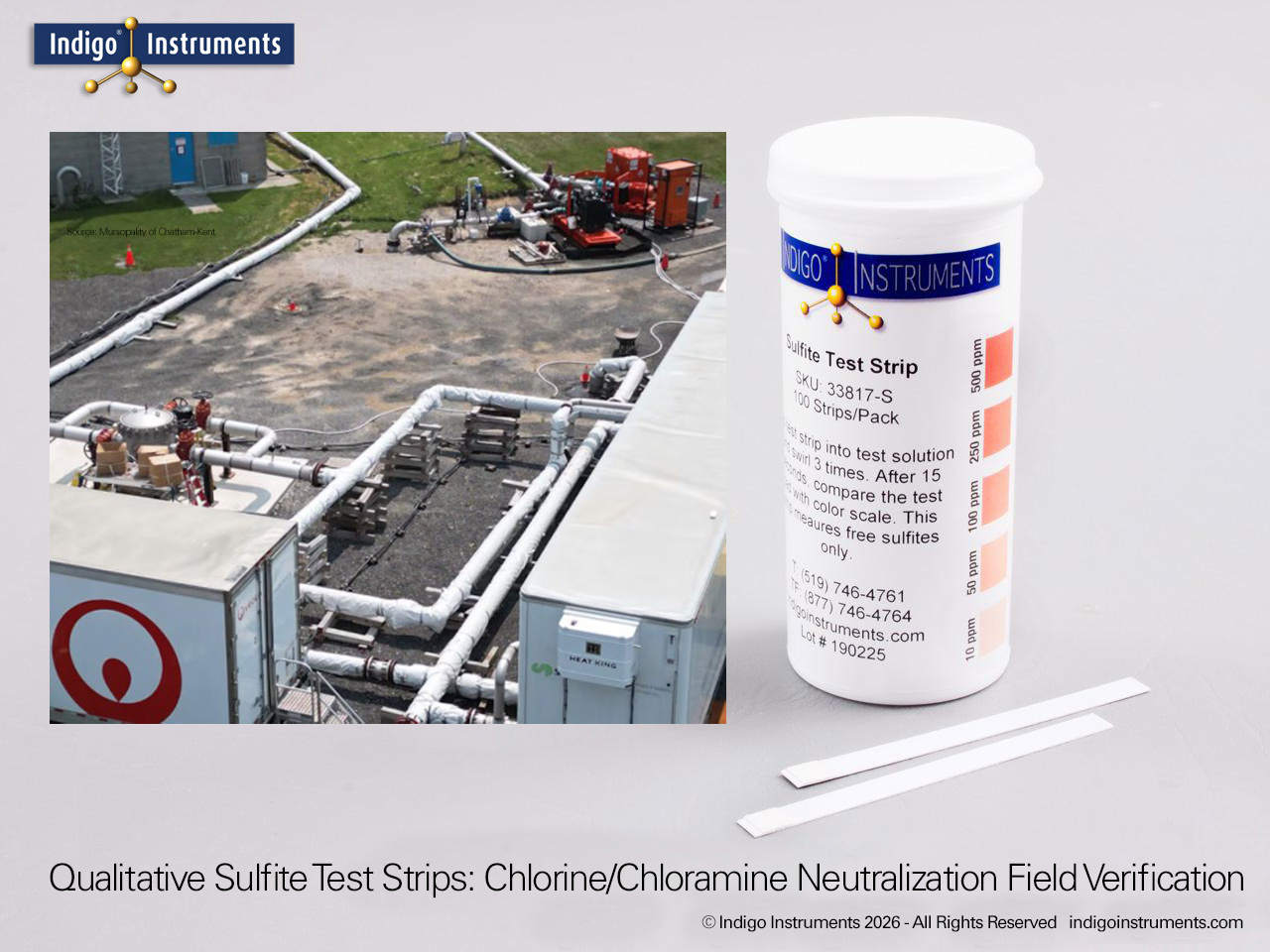
Water Treatment
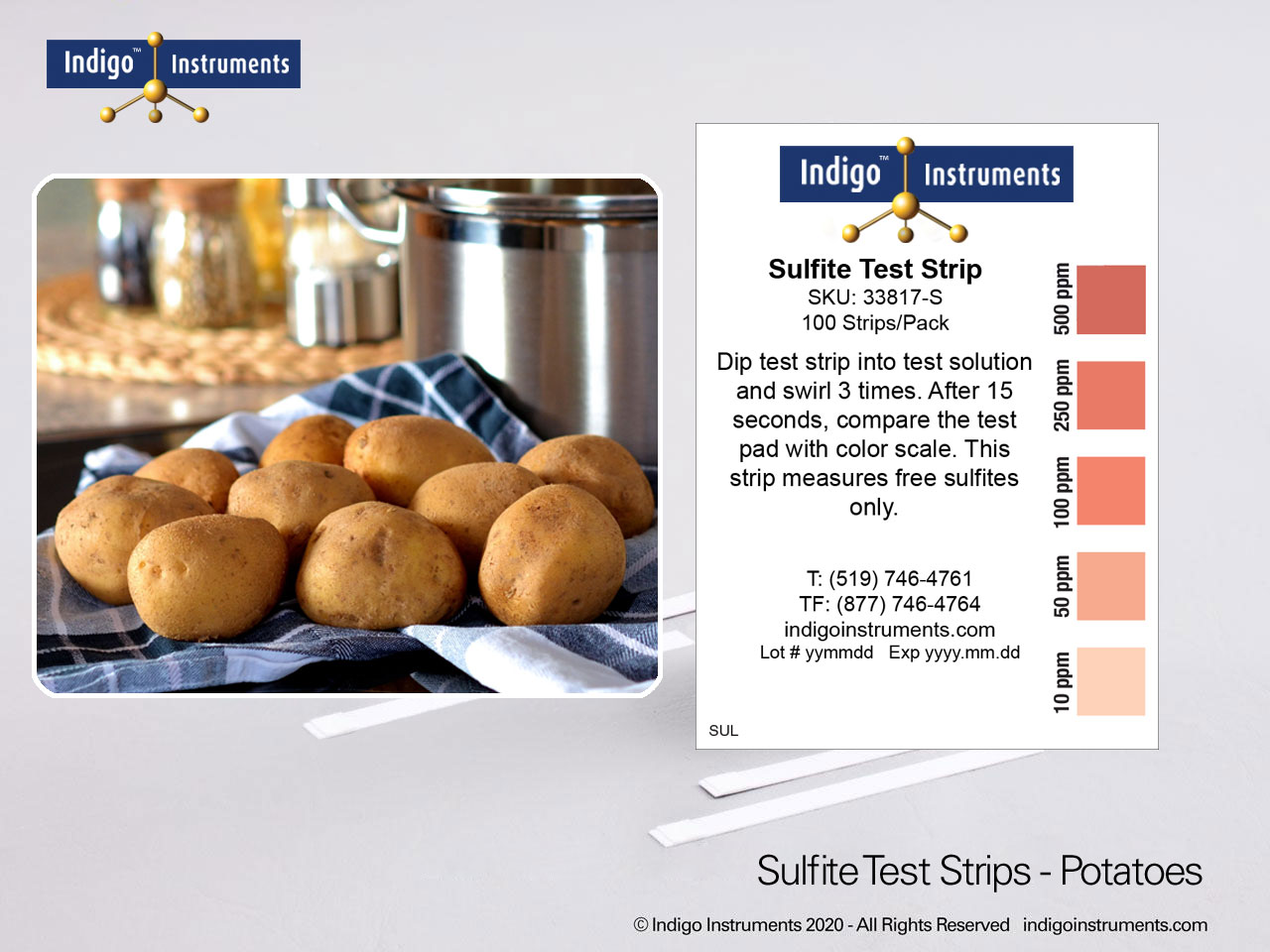
Potatoes
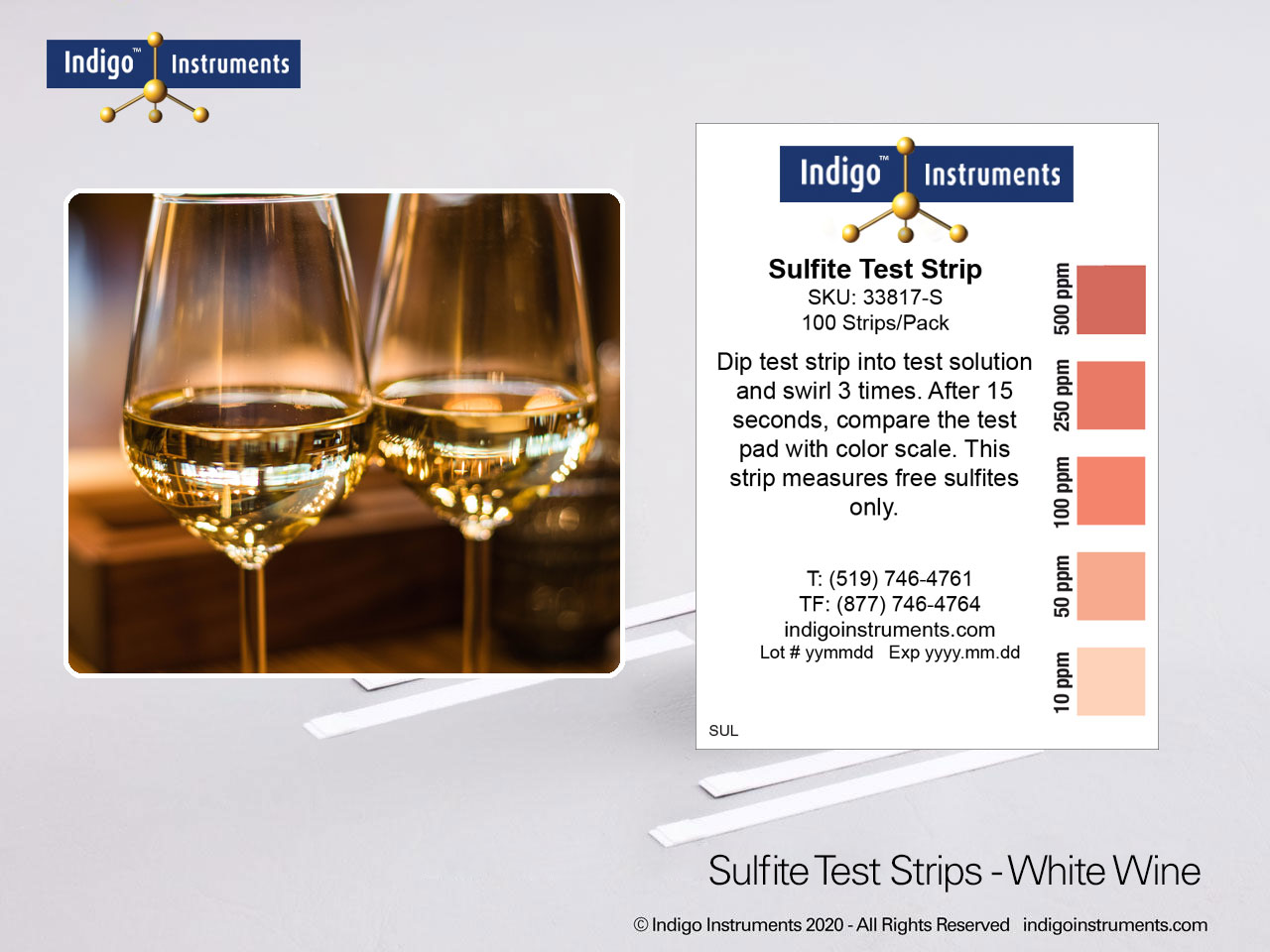
Wine-White
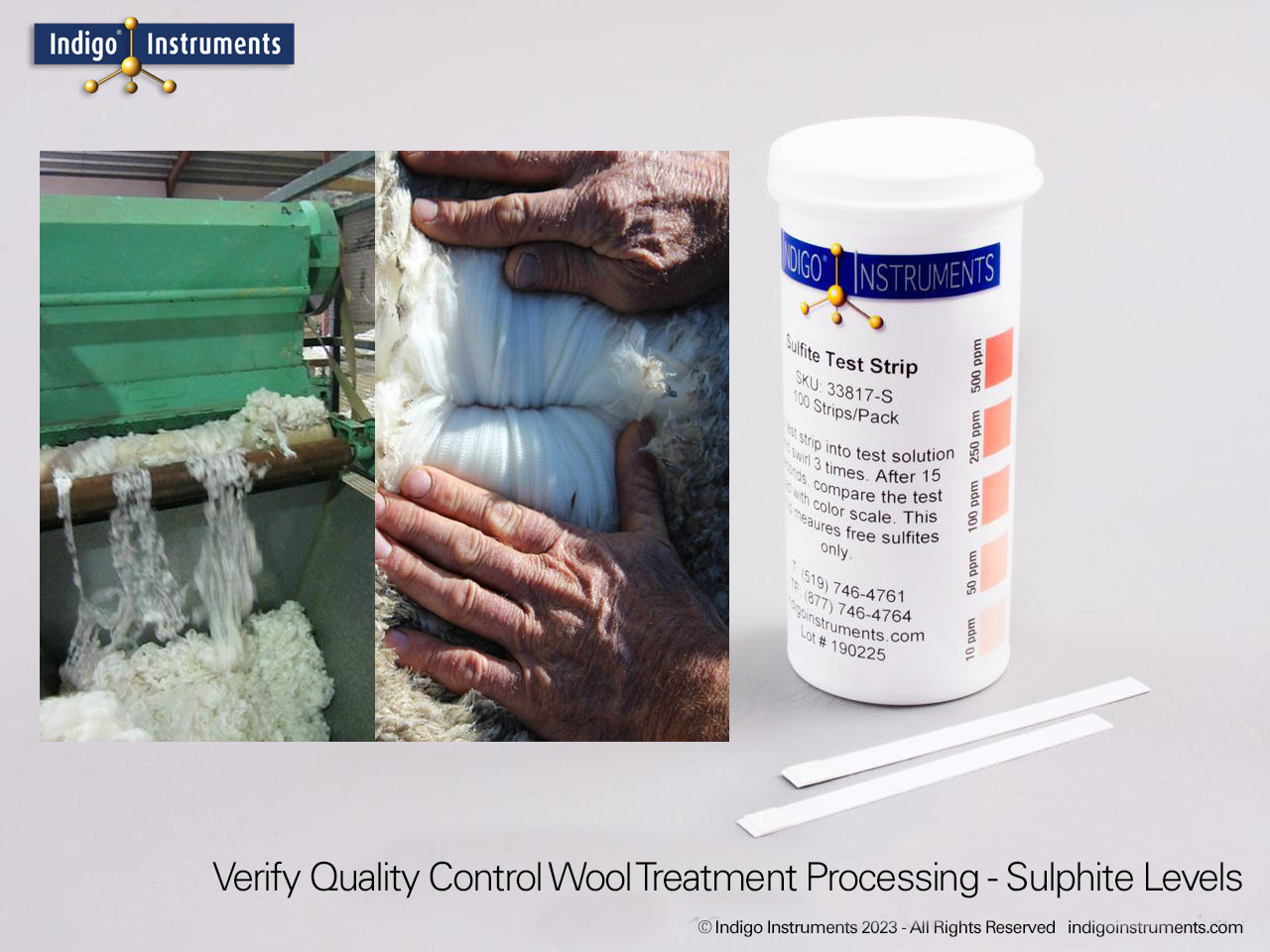
Wool
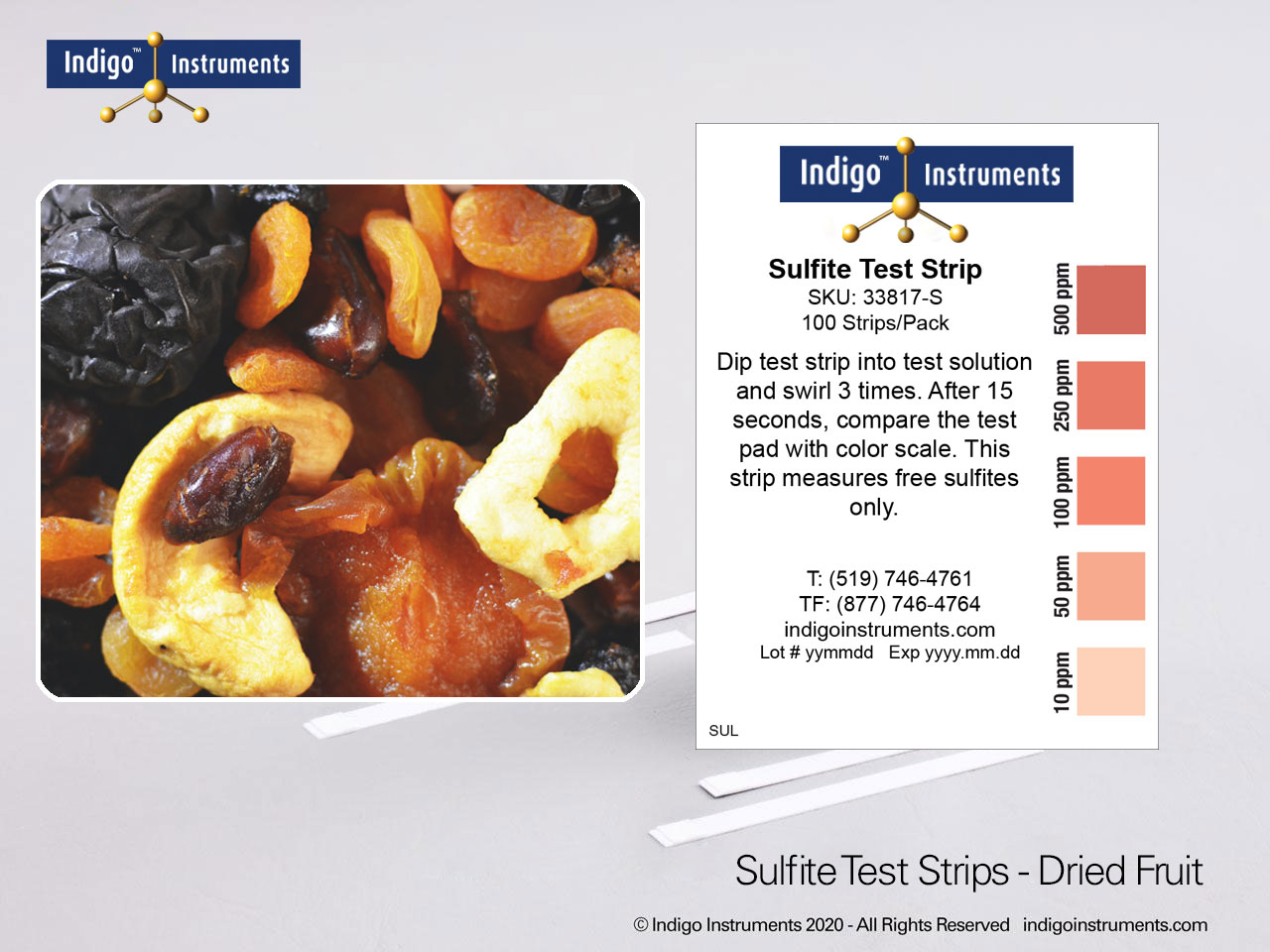
Dried Fruit
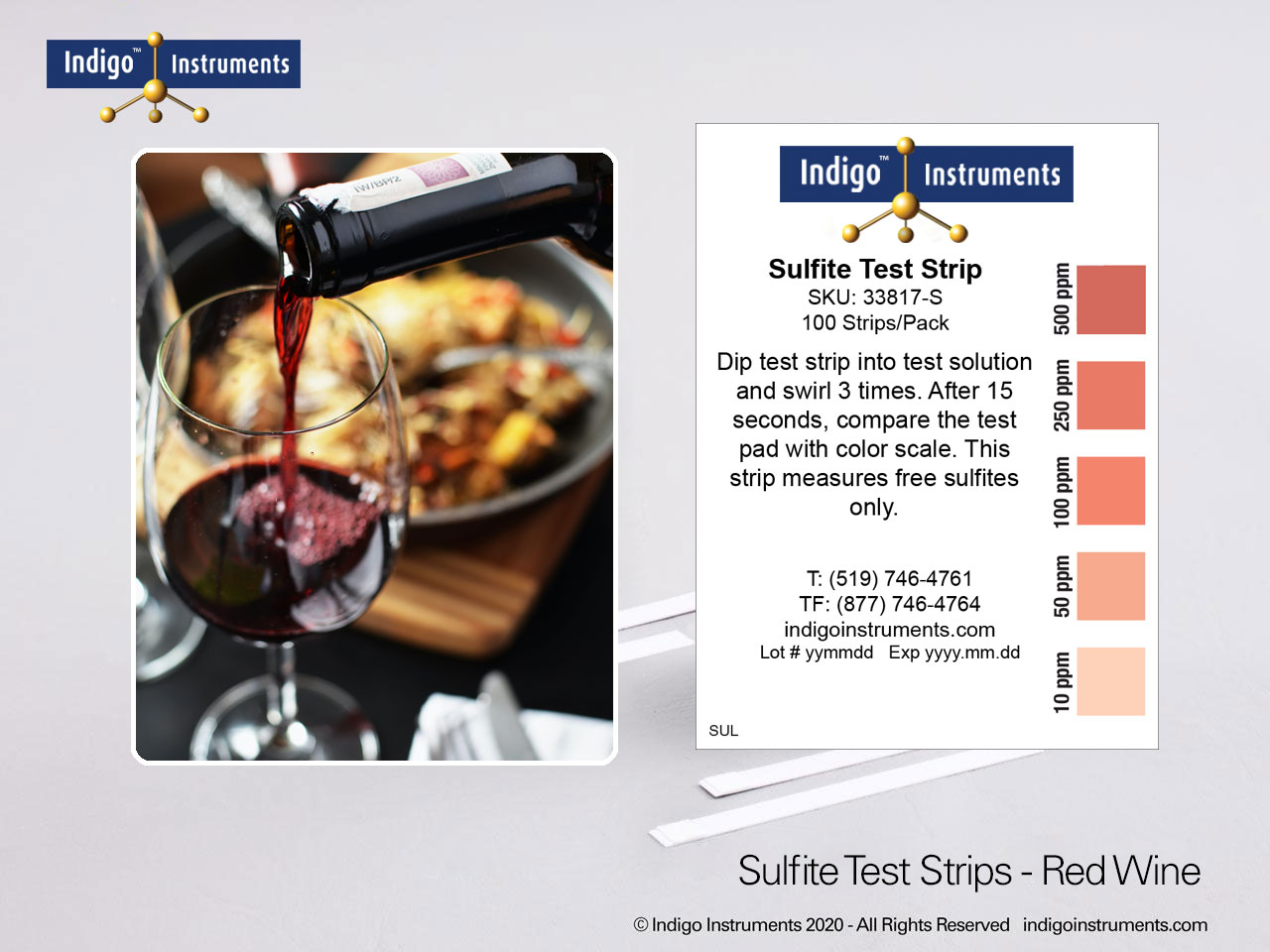
Wine-Red
Specifications
Indigo® sulfite test strips indicate the presence of sulfite ion in increments of 10, 50, 100, 250, and 500ppm after 15 seconds.
The number of strips (50) vial is approximate.
These strips have a guaranteed shelf of 3 years from date of manufacture (indicated by expiration date)
Vial must be kept tightly sealed & kept at typical room temperatures.
Strips test for: sulfite, bisulfite and metabisulfite
Documentation
A Certificate of Conformance is available on request after shipment. Indigo® sulfite test strips are made in USA & calibrated with NIST standards.
Test Strip Documentation
Stability Statement
Certificate of Analysis
SDS
Reviews (2)
2023-10-27
Test strips worked as described, including the red wine citric acid method. I first did some comparisons using sulfites in water. Dipping the strips and the citric acid method gave the same result, albeit a little lower than expected. Solution was mixed to 100 ppm and both strips showed about 75. Used a similar technique on red wine, although dipping does not work. Wine with no sulfites showed zero. Added and got similar readings to the water results. Thanks for the great product and the citric acid trick.
2021-01-22
Great place for a hard to find product. Excellent price! Quick shipping.

Thanks for letting us know. This might interest you since you are in quality control: Can 10ppm of Sulfite & Quat Really Mean Zero?