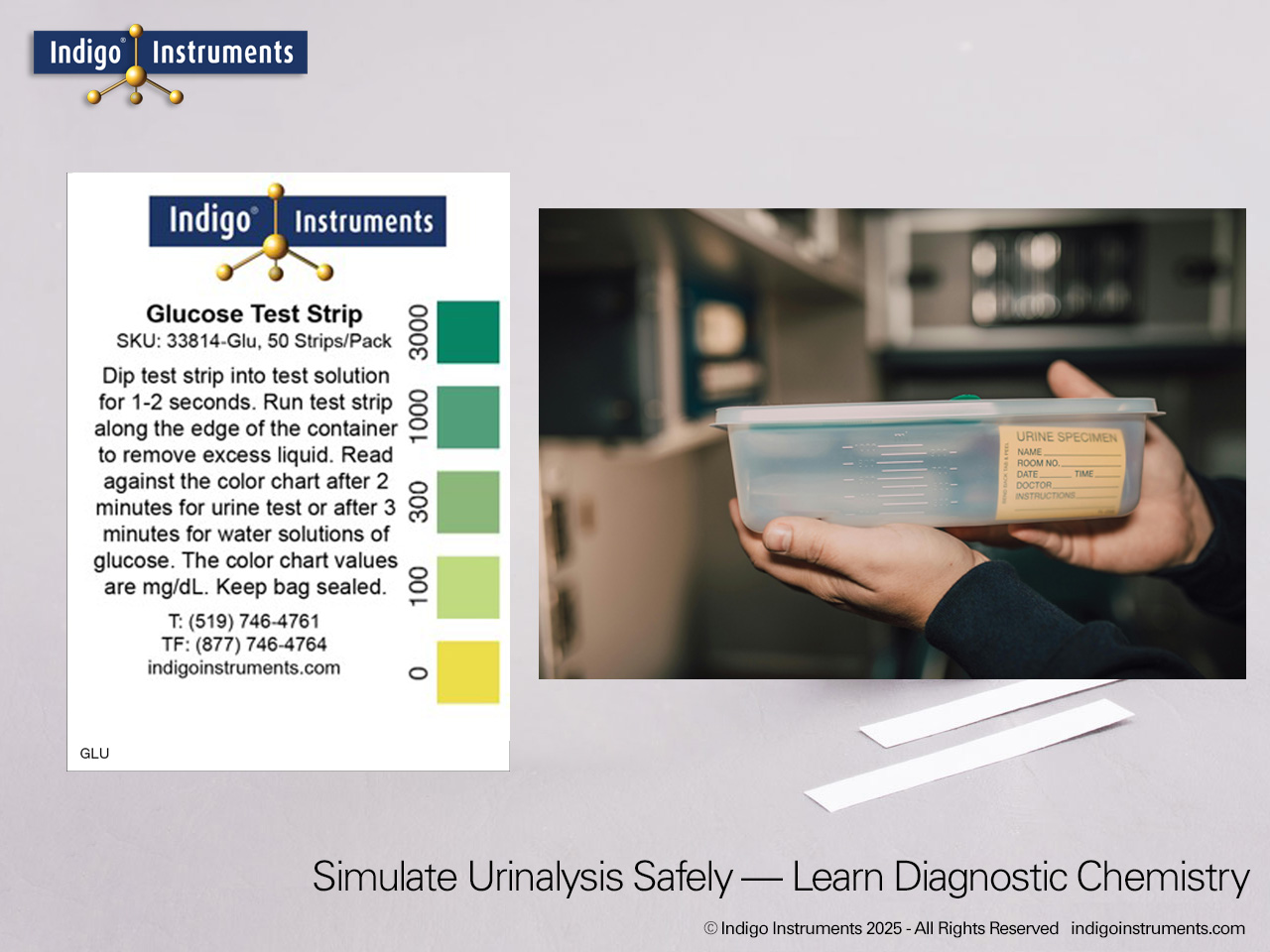
Simulate glucose urinalysis safely in the classroom and explore kidney filtration, diabetes, and enzyme color reactions with Indigo® glucose test strips.
In physiology and biology labs, glucose test strips offer a simple way to simulate urinalysis and demonstrate how glucose appears in urine under certain metabolic conditions. Normally, kidneys reabsorb all glucose from the filtrate. When blood glucose rises above the renal threshold, as in diabetes mellitus, excess glucose remains in urine. By testing artificial urine or glucose solutions, students can safely explore this diagnostic concept without biological samples.
Simulate real diagnostics in the classroom. Use Indigo® glucose test strips to demonstrate kidney function and glucose regulation safely and effectively.
These hands-on models reinforce spatial understanding of glucose’s ring form and help explain why its size limits membrane permeability during osmosis. University students taking organic chemistry will also recognize that the cyclohexane chair-boat flip applies to glucose.
Related information or images
Glucose Test Strips: Osmosis/Diffusion/Urine
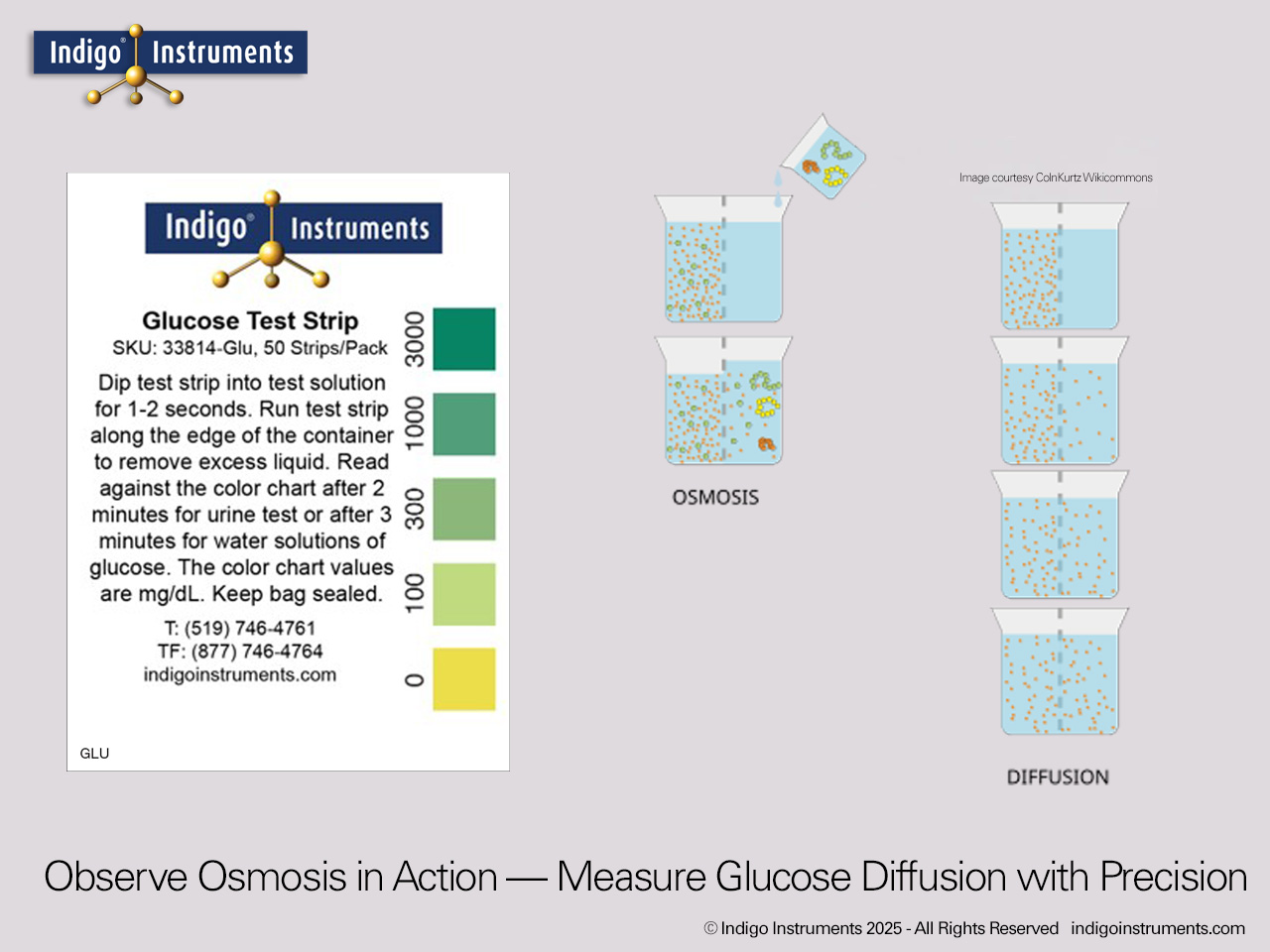
Osmosis & Diffusion
Specifications
The number of strips (50) per pack is approximate.
The guaranteed shelf life is 3 years if stored properly. 5 years is possible if the pack is kept sealed & stored in a cool dark place.
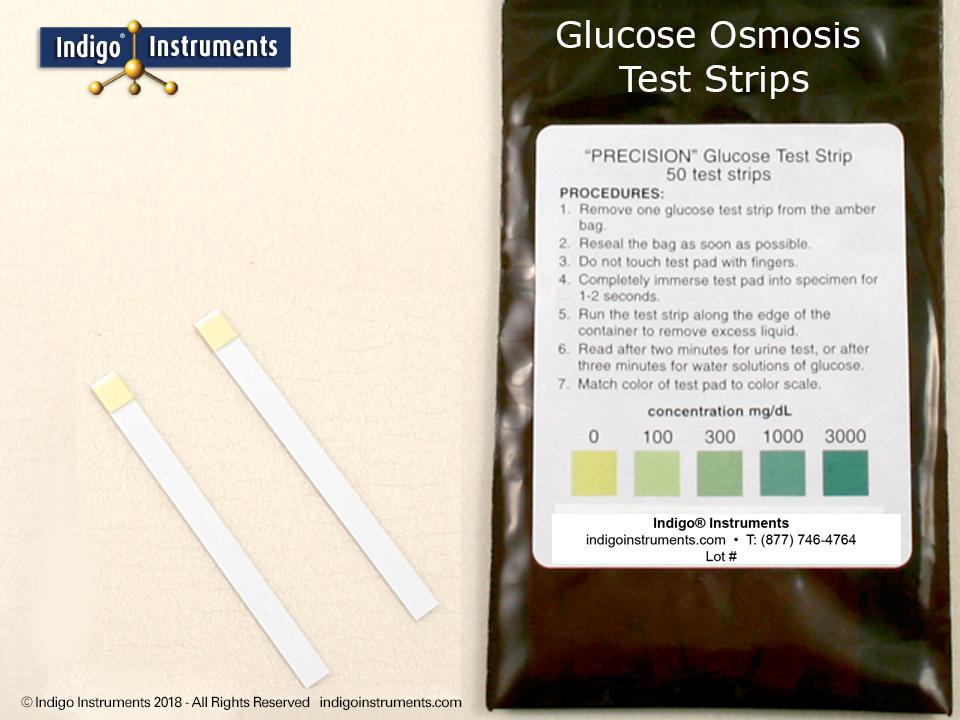
The color test chart indicates concentration levels in mg/dL but you can convert this to mmol/L by multiplying by 0.055. eg. 100mg/dL is equal to 5.5mmol/L.
These strips are not intended for medical diagnosis. Should you decide to test your urine & you get any positive result you should report it to your physician who can order a proper test for your blood sugar levels.