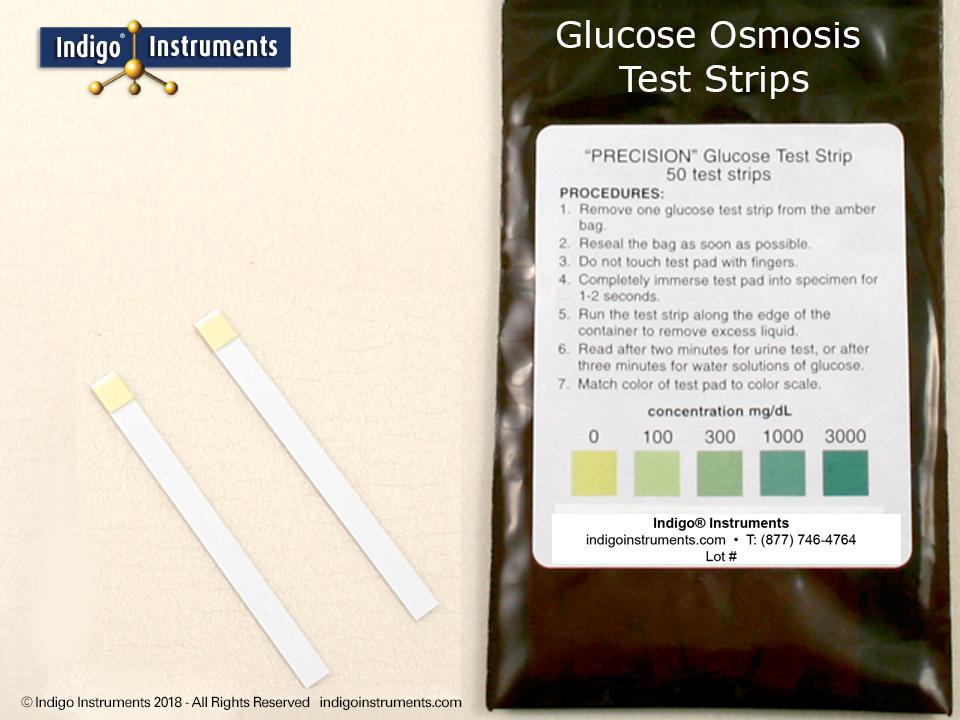
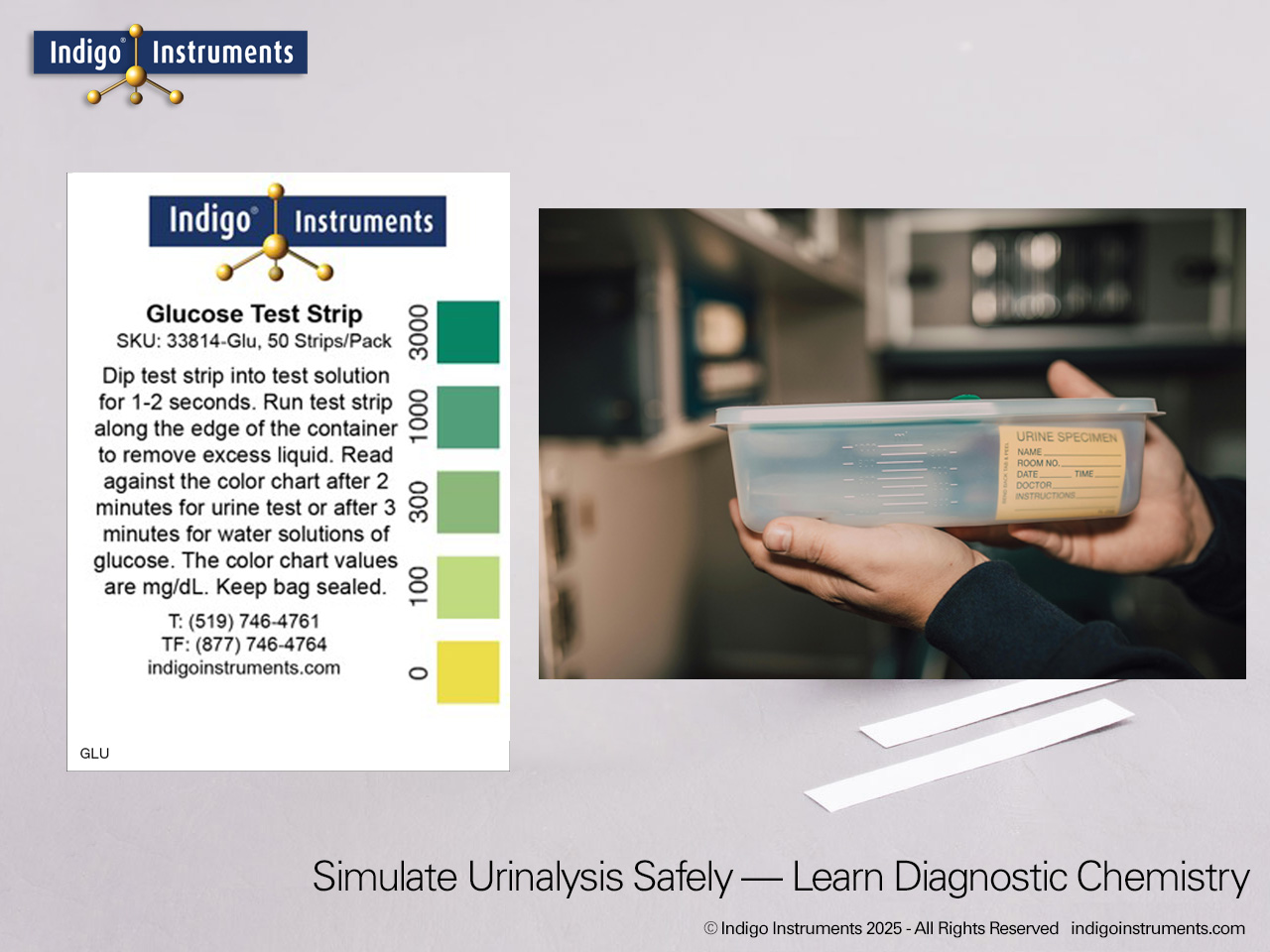
Measure glucose in biology and chemistry labs. Ideal for osmosis, diffusion, and urinalysis experiments. Fast, reliable color-change test strips.
Indigo® glucose test strips provide a quick, visual way to measure glucose concentration in aqueous solutions. They are ideal for osmosis and diffusion experiments, where glucose acts as a model solute, and for urinalysis labs, where students explore how glucose appears in urine under different physiological conditions. Each strip contains an enzyme-based glucose reagent that changes color in proportion to glucose concentration, allowing accurate comparisons across a range of biological and chemical applications.
Indigo® glucose test strips are a simple, reliable way to teach core biological and chemical principles, from cell membranes to metabolism. Order now to support your next osmosis, diffusion, or urinalysis lab.
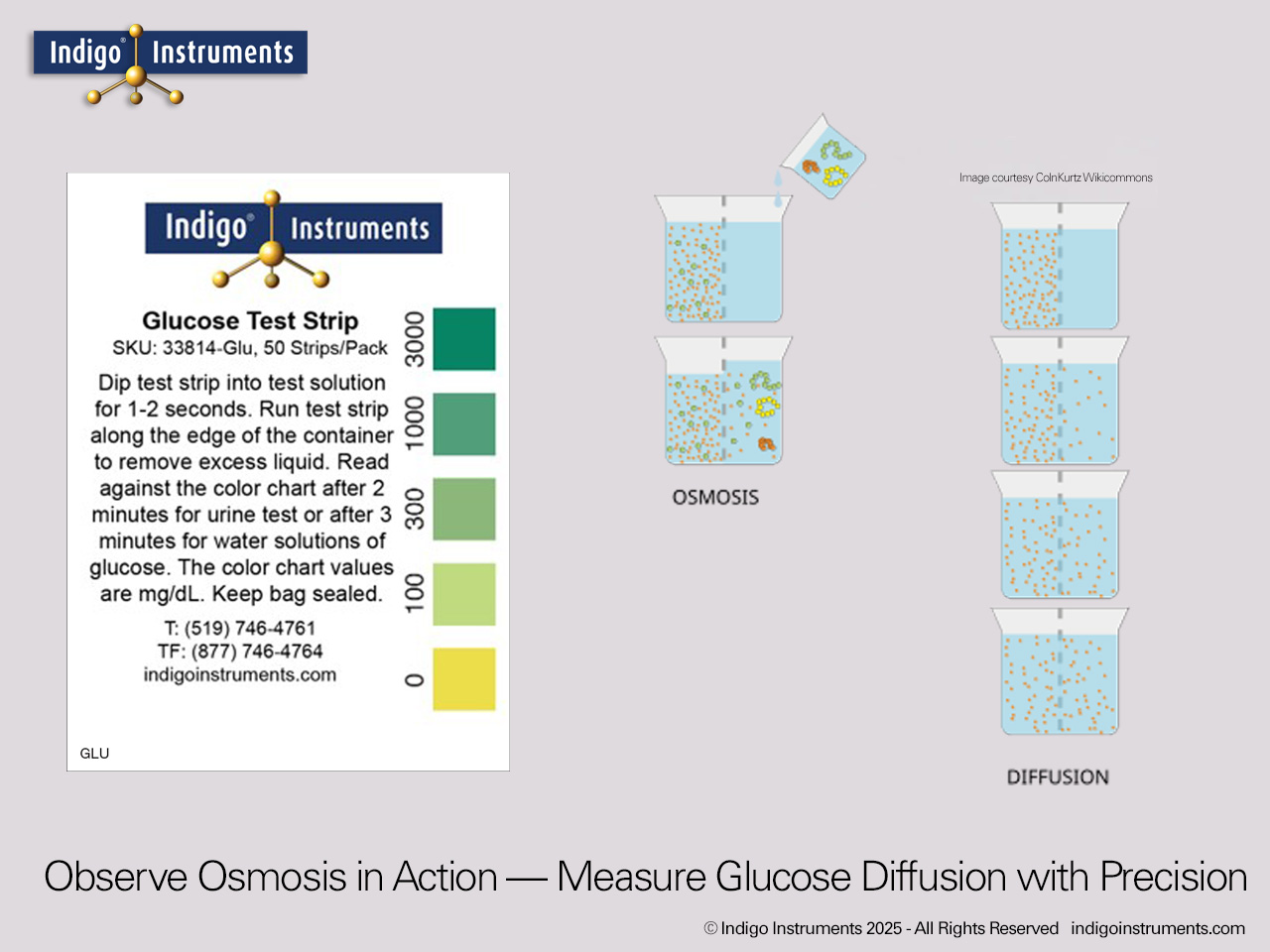
| Concept | Description | Activity | Learning Link |
|---|---|---|---|
| Osmosis | Water moves from low to high solute concentration through a semi-permeable membrane. | Use glucose strips to detect concentration changes inside and outside the membrane. | Visualizes the driving force behind water movement in cells. |
| Diffusion | Glucose molecules move down their concentration gradient until equilibrium is reached. | Measure glucose before and after diffusion between solutions. | Illustrates molecular motion and equilibrium dynamics. |
| Concentration Gradient | The difference in solute levels determines rate and direction of molecular movement. | Test multiple concentration pairs and graph diffusion rate vs. gradient strength. | Links experimental observation to Fick’s laws of diffusion. |
Students can build glucose molecular models to help visualize the molecule behind these diffusion and urinalysis experiments:
These hands-on models reinforce spatial understanding of glucose’s ring form and help explain why its size limits membrane permeability during osmosis. University students taking organic chemistry will also recognize that the cyclohexane chair-boat flip applies to glucose.
The color test chart indicates concentration levels in mg/dL but you can convert this to mmol/L by multiplying by 0.055. eg. 100mg/dL is equal to 5.5mmol/L.
These strips are not intended for medical diagnosis. Should you decide to test your urine & you get any positive result you should report it to your physician who can order a proper test for your blood sugar levels.