Osmosis and Diffusion Glucose Test Strips
SKU: 33814-Glu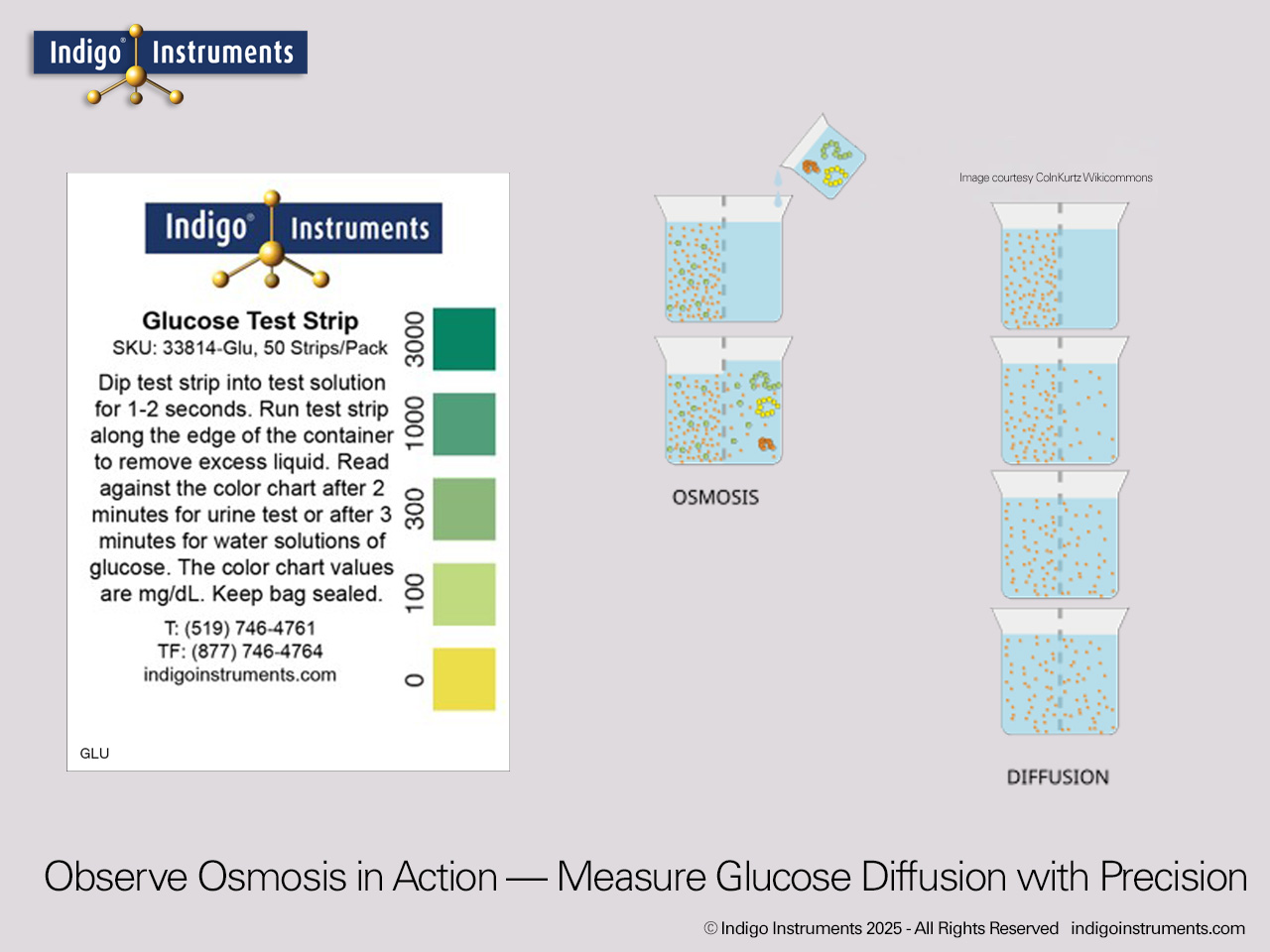
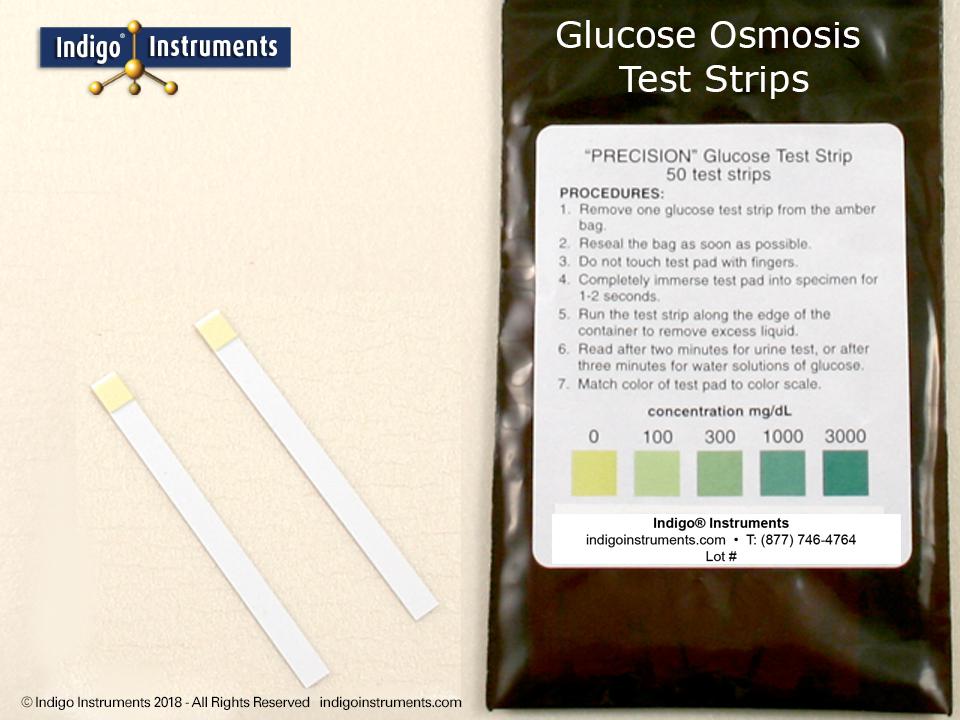
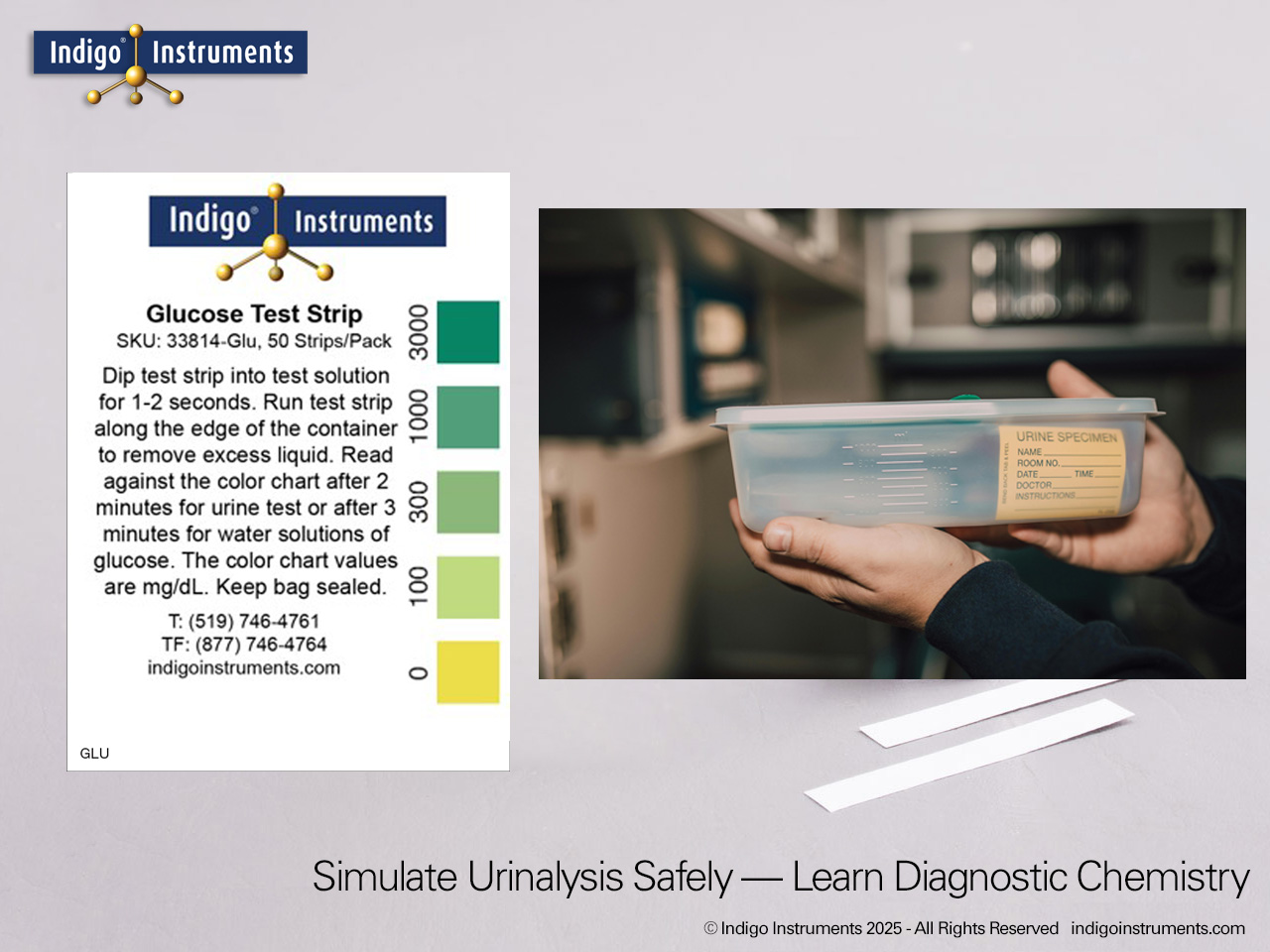
Demonstrate the principles of osmosis and diffusion using Indigo® glucose test strips. These strips help visualize concentration gradients, membrane permeability, and enzyme reactions in one easy lab.
Osmosis and diffusion are fundamental to understanding how molecules move in living systems. Using glucose test strips, students can visualize how solute concentration gradients affect the movement of water and glucose across a semi-permeable membrane. By comparing glucose concentration inside and outside a dialysis tube before and after exposure, learners directly observe diffusion in action. The enzyme-based color change offers a quick, visual confirmation of molecular movement and concentration differences.
Bring osmosis and diffusion to life. Order Indigo® glucose test strips today and let your students see concentration gradients in real time.
Osmosis is the movement of solvent molecules across a selectively permeable membrane such as dialysis tubing from a lower to higher region of solute concentration. The process continues until both sides are in equilibrium. Osmosis is important in living systems since biological membranes are semipermeable. Large polar molecules such as glucose cannot cross but smaller non-polar ones such as water can. Osmosis is the primary method that transports water in and out of cells.
A common classroom osmosis experiment with glucose and starch demonstrates how solute size affects membrane permeability. Students typically place a mixture of glucose and starch inside dialysis tubing and immerse it in distilled water or an indicator solution. Because glucose molecules are small, they diffuse across the semi-permeable membrane, while the much larger starch molecules remain inside the tubing. This setup visually reinforces key concepts such as selective permeability, molecular size, and solute-driven water movement, and it pairs well with Indigo® glucose test strips, which can be used to confirm the presence of glucose in the surrounding solution.
Experimental Concept for Indigo® Glucose Test Strips
- Prepare glucose solutions of known concentration.
- Fill a length of dialysis tubing (“model cell”) with one solution and immerse it in another of different concentration.
- After a set time, test both solutions using glucose strips.
- Record color change and interpret which direction diffusion occurred.
Teaching Extension
Combine this lab with starch or iodine tests to explore molecule size and membrane selectivity. Glucose strips provide quantitative feedback, while other tests show which solutes remain trapped, deepening understanding of molecular permeability.
Alternatively, A potato glucose osmosis experiment is a simple way to demonstrate how water moves in and out of plant cells based on solute concentration. Students place potato pieces in different glucose solutions and measure mass changes to visualize tonicity and osmotic flow. This classic lab reinforces concepts like concentration gradients and cell membrane permeability, and pairs well with related diffusion and osmosis activities.