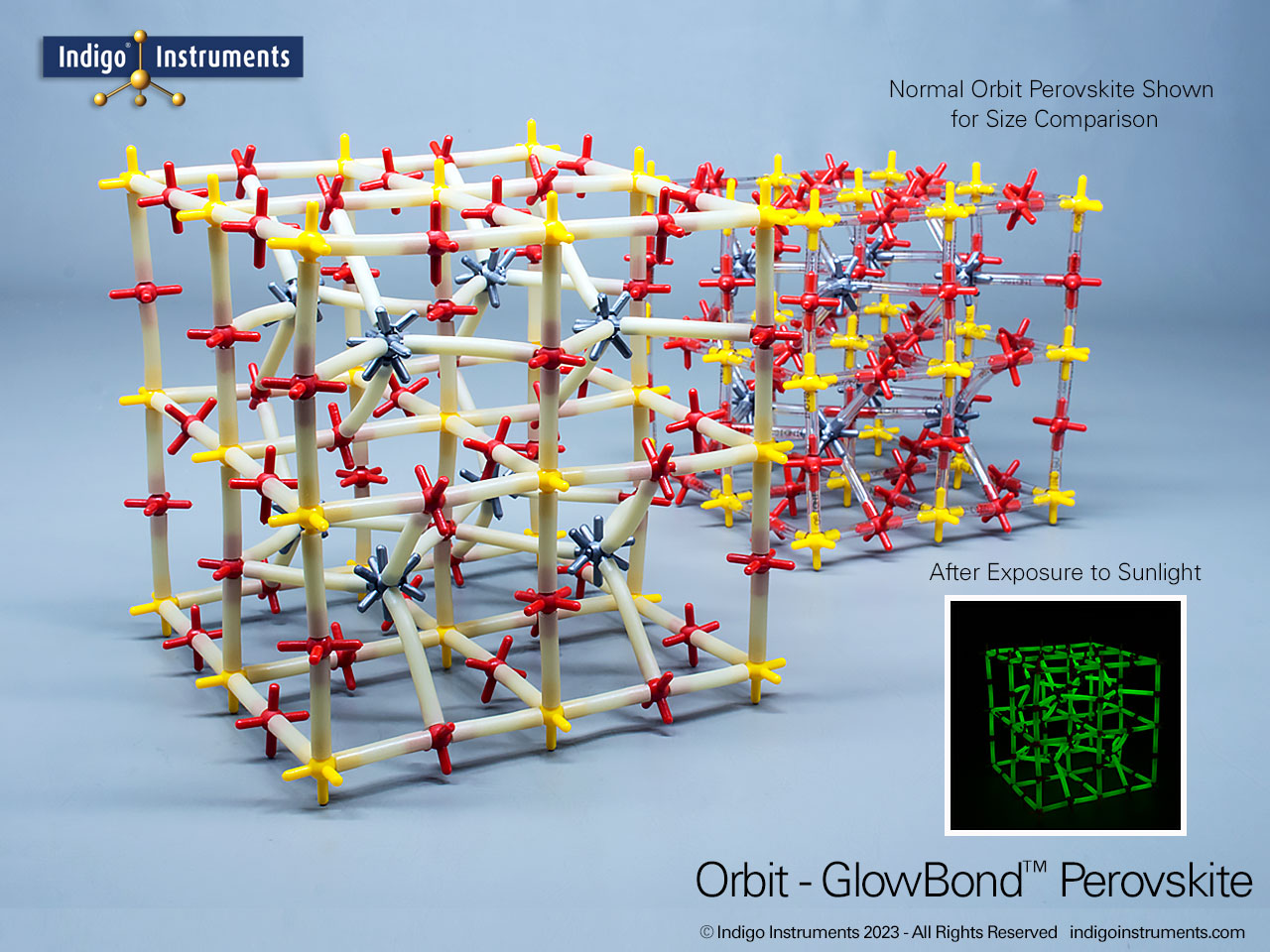
Perovskite Unit Cell Molecular Model
SKU: 68790W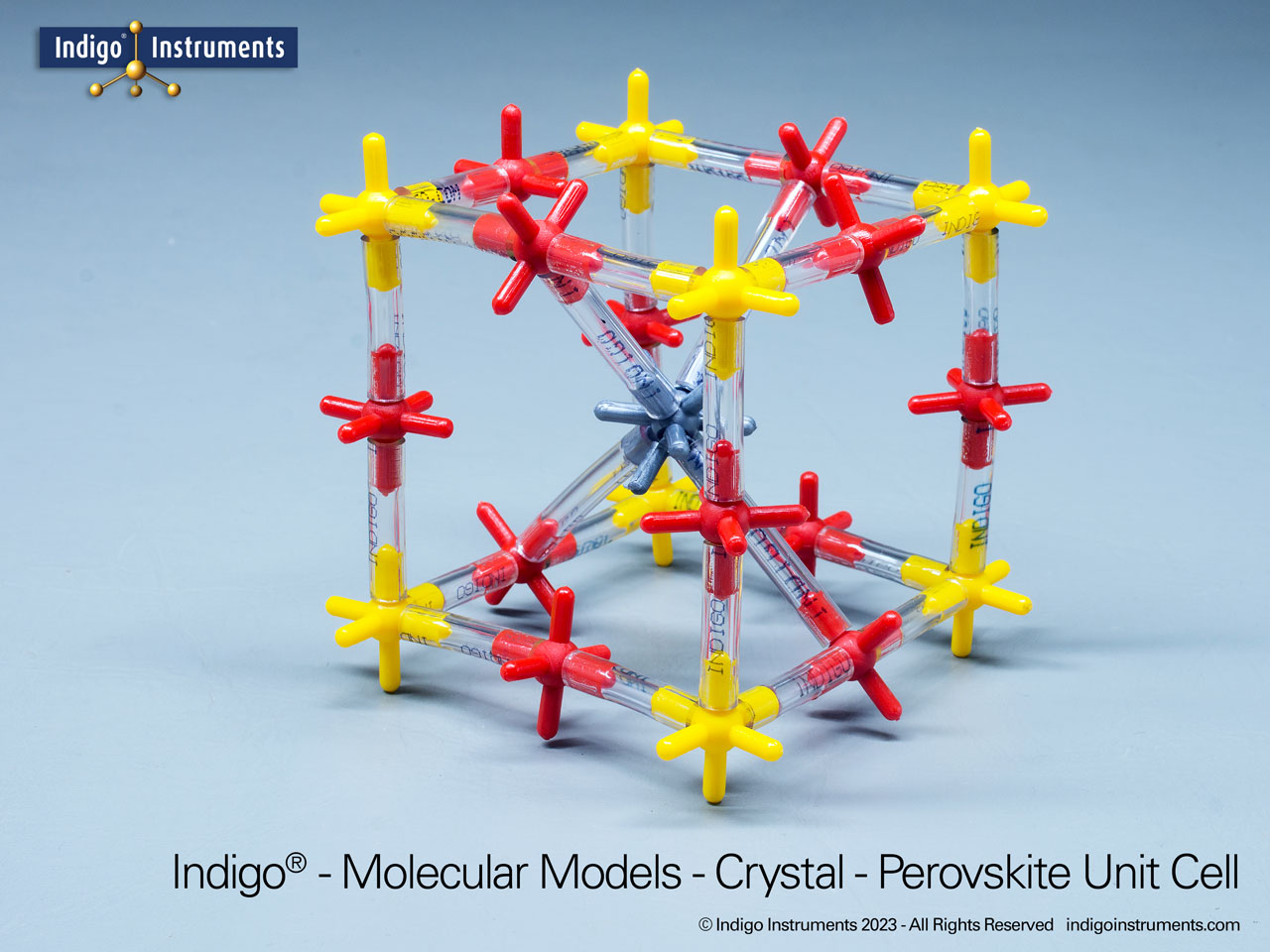
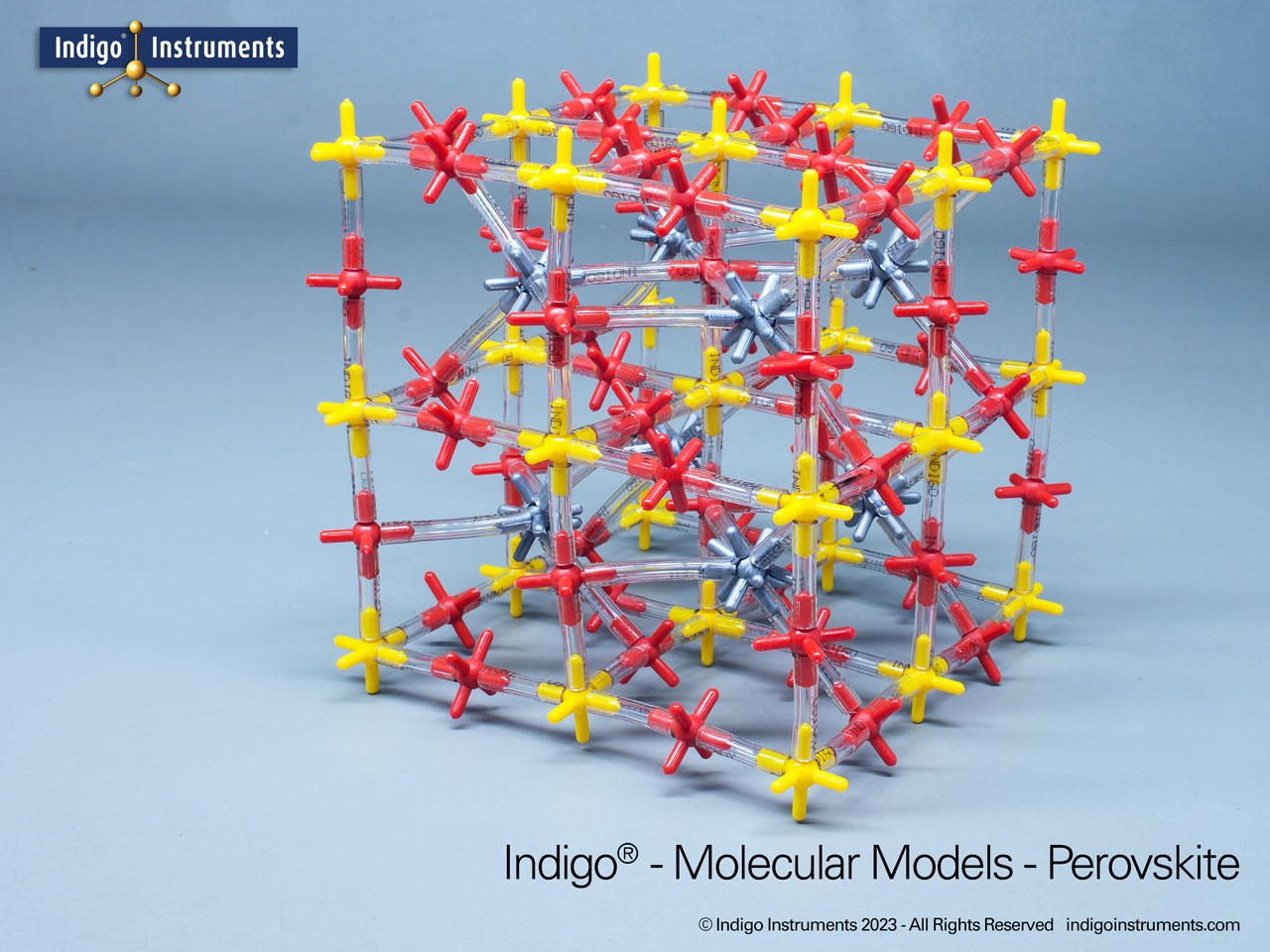
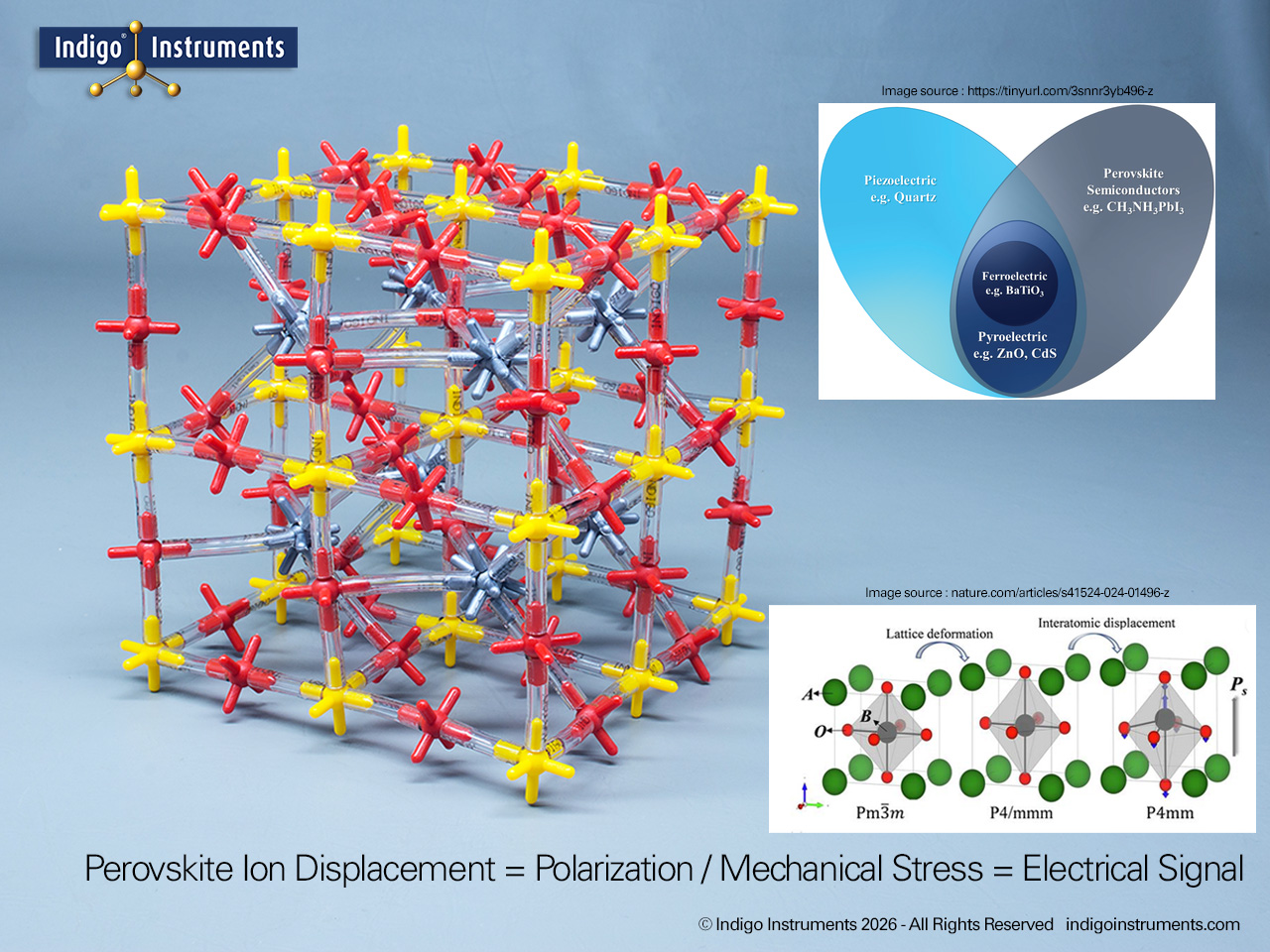
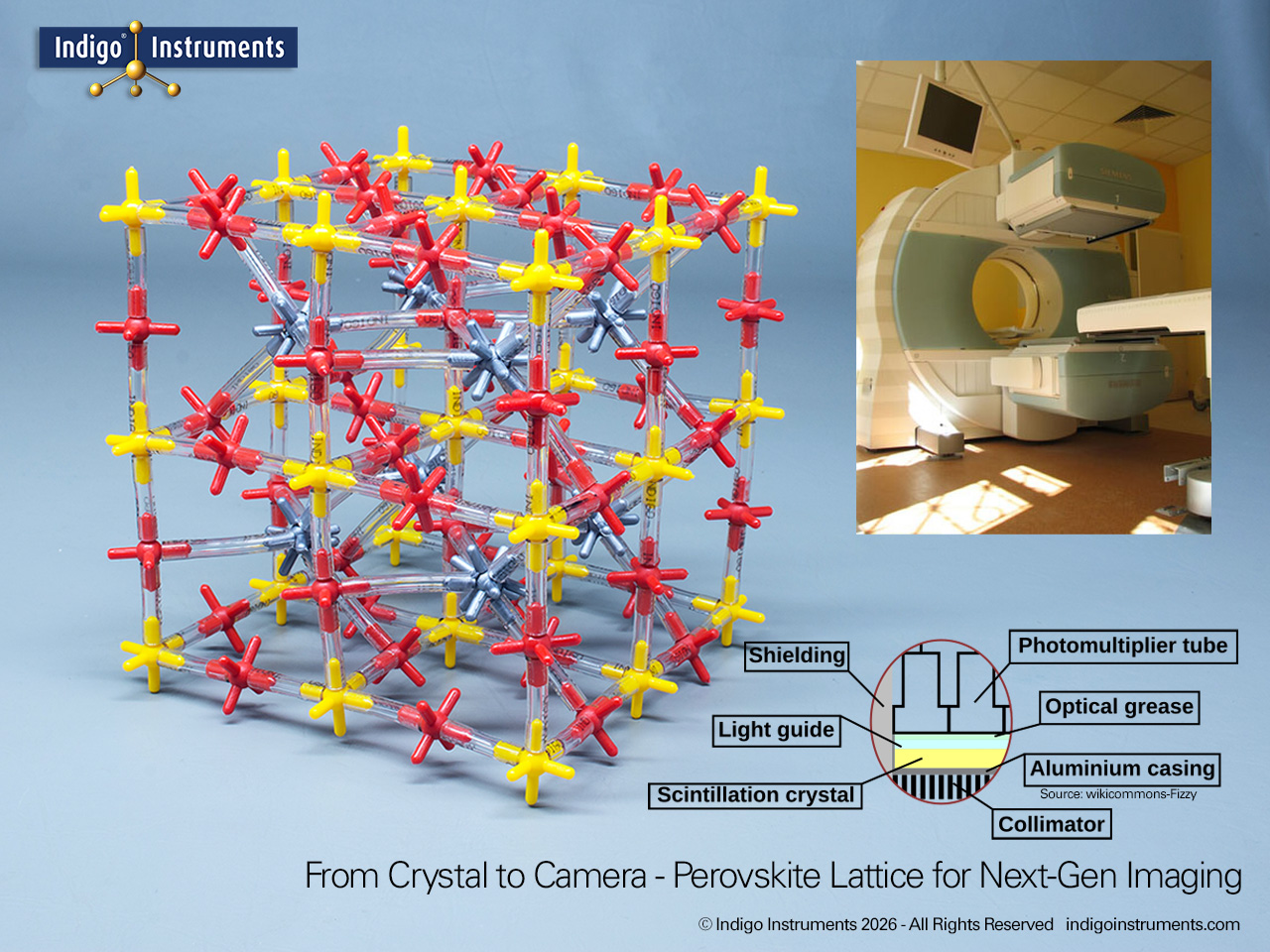
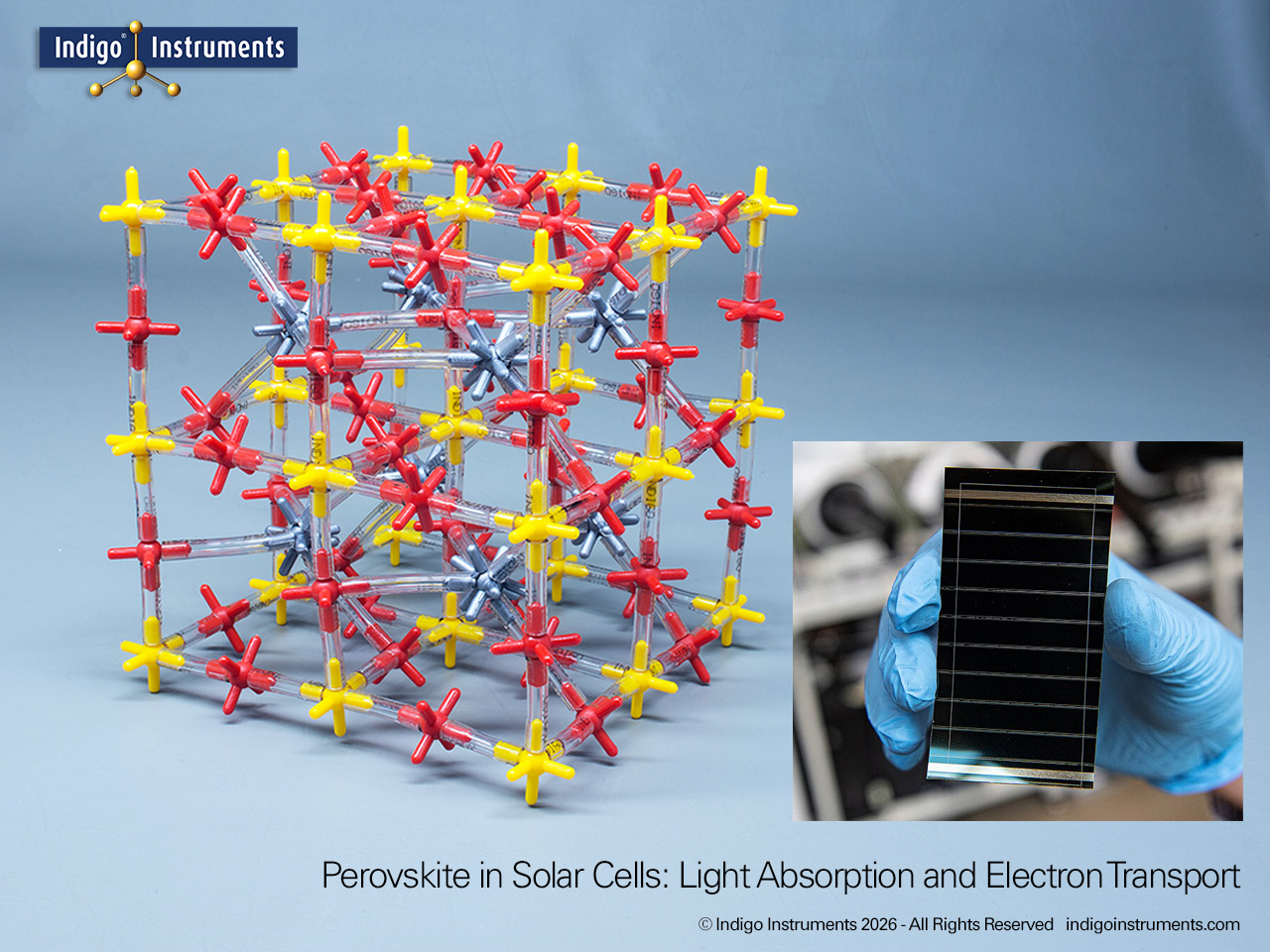
The Indigo® perovskite unit cell molecular model shows Oh point group symmetry, ABX3 cubic crystal structure, and 12-coordinate A-site cation geometry. It's ideal for solid state chemistry, crystallography, materials science, and energy research courses.
The Indigo® perovskite unit cell model reflects the full cubic symmetry of an ideal perovskite. It also helps understand the structure's general formula ABX3, its belonging to the Oh point group and the crystallographic space group Pm3m. In calcium titanate (CaTiO3), the prototype perovskite mineral, the A-site Ca2+ cations occupy the corners of the unit cell in a 12-coordinate cuboctahedral geometry, the B-site Ti4+ cation sits at the body center octahedrally coordinated by six oxygen anions, and the X-site O2- anions occupy the face centers of the cube.
Indigo Instruments has held inventory of genuine Cochranes of Oxford (Orbit) parts for 30+ years (See Skeletal (Orbit/Minit)) that are compatible with every molecular model we have sold since day 1. This level of quality may appear expensive but no parts support from other vendors costs even more.