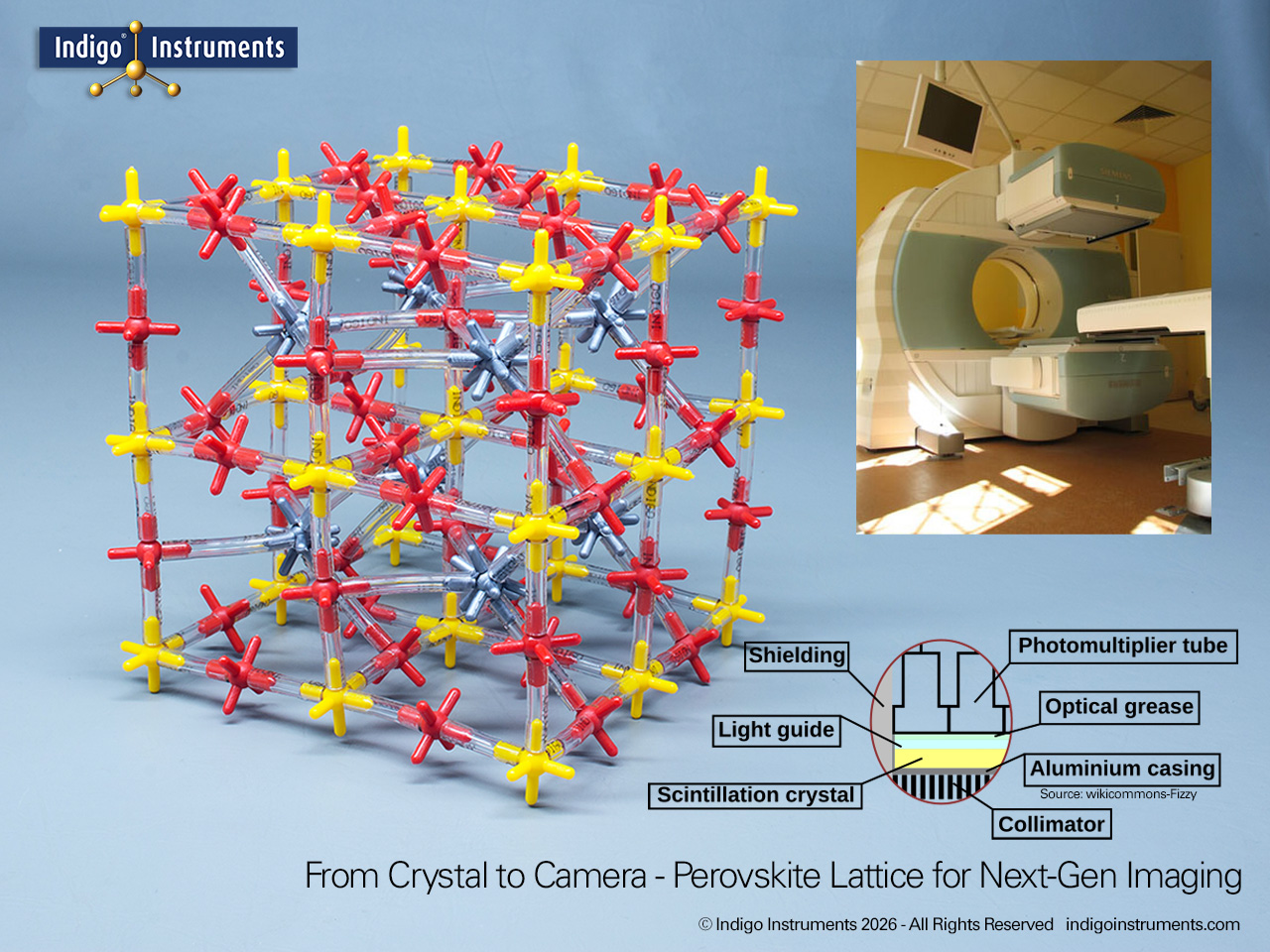
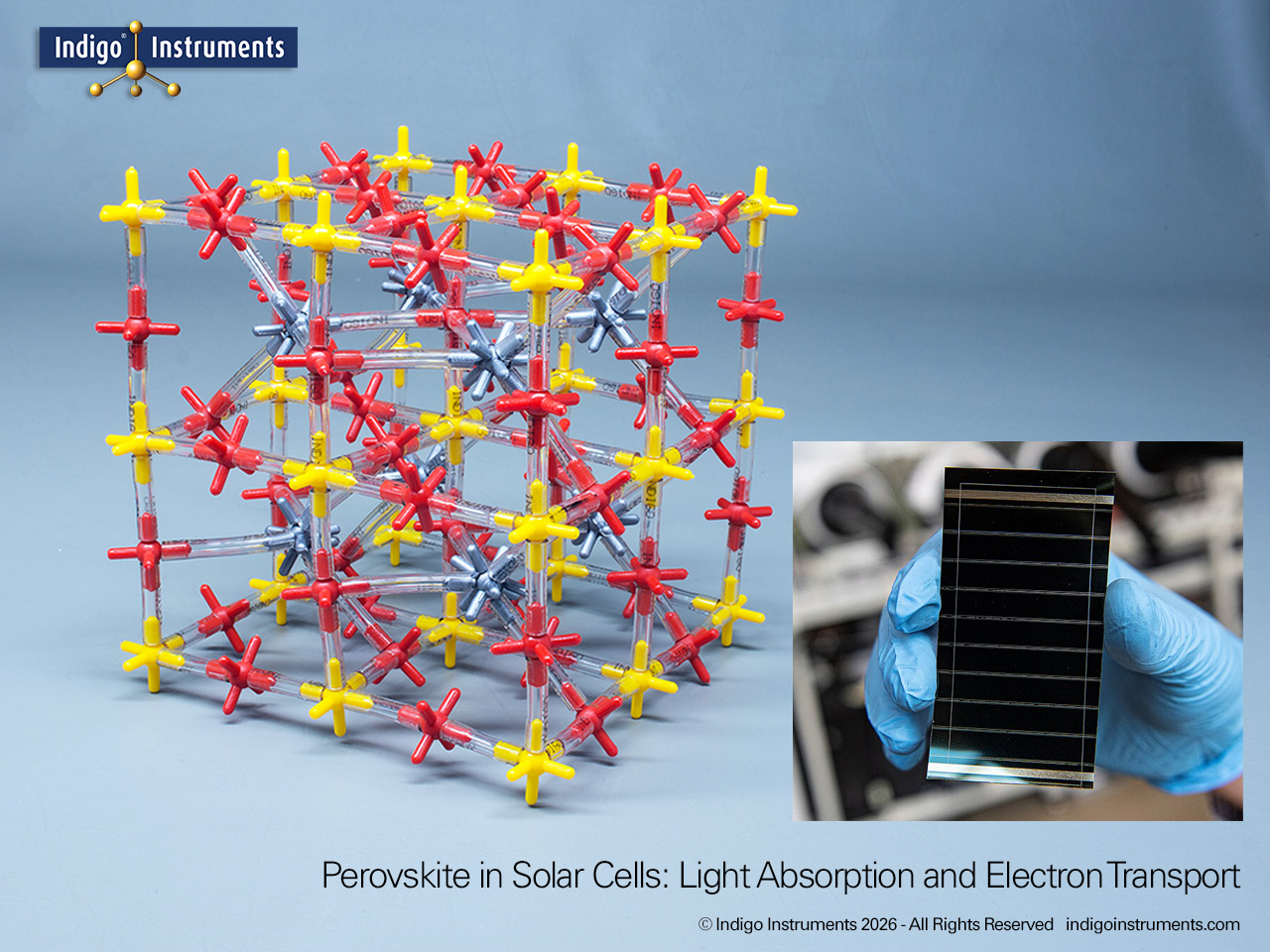
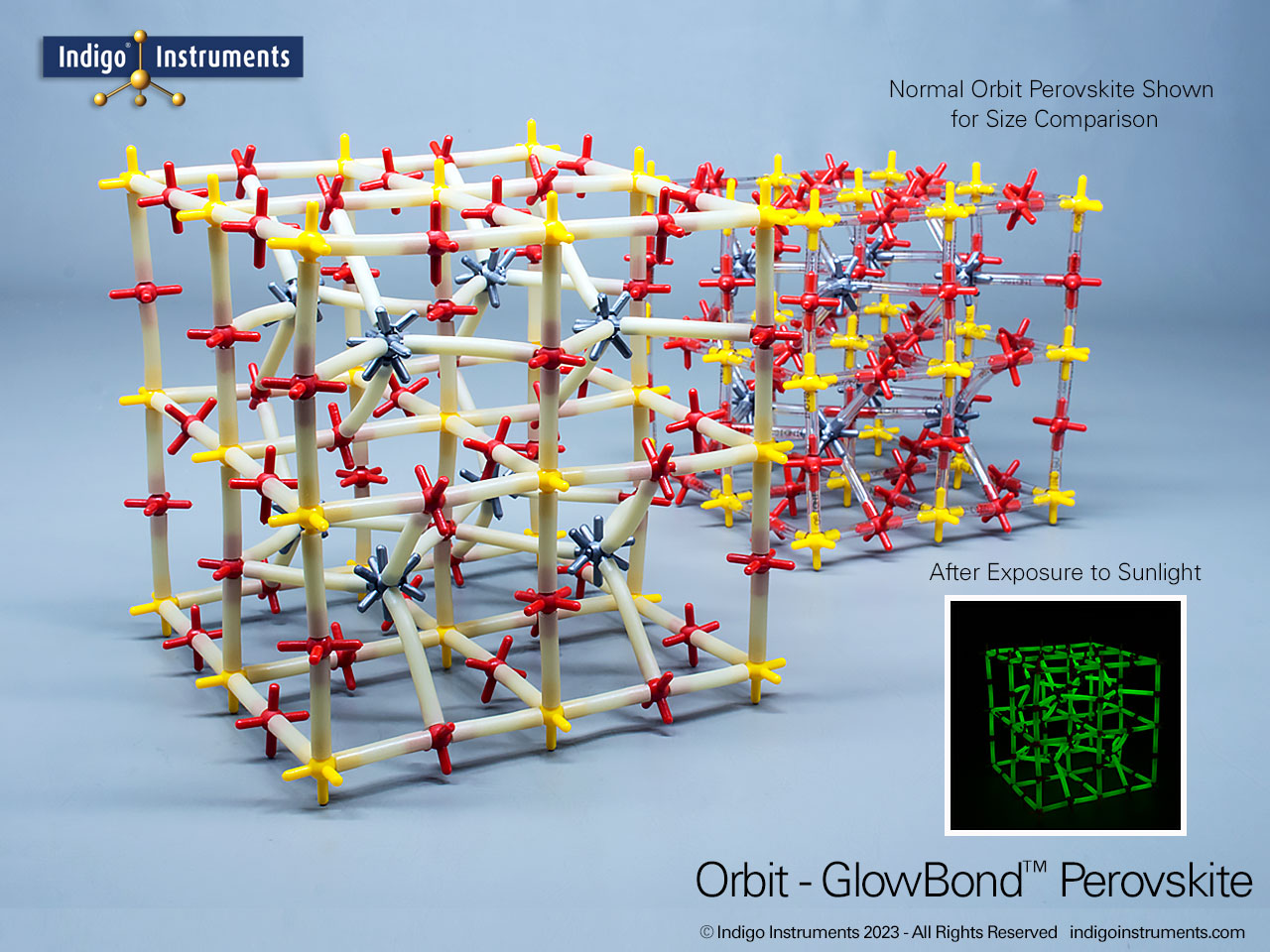
Perovskite Ferro/Piezo Lattice Model

SKU: 68790W
$45.95USD Each

Qty:

Explore how perovskite structures explain ferroelectric and piezoelectric behavior. This Indigo® perovksite crystal lattice model is ideal for teaching crystal symmetry, dipole alignment, and material design in electronics.

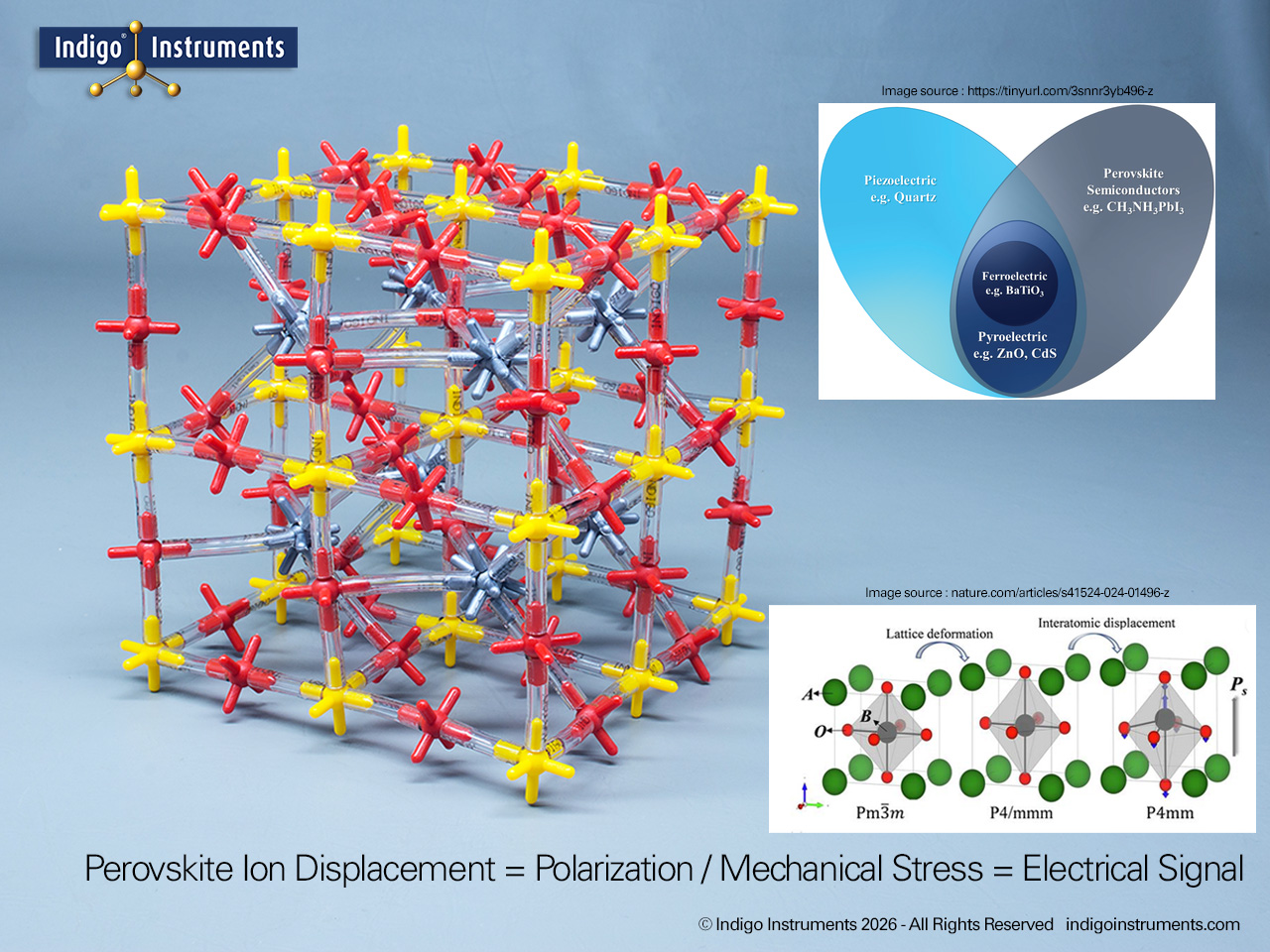
Ferroelectric and piezoelectric materials play a central role in modern devices ranging from ultrasound transducers to precision sensors and actuators. Their properties originate from subtle structural features of the perovskite lattice, particularly the displacement of ions within the unit cell, which creates permanent dipoles or polarization domains. A physical molecular model makes these concepts easier to grasp by showing how lattice symmetry breaks, how domain switching occurs, and how polarization responds to applied stress or electric fields.

Teaching perovskite ferroelectrics and piezoelectrics with Indigo® molecular models supports both advanced chemistry and materials science education. Students in solid-state physics, electrical engineering, and applied nanotechnology can see how oxygen octahedra distort, how cations shift under external forces, and how these effects scale up to functional materials such as PZT (lead zirconate titanate). This hands-on visualization provides a stronger link between atomic-scale structure and macroscopic properties.

Indigo Instruments has maintained a substantial inventory of genuine Cochranes of Oxford (Orbit) parts for 30+ years (scroll down to see "Skeletal (Orbit/Minit) and are compatible with every molecular model kit we have sold since day 1. This level of quality may appear expensive but no parts support from other vendors costs even more.
Currently Out of Stock
Details

Learning Outcomes for Perovskite Models Piezo/Ferro Electric Applications

Materials Science Focus Physics / Engineering Focus
Visualize how cation displacement (e.g., Ti4+ in BaTiO3) drives ferroelectricity, enabling understanding of spontaneous polarization. Connect lattice symmetry breaking to macroscopic properties such as hysteresis loops and domain switching in capacitors and memory devices.
Explore how doping or substitution (e.g., Zr for Ti) tunes Curie temperature and polarization strength in piezoelectric ceramics. Relate ionic displacement under mechanical stress to piezoelectric coefficients used in transducers, sensors, and actuators.
Understand defect chemistry and grain boundary effects, critical for optimizing fatigue resistance and reliability in ferro/piezo materials. Apply model insights to energy conversion devices, such as vibration harvesters, by linking structural distortion to output efficiency.
Demonstrate how perovskite structure serves as a prototype for multifunctional oxides combining ferroelectric, piezoelectric, and dielectric behaviors. Use physical models to visualize coupling between electric, mechanical, and thermal domains for system-level device design.
Related information or images
Parts
Specifications

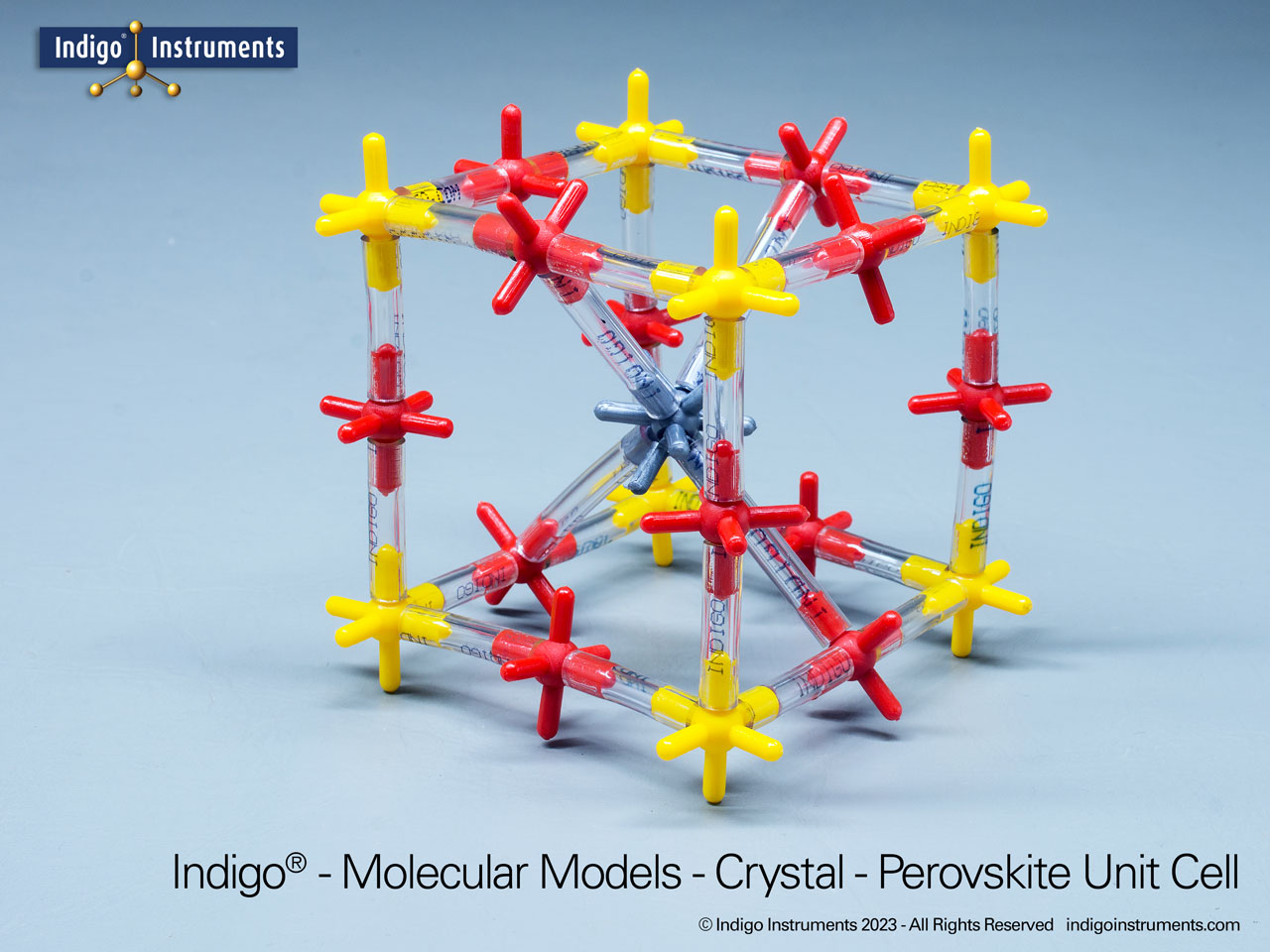
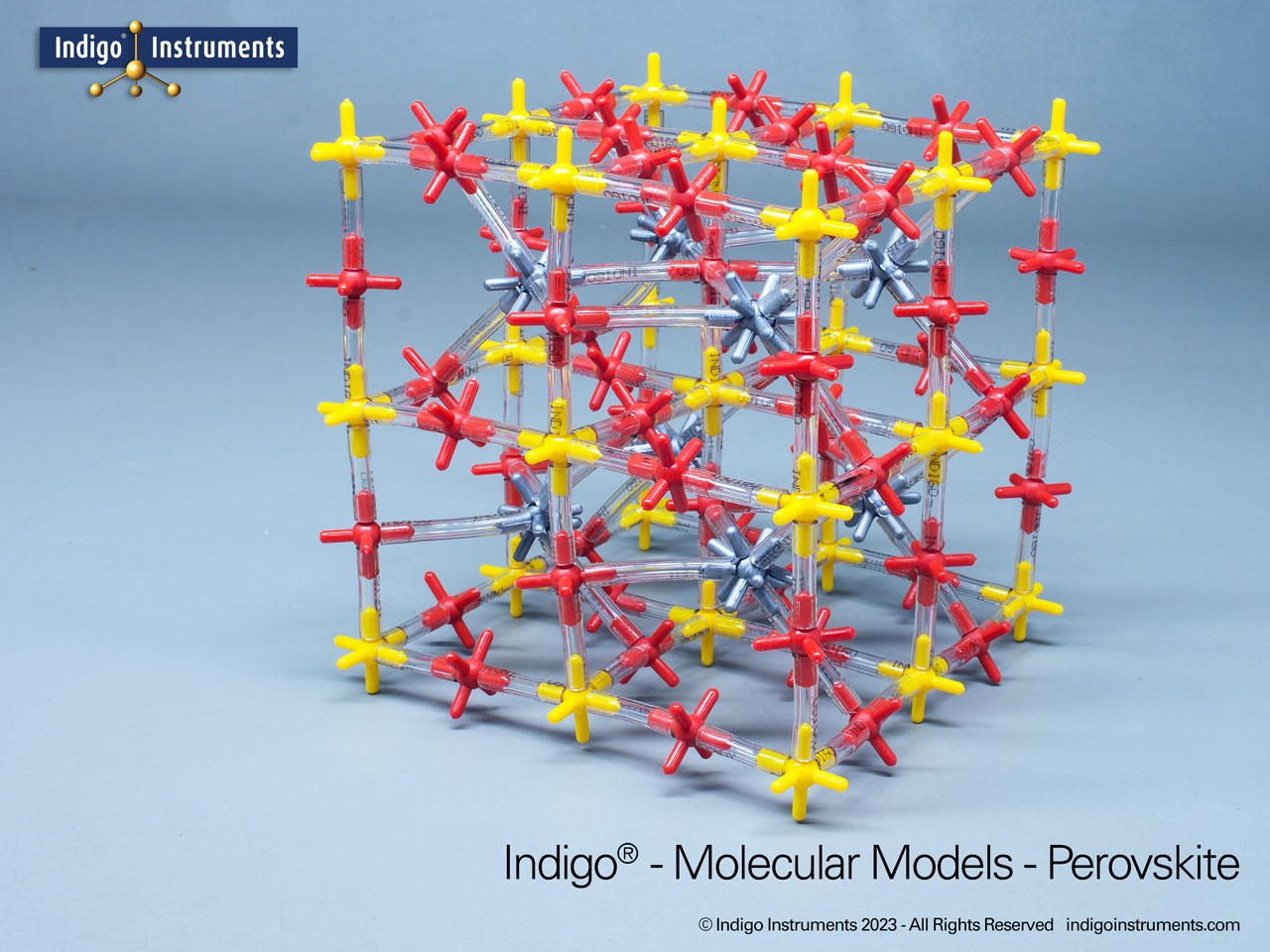
There are no printed instructions for assembling this model. However, these specifications & a close look at the images of the model & unit cell should suffice. This model can represent either BaTiO3 or PZT (Lead Zirconate Titanate)

  • Grey is Barium (Ba) or Lead (Pb). Note that this atom is 12 coordinate & comes in 3 parts. A 6 armed central piece with holes for the two 3 armed pieces to plug into
  • Yellow is Titanium or Zirconium & connects to the red atoms with the 30mm bonds
  • Red is Oxygen or & connects to the yellow atoms with the 45mm bonds
  • Clear 50mm "Wobbly" bonds have been precut to 45mm to fit the lattice structure
  • Four of these clear 45mm "Wobbly" bonds connect the central grey calcium atom to 4 oxygen atoms. Of these red atoms 2 in the top row are shifted 90 degrees relative to the bottom row.
  • The Ca-O bonds are easier to see in the Unit Cell image
Reviews ()
Review This Product Now!