Limonene
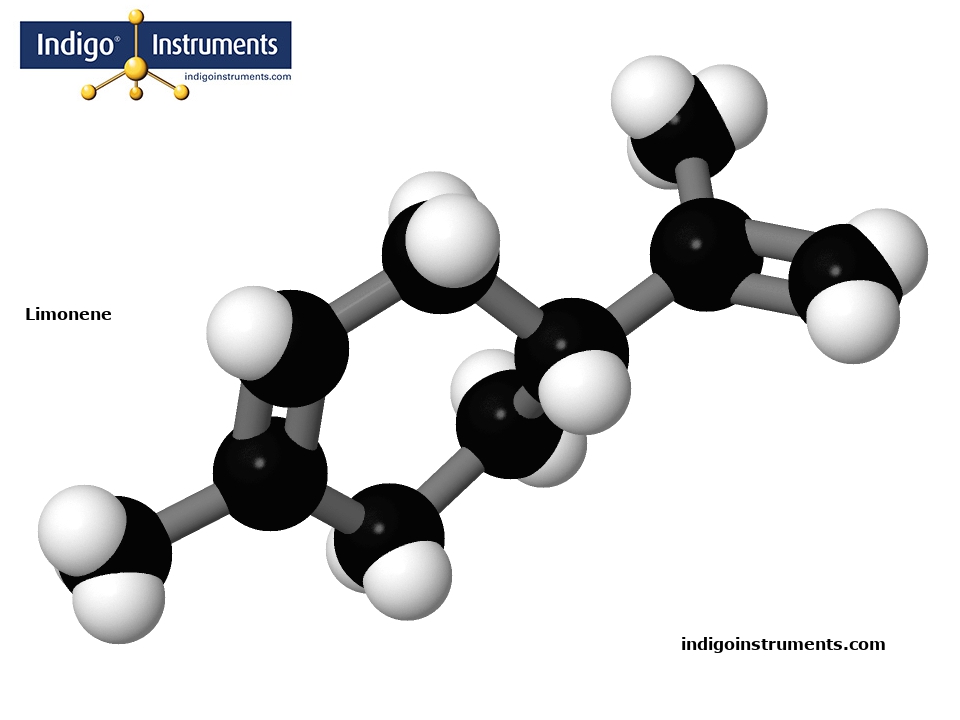
Assemble a molecular structure model of Limonene using Genuine Molymod Components by indigoinstruments.com
Limonene, or more specifically, (R)-limonene, is a cyclic hydrocarbon also classified as a cyclic monoterpene. It occurs naturally & is extracted from citrus oils found in the peels of fruits such as oranges, lemons, limes, and grapefruits. Limonene role in the aroma and flavor of citrus fruits makes it useful as an additive in cosmetics, soaps and fragrances. As a food flavorant it can mask the bitter taste of strongly alkaline compounds.
It is also considered to a biodegradable "organic" or botanical insecticide effective in killing or repelling ants, cockroaches, fleas, palmetto bugs, silverfish & other pests while being non-toxic to mammals, birds & fish.
A molecular model of Limonene in the Molymod Hybrid Dome style uses the atoms & bonds in the parts list below. Our free 3D Molecular Model Builder shows other styles & allows for image rotation as an assembly guide.
| Molecular Weight | Chemical Formula |
|---|---|
| 136.2364 | C10H16 |