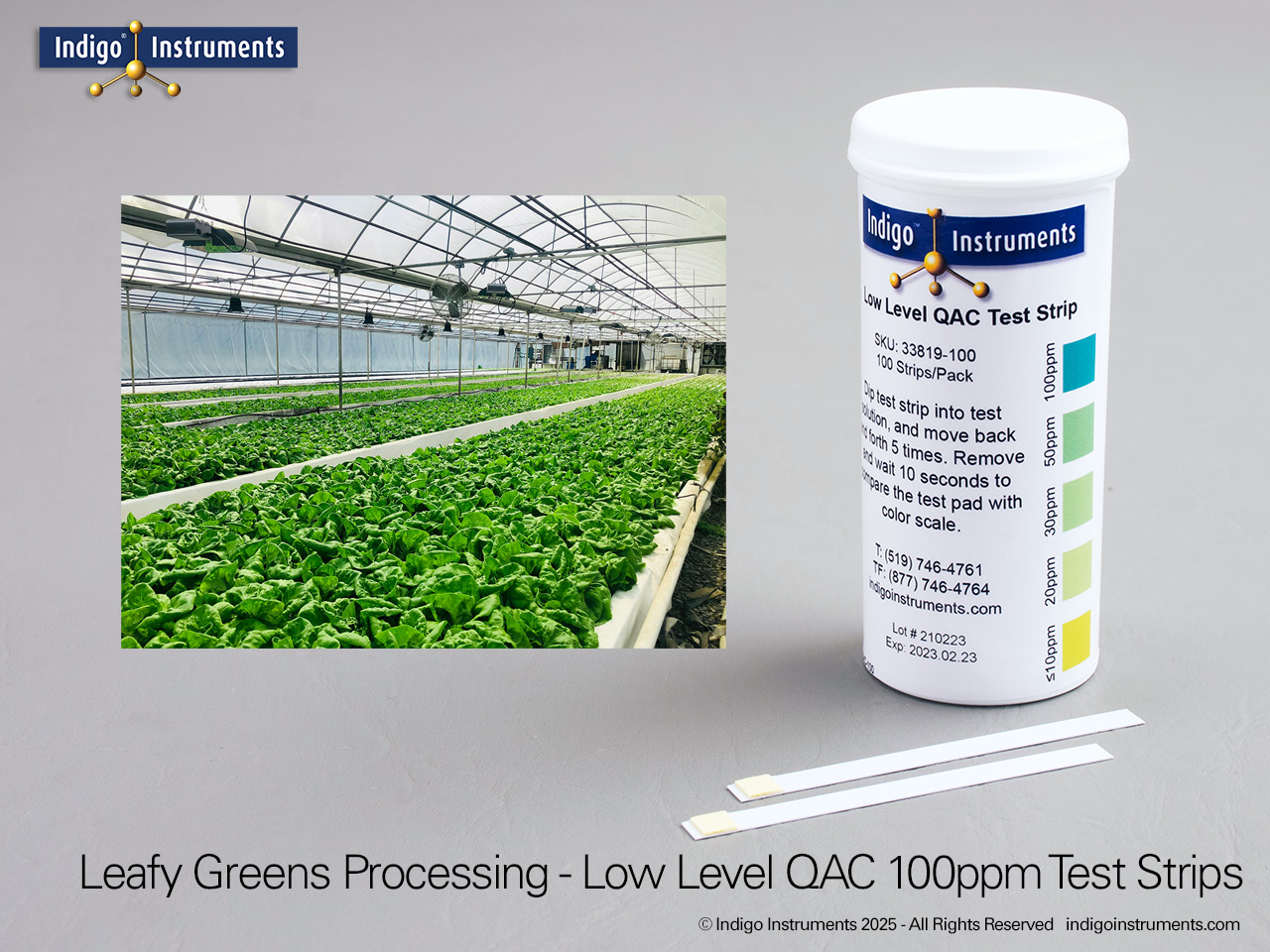
Safeguard leafy greens from harmful pathogens and excess quat residues with Indigo® QAC test strips. Verify wash water and hydroponic system sanitation, protect against E. coli and Listeria, and meet HACCP, FSMA, and organic certification standards.
Residual quat test strips are convenient & economical tools for growers, packers, and processors of leafy greens such as spinach, kale, romaine, and spring mixes. QACs or “quats” are widely used as sanitizers in food production facilities but excessive residue levels may risks to consumer safety and fail organic certification standards.
Regulators such as the FDA (Food and Drug Administration), USDA National Organic Program (NOP), and third-party auditors under the Harmonized GAP standards require sanitizing chemicals be applied correctly and rinsed when necessary, leaving no harmful residues on produce. These test strips provide a quick, inexpensive way to confirm that sanitizer levels fall within safe ranges, reducing the risk of inspection failures, costly recalls, or loss of organic status.
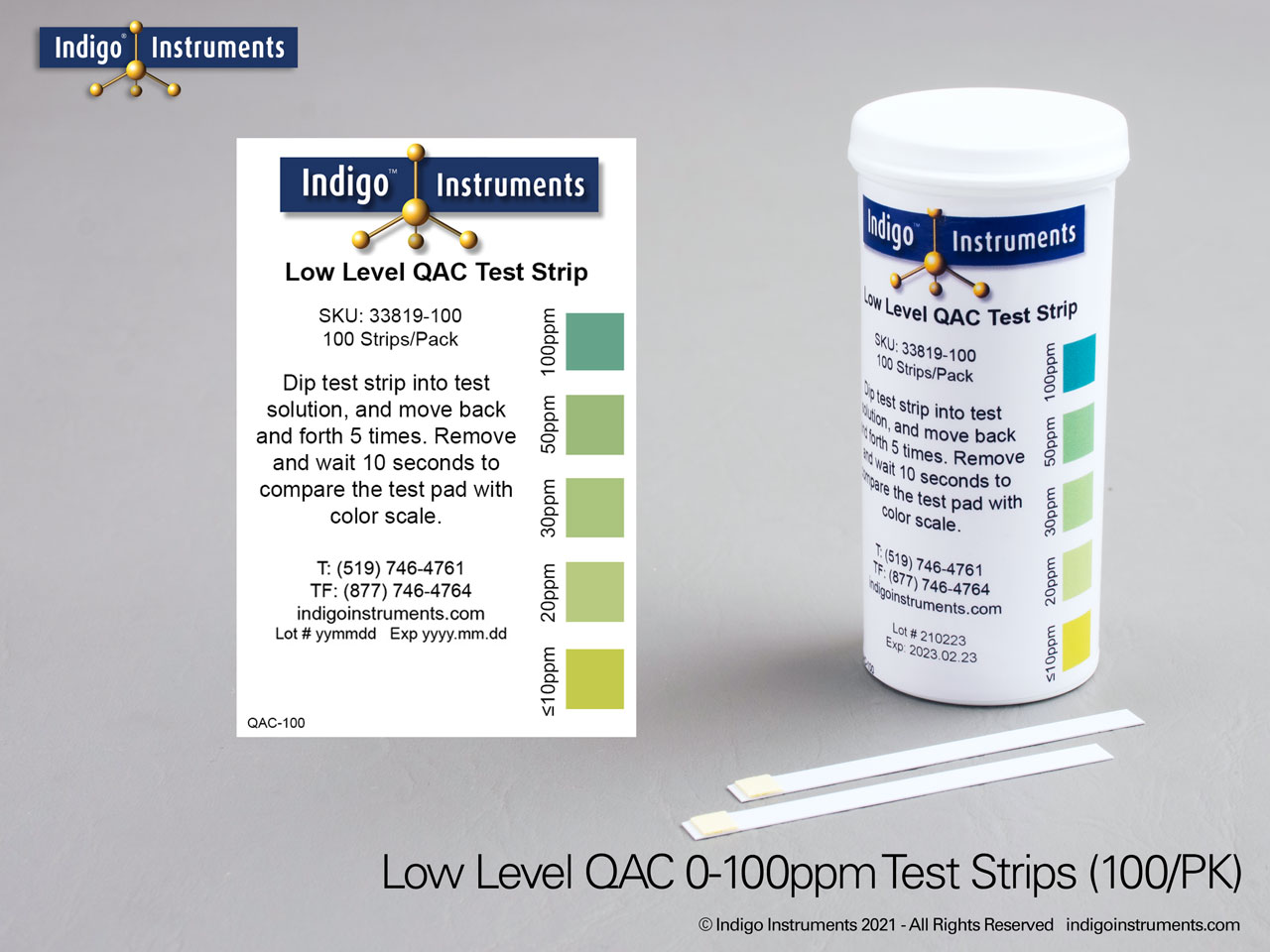
Test for sanitizer residues on harvesting bins, conveyor belts, and hydroponic channels, ensuring ≤100 ppm, using Indigo® residual QAC test strips which detect down to 10 ppm.
Pay special attention to hydroponic nutrient reservoirs and irrigation systems, where sanitizer overuse can alter plant uptake or mask contamination.
Maintain compliance with FDA’s Produce Safety Rule and GlobalG.A.P. standards.
Document sanitation verification to support both conventional field crops and controlled environment agriculture (CEA) certifications.
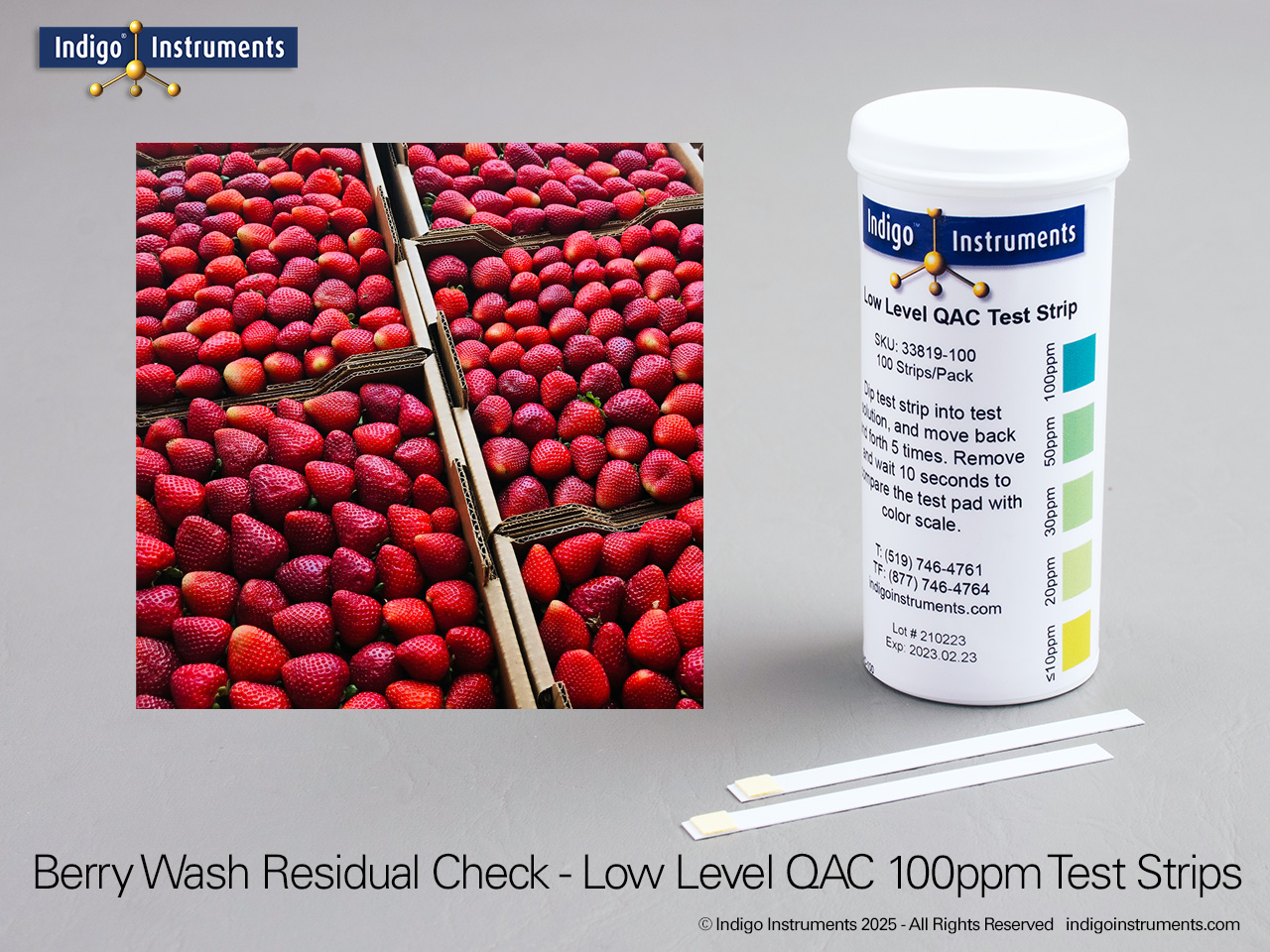
The directions on the test strip bottle are for testing liquid quat solutions. Test surfaces for residues by first wetting the strip's testing pad with water (deionized or distilled if available). Then press against fruits, vegetables, cutting boards, utensils, etc. for at least 10 seconds & then compare against the color chart.
Levels less than "10" ppm are impossible to determine but some organic certifications call for "0" ppm. This is because water alone causes a reading of 10ppm. Read more in our blog on What 10ppm really means? when measured on surfaces of knives, cutting boards, fruits or vegetables.
As part of best practices protocols, hydroponic growers should rinse equipment thoroughly after quat sanitation, replace nutrient solution regularly, and test with low-level quat strips (10–100 ppm range) before reintroducing crops.
Related information or images
Residual Quat 10-100 ppm
Berries
Dairy-Cheese
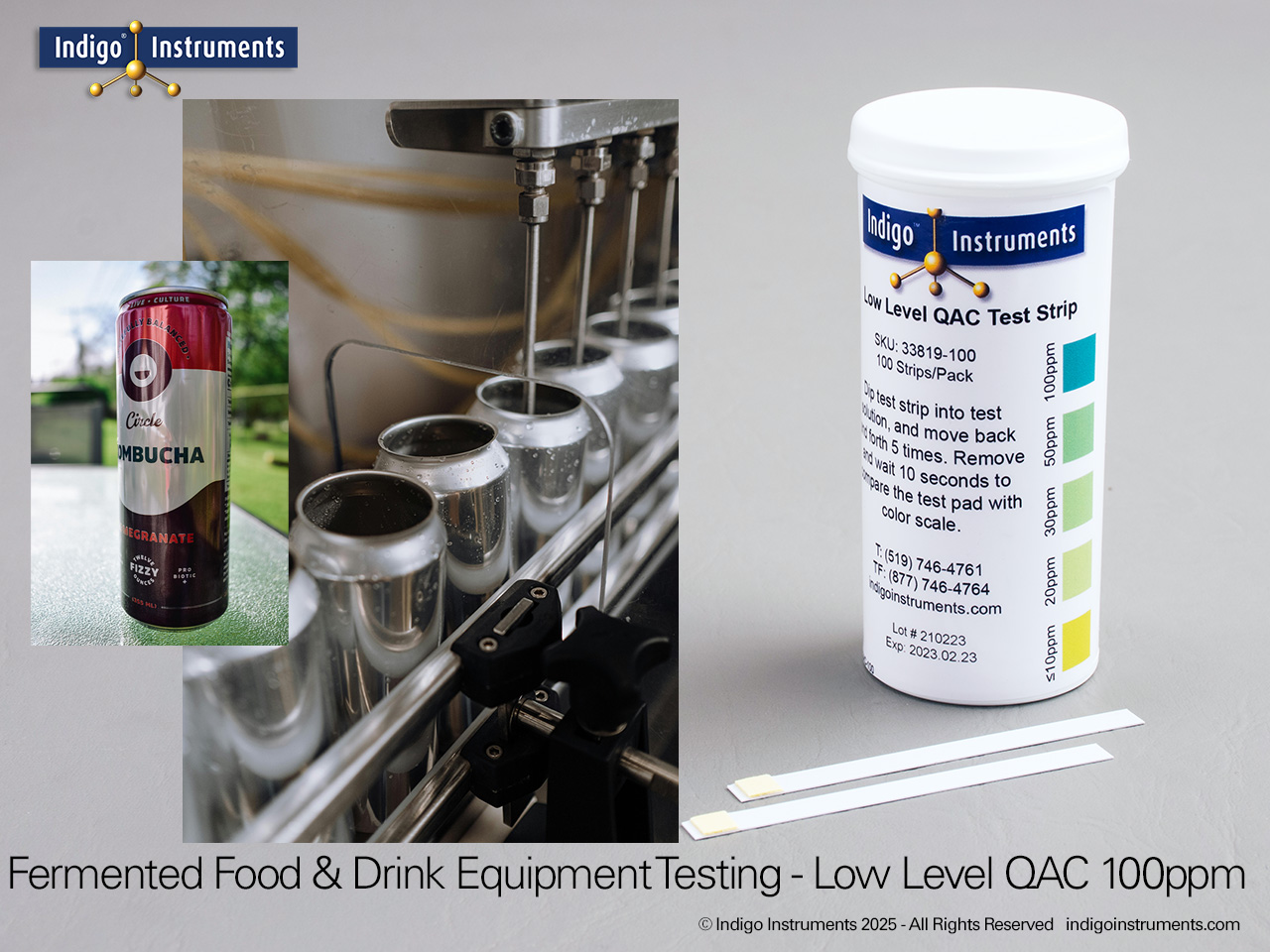
Fermented Foods
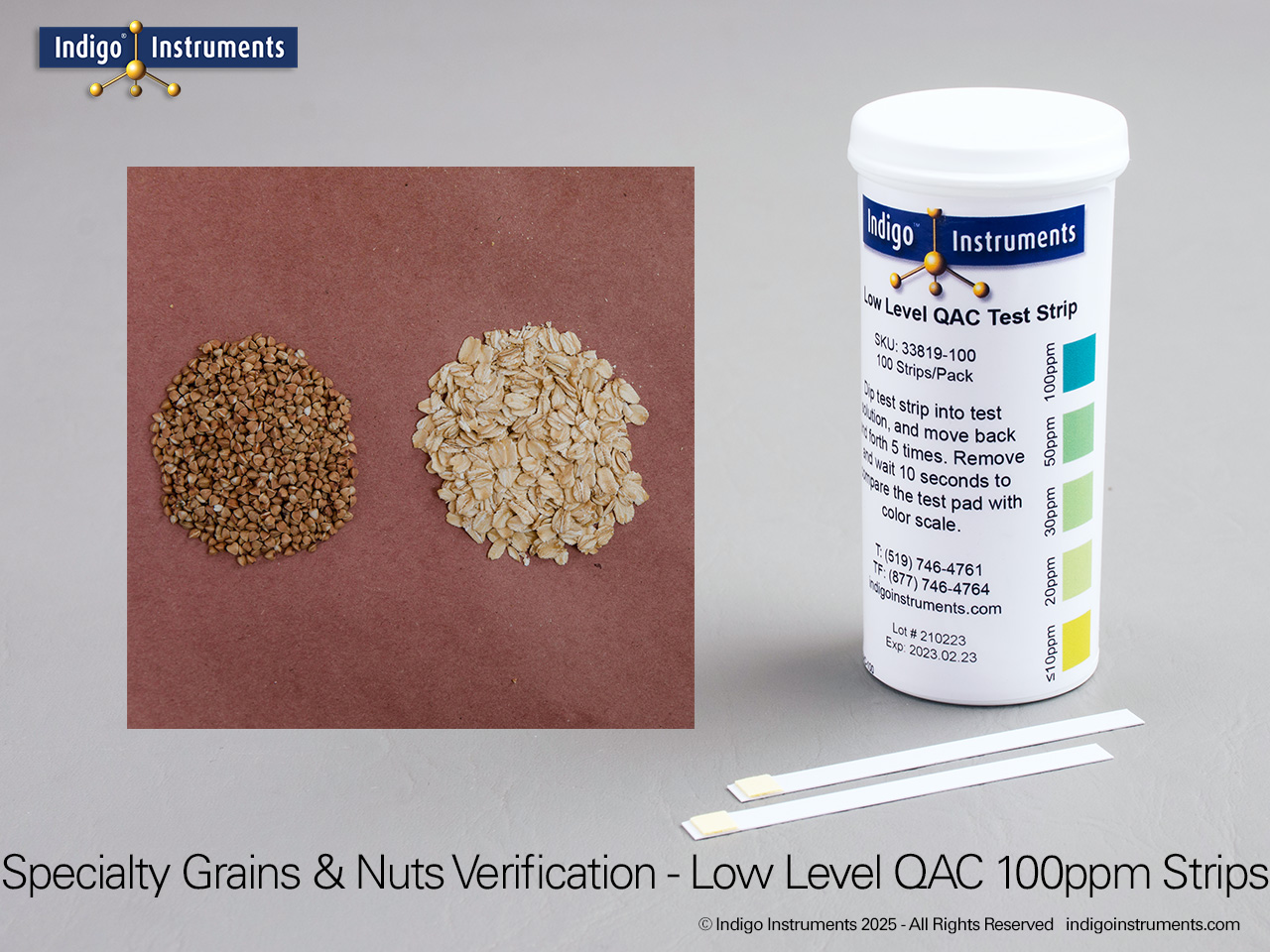
Grains-Nuts
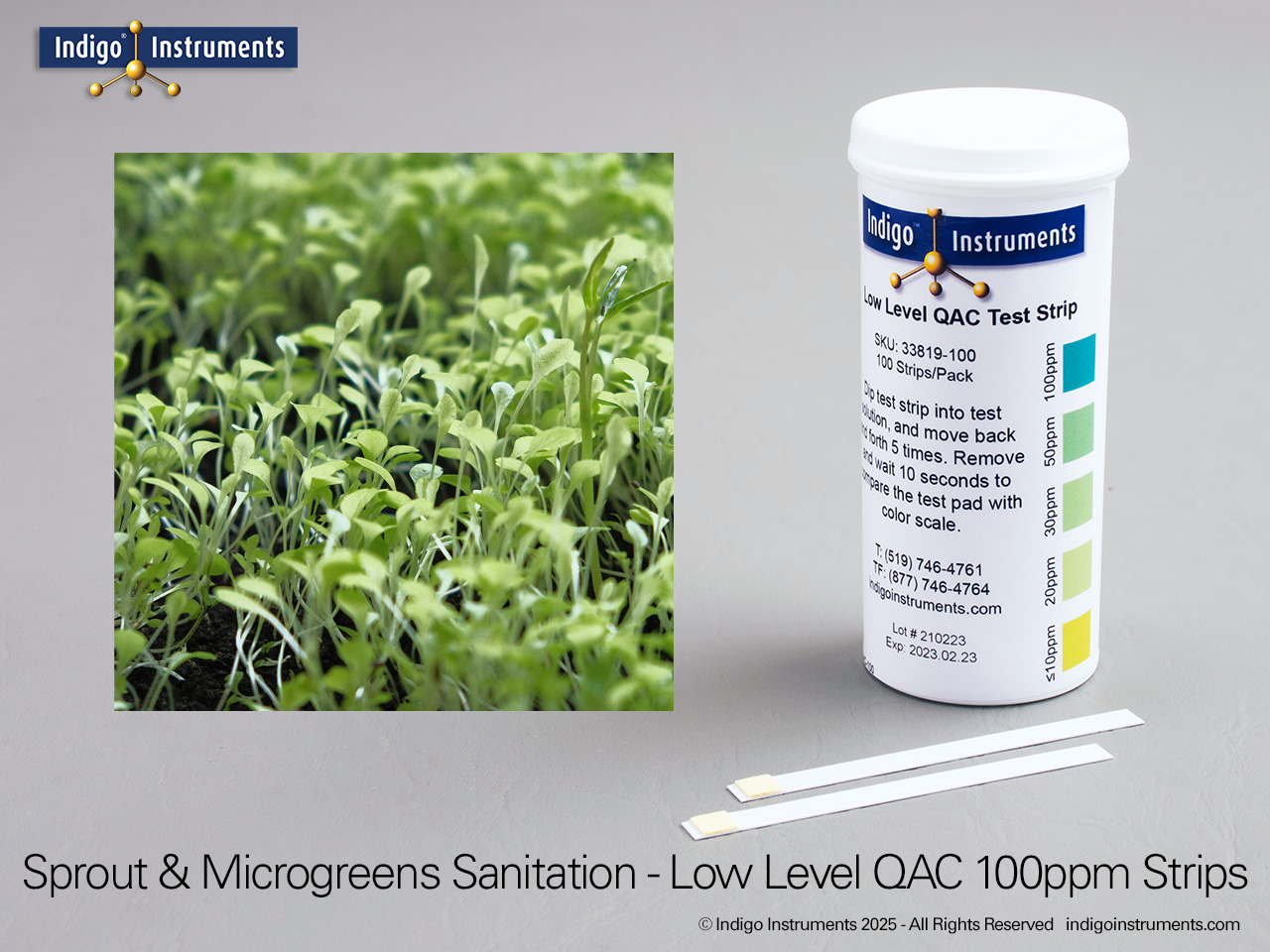
Microgreens-Sprouts
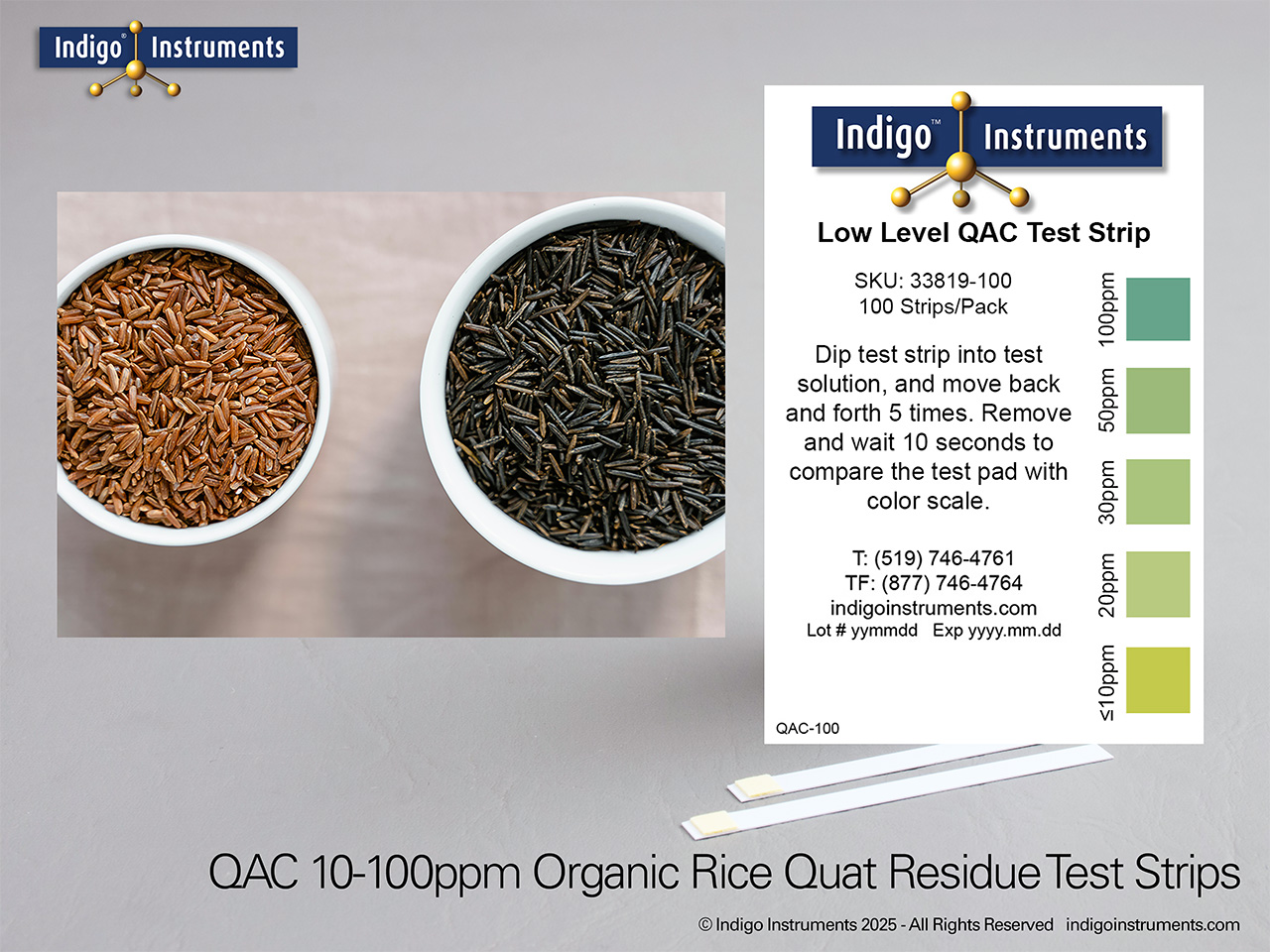
Wild Organic Rice
Specifications
Swish strip in liquid 5 times & then compare to color chart after 10 seconds.
Read ≤10-30-60-80-100ppm ppm for quaternary ammonium disinfectant concentration.
Indigo® quat test strips have a guaranteed minimum 3 year shelf life but desiccant lined vials allow for 5+ years.
Store at 20-30C, in a dry place out of direct sunlight.
Indigo® QAC test strips are calibrated for Oasis 146, see details.
Consult your supplier if any special testing is necessary for their formulation.
Solution temperatures from ~30-45C can cause strips to read up to ½ unit a chart unit higher.
Temperatures above 45C can shift the results 1 chart unit higher. Testing at room temperature
Hard water (above 500 ppm) can cause the strips to read high by up to 1 chart unit.
The number of strips (100) per vial is approximate.