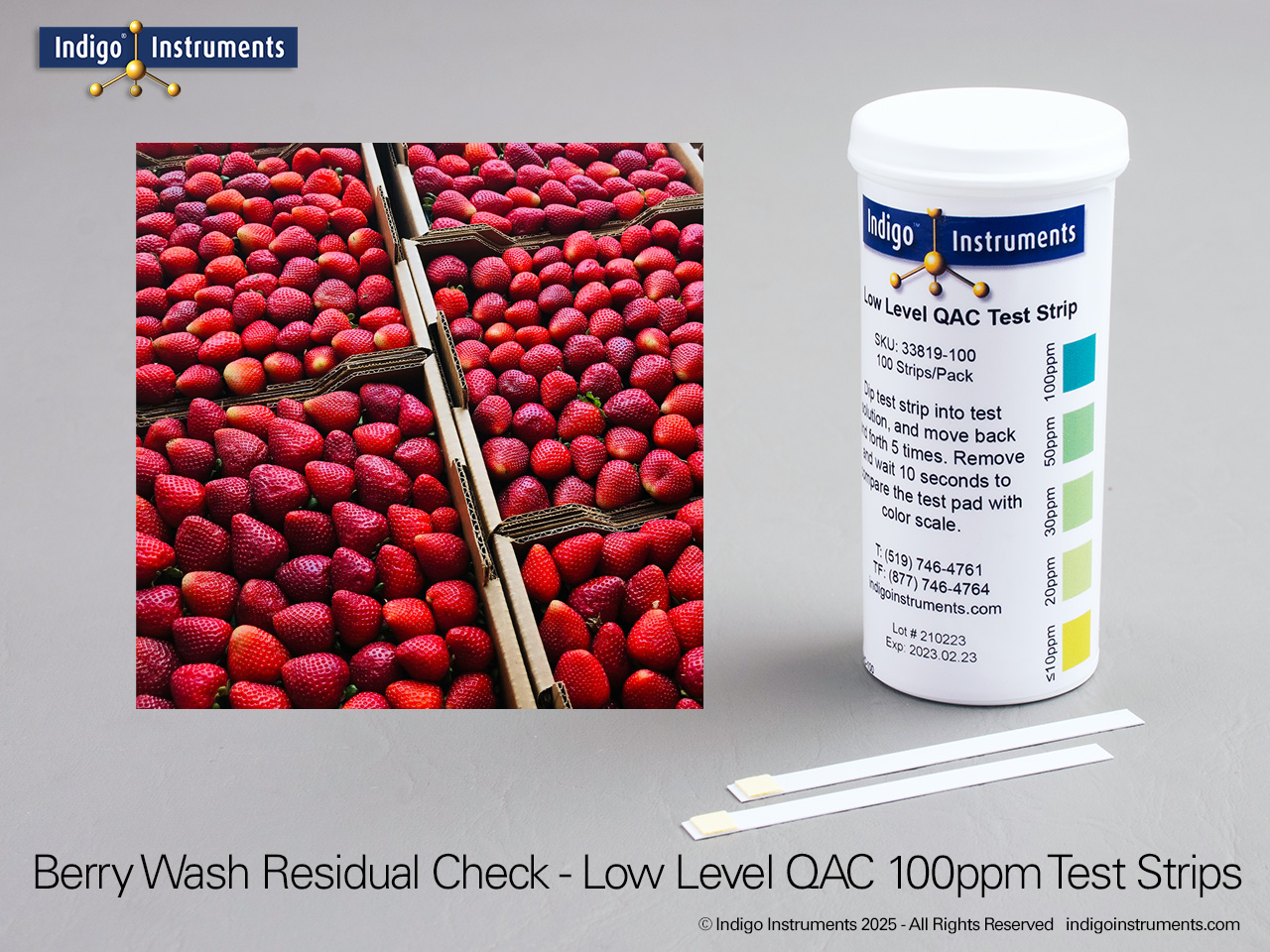
Indigo® QAC test strips detect and verify quaternary ammonium residues in berry wash systems, ensuring safe sanitation, minimizing allergen cross-contact risks, and helping processors comply with HACCP, FSMA, and FDA food safety standards.
Fresh and frozen berries such as strawberries, blueberries, raspberries, and blackberries are highly perishable and easily damaged by microbial contamination. Sanitizers like quaternary ammonium compounds (QACs) are widely used in berry handling facilities, but residues must be carefully controlled to avoid affecting taste, shelf life, or consumer perception. Indigo® residual quat test strips, which detect as low as 10 ppm, provide packers and processors with a simple, effective tool to confirm that cleaning agents have been fully rinsed away. This protects both compliance with food safety regulations and the reputation of berries as a clean, natural product.
Monitor residues on washing flumes, sorting belts, and packaging lines; ensure levels are ≤100 ppm, using Indigo® residual QAC test strips which detect down to 10 ppm.
Protect consumers who expect “natural” or “chemical-free” labeling by minimizing sanitizer carryover.
Demonstrate compliance with HACCP plans and GFSI-benchmarked schemes (e.g., SQF, BRCGS).
Reinforce food safety assurances for both domestic and export berry markets.
The directions on the test strip bottle are for testing liquid quat solutions. Test surfaces for residues by first wetting the strip's testing pad with water (deionized or distilled if available). Then press against fruits, vegetables, cutting boards, utensils, etc. for at least 10 seconds & then compare against the color chart.
Levels less than "10" ppm are impossible to determine but some organic certifications call for "0" ppm. This is because water alone causes a reading of 10ppm. Read more in our blog on What 10ppm really means? when measured on surfaces of knives, cutting boards, fruits or vegetables.
Related information or images
Residual Quat 10-100 ppm
Dairy-Cheese
Fermented Foods
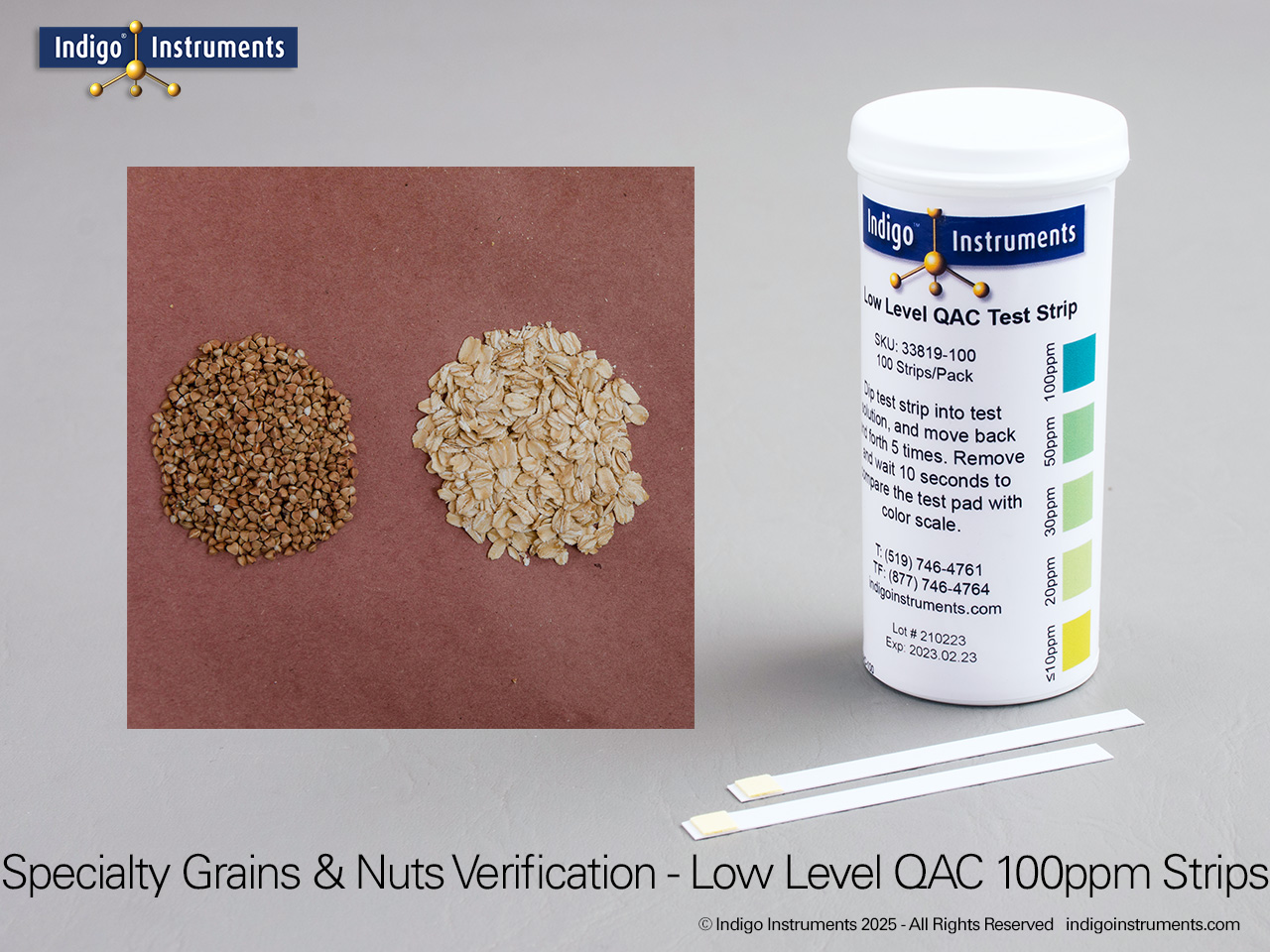
Grains-Nuts
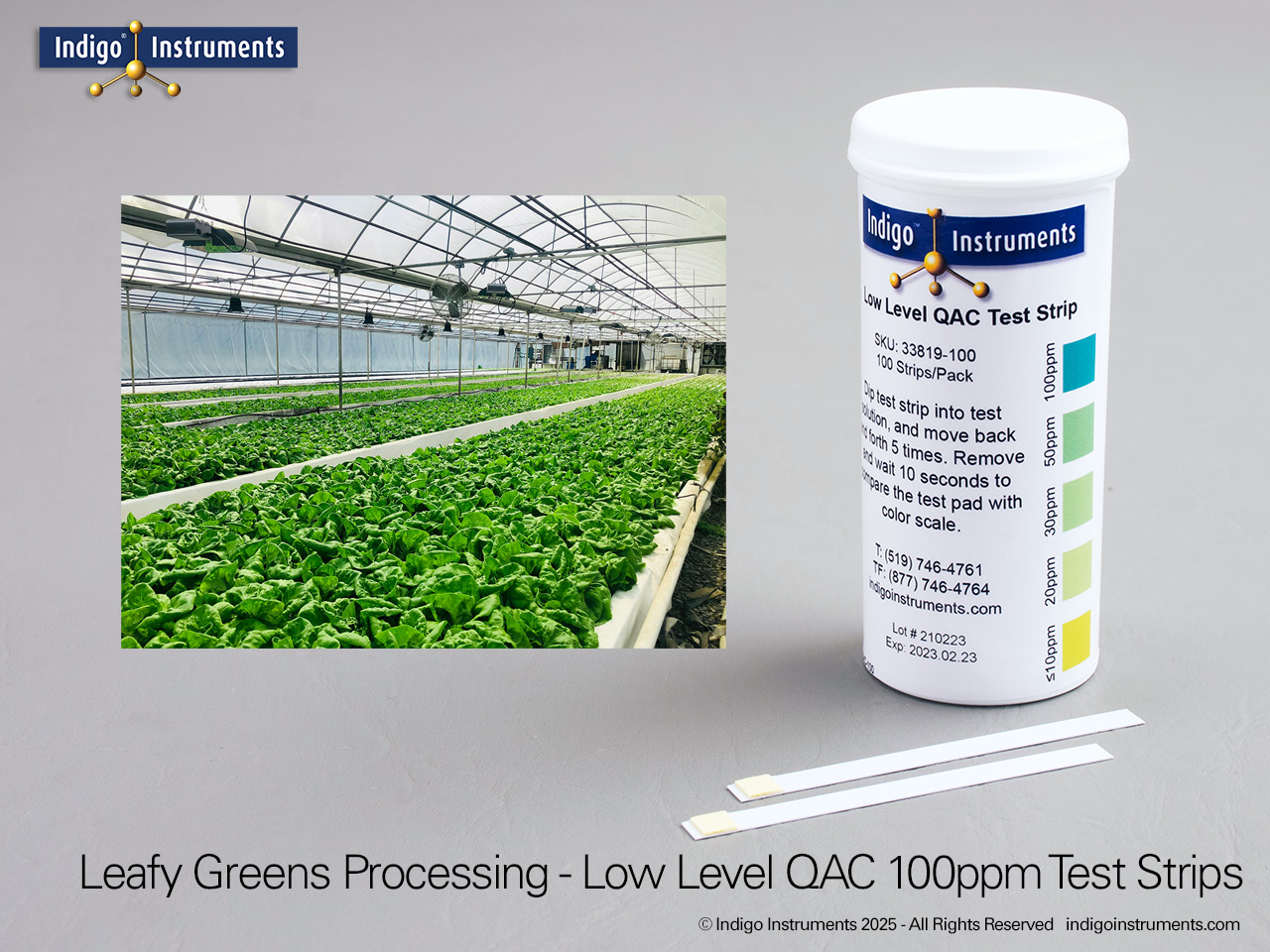
Leafy Greens
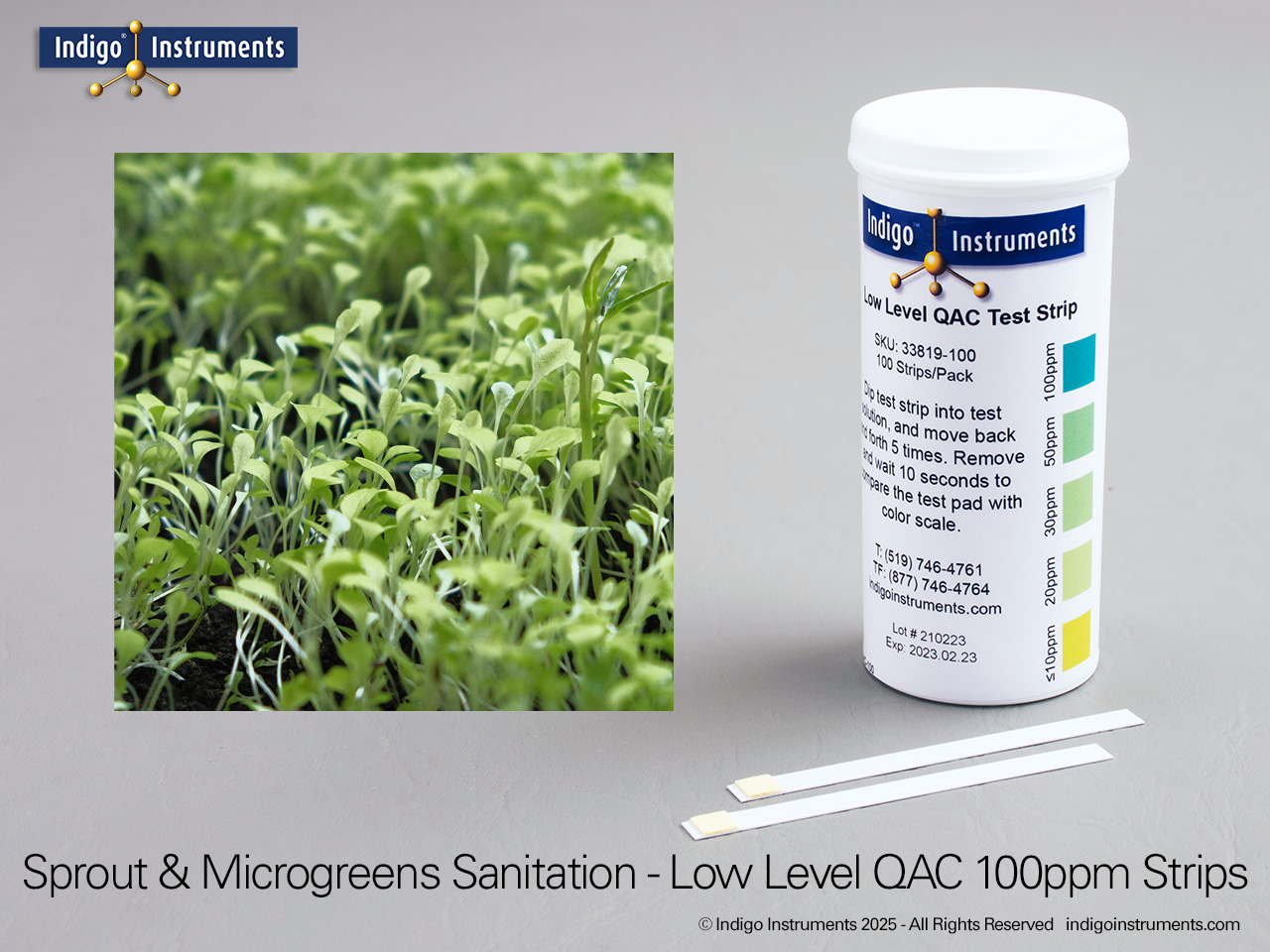
Microgreens-Sprouts
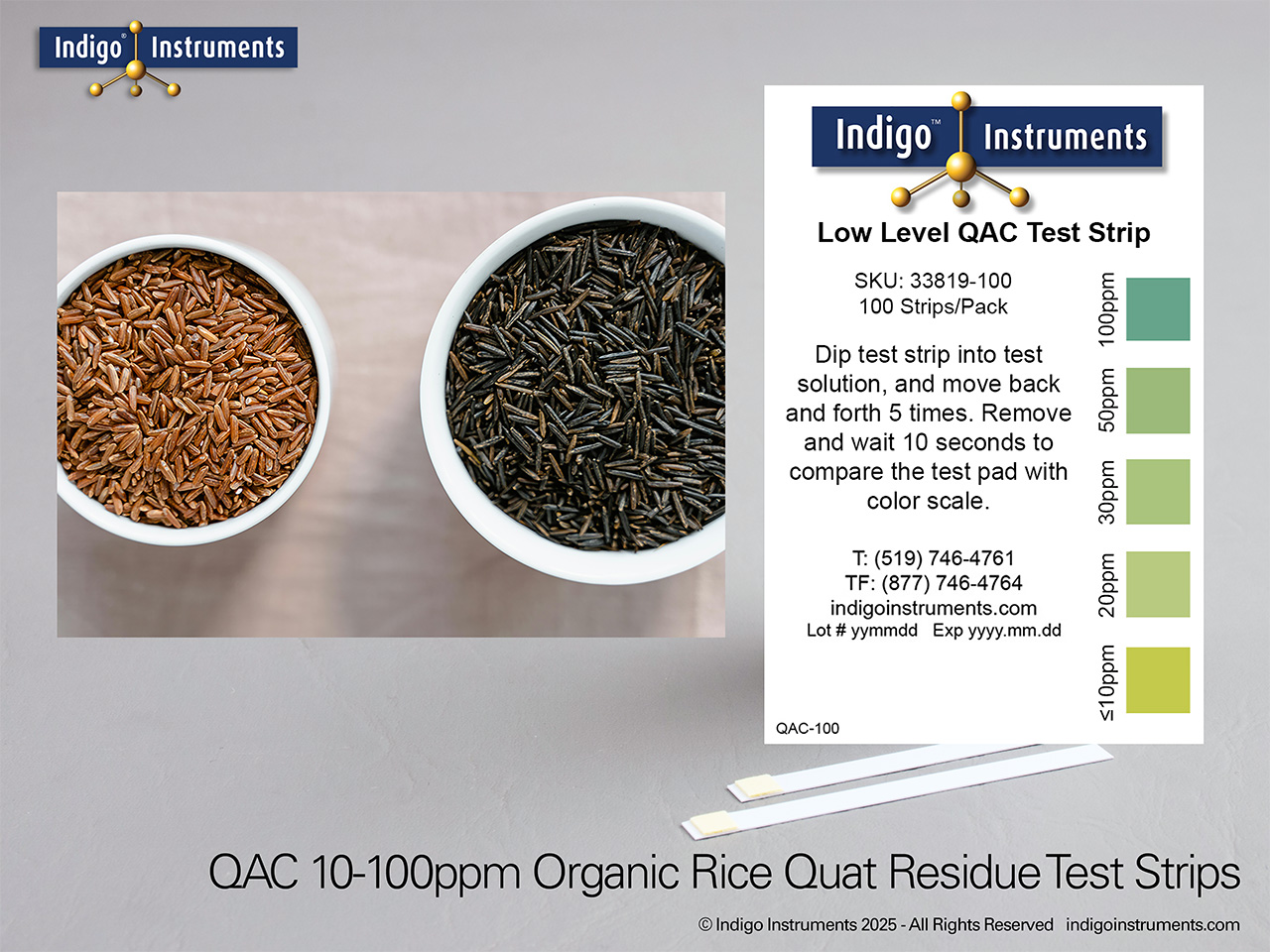
Wild Organic Rice
Specifications
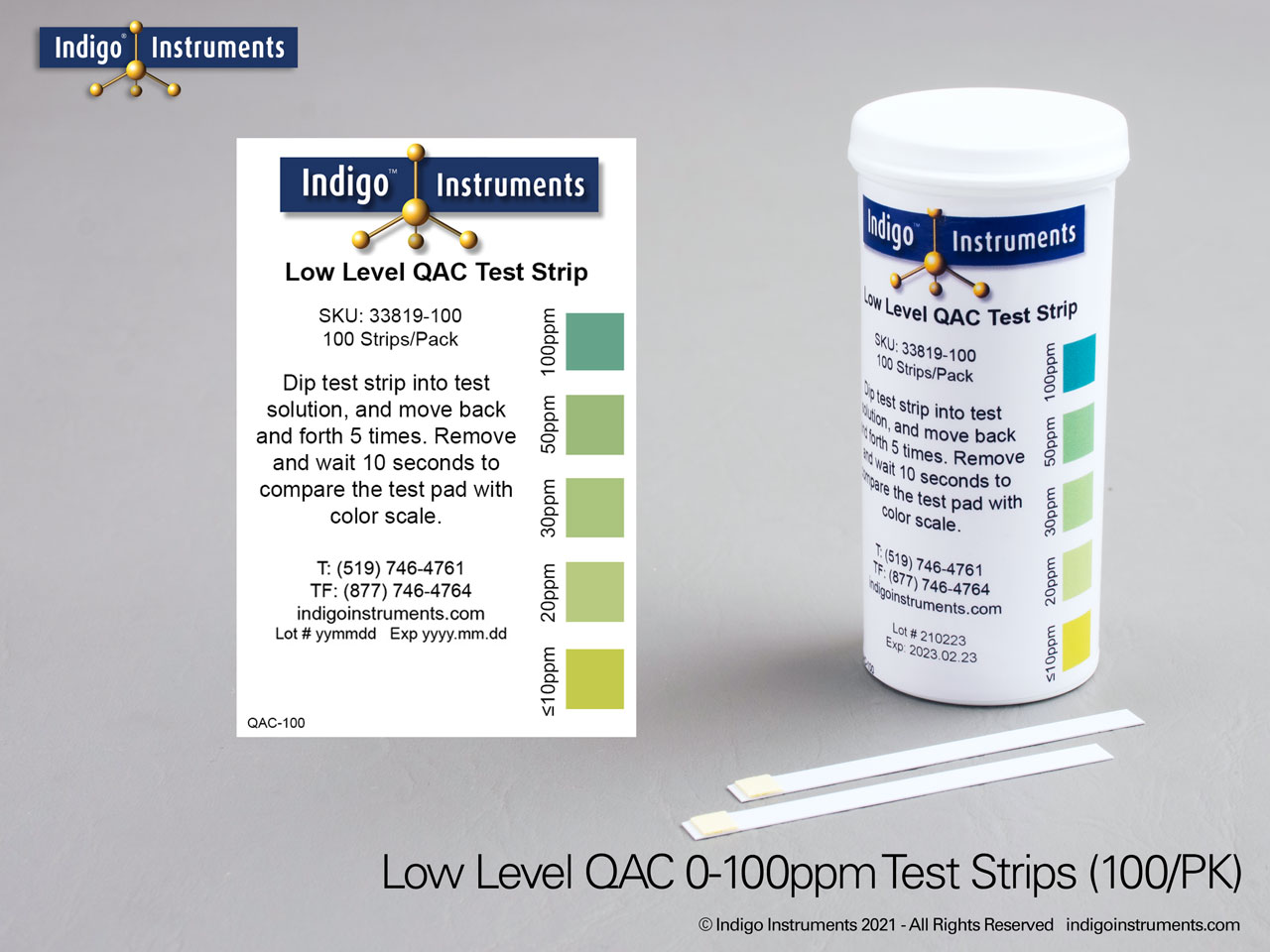
Swish strip in liquid 5 times & then compare to color chart after 10 seconds.
Read ≤10-30-60-80-100ppm ppm for quaternary ammonium disinfectant concentration.
Indigo® quat test strips have a guaranteed minimum 3 year shelf life but desiccant lined vials allow for 5+ years.
Store at 20-30C, in a dry place out of direct sunlight.
Indigo® QAC test strips are calibrated for Oasis 146, see details.
Consult your supplier if any special testing is necessary for their formulation.
Solution temperatures from ~30-45C can cause strips to read up to ½ unit a chart unit higher.
Temperatures above 45C can shift the results 1 chart unit higher. Testing at room temperature
Hard water (above 500 ppm) can cause the strips to read high by up to 1 chart unit.
The number of strips (100) per vial is approximate.