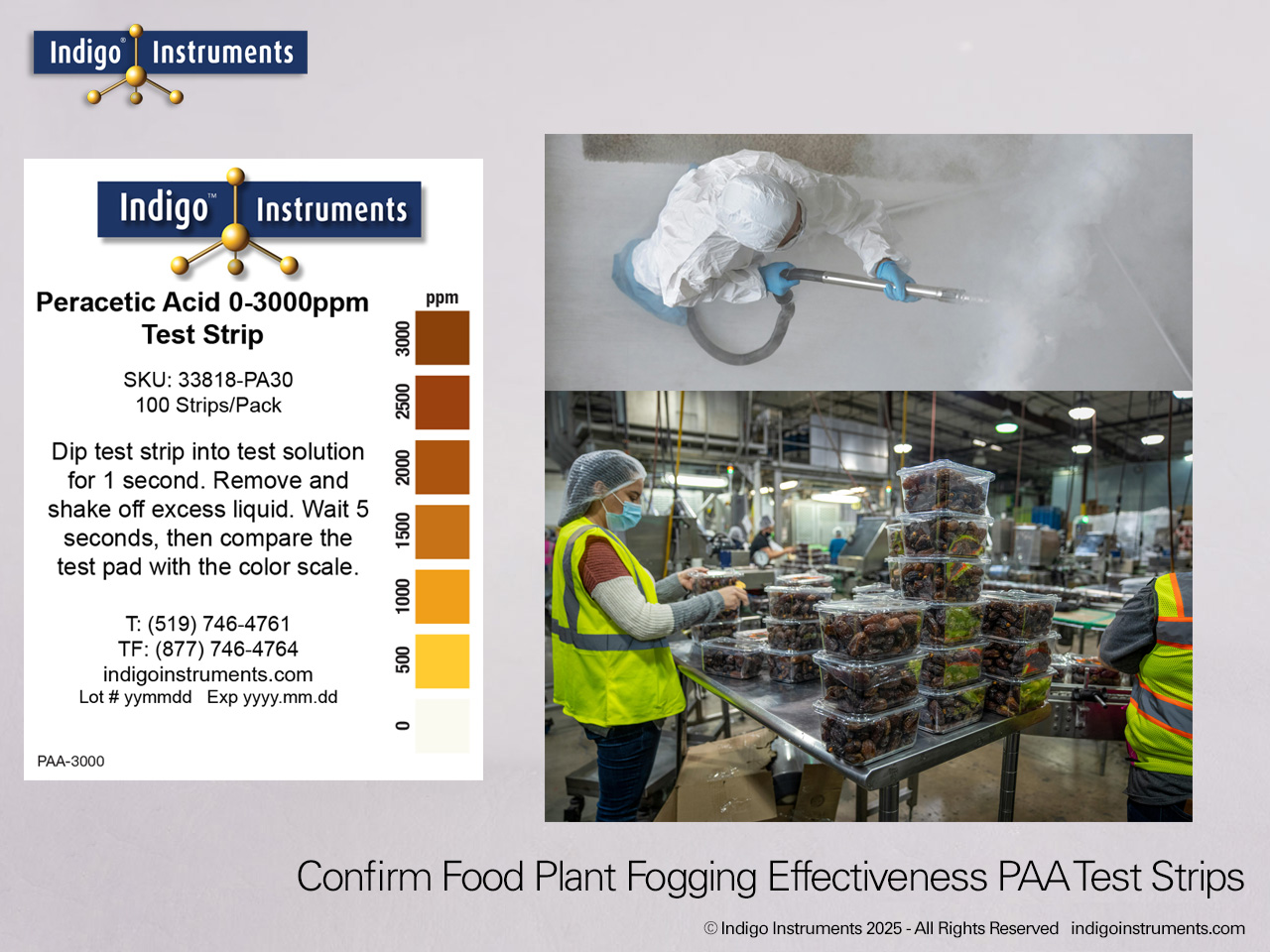
PAA Spill Response Test Strips 0-3000ppm

SKU: 33818-PA30
$20.95USD or lower Each

Save More When You Buy More!
Quantity1+2+ 3+ 10+ 
Price for each$20.95USD$20.57USD$20.19USD$19.05USD
Your savings - 1.81%3.63%9.07%
Qty:

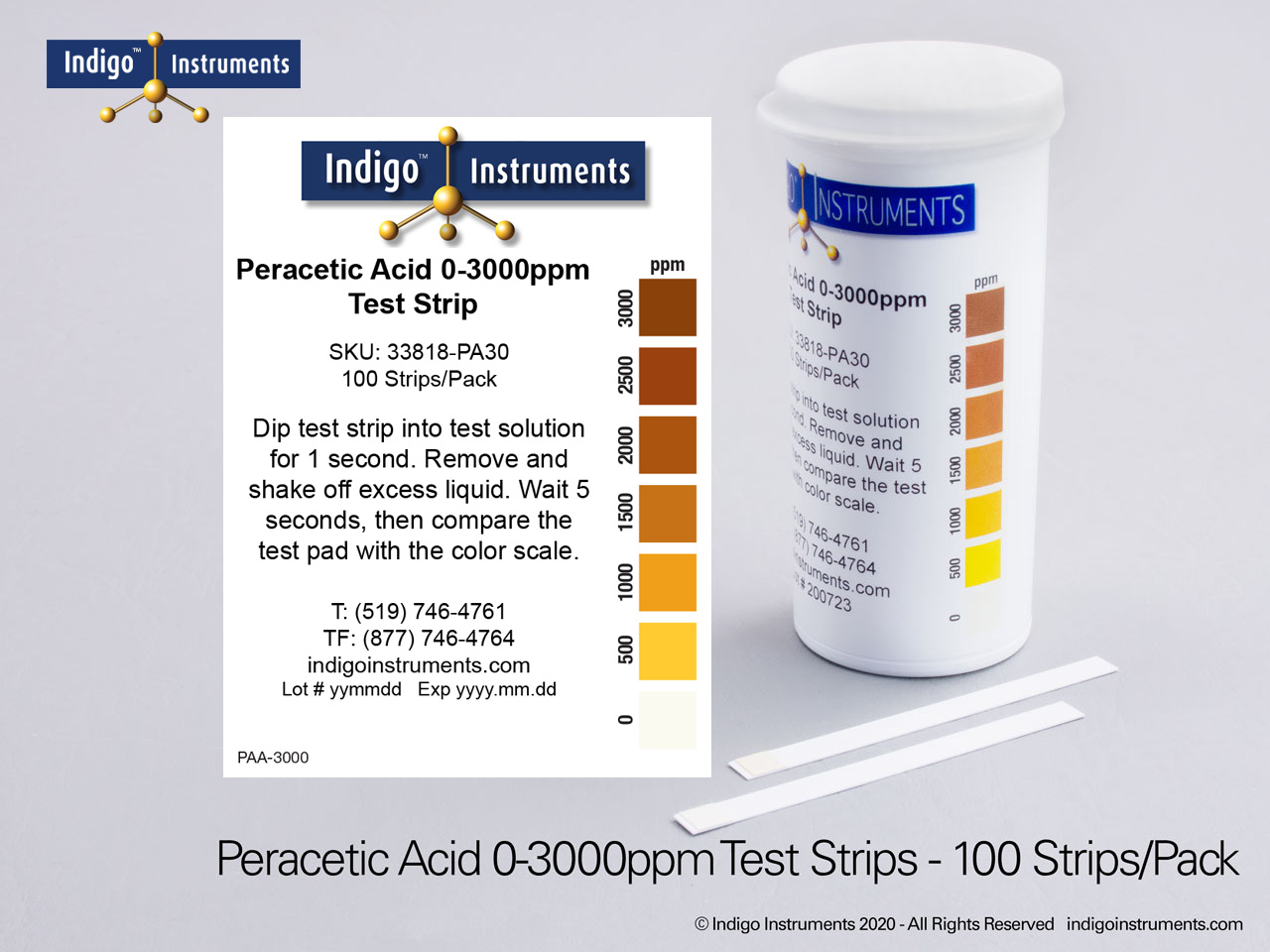
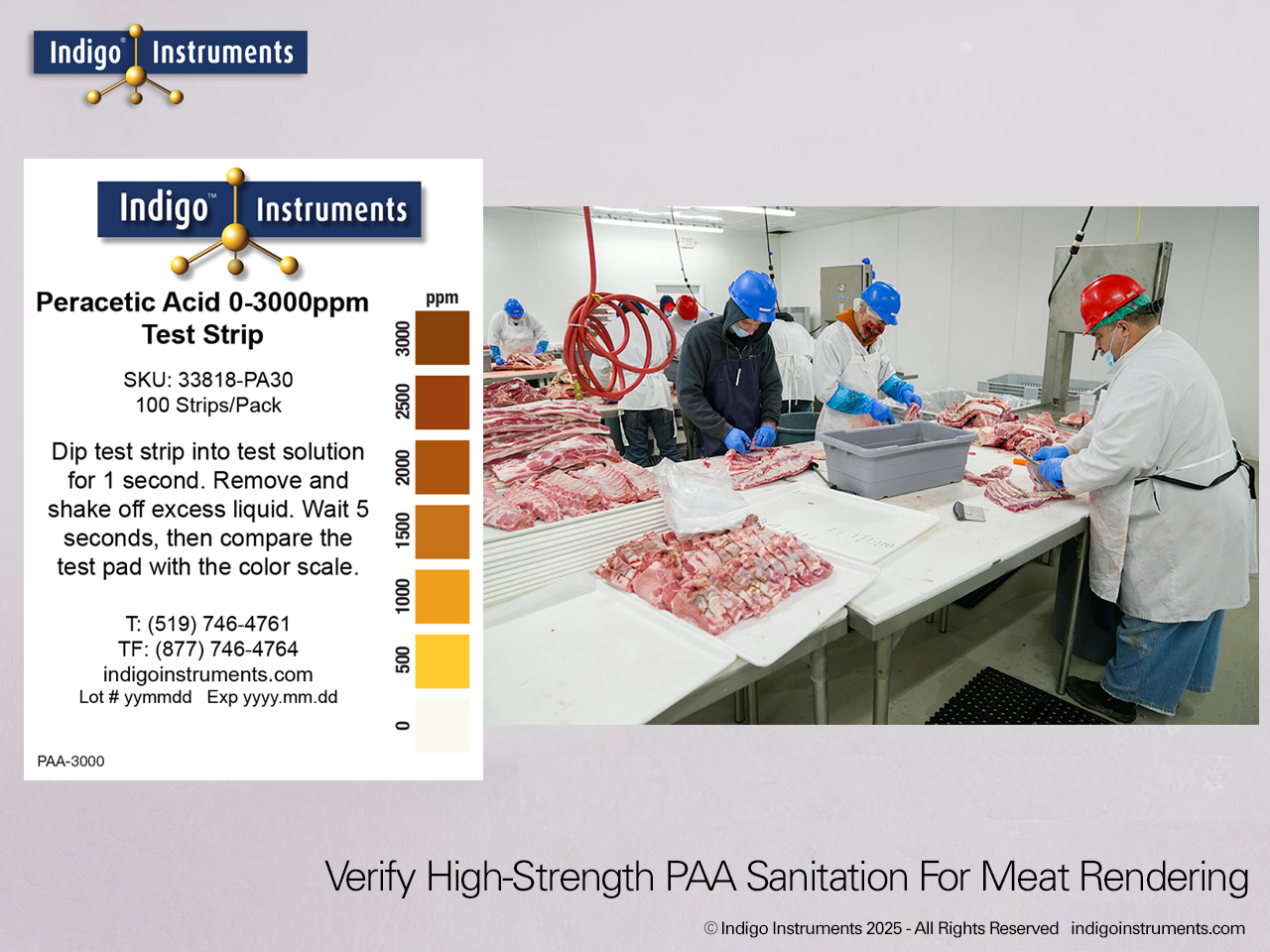
Use Indigo® high-range 0–3000 ppm peracetic acid strips to assess spill zones, guide PPE use, and document cleanup safety during chemical decontamination.

Accidental spills of peracetic acid (PAA) in industrial or healthcare environments require rapid assessment to ensure worker safety and proper cleanup. Indigo® 0–3000 ppm PAA test strips are ideal for this application, with clear color blocks at 500, 1000, 1500, and 3000 ppm, enabling safety officers to quickly determine spill strength and define containment measures. Fast, on-site verification helps determine the level of personal protective equipment (PPE) required and supports compliant hazardous waste handling.

During chemical spill response and decontamination, it is essential to document PAA concentrations in affected areas. These test strips provide real-time spill zone assessment, supporting OSHA hazard communication protocols, emergency response teams, and industrial hygiene programs. By identifying whether a spill remains at high-strength disinfection levels (≥1500 ppm) or has diluted below hazardous thresholds, responders can select the appropriate neutralization strategy, PPE, and disposal method.

Hazards of High-Level Peracetic Acid Exposure

  • 3000 ppm (strong irritant to corrosive): At this level, peracetic acid vapor and liquid contact rapidly cause eye irritation, conjunctivitis, and tearing. On skin, it produces whitening, redness, and blistering due to its oxidizing power. Inhalation can cause coughing, throat pain, and bronchial irritation.
  • 10,000–30,000 ppm (severe corrosive range): Strong risk of corneal burns, skin ulceration, and pulmonary edema if vapors are inhaled in confined spaces. Even brief exposure is dangerous. Direct liquid contact may cause chemical burns.
  • 100,000+ ppm (bulk spill concentrations): These are life-threatening exposures. Contact results in deep tissue destruction, while inhalation of vapor can lead to severe airway injury, chemical pneumonitis, or asphyxiation. High concentrations may also damage mucous membranes within seconds.
  • Primary tissues affected:
    Eyes (very sensitive even at lower ppm)
    Respiratory tract (nose, throat, lungs)
    Skin (oxidative burns)
    Mucous membranes (oral and nasal passages)

Compliance & Safety Considerations

  • OSHA (29 CFR 1910.1200 – Hazard Communication Standard): PAA is classified as a corrosive liquid and strong oxidizer. Employers must have SDS sheets, labels, and training for handling and spill scenarios.
  • OSHA HAZWOPER (29 CFR 1910.120): For larger spills, responders must be trained under HAZWOPER regulations, which cover PPE use, exposure monitoring, and decontamination procedures.
  • EPA & DOT Regulations: Bulk PAA shipments are regulated as hazardous materials. Spill cleanup and neutralization must comply with EPA waste disposal guidelines to prevent uncontrolled environmental release.
  • NIOSH / ACGIH Exposure Limits: ACGIH has a Threshold Limit Value (TLV): 0.4 ppm (15-min STEL) for airborne vapor.

This underscores how 1000+ ppm liquid solutions are extremely dangerous if aerosolized or volatilized.

Details

Best Practices for PAA Spill Response Using 3000ppm PAA Test Strips

  • Assess the Scene First: Use PAA test strips (0–3000 ppm) at spill edges to confirm dilution levels before responders advance.
  • PPE is Mandatory: Chemical-resistant gloves, goggles/face shield, and respiratory protection if vapors are suspected.
  • Ventilation: Open windows, use fume hoods, or employ portable exhaust systems when indoors.
  • Neutralization Protocols: Apply appropriate neutralizers (e.g., sodium bicarbonate solution) for contained spills.
  • Verify Dilution Before Re-entry: Use strips to confirm that residual PAA is <3000 ppm (ideally approaching 0) before allowing unprotected personnel to enter.
  • Waste Disposal: Collect neutralized residues in properly labeled hazardous waste containers for EPA/DOT-compliant disposal.

Miscellaneous Information

For more information on actual shelf life, see our blog: Test Strip Expiration Dates; Good Today, Dead Tomorrow?

You can compare the chemical structures of peracetic acid (aka peroxyacetic acid), chemical formula C2H4O3, to acetic acid, hydrogen peroxide & most quaternary ammonium compounds using our 3D Molecular Model Builder.

Use our free Sanitizer Dilution Calculator to prepare accurate dilutions to any ppm level for any volume. Some knowledge of the metric system is required.

Related information or images
Specifications
Results in 5 seconds with readings at 500-1000-1500-2000-2500-3000 ppm for peracetic acid concentration. The detection limit of the strip is ~250ppm.
Documentation

Test Strip Documentation

Stability Statement Certificate of Analysis SDS
Indigo Peracetic Acid Test Strips 0-3000ppm Stability Statement Indigo Peracetic Acid Test Strips 0-3000ppm Certificate of Analysis Indigo Peracetic Acid Test Strips 0-3000ppm SDS

Indigo® peracetic acid test strips are Made in USA & tested for accuracy using NIST compliant standards.

Reviews ()
Review This Product Now!


Frequently Asked Questions

FAQ for PAA Spill Response Test Strips 0-3000ppm

Yes. The 0-3000 ppm range helps confirm when a spill has been effectively neutralized below hazardous levels.

If strips indicate >1000 ppm, chemical-resistant gloves, goggles, and respirators should be used in accordance with OSHA and the product SDS.

They are best used as a first-response field test. For regulatory reporting, additional lab verification may be required.