Progesterone Chemical Structure Model
SKU: 62512A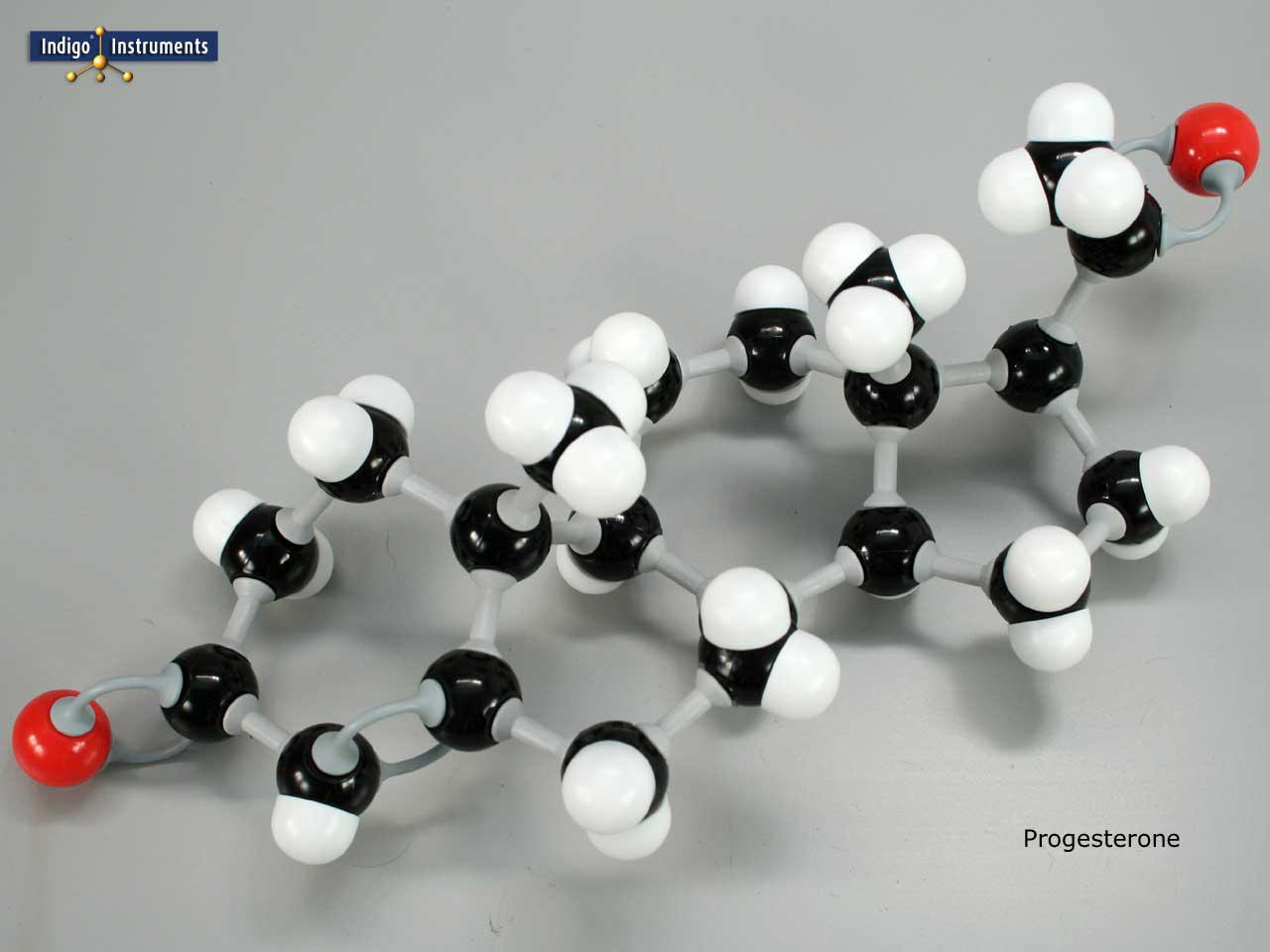
Progesterone is an steroidal hormone in biological females. It has the chemical formula C21H30O2. Its chemical structure consists of four fused rings: a cyclohexene, 2 cyclohexanes & a cyclopentane ring. The cyclohexene ring is characterized by a keto (ketone) functional groups while the cyclopentane has a methyl ketone. The overall structure is relatively planar due to the arrangement of its fused rings. Progesterone's 's molecular structure is typical of steroid hormones derived from cholesterol and shares a similar ring motif.
Progesterone is mainly produced by the corpus luteum, an endocrine gland that forms in the ovary after ovulation. Its production is controlled by chemical signalling from the hypothalamus, pituitary gland and ovaries.
Compare progesterone's structure to cholesterol, estradiol, testosterone & cortisone.
Progesterone is an essential natural hormone in biological females (XX). It is responsible for endometrial receptivity, embryo implantation, and other functions related to pregnancy. Progesterone also stimulates the development mammary glands to produce milk (lactation).
Low progesterone levels can lead to infertility and spontaneous abortion. Progesterone is also used in contraception as higher levels prevent ovulation and fertilization.
Why educators choose Indigo® Instruments models? We've kept inventory of genuine Molymod atoms & bonds for 30+ years; compatible with every molecular model kit we have sold. This level of quality may seem expensive but no parts support from other vendors costs even more.