Garden Tool Pathogen Quat Disinfection

SKU: 33819-1500

$15.75USD or lower Each

Save More When You Buy More!
Quantity1+2+ 3+ 10+ 
Price for each$15.75USD$15.47USD$15.19USD$14.40USD
Your savings - 1.78%3.56%8.57%
Qty:
[5]   3 Reviews    | Write a Review

Prevent plant disease spread with quat test strips for pruning shears, greenhouse benches, and trays. Verify 0–1500 ppm quaternary ammonium sanitizer levels for reliable horticulture sanitation.

Keep plants safe with proper quat sanitation. Plant pathogens spread easily through shared tools and greenhouse equipment. From pruning shears to potting benches, quaternary ammonium compounds (quats) are widely used to prevent cross-contamination. Indigo® 0–1500 ppm quat test strips help growers confirm sanitizer concentrations are strong enough to kill pathogens, but safe for plants and workers.

Sanitizing garden tools used around fruits, vegetables, and flowering plants, requires quaternary ammonium chloride (quat) concentrations ranging from 800 to 1500 ppm to effectively eliminate plant pathogens. At these levels, quats are effective bactericidal, fungicidal, and virucidal agents that work both in home gardens and in greenhouses, nurseries, and commercial agriculture.

Sanitizing Garden Tools (Pruning Shears, Knives, and Pots)

  • Why it matters: Tools like shears and knives carry bacteria, fungi, and viruses from one plant to another. Common culprits include Pseudomonas, Xanthomonas, and Botrytis species.
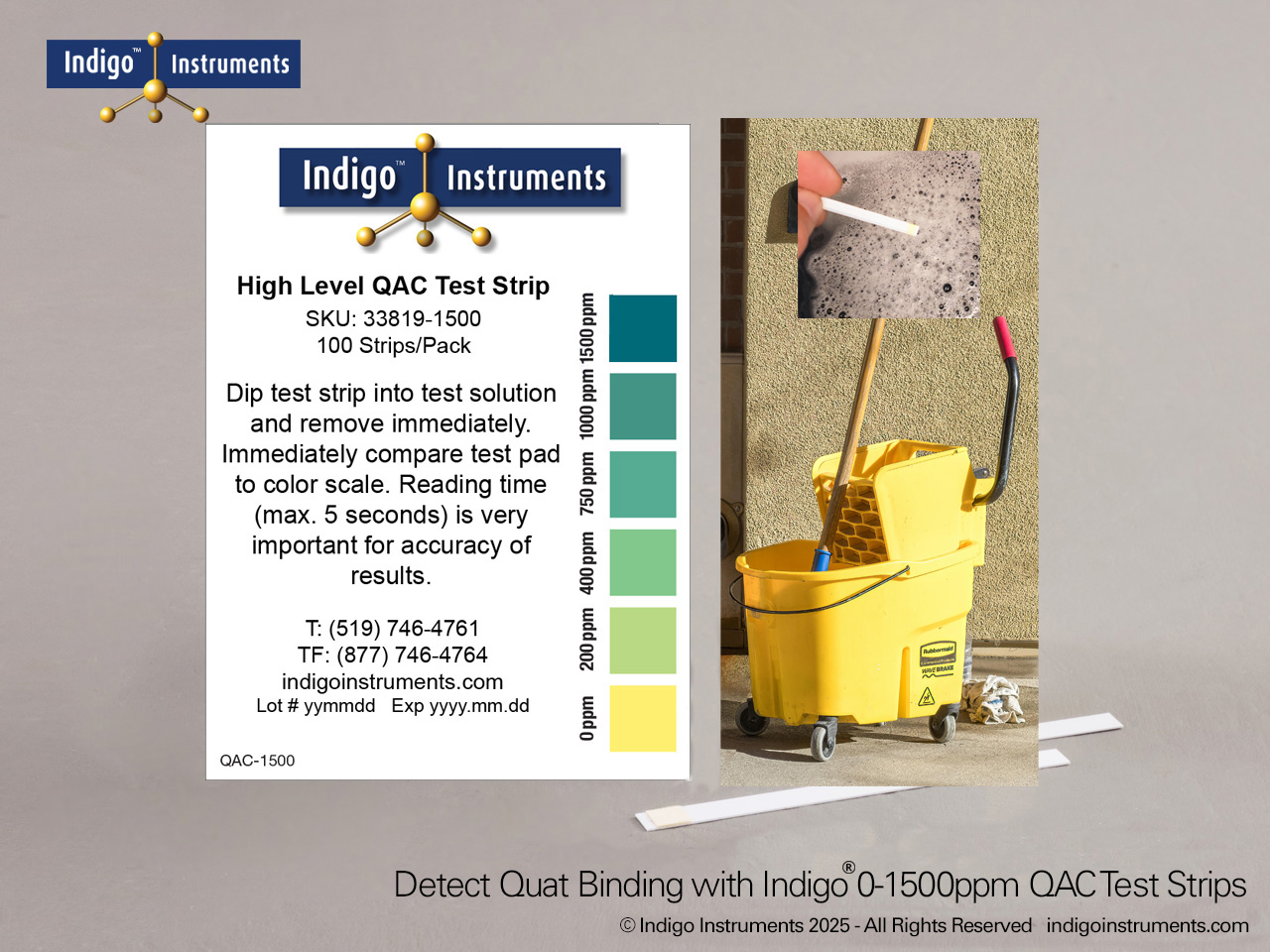
  • Best practice: Immerse or wipe down tools with a quat sanitizer solution between uses. Always test solution strength with 0–1500 ppm strips, as organic matter from sap and soil can reduce quat effectiveness.
  • Key pathogens of concern: Fire blight (Erwinia amylovora) in orchards, tomato bacterial spot, and powdery mildew spores in greenhouse crops.

Sanitizing Greenhouse Surfaces (Benches, Trays, and Floors)

  • Why it matters: Greenhouse benches, trays, and irrigation equipment harbor residues where pathogens persist between crop cycles.
  • Best practice: Clean surfaces first, then apply a quat solution at 600–1200 ppm depending on organic load. Our test strips confirm the correct concentration, preventing under- or over-application.
  • Key pathogens of concern: Root rot fungi (Pythium, Phytophthora), downy mildew, and bacterial wilt pathogens.

Plant Pathogens Targeted by High-Strength Quats-Details

  • Pseudomonas syringae are bacteria that affect tomatoes, peppers, beans, and stone fruits. Their presence is indicated by leaf spots, wilts, and fruit blemishes. They can be spread by tools, water, and contact between plants
  • Erwinia amylovora are bacteria that infects apples, pears, quince, and other pome fruits with the disease fire blight. Symptoms are shoots and blossoms that wilt and appear scorched (blackened or burnt tips), oozing bacterial exudate. They are transmitted by contaminated pruning tools, insects, and rain splash & are highly highly destructive in commercial orchards.
  • Botrytis cinerea (gray mold) is a fungus that affects grapes, strawberries, and ornamental flowers & can be seen as fruit rot & stem infections. Its spores are spread by tools.
  • Fusarium oxysporum, also a fungus, affects tomatoes, cucurbits, many ornamentals with vascular wilt & is spread by contaminated soil and tools.
  • Phytophthora spp. is a water mold that affects potatoes, tomatoes, peppers with late blight & root rot. It is spread by soil, splashes & tools.
  • Tobacco mosaic virus can infect tomatoes, peppers, ornamental plants & is evidenced by leaf mottling & reduced yields. It is extremely persistent on hands and tools

Cautions & Best Practices

Lower-concentration sanitizers are ineffective on spores, virus particles, and biofilms wheras quats at 800–1500 ppm can inactivate most fungi, bacteria, and viruses within minutes. Quats with added wetting agents or fungicides may be used in particularly high-risk greenhouse setups.

Always rinse tools (or allow to air dry thoroughly) after disinfection to avoid plant phytotoxicity, especially for delicate ornamentals. Replace solution regularly — organic matter like sap and soil inactivates quats over time.

Best Practices for Using High-Strength Quats

  • Soak time matters: Most pathogens require at least 10 minutes of contact time. Clean tools first.
  • Remove soil, sap, or organic material before disinfection—quats are less effective on dirty surfaces.
  • Rinse or dry tools before use on sensitive plants, especially if edible, to avoid phytotoxicity.
  • Rotate disinfectants occasionally; overuse can promote microbial resistance or buildup of quats.

We've been selling quaternary ammonium (quat) test strips since 2007. Buy best-in class, fully documented Indigo® QAC test strips, 100 strips/pack with a guaranteed 3 year shelf life (dated back from expiration date "yyyy.mm.dd"); see storage requirements in Specifications.
Details

Who Benefits from Quat Testing in Horticulture?

  • Commercial growers: vegetable, fruit, and ornamental crops.
  • Greenhouse operators: benches, trays, irrigation tools.
  • Orchard managers: pruning tools for apples, pears, grapes.
  • Plant nurseries: reducing cross-contamination in propagation.
  • Regulatory inspectors: confirming sanitizer concentrations meet GAP and HACCP standards.


Search Terms for More Info on Quats for Garden Tools

  • quat test strips 0–1500 ppm garden tools
  • high strength disinfectant for pruning shears
  • physan 20 sanitizer for greenhouse use
  • plant pathogen sanitation guide
  • botrytis pruning prevention disinfectant
  • Quat disinfectant for garden tools
  • Physan 20 vs GreenShield vs bleach
  • high strength QAC test strips horticulture
  • fungicide alternatives for tool sanitation
  • disinfecting pruning shears plant pathogen control


Related information or images
Specifications

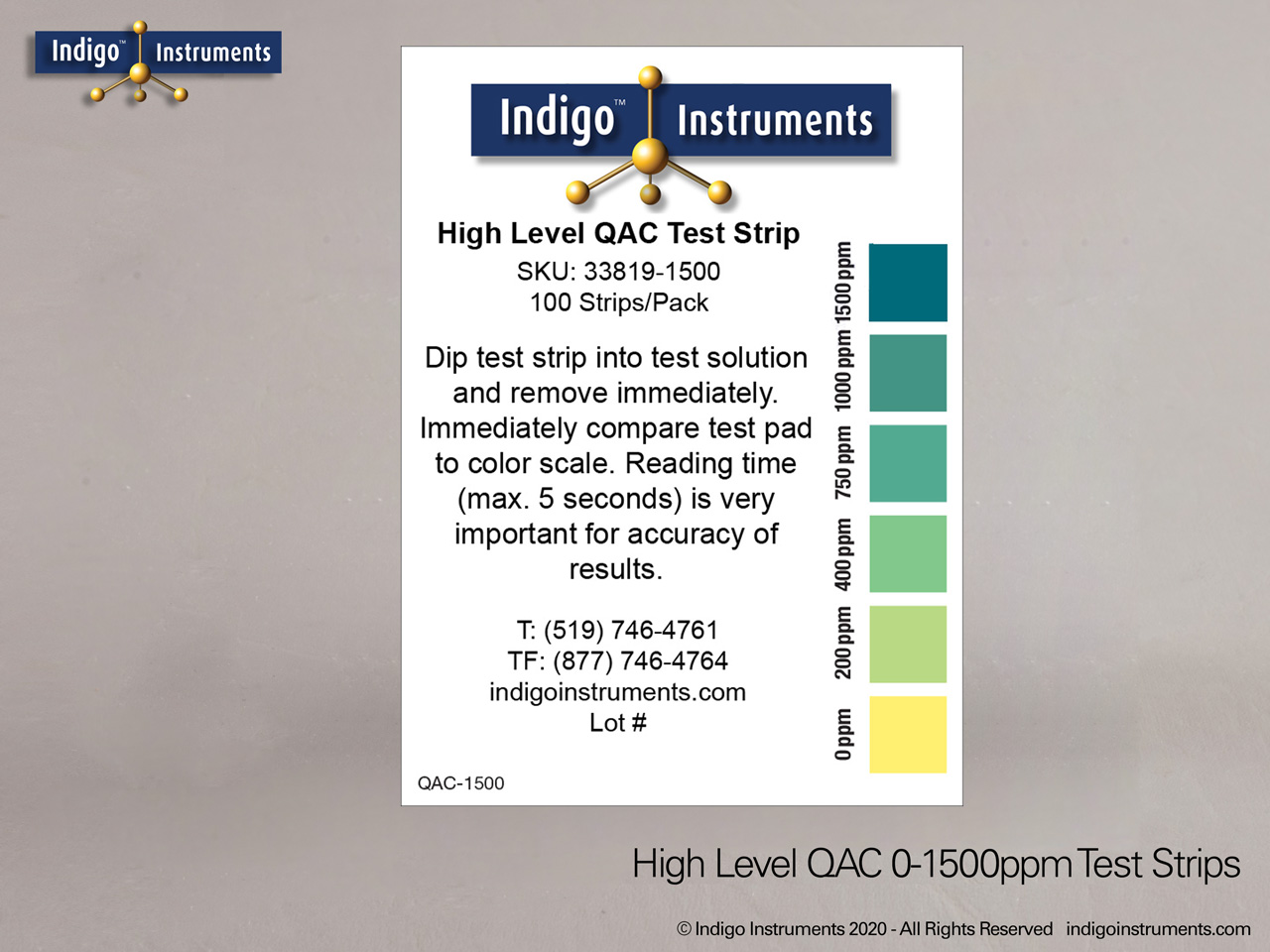
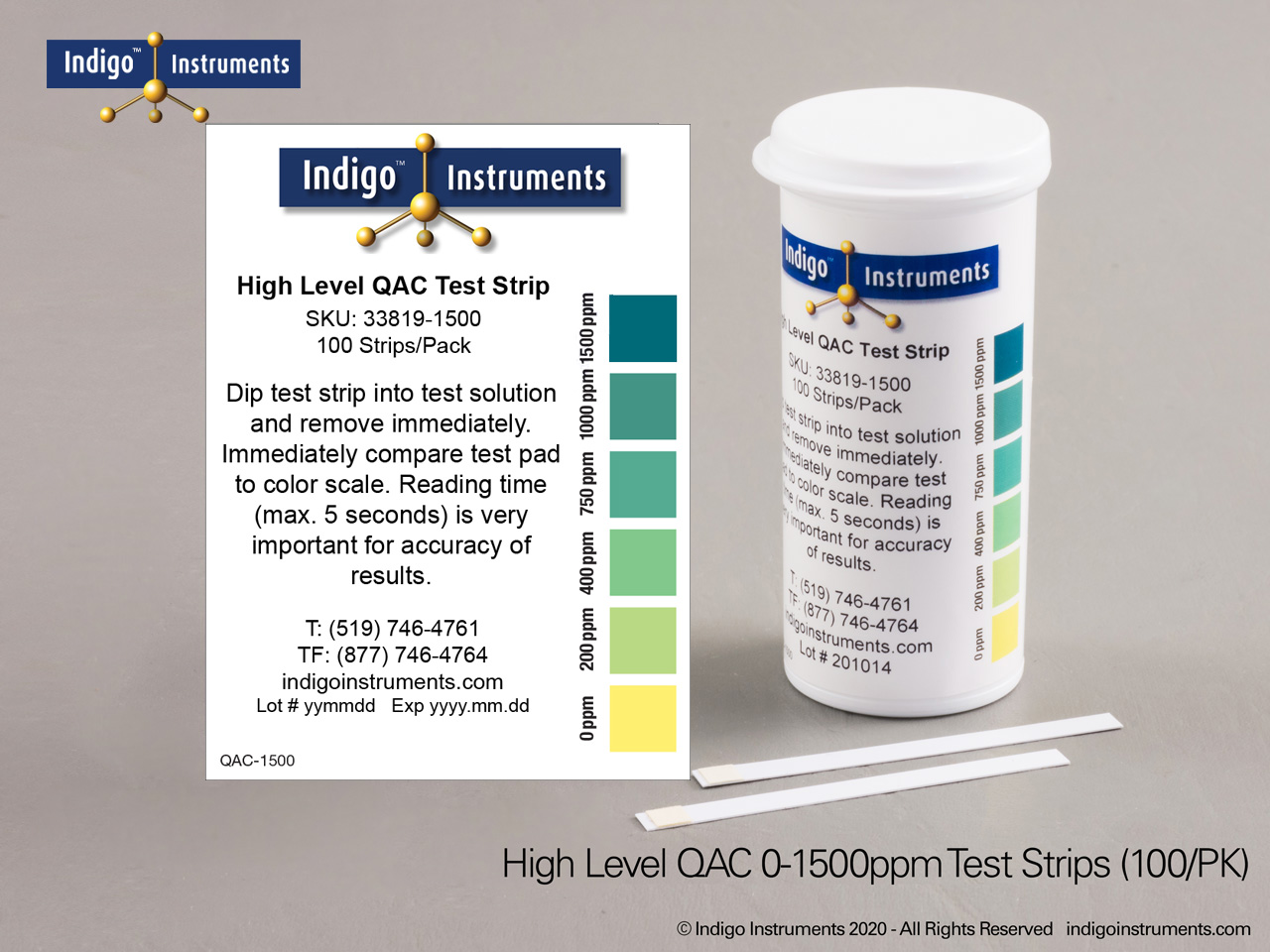
Dip strip & remove for immediate reading at 200-400-750-1000-1500 ppm for quaternary ammonium disinfectant concentration. Read strip results immediately. If you wait the 30 seconds needed for some other strips you will get a reading that is too high.

  • Indigo® quat test strips have a guaranteed minimum 3 year shelf life but are stored in desiccant lined vials so actual shelf life can be 5+ years.
  • Store in original vial in a cool, 20-30C, dry, place out of direct sunlight.
  • Detection limit: 50ppm; Accuracy: +/- ½ color chart unit
  • For technical explanation, read: Sanitizer Test Strip Expiration; Good Today, Dead Tomorrow?
  • These strips measure any quat formulation
  • Indigo® QAC test strips are calibrated for Oasis 146: see details. Consult your supplier if necessary.
  • Hard water (above 500 ppm) can cause the strips to read high, up to 1 unit.
  • The number of strips (100) per vial is approximate.
Reviews (3)
2020-06-19
Great product, very easy to use and understand.
— Tony Mack
2019-05-13
Excellent website, and quick delivery. Very happy with service.
— Stu
2017-01-17
These guys are great! I can send in a technical question at the oddest hour and get a reply. Extremely customer focused and always willing to help. Every project that we have worked on together has been successful.
— Mike
— Indigo: You & your company are a pleasure to work with.
Review This Product Now!