Taste Bud Test Strips
Super Taster Test Strips
Buy Bulk, Save Big on
Supertaster Genetics Lab Kits

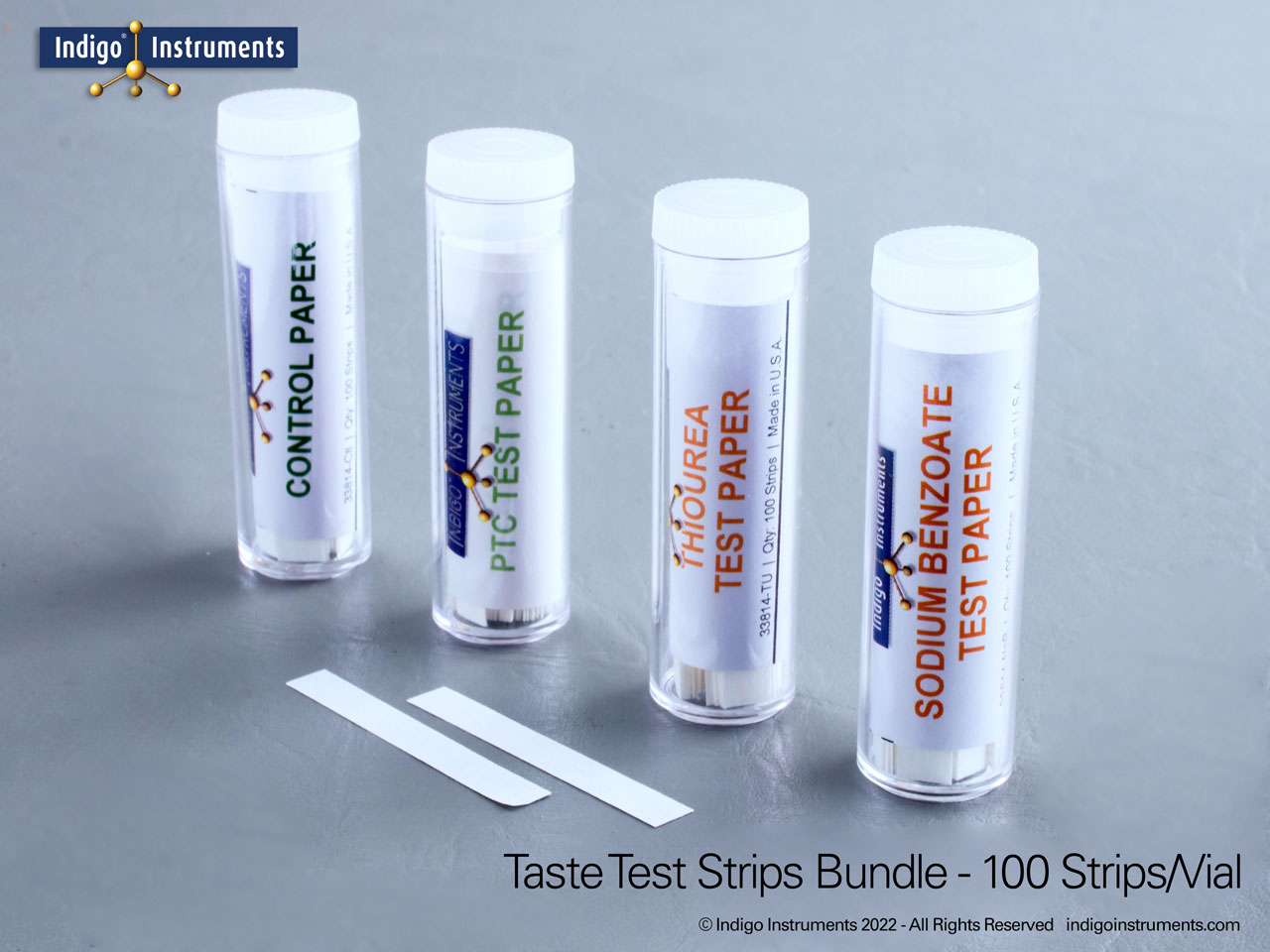
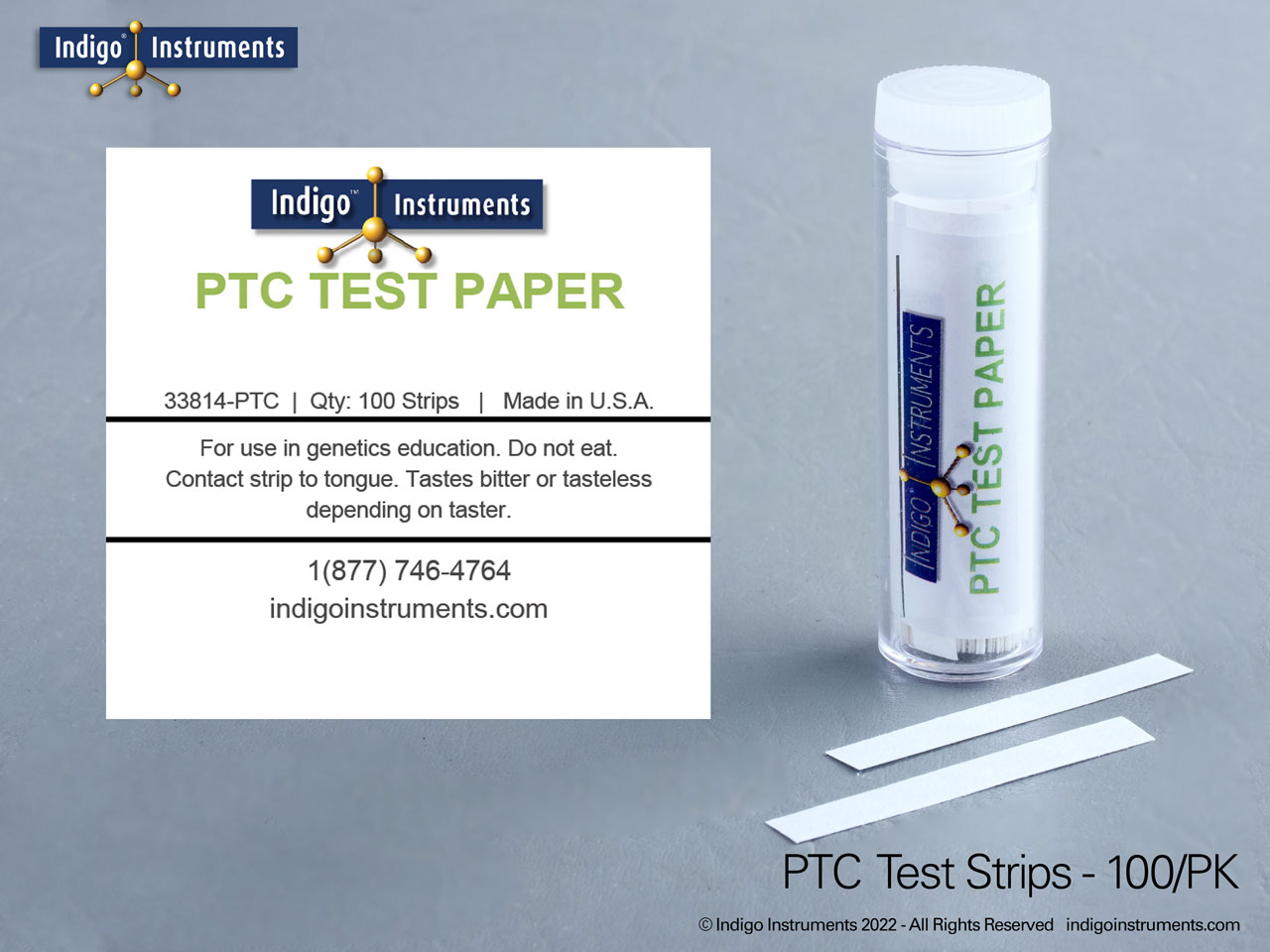
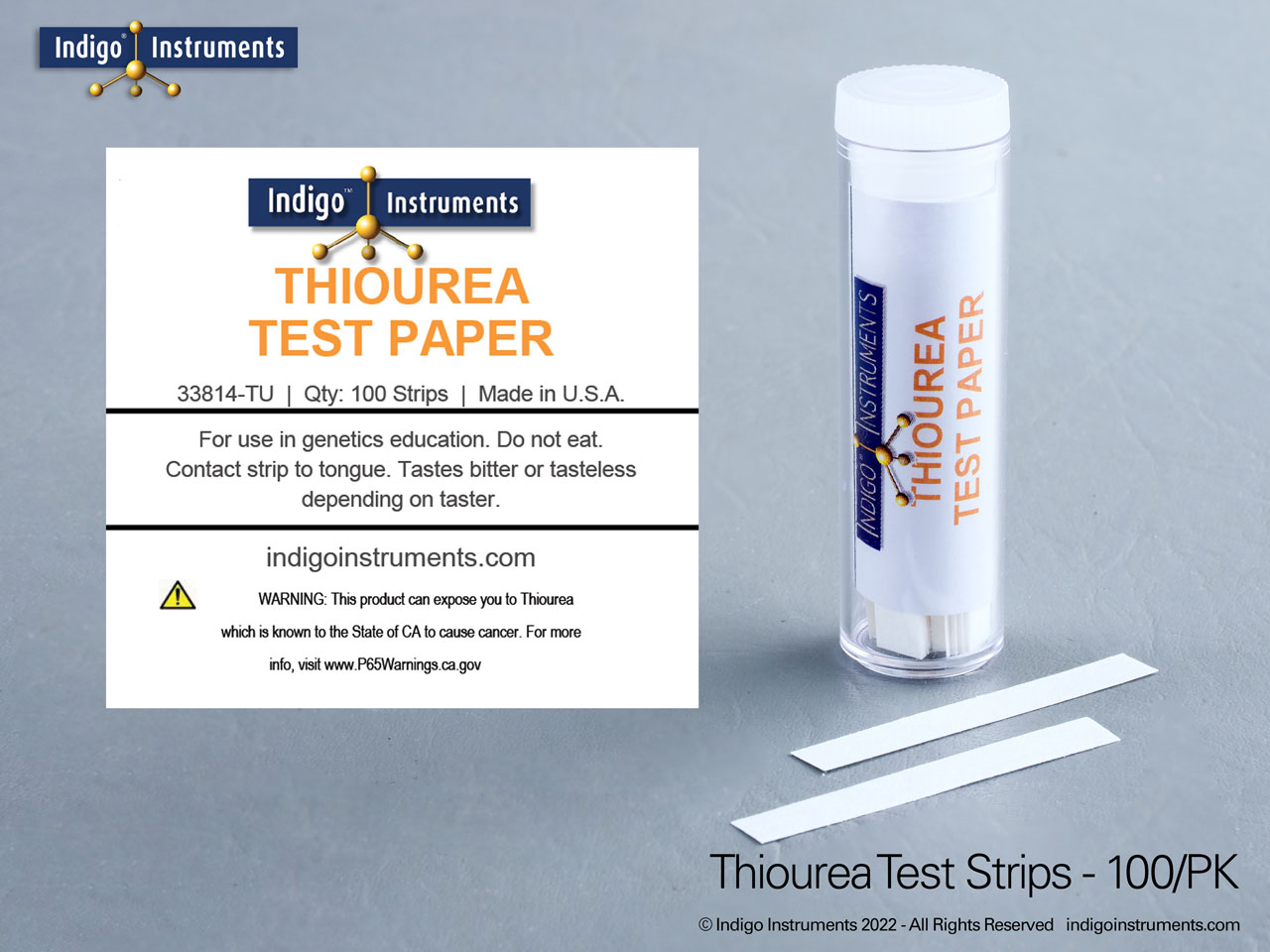
Make your own super taster genetics lab kit with any combination of Indigo® PTC, thiourea, sodium benzoate & control test papers for taste testing. Use in biology lab experiments to identify the different genotypes by their distribution of dominant & recessive supertasting specific genes. Or, turn it into a fun activity. Your kids' food preferences could be genetic!
All Indigo® taste test papers come with 100 strips/vial and a minimum guaranteed 3 year shelf life. Full documentation is provided including a Stability Statement, Certificate of Analysis & SDS. Optional next day delivery for any quantity of most items.
Buy Indigo® test strips, the brand you can trust for accuracy & technical support. Call us on our toll free line for immediate assistance or e-mail us with your questions. 1 hour response is typical during business hours, M-F, slightly longer on weekends.
Indigo® Taste Test Strips
Human taste perception varies widely because of differences in receptor genetics, salivary chemistry, and the number of fungiform papillae on the tongue. Classroom-safe taste test strips provide a simple way to explore how these biological factors shape our perception of sweetness, saltiness, sourness, bitterness, and UMAMI, depending on the compound used. PTC, sodium benzoate, and thiourea activate different subsets of taste receptors, revealing how complex and individualized human taste truly is.
What is Supertasting?
While PTC is strongly bitter for individuals with active TAS2R38 receptors, sodium benzoate produces a diverse range of sensations, sweet, salty, sour, bitter, or even tasteless, depending on a person’s unique combination of taste receptors and saliva composition. Thiourea compounds activate a broader set of bitter receptors than PTC and generate highly variable responses as well. Together, these strips help students and researchers examine the biological, chemical, and genetic factors that drive taste variation.
Someone with "super taste" senses flavors more strongly than the average person. They have many more taste buds and are particularly sensitive to bitter foods such as broccoli, spinach, coffee, beer, and chocolate. This characteristic is inherited by roughly 25% of the population, more often in women. Use Indigo® taste test paper strips in your lab/class experiments or with your family or friends.
The reason for our supertasting ability is unclear but sensitivity to bitter compounds may relate to our recognizing potentially toxic plant alkaloids since this trait is in ~75% of people who taste PTC. This may also be of benefit in avoiding spoiled foods. Read Expiration Dates Are Meaningless & why we evolved a disgust response
See the Scientific American article: Super-Tasting Science: Find Out If You're a "Supertaster"!. It even includes instructions on how you can compare the number of taste buds on your tongue to that of your friends.