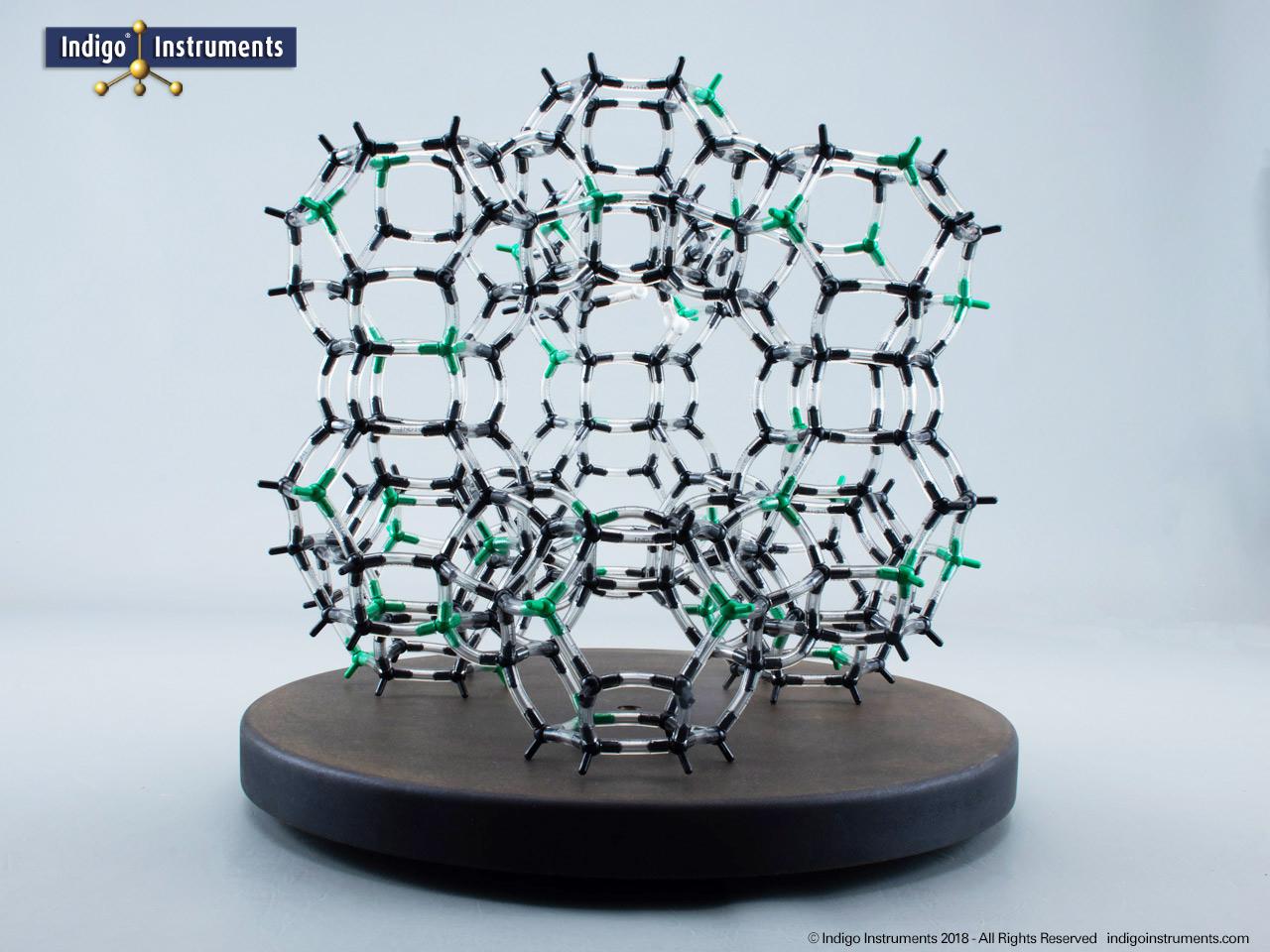
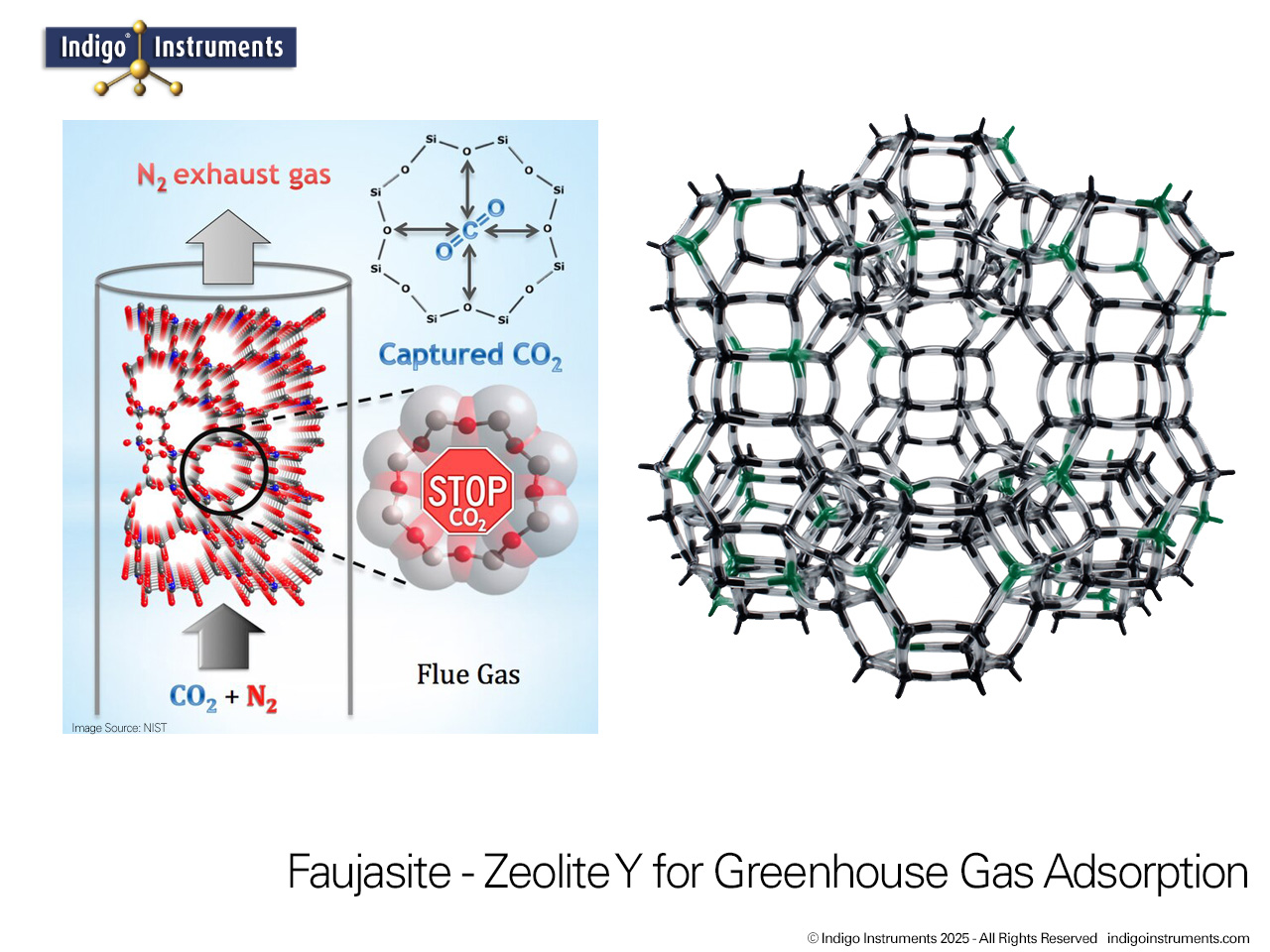
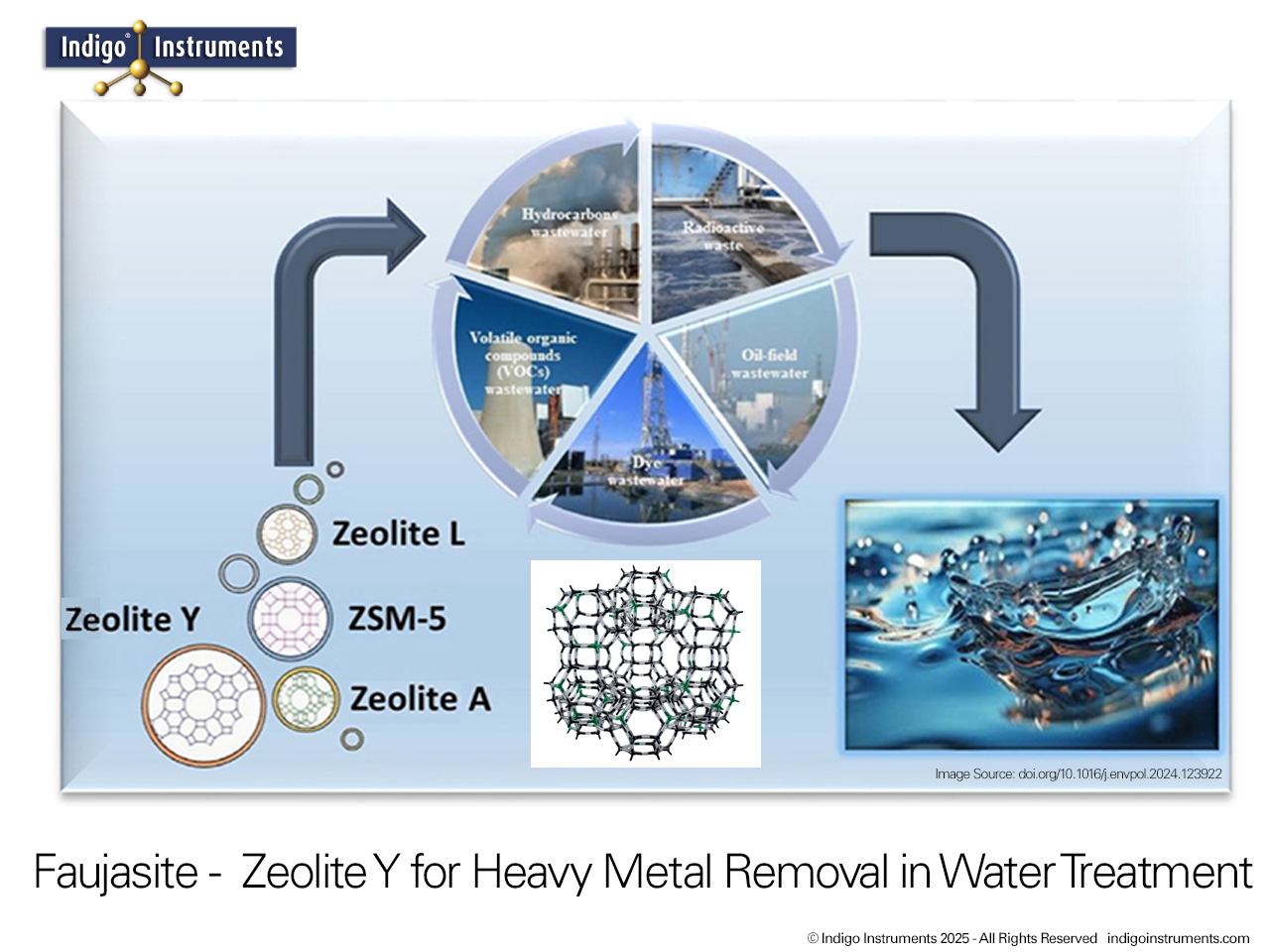
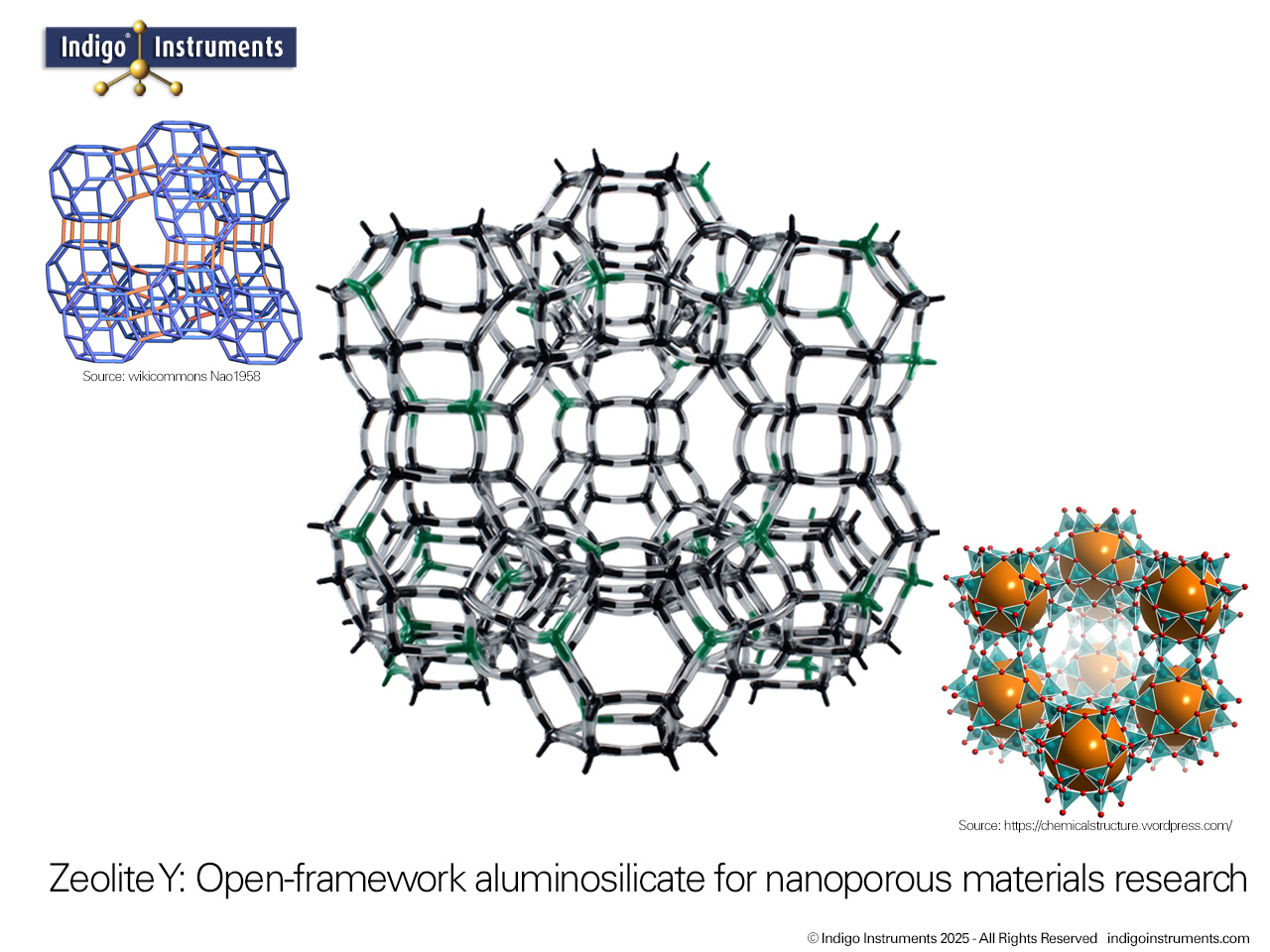
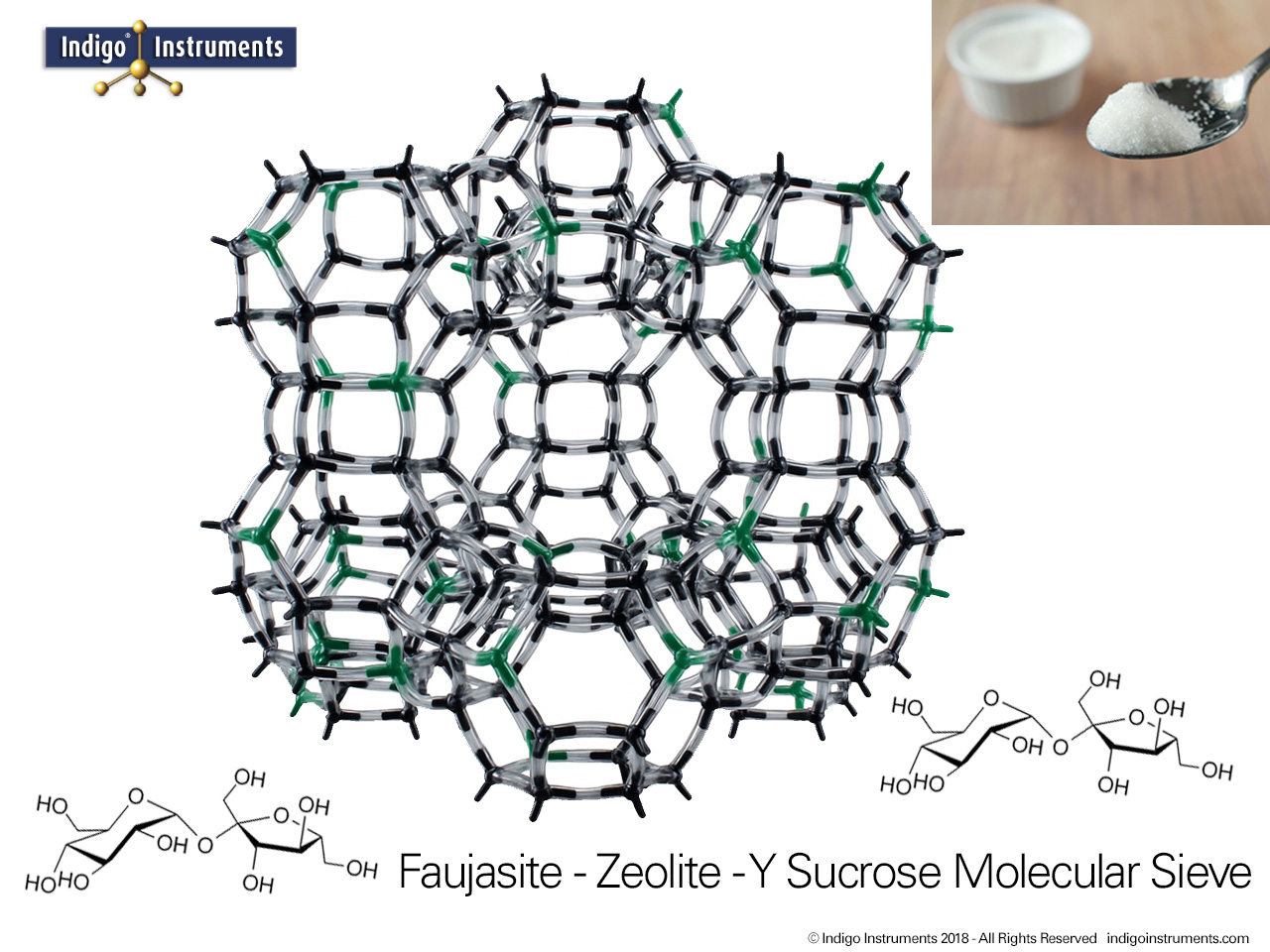
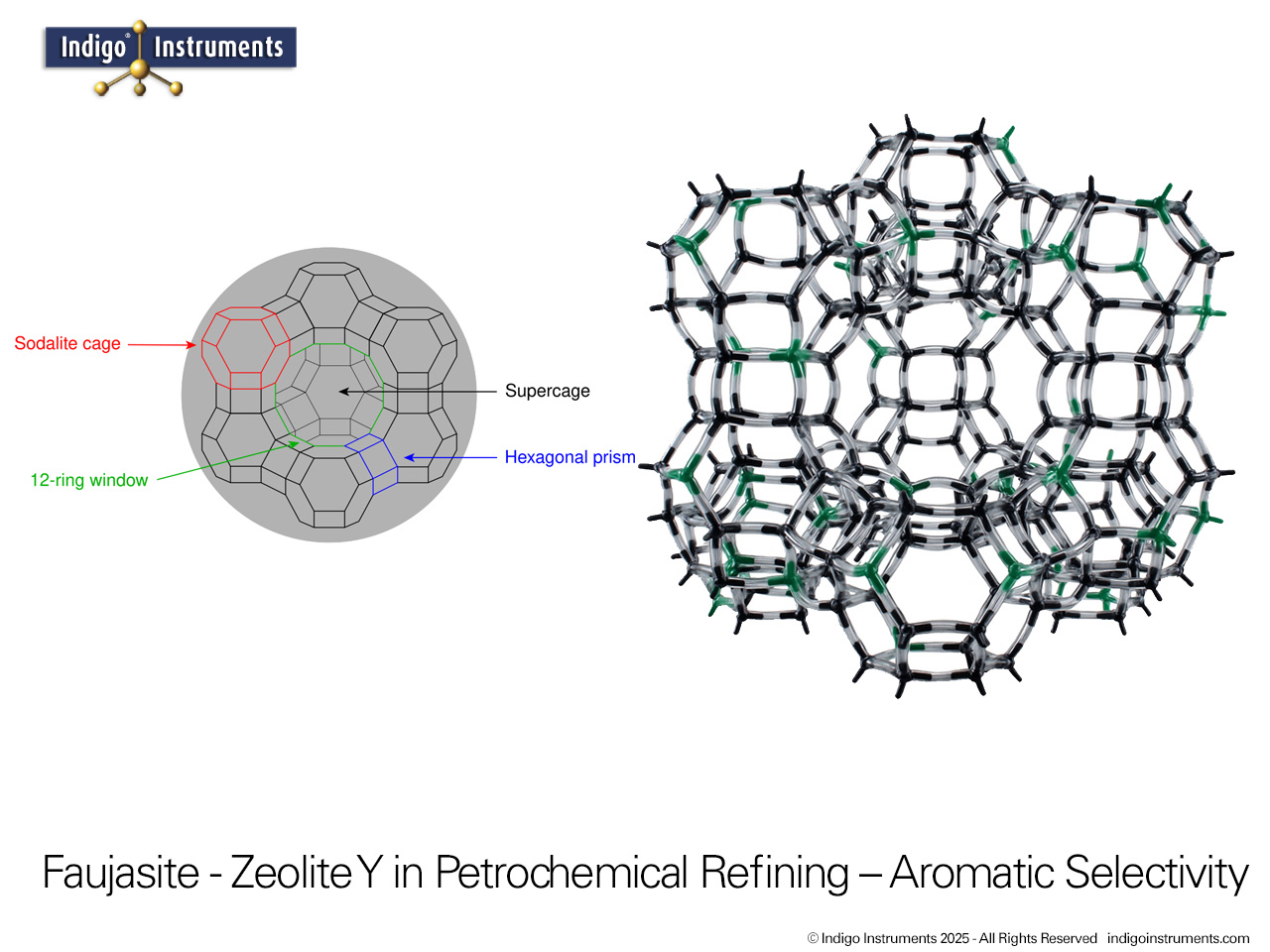
Zeolite Y, a synthetic form of the Faujasite (FAU) framework, features a 12-membered ring pore system that enables selective molecular sieving. Build and explore the Indigo ® Zeolite Y molecular model in studies on catalysis, molecular sieving, oil cracking & materials science.
The Zeolite Y Catalyst Structure Model (244 atoms, 434 bonds) illustrates the three-dimensional aluminosilicate faujasite cage structure, complete with pores (~7.4 Å) that support ion exchange, catalysis, molecular sieving, and hydrocarbon cracking. Its pores & channels and high surface area are arranged such that positively charged ions can enter & exchange with metal ions. It is ideal for teaching catalyst function in petroleum refining, separation of molecular-sized gases, or materials chemistry in advanced coursework. Because of its structural stability and hydrophobicity, Zeolite Y serves in applications from cracking heavy fractions of crude oil to desiccant or air purification systems.
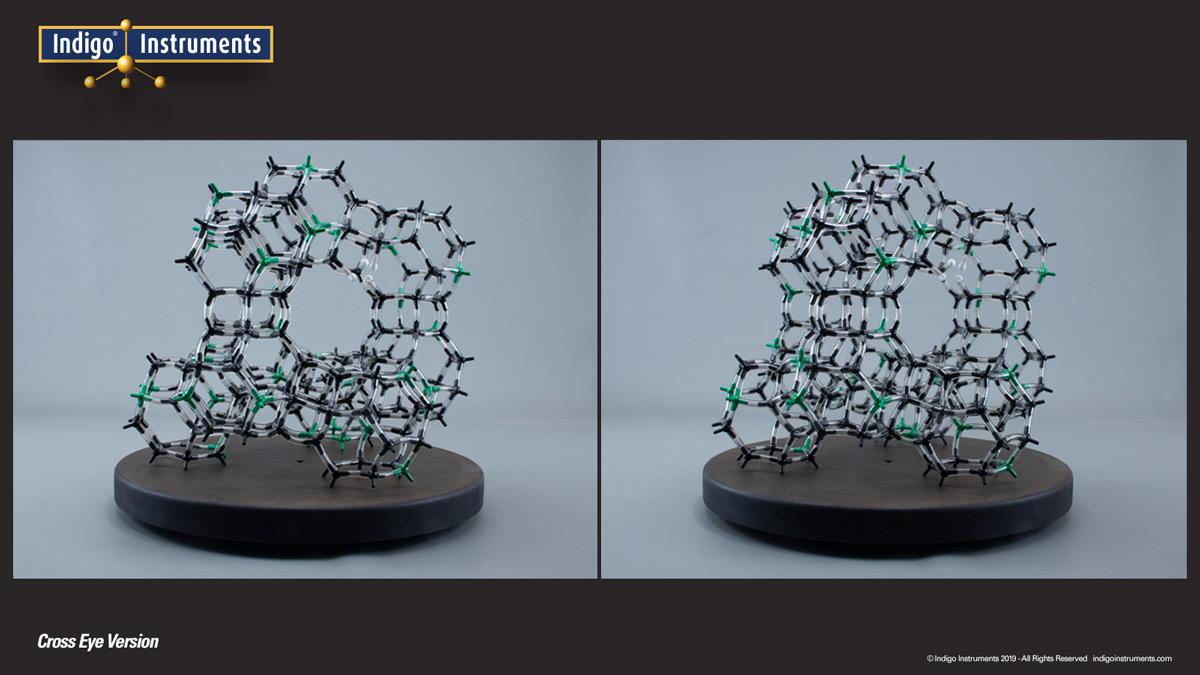
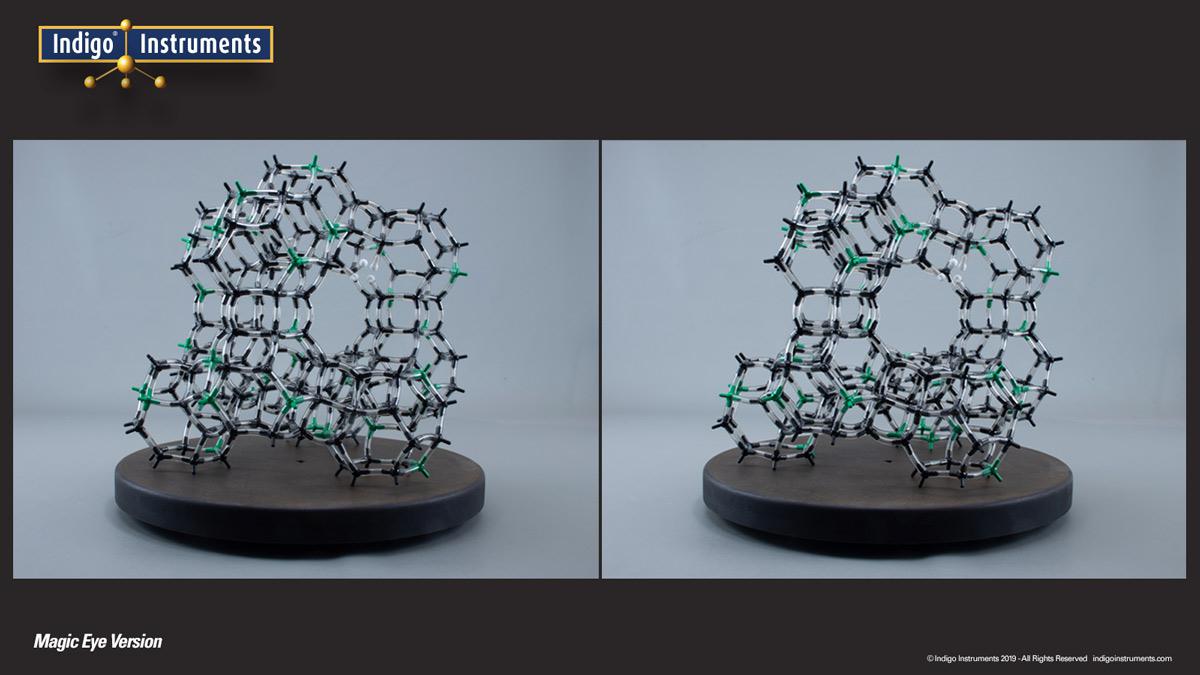
Note: The base is not included and the oxygen atoms are implied. Also, there are no written instructions. You will need to build it using the stereo pair images below or the video to guide you. This is not recommended for beginners.
Mesoporous Zeolite Y, is a faujastite aluminosilicate structure with a general chemical formula of (Na2,Ca,Mg)3.5[Al7Si17O48]·32(H2O). Its 24-tetrahedracuboctahedral sodalite cage subunits are arranged in the same way as carbon atoms in a diamond lattice structure. Dealuminated Y zeolites are good adsorbents and stable acid catalysts. They have high thermal and hydrothermal stability and higher catalytic activity than aluminum-rich Y zeolites. Y zeolites used in fluid catalytic cracking of petroleum are further stabilized with rare earth cations of lanthanum and cerium further enhancing their shape selective catalysis.
| Learning Outcome | Key Features of Zeolite Y Model |
|---|---|
| Understand aluminosilicate framework | Displays alternating SiO4 and AlO4 tetrahedra linked through shared oxygen atoms |
| Visualize pore geometry | Highlights the 3D cage structure and large supercages connected by 12-membered oxygen rings |
| Relate structure to function | Explains how uniform pore size enables molecular sieving and shape-selective catalysis |
| Connect to petrochemical refining | Shows how cracking of long-chain hydrocarbons is facilitated by zeolite pore dimensions |
| Apply to environmental chemistry | Demonstrates capacity for ion exchange, adsorption, and pollutant removal |
| Bridge to industrial practice | Links laboratory-scale visualization to commercial catalytic processes |
Indigo Instruments has held inventory of genuine Cochranes of Oxford (Orbit) parts for 30+ years (See Skeletal (Orbit/Minit)) that are compatible with every molecular model we have sold since day 1. This level of quality may appear expensive but no parts support from other vendors costs even more.
| Category | Example Molecules | Relevance / Application |
|---|---|---|
| Small Gas Molecules | Methane (CH4) Carbon dioxide (CO2) Nitrogen (N2) Oxygen (O2) Hydrogen (H2) |
Gas purification, O2/N2 separation, CO2 capture |
| Water & Small Polar Molecules | Water (H2O) Ammonia (NH3) Methanol (CH3OH) Ethanol (C2H5OH) |
Dehydration, alcohol–water separation, drying agents |
| Hydrocarbons (Petroleum/Fuels) | n-Hexane Iso-hexane 2-Methylpentane Xylenes (o-, m-, p-) Toluene |
Fluid catalytic cracking, isomer separation, refining |
| Aromatics & Larger Molecules | Benzene Ethylbenzene Styrene Naphthalene Anthracene |
Shape selectivity; demonstrates size exclusion limits |
| Compound Category | Examples | Relevance to Zeolite Y |
|---|---|---|
| Alkanes | n-Hexane, n-Octane | Small linear hydrocarbons can diffuse through 12-membered ring pores for catalytic cracking |
| Alkenes | Ethylene, Propylene, 1-Butene | Shape-selective conversion in hydrocarbon processing and polymer feedstock production |
| Aromatics | Benzene, Toluene, Xylene | Adsorption and selective catalysis for reforming and separation processes |
| Alcohols | Ethanol, Methanol | Size exclusion and catalytic dehydration reactions |
| Oxygenates | Methyl tert-butyl ether (MTBE), Dimethyl ether (DME) | Pore confinement allows selective conversion and adsorption for fuel additives |
| Water & Small Inorganics | H2O, NH3 | Ion exchange and adsorption capacity for environmental or purification applications |
| P/N | Description | QTY |
|---|---|---|
| 68186-20 | Wobbly bond, 20mm, each | 4 |
| 68186-30 | Wobbly bond, 30mm, each | 430 |
| 68216C | Atom, Orbit, H "a", white, 1 prong | 4 |
| 68244C | Atom, Orbit, C "k", tetrahedral, black | 200 |
| 68250C | Atom, Orbit "k", tetrahedral, green | 40 |
Really beautiful model! Students have lots of fun and useful discussions while assembling it. Looking at the photographs at the web site was sufficient enough for successful assembly. We are truly satisfied to have this model in our lab.
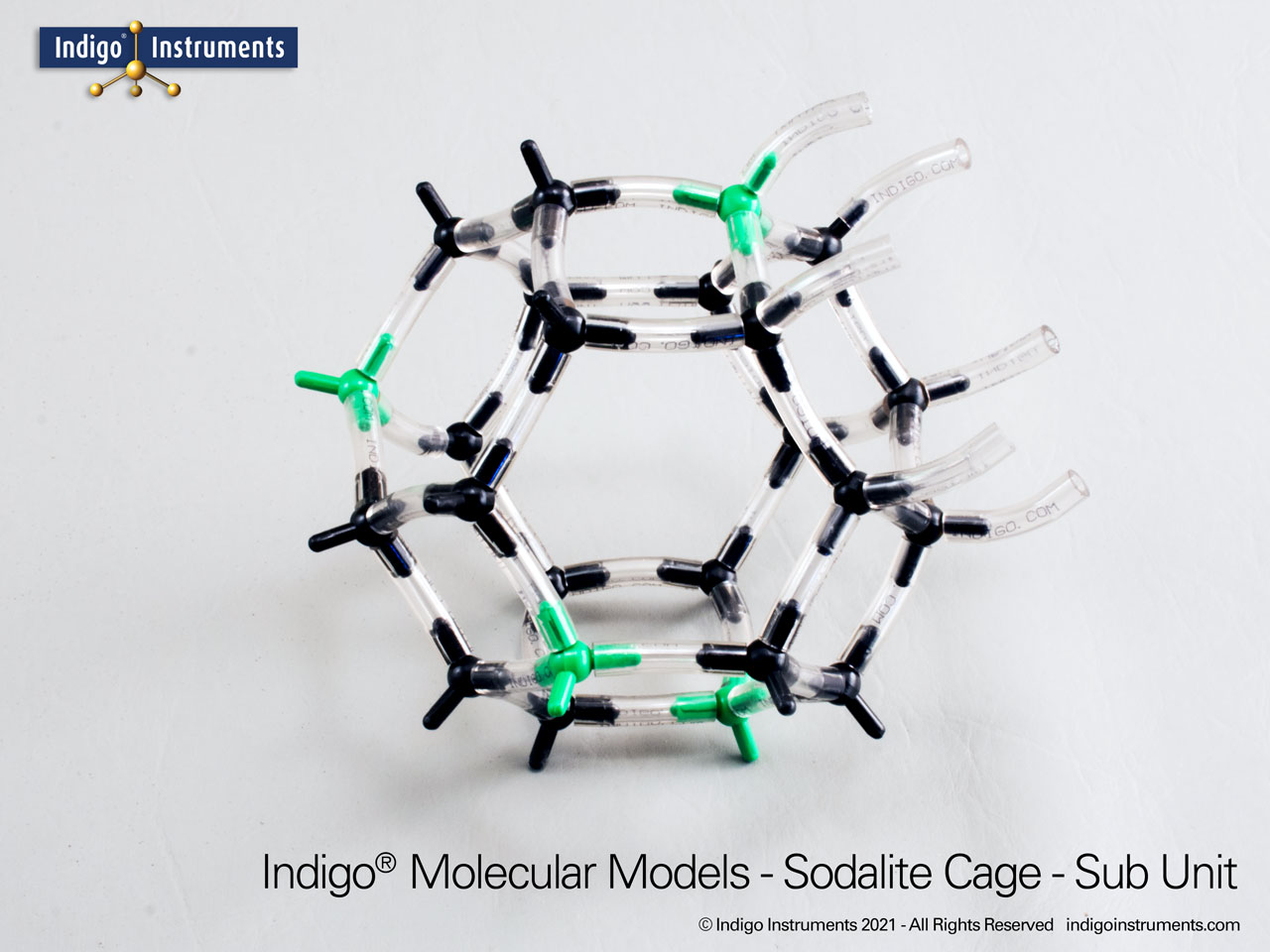
Visually, this molecular structure of Zeolite Y is beautiful! It received a lot of attention from everyone who passed by it! For the assembly, there is no instruction that comes with the kit and the picture online is the only guide. However, the structure can be made by making 10 sodalite cages and connecting them with bonds via the hexagonal faces (it is helpful to look at the picture while connecting them). Wearing gloves can help provide a better grip while connecting the bonds to the atoms. Overall a good product!
Thanks for the feedback. Trying to describe the assembly was next to impossible so we'll get a picture done of the sodalite cage & add that shortly. Here's a bit more on this model also used for teaching: Zeolite Catalyst Molecular Models Teach Oil Cracking