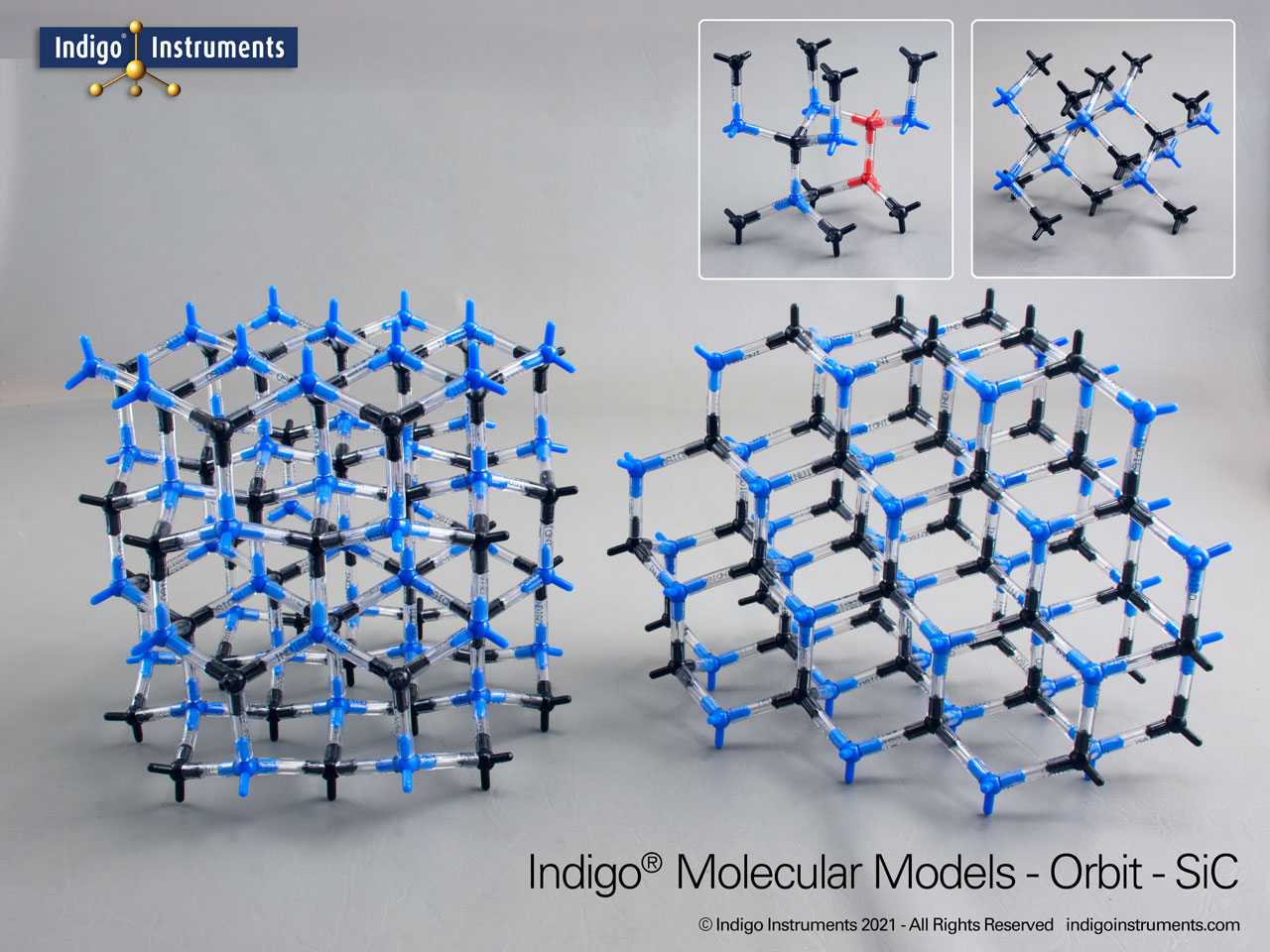
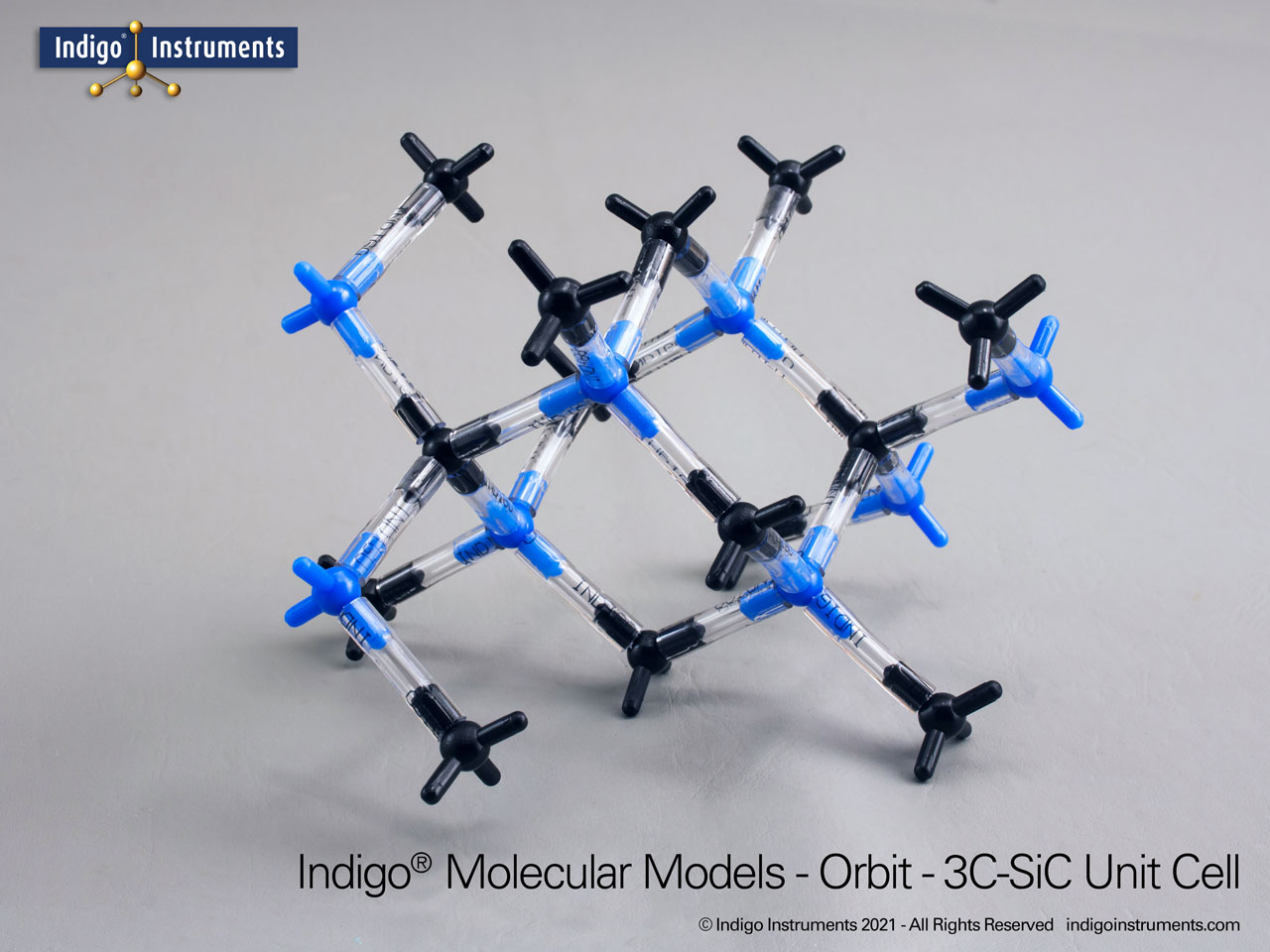
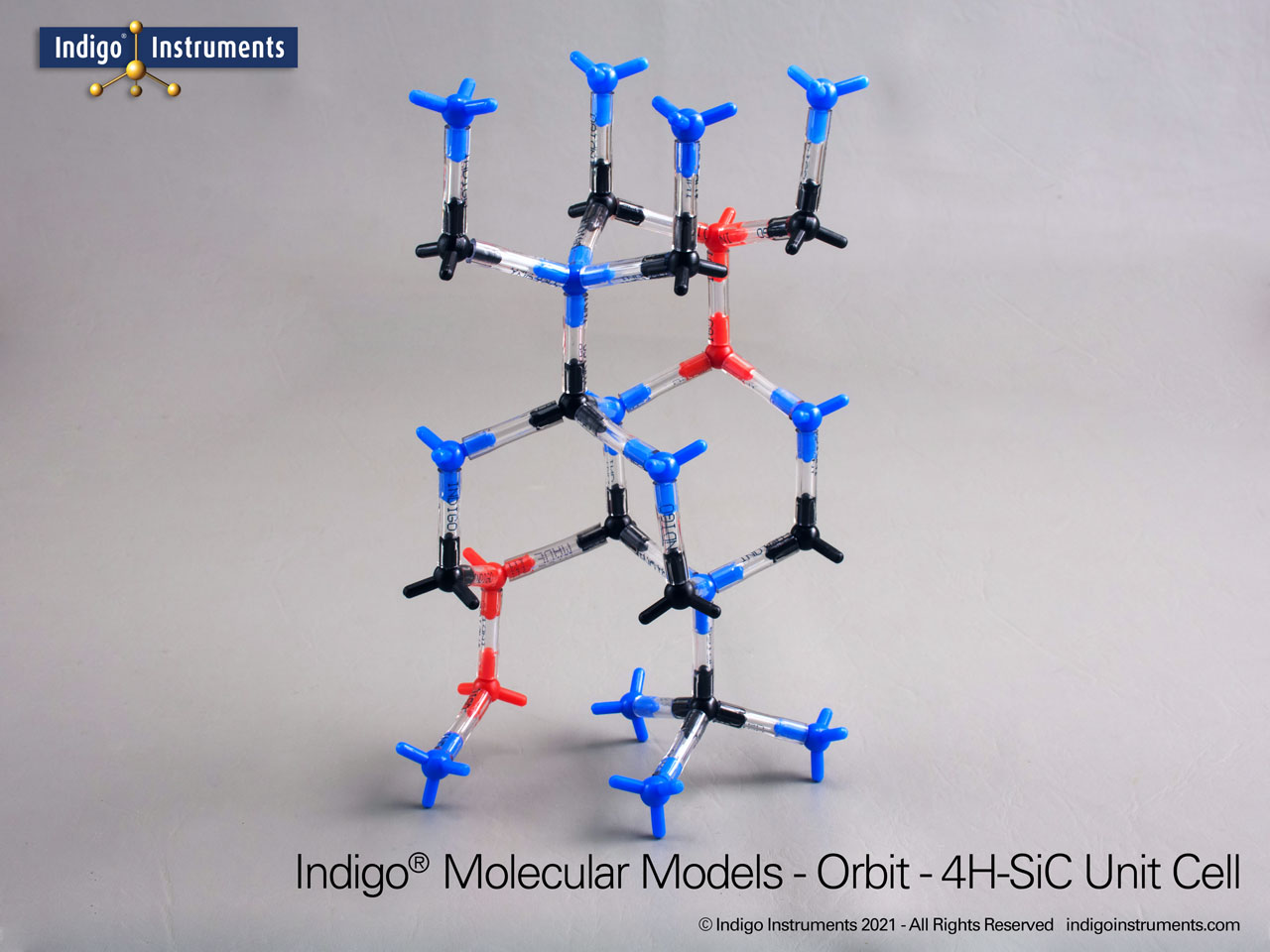
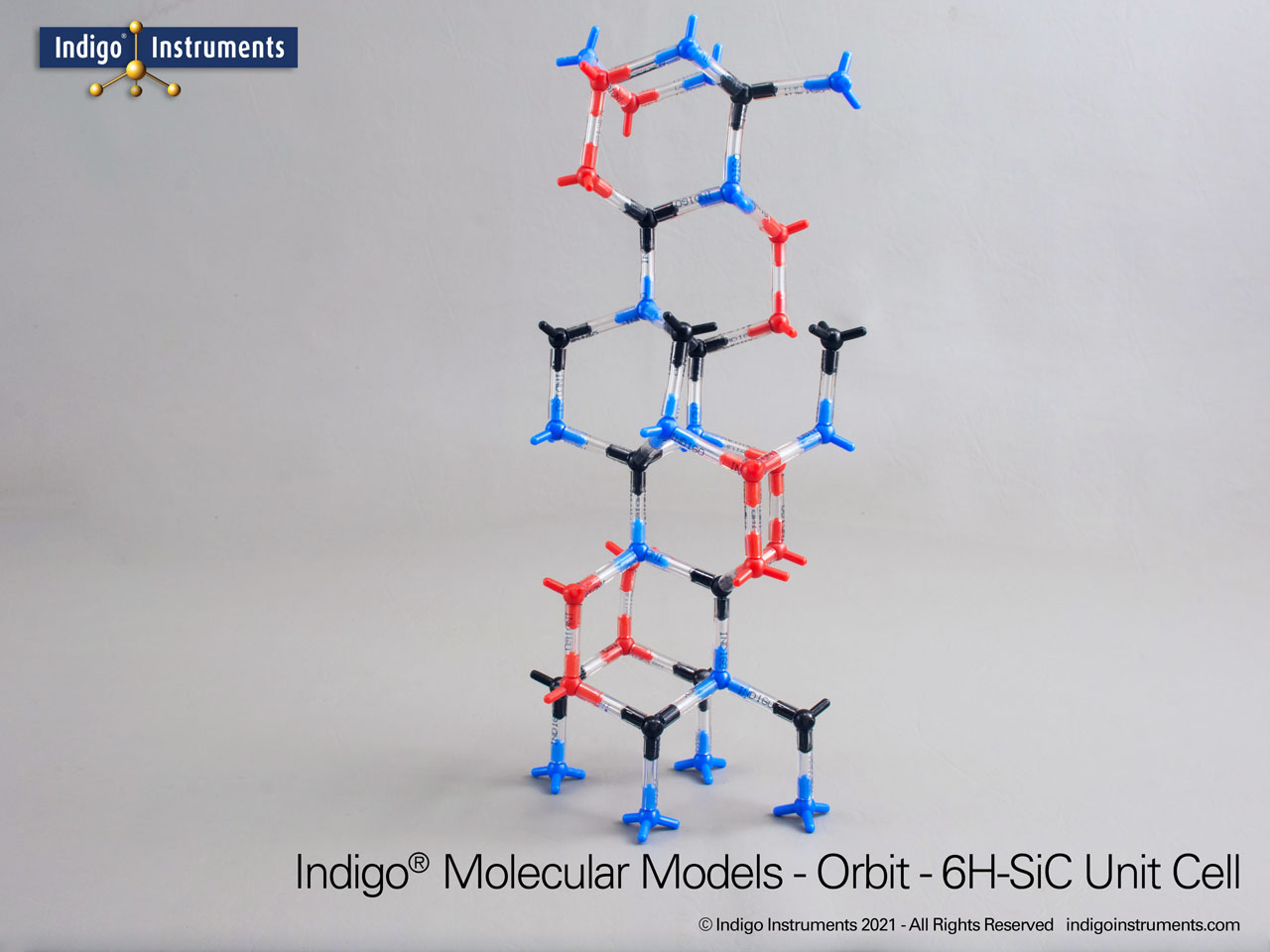
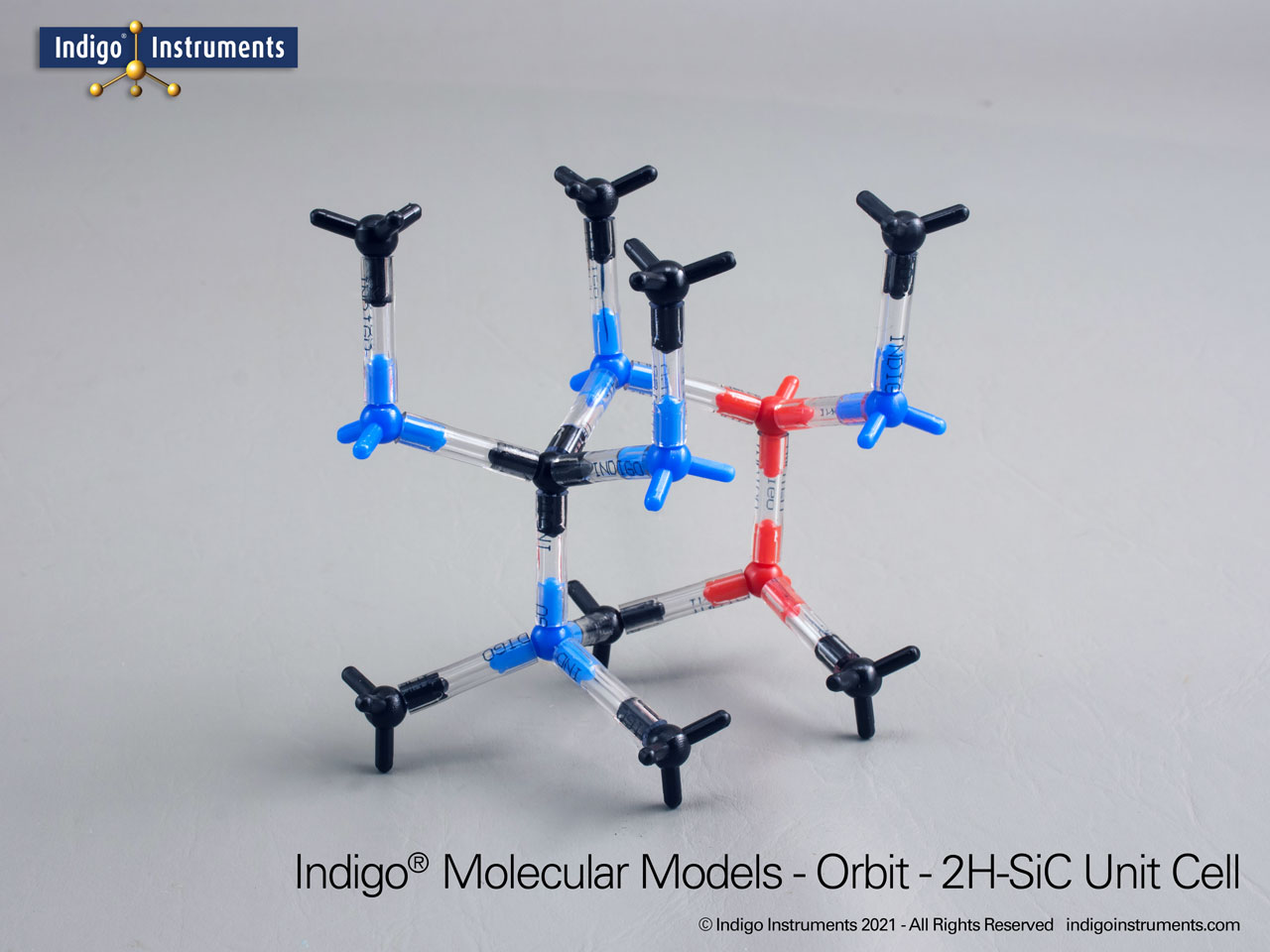
The Indigo® silicon carbide crystal model illustrates moissanite for geology while also showing SiC polytypes used in teaching semiconductors, photonics, and materials science.
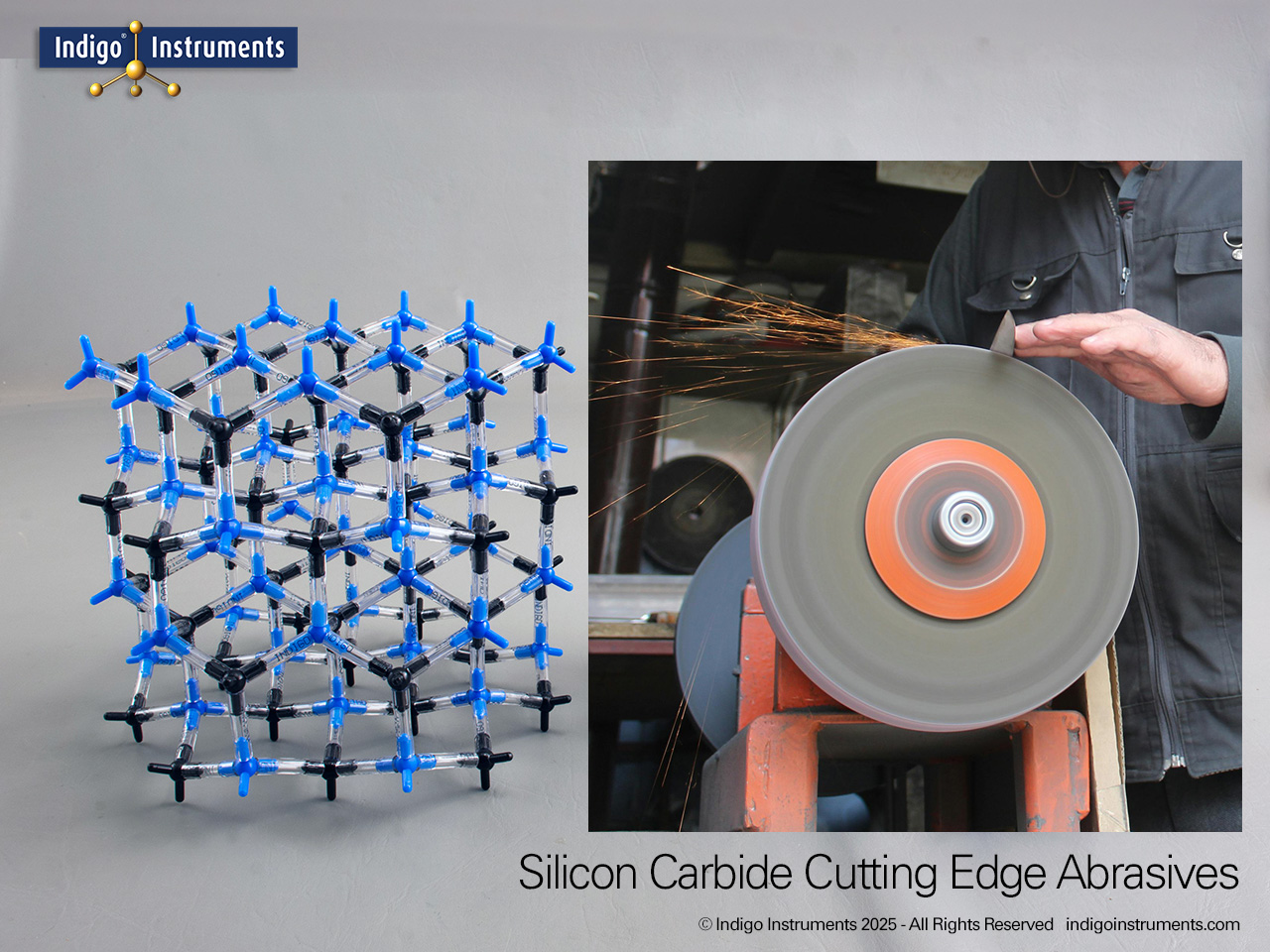
The Indigo® silicon carbide crystal model demonstrates the structure of moissanite, a naturally occurring mineral of geological interest, and introduces students to the unique lattice arrangements that define SiC. Known for its hardness, silicon carbide has long been used as an abrasive in grinding and sharpening. Beyond geology, this model helps learners visualize the atomic bonding that underpins SiC’s exceptional thermal conductivity and durability, making it a material of choice in advanced technologies.
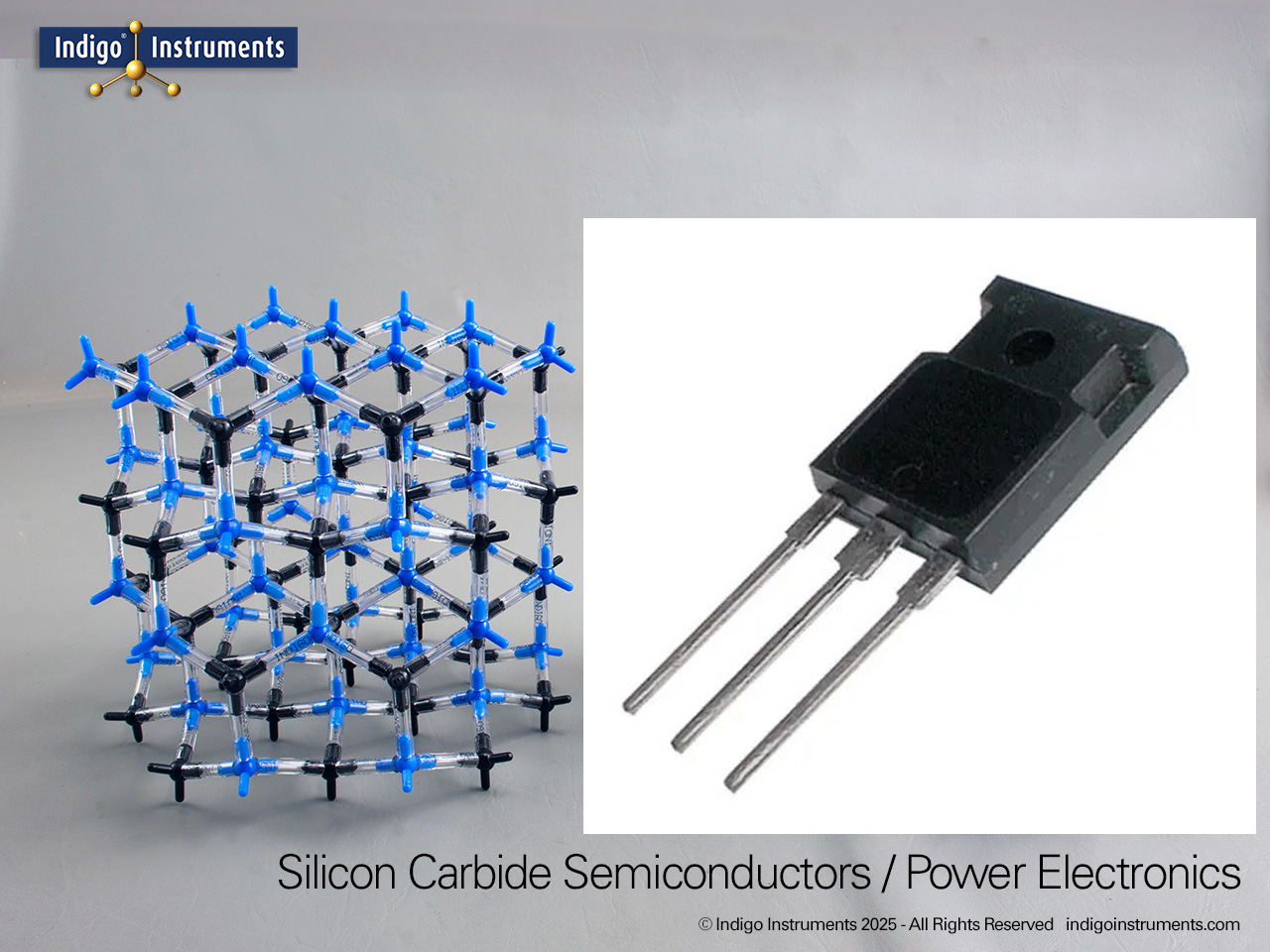
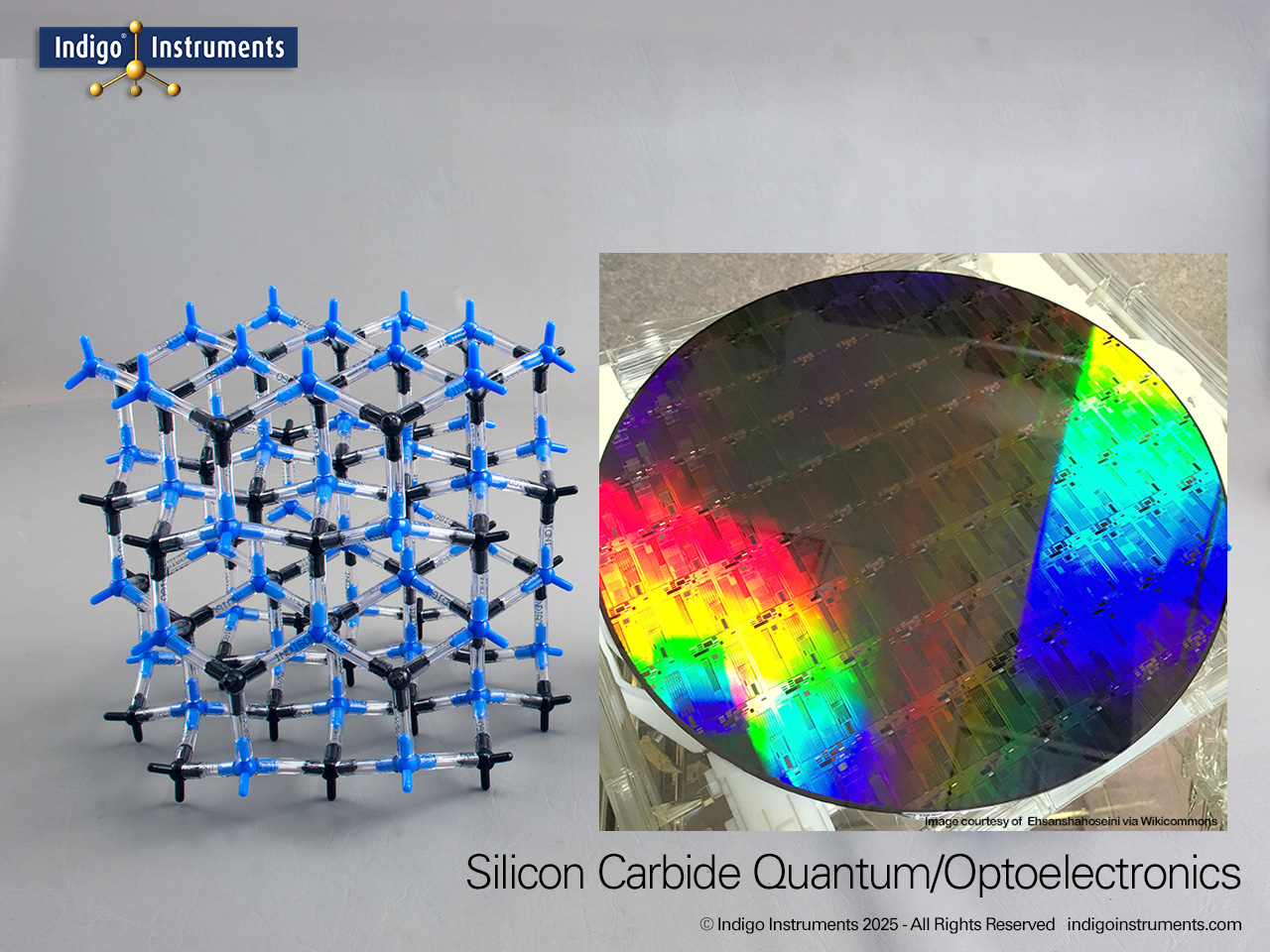
In physics and engineering, silicon carbide is valued for its role in power electronics, semiconductors, and photonics, where different polytypes influence band gaps and performance. Materials science and chemistry courses employ the SiC lattice model to compare covalent network solids with other structures such as diamond and graphite. By spanning geology, industrial applications, and high-tech innovation, this teaching model provides a versatile platform for exploring crystallography, bonding, and real-world materials science.
SiC is the only stable group IV-IV compound semiconductor. No other combination of carbon, silicon, germanium and tin occur in a defined lattice. SiC has a unique lattice defect all called a micropipe, a hollow channel with a diameter of 0.1-5µm that runs through the lattice.
Indigo Instruments has held inventory of genuine Cochranes of Oxford (Orbit) parts for 30+ years (See Skeletal (Orbit/Minit)) that are compatible with every molecular model we have sold since day 1. This level of quality may appear expensive but no parts support from other vendors costs even more.
| Discipline | Learning Outcomes / Key Features |
|---|---|
| Geology | • Understand the crystal structure of moissanite, the natural form of SiC. • Relate SiC crystallography to mineral hardness and natural occurrence. • Compare moissanite with other silicate minerals found in geology. |
| Chemistry | • Explore covalent network bonding and tetrahedral coordination in SiC. • Contrast silicon carbide with diamond and graphite structures. • Relate bonding to material properties such as thermal conductivity. |
| Physics & Engineering | • Study SiC polytypes and their impact on band gaps and conductivity. • Examine applications in power electronics, semiconductors, and photonics. • Connect crystallography with materials used in high-temperature and high-power devices. |
| Materials Science | • Analyze SiC as a model covalent solid with industrial significance. • Discuss processing methods for SiC ceramics, abrasives, and composites. • Link lattice structure to real-world manufacturing and design challenges. |
| P/N | Description | QTY |
|---|---|---|
| 68186-30 | Wobbly bond, 30mm, each | 240 |
| 68244C | Atom, Orbit, C "k", tetrahedral, black | 72 |
| 68245C | Atom, Orbit, N "k", tetrahedral, blue | 72 |
Moissanite is the rare, naturally occurring mineral form of silicon carbide (SiC). The model illustrates its tetrahedral covalent lattice, showing how each silicon atom bonds to four carbons and vice versa. This helps geology students understand both the mineral's rarity and its structural link to extreme hardness.
Beyond abrasives and cutting tools, silicon carbide is a leading material for semiconductors, LEDs, and power electronics due to its wide band gap and high thermal conductivity. The model demonstrates how variations in lattice symmetry (polytypes) influence these advanced applications.
Physical models give students a hands-on way to see tetrahedral coordination and covalent network bonding. In chemistry, this aids in comparing SiC to diamond or graphite. In engineering, it helps link lattice structure to real-world devices like photonics components and high-power transistors.
Yes. When placed alongside models of NaCl, diamond, or perovskites, it highlights differences in bonding (ionic vs covalent), coordination numbers, and packing efficiency thereby reinforcing crystallography lessons across disciplines.
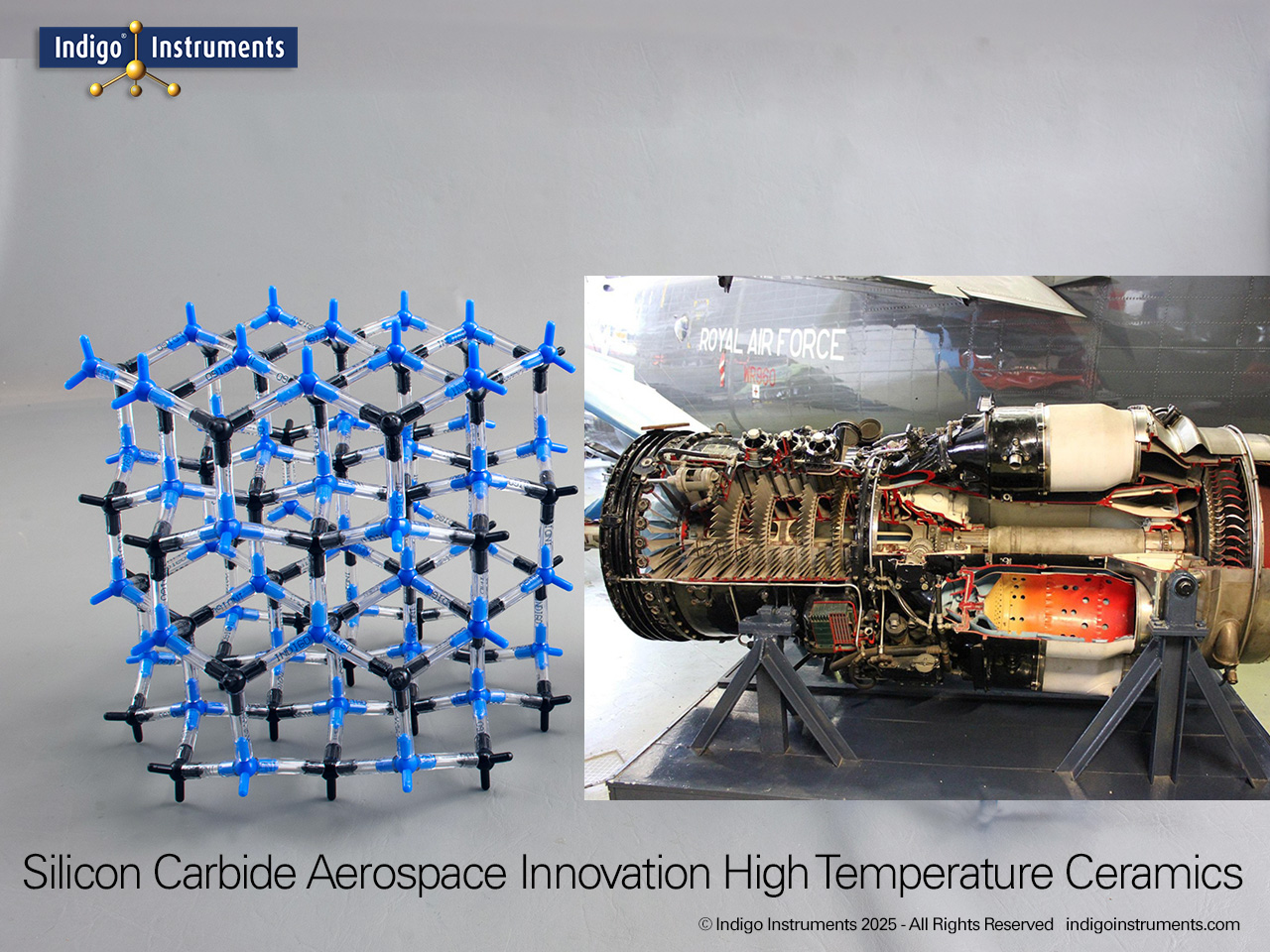
SiC is both a subject of teaching and a cornerstone of modern industry. Its applications span geology (natural moissanite), materials science (ceramics, composites), and high-tech industries (semiconductors, photonics, abrasives), making it one of the most versatile compounds taught using crystal models.