Molybdenum Disulfide Structure Model

SKU: 68702W
$39.95USD Each

Qty:

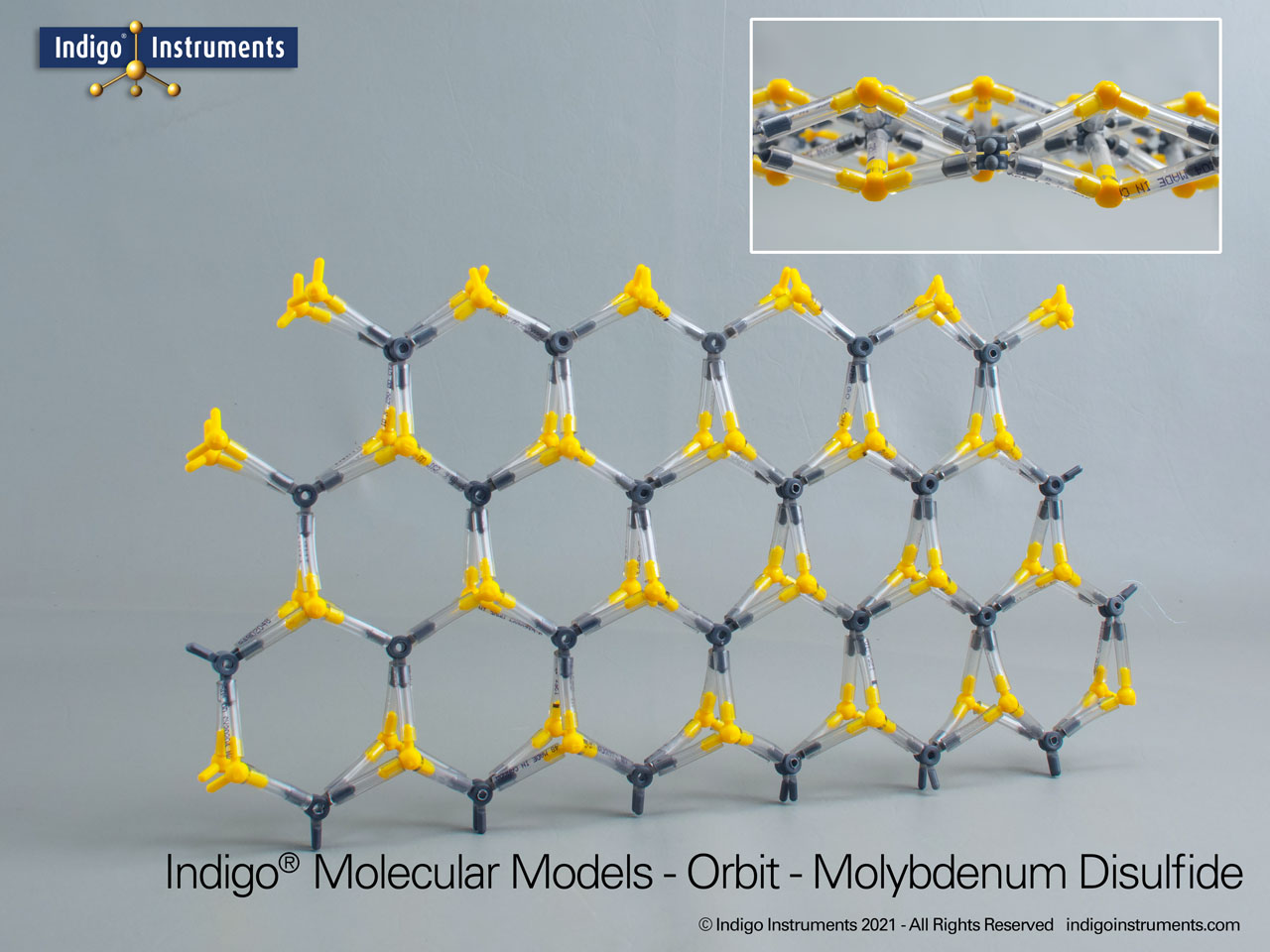
This molybdenum disulfide model is a typical 2D transition metal dichalcogenide (TMDC) shares similarities with graphene. It has 100 atoms, including special flexible trigonal atoms for just $39.95.

This hexagonal MoS2 film models sandwiched S-Mo-S layers. There are short covalent bonds between molybdenum & sulfur & spaces that represent Van der Waals forces between layers. These figure into MoS2's optical, electrical, and chemical properties that have potential use in nanoelectronics.

Potential applications include plasmonic resonance arrays, DNA detecting nanopores, biomedical imaging & refractive index photodetectors, MoS field effect transistors (FET) as operational amplifiers for gas sensors & electrochemical biosensors.

MoS2 photoluminescences & chemical properties may be able to enhance photocatalytic hydrogen production, pollutant degradation, photoelectrochemical hydrolysis and microbial disinfection.

Biomedical applications using MoS2 nanosheets may be able to detect prostate specific antigens (PSA) & biomarkers for breast cancer. MoS quantum dots may figure into photodynamic therapy (PDT) for killing cancer cells.

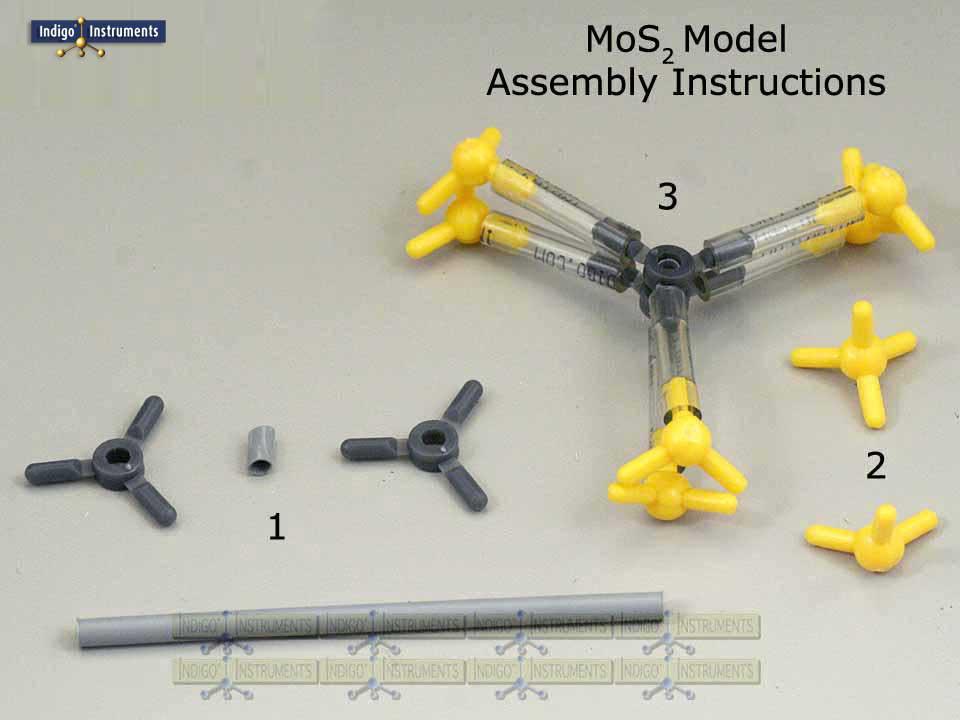
Indigo Instruments has held inventory of genuine Cochranes of Oxford (Orbit) parts for 30+ years (See Skeletal (Orbit/Minit)) that are compatible with every molecular model we have sold since day 1. This level of quality may appear expensive but no parts support from other vendors costs even more.
Details

2D MoS2 chalcogenide in thin and thick layers may improve the stability of perovskite solar cells. Compare also to our graphene & graphite models.

Related information or images
Parts
P/NDescriptionQTY
68186-30Wobbly bond, 30mm, each126
68206CBond, yellow, 210mm each1
68248CAtom, Orbit, S "k", tetrahedral, yellow50
68508COrbit flexible 3 prong connector52
Reviews ()
Review This Product Now!


Frequently Asked Questions

FAQ for Molybdenum Disulfide Structure Model

Monolayer MoS2 is a semiconductor with a 2D structure that may have advantages over graphene in future switching and optoelectronic devices.

Two layers of sulfur atoms sandwich a layer of molybenum atoms as demonstrated by this molecular model. When used as a film coating, MoS2 acts as a lubricant where the sulfur atoms slide due to Van der Waals forces similar to those seen in graphite.