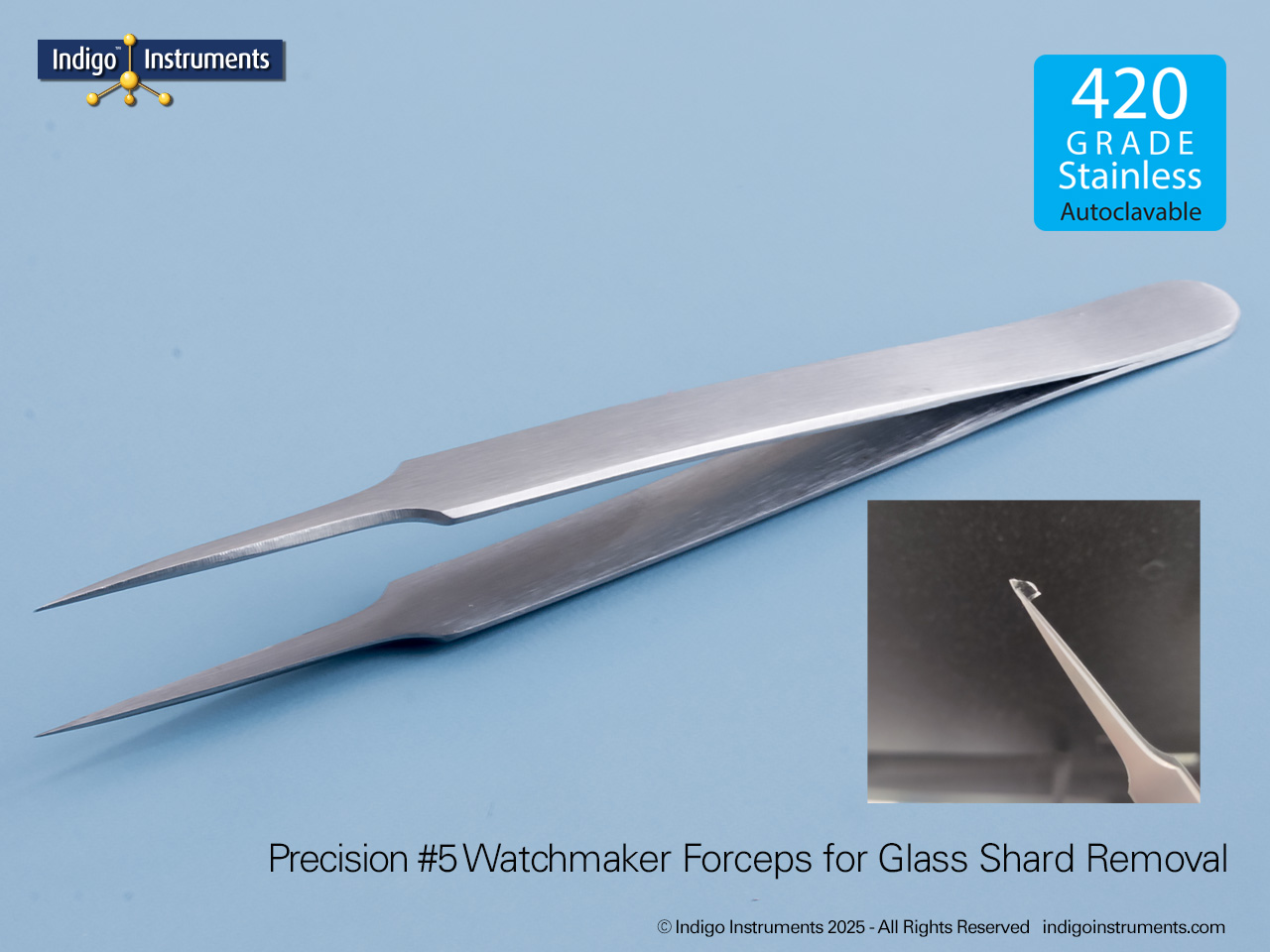
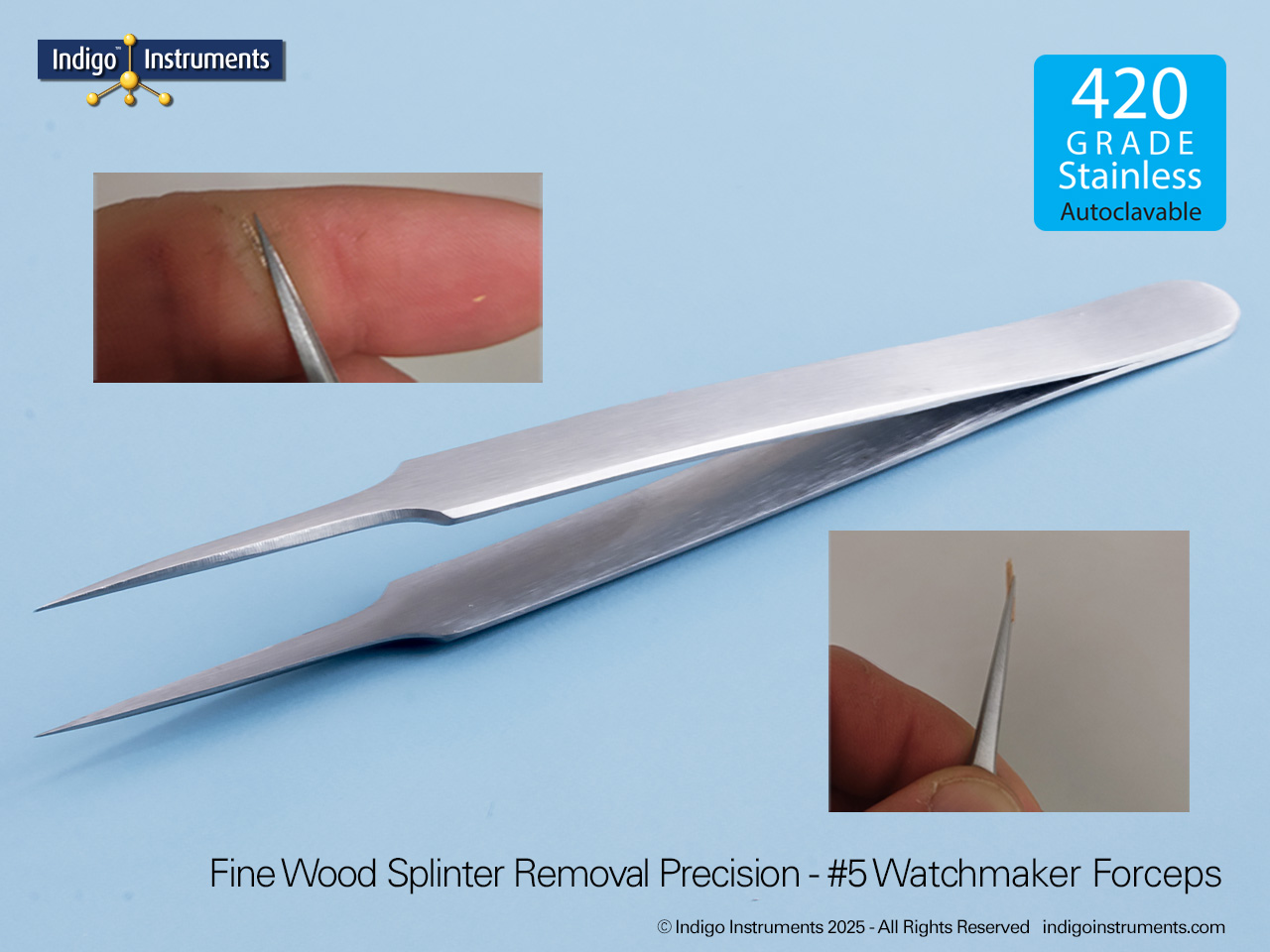
Laser etched tick removal watchmaker forcep
SKU: 22490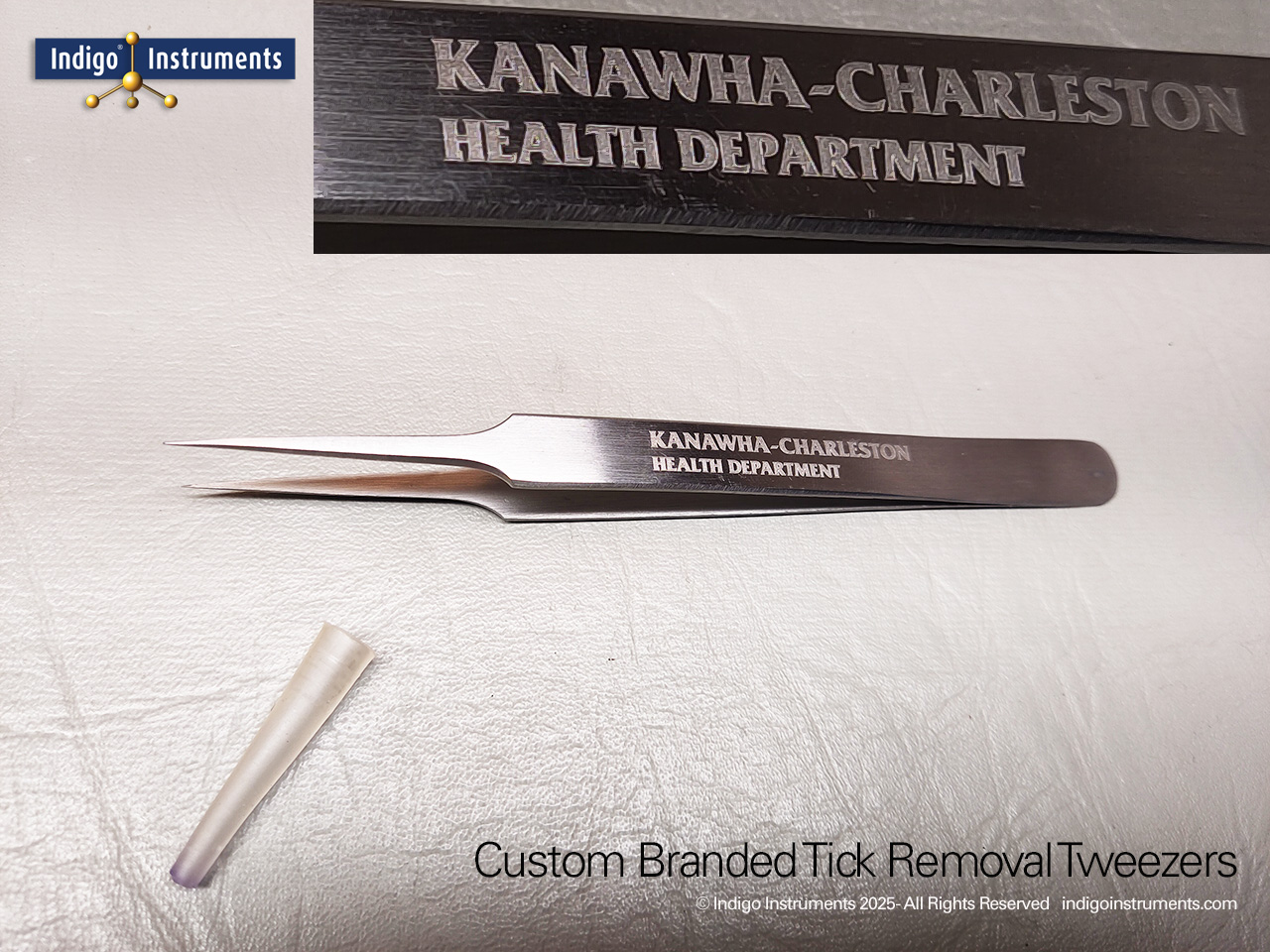
Black-legged deer tick bites can transmit potentially serious illnesses including Lyme Disease (fever, headache, fatigue) Anaplasmosis (fever, headache, muscle aches, and fatigue) Babesiosis, Rocky Mountain Spotted Fever (fever, rash, death).
Dogs & cats can be infected with canine ehrlichiosis (fever, lethargy, loss of appetite, death), Anaplasmosis & Tick paralysis. Livestock can suffer from similar diseases as well as reduced weight gain & milk production decline. The fine, tapered tips of watchmaker forceps are ideal for tick removal & can limit the damage if done promptly.
Grasp the tick as close to the skin as possible, at the tick's mouthparts, for complete removal. This minimizes squeezing & reduces the risk of compressing the tick and forcing infected fluids into the host. They can be used on people, dogs, cats, horses, and cattle. Medical grade stainless steel ensures they are sterilizable in an autoclave or with alcohol for repeated public-health use.
Why Proper Tick Removal Matters
Untreated humans can be infected with Lyme disease, anaplasmosis, Rocky Mountain spotted fever, and more. Dogs and cats similarly risk ehrlichiosis, anaplasmosis, tick paralysis, and RMSF. Livestock infestations cause anemia, weight loss, hide damage, and can transmit diseases like babesiosis and anaplasmosis.
Prompt removal can help preventing secondary problems. Ticks can inject neurotoxins, cause toxicosis or tick paralysis, even before pathogens are transmitted. Tick feeding wounds can become infected with secondary bacteria or attract screwworm infestation in animals.
The bottom line is fine tipped tweezers for ticks are the simplest field ready tools for this task.
Recommended References
CDC: Removing a Tick. This page provides step-by-step instructions on tick removal using fine-tipped tweezers (like watchmaker forceps), along with illustrations and warnings about what not to do (e.g., no petroleum jelly, matches, or twisting).
Merck Veterinary Manual: Tick Control & Infestation: Discusses disease transmission, economic effects, and removal urgency in animals.
What is Tick Paralysis & How It’s Graded
Tick paralysis is a condition caused by certain ticks that inject a neurotoxin (for example Ixodes holocyclus in Australia). This toxin interferes with signal transmission at the neuromuscular junction, causing an ascending flaccid paralysis. Since symptoms (especially respiratory compromise) progress over time, vets use grading / staging systems to monitor severity, guide treatment urgency, and predict prognosis.
Clinical Implications & Prognosis
- The presence of respiratory compromise (difficulty breathing, cyanosis) greatly escalates the risk.
- Treatment often involves removing the tick(s), and sometimes use of tick anti-serum plus supportive care (oxygen, sometimes ventilation).
- Prognosis declines with increasing grade, presence of aspiration pneumonia, duration before treatment.
These forceps/tweezers are made with AISI 410 German surgical grade stainless steel, not "alloy steel" recovered from rusted cars. We've been selling this grade of tool since 1998. See "Documentation" for the chemical analysis certificate.