Drinking Water Nitrite Nitrate Test Strips
SKU: 33817-NN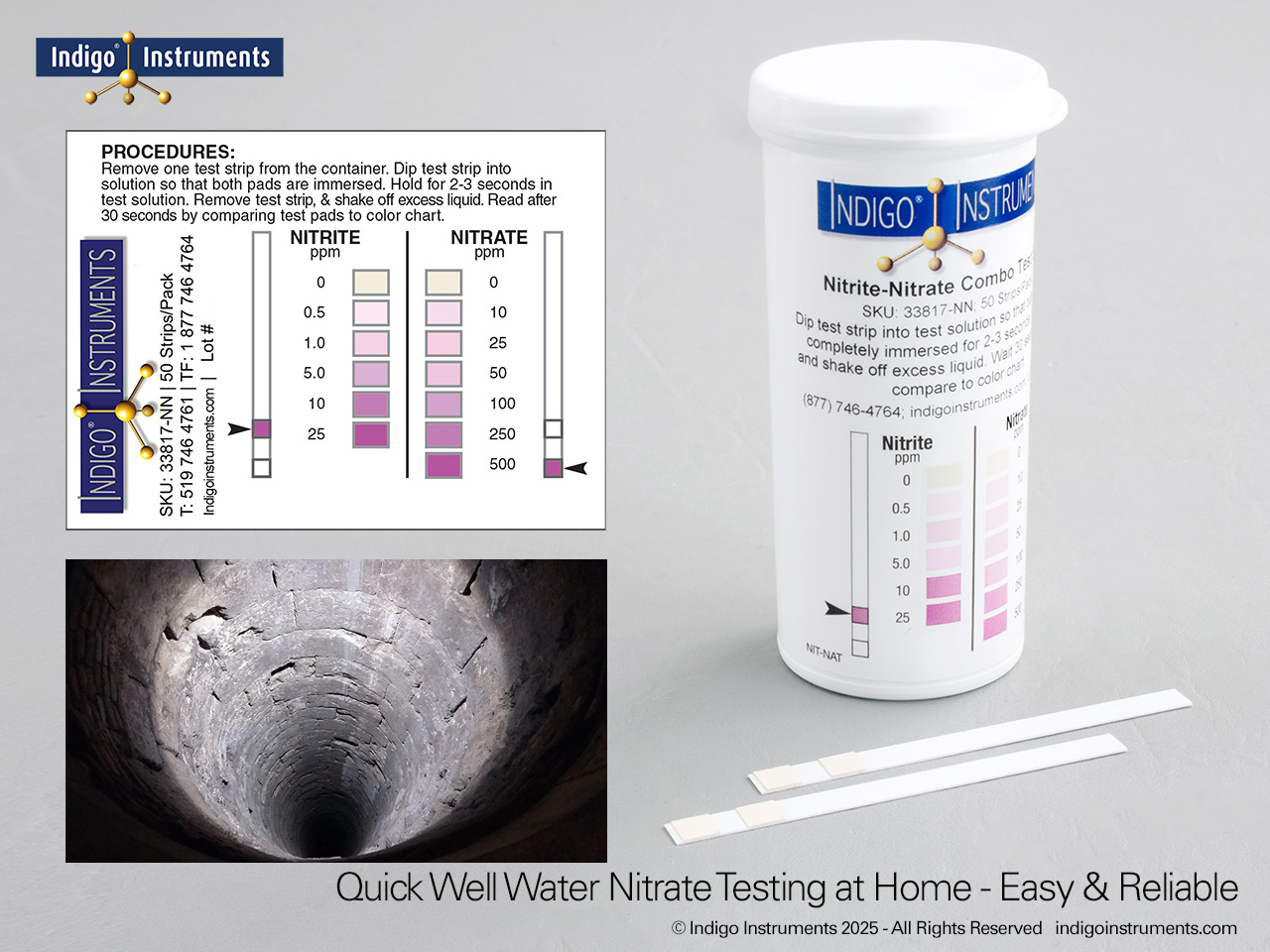
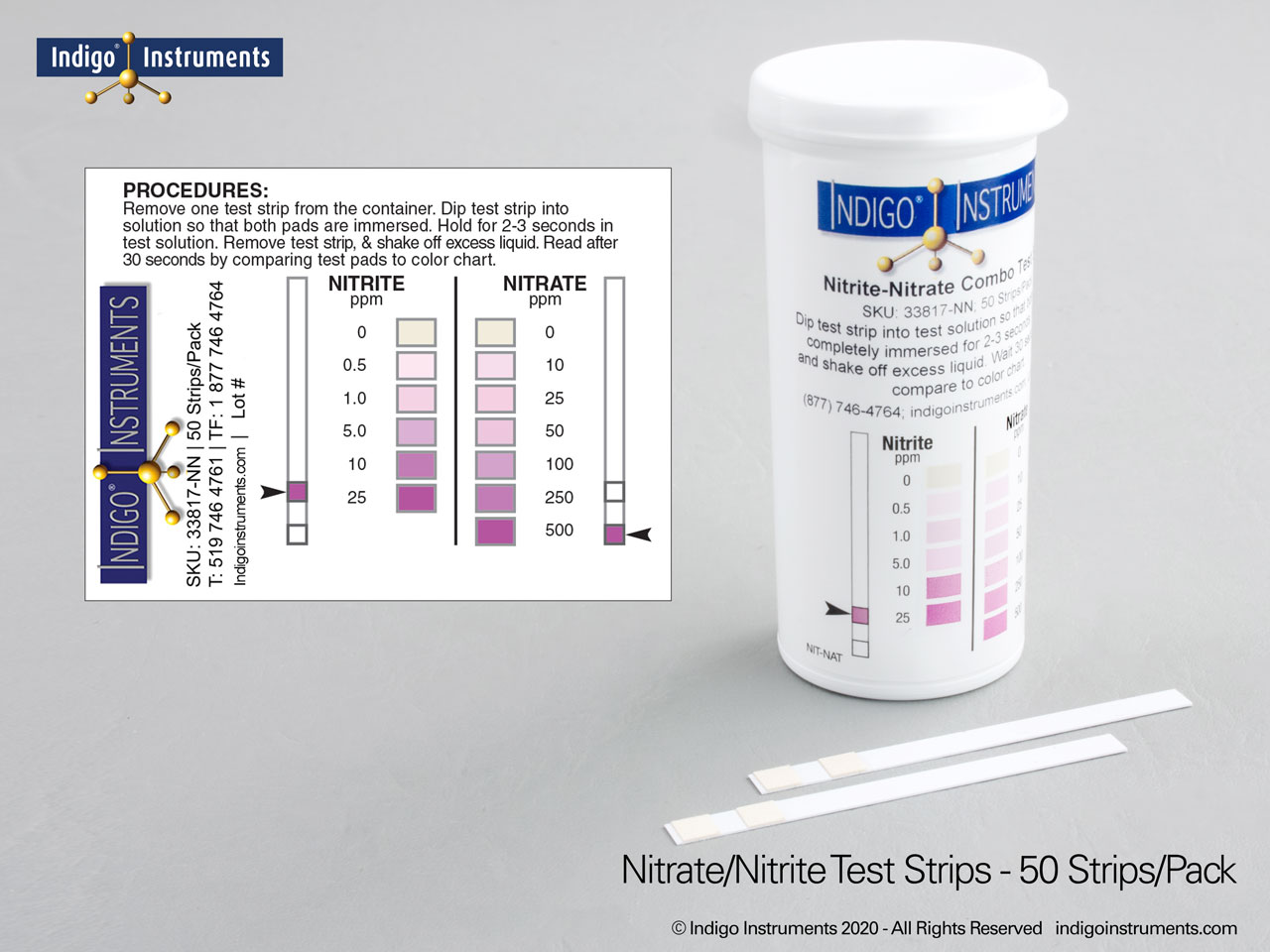
Measure nitrate and nitrite levels in drinking water, wells, and private supplies quickly & easily with Indigo® Nitrite-Nitrate test strips. Meet EPA/WHO guidelines and explore links to public health and environmental safety.
Nitrate and nitrite contamination in drinking water is a well-recognized public health concern, particularly for private wells and rural water supplies influenced by agriculture or septic systems. Indigo® Nitrite-Nitrate Test Strips provide a fast, accessible way to screen drinking water, wells, and household supplies for nitrogen contamination relative to established EPA and WHO guideline values. Rapid screening helps users identify potential risks early and determine when confirmatory laboratory testing or corrective action may be warranted.
Indigo® nitrate and nitrite test strips are commonly used for preliminary water quality checks by homeowners, environmental educators, public health programs, and field technicians. Typical applications include private well testing, rural water safety screening, and educational demonstrations linking nitrogen chemistry to health outcomes such as methemoglobinemia (“blue baby syndrome”). While not a replacement for certified laboratory analysis, strip-based testing supports informed decision-making, risk awareness, and routine monitoring between formal test intervals.
Nitrate and nitrite contamination of drinking water is a public health concern, especially in rural and agricultural areas where fertilizer use or septic systems can affect groundwater. These nitrite/nitrate test strips provide a quick and reliable way to screen tap water, wells, and private supplies for contamination levels relative to EPA and WHO drinking water limits. Rapid screening helps homeowners, health professionals, and educators alike understand risks such as methemoglobinemia (“blue baby syndrome”) and broader implications in environmental toxicology.
Why Test Drinking Water for Nitrate?
- Protects infants from methemoglobinemia
- Identifies fertilizer runoff contamination
- Supports safe water practices in rural areas
Who Uses These Strips?
- Homeowners and well-water users
- Public health labs and inspectors
- Teachers covering toxicology, biology, and chemistry
Test Strips vs. Liquid Reagent Kits
| Feature | Test Strips | Liquid Reagent Kits |
|---|---|---|
| Ease of use | Simple dip-&-read procedure; minimal training required for homeowners and field workers. | Multi-step procedures (mixing reagents, timed reactions, sometimes multiple reagents); requires basic lab skills. |
| Time per test | ~30–60 seconds for a result. | Typically 5–20 minutes depending on the method and incubation times. |
| Precision & accuracy | Semi-quantitative; suitable for screening and trend monitoring but limited resolution at regulatory thresholds. | Higher precision and finer concentration gradations; better for confirmatory or research-grade measurements. |
| Regulatory suitability | Good for routine homeowner screening and field triage; not recommended as sole evidence for regulatory compliance. | Appropriate for confirmatory testing and regulatory reporting when performed in a qualified lab. |
| Cost per test | Low—economical single-use strips. | Moderate—reagents, glassware, and controls increase per-test cost. |
| Portability | Highly portable; ideal for on-site well checks and home testing. | Less portable; typically performed in a lab or field kit with more equipment. |
| Sample types & matrix effects | Works well with clear tap/well water; turbidity, color, or chlorine can affect color readout. | Better options for turbid or colored samples with sample preparation and controls to minimize matrix effects. |
| Interferences | More susceptible to visual/color interferences and user interpretation error; follow instructions carefully. | Generally more robust; many methods include blanks/controls to identify interferences. |
| Safety & waste | Minimal chemical waste; safe for household use when handled per instructions. | Generates chemical waste and requires safe reagent handling and disposal procedures. |
| Learning outcomes | Teaches rapid field screening, decision-making, and basic water safety assessment for students/homeowners. | Teaches laboratory technique, QA/QC, method validation, and interpretation for advanced classes or technicians. |
| When to use | Routine well/tap water screening, frequent home monitoring, initial field triage. | Confirmatory analysis, regulatory compliance, research, or whenever precise quantitation is required. |
| Recommended follow-up | If results approach or exceed guideline values (e.g., EPA/WHO limits) or are inconsistent, send samples to a certified lab for confirmation. | Use as definitive data when performed by accredited labs; follow regulatory reporting workflows as required. |
Importance of Indigo® Nitrate-Nitrate Test Strip Documentation
Lot identification, defined shelf life, and consistent documentation support use in public health outreach, water quality education, and institutional screening programs where traceability, repeatability, and audit-ready records are expected—even when test strips are used as qualitative or semi-quantitative screening tools.
We've been selling nitrate-nitrite test strips since 2009. Buy fully documented Indigo® nitrate-nitrite test strips, 50 strips/vial. Guaranteed 3 year shelf life (dated back from expiration date "yyyy.mm.dd").