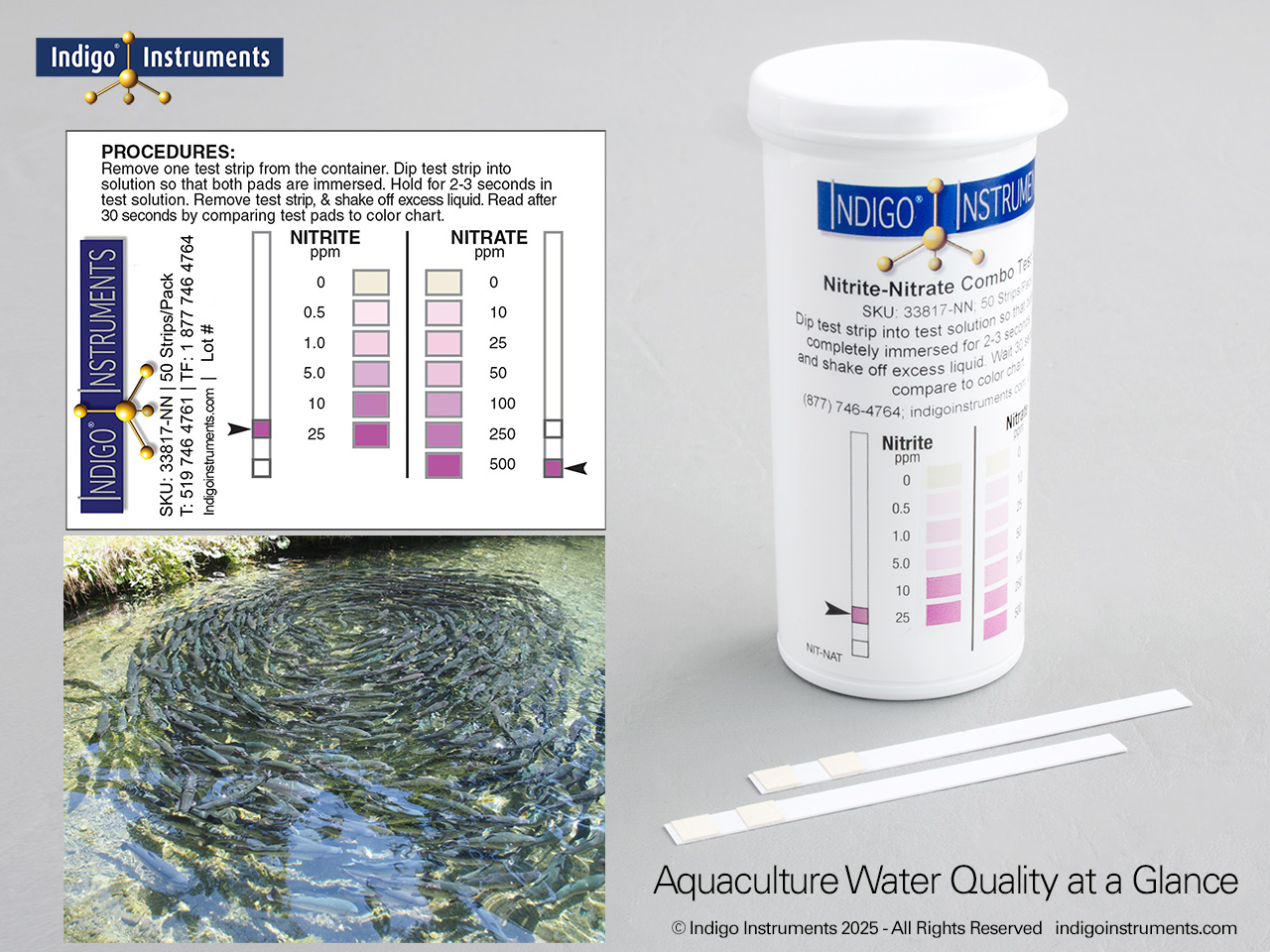
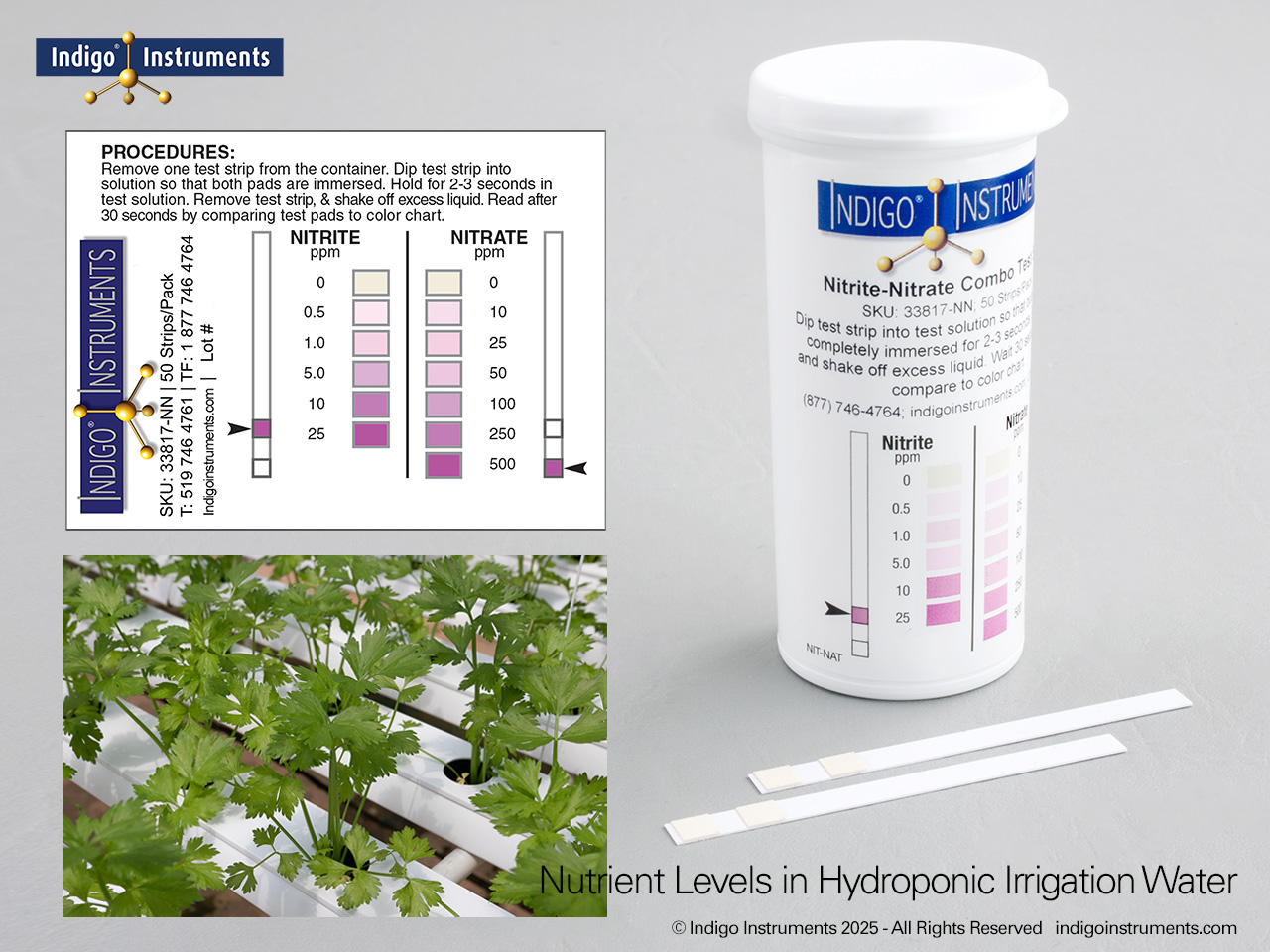
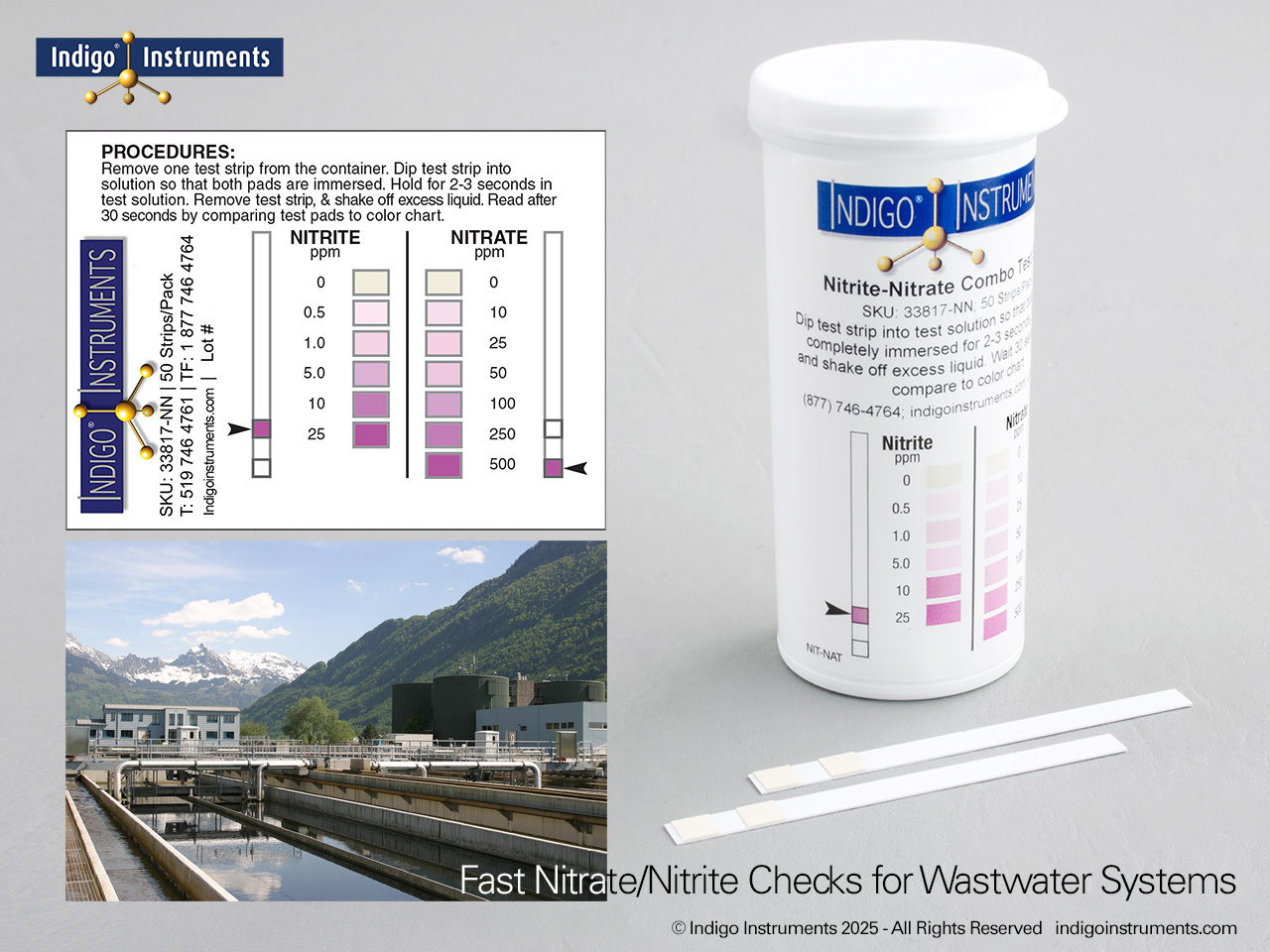
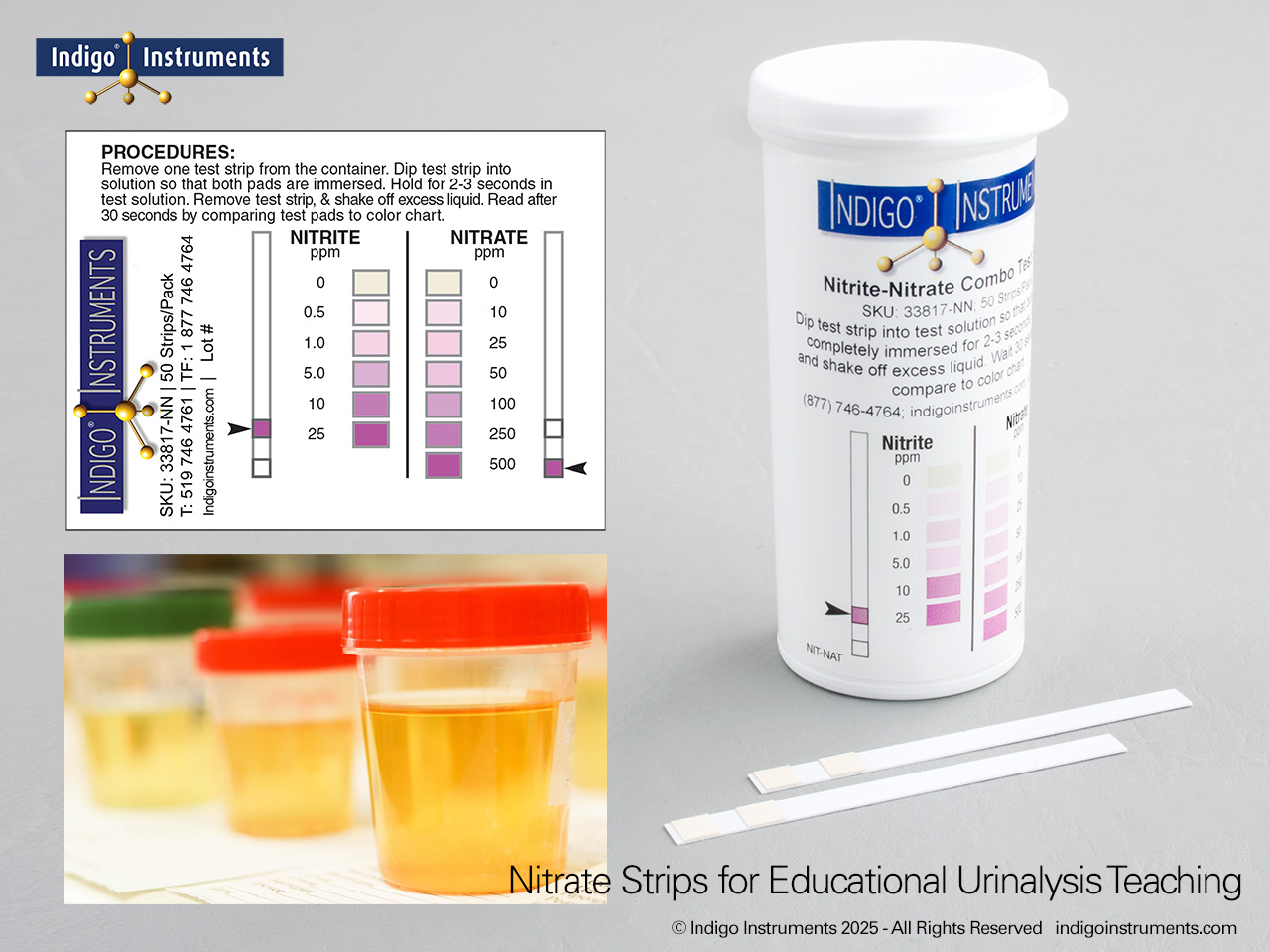
Monitor aquarium and aquaculture water quality with Indigo® Nitrite-Nitrate test strips. These simple tools can detect toxic nitrite and nitrate buildup to protect fish health and biofiltration balance.
Nitrite and nitrate are critical indicators of biological filtration performance and nitrogen cycle stability in aquariums and aquaculture systems. Indigo® Nitrite–Nitrate Test Strips provide a fast, dependable way to detect toxic nitrite accumulation and rising nitrate levels before they harm fish, invertebrates, or biofilters. The simple dip-and-read format allows routine monitoring of freshwater and marine systems without liquid reagents or complex test kits, supporting stable, well-managed aquatic environments.
Indigo® nitrite and nitrate test strips are commonly used in home aquariums, fish hatcheries, and small-scale aquaculture operations to track cycling progress, confirm filter efficiency, and prevent chronic water quality stress. By enabling frequent testing of tank water, recirculating systems, and culture tanks, they help identify incomplete nitrification, overfeeding, or system overload. Fast visual results make them especially useful for daily checks, system startups, and corrective maintenance.
Whether you manage a home aquarium or a commercial aquaculture setup, nitrate and nitrite levels are critical indicators of water safety. Indigo® nitrate-nitrite test strips are designed for routine monitoring of fish tank water quality, pond management, and biofiltration systems. Combined in a single strip, they make it easy to detect nitrogen imbalances that can threaten freshwater or saltwater habitats.
| Feature | Test Strips | Liquid Reagent Kits |
|---|---|---|
| Ease of Use | Quick dip-&-read method; minimal training required. | Requires multiple steps (pipetting, mixing reagents, timing). |
| Time per Test | ~30–60 seconds for results. | 5–15 minutes depending on procedure. |
| Precision | Semi-quantitative; good for routine checks. | Higher accuracy and finer gradations possible. |
| Cost per Test | Low, strips are economical, single-use. | Moderate, reagents must be replenished. |
| Applications | Rapid screening in aquaculture, classrooms, and field work. | Detailed analysis for research labs or regulatory compliance. |
| Portability | Highly portable; no additional equipment needed. | Less portable; glassware and reagents required. |
| Learning Outcomes | Teaches students quick water quality assessment methods and decision-making in field conditions. | Teaches titration skills, reagent handling, and precision measurement techniques. |
For aquaculture facilities and research systems, lot-identified test strips with defined shelf life support internal QA records, standard operating procedures, and repeatable monitoring programs where consistency and traceability matter alongside rapid testing.
We've been selling nitrate-nitrite test strips since 2009. Buy fully documented Indigo® nitrate-nitrite test strips, 50 strips/vial. Guaranteed 3 year shelf life (dated back from expiration date "yyyy.mm.dd").
| Discipline | Learning Outcomes / Key Features |
|---|---|
| Marine & Aquatic Biology | Understand the nitrogen cycle in aquatic ecosystems (ammonia → nitrite → nitrate). Recognize how nitrate accumulation affects fish health, algal blooms, and eutrophication. |
| Environmental Science | Apply test strips to monitor nutrient runoff and water quality in streams, rivers, and lakes. Link nitrate levels to agricultural impact and ecosystem balance. |
| Chemistry Education | Illustrate principles of redox chemistry: nitrate reduction to nitrite. Demonstrate rapid colorimetric testing and interpretation of concentration ranges. |
| Aquaculture & Fish Health | Learn best practices for water monitoring in commercial fish tanks and aquaculture systems. Prevent nitrite toxicity (brown blood disease) and maintain safe nitrate levels. |
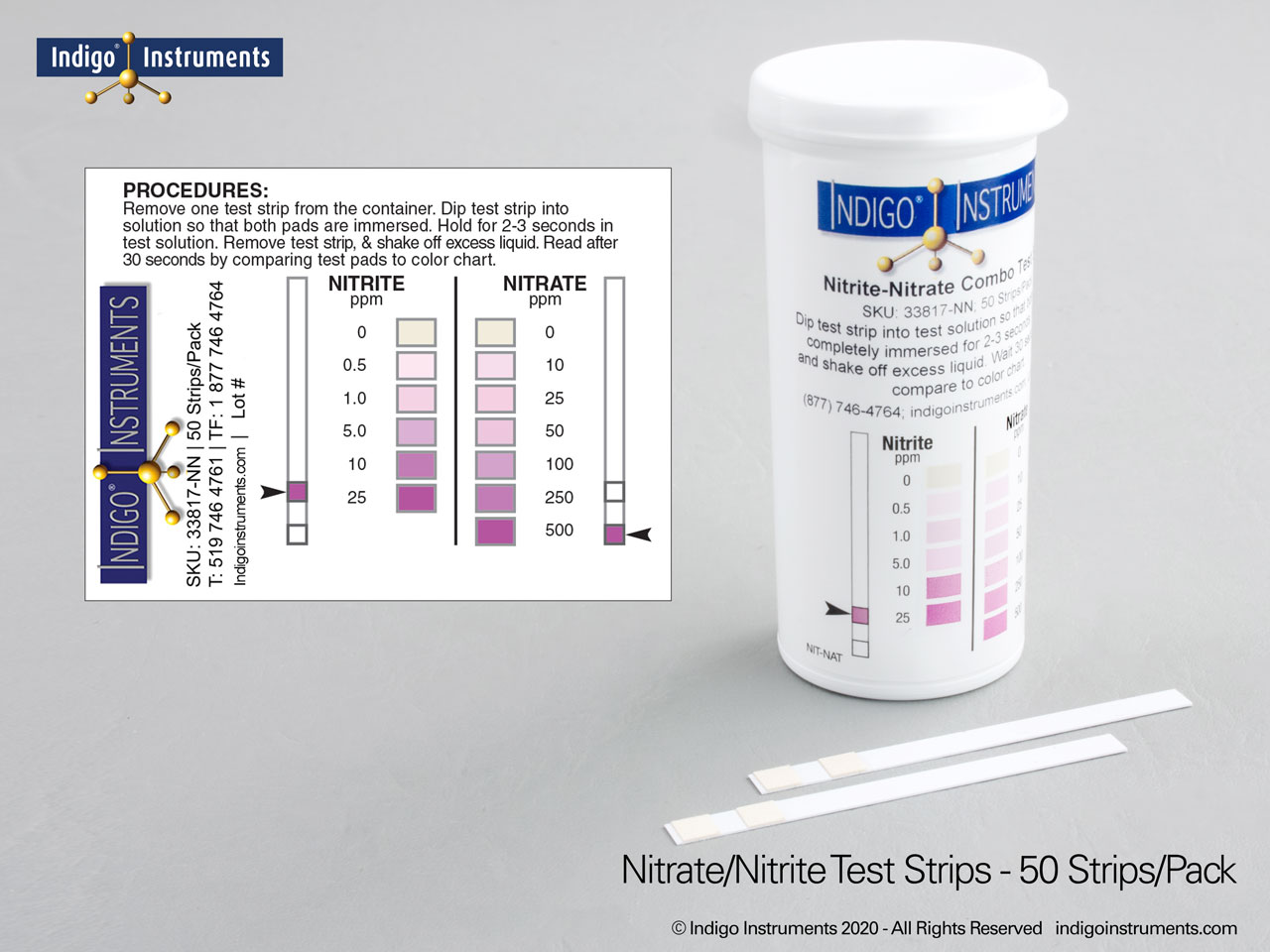
This Indigo® test strip indicates the presence of nitrate & nitrite. Results for ranges shown below can be read in 30 seconds.
Nitrite binds to hemoglobin, preventing oxygen transport and causing “brown blood disease,” which can be fatal even at low concentrations.
Ideally below 20 ppm for freshwater aquariums; reef tanks benefit from even lower nitrate levels to protect corals.
Yes, they work in ponds, aquaponics, and larger aquaculture systems as well as small aquariums.
Weekly for established tanks, but daily or every other day during new tank cycling or after heavy stocking/feeding changes.