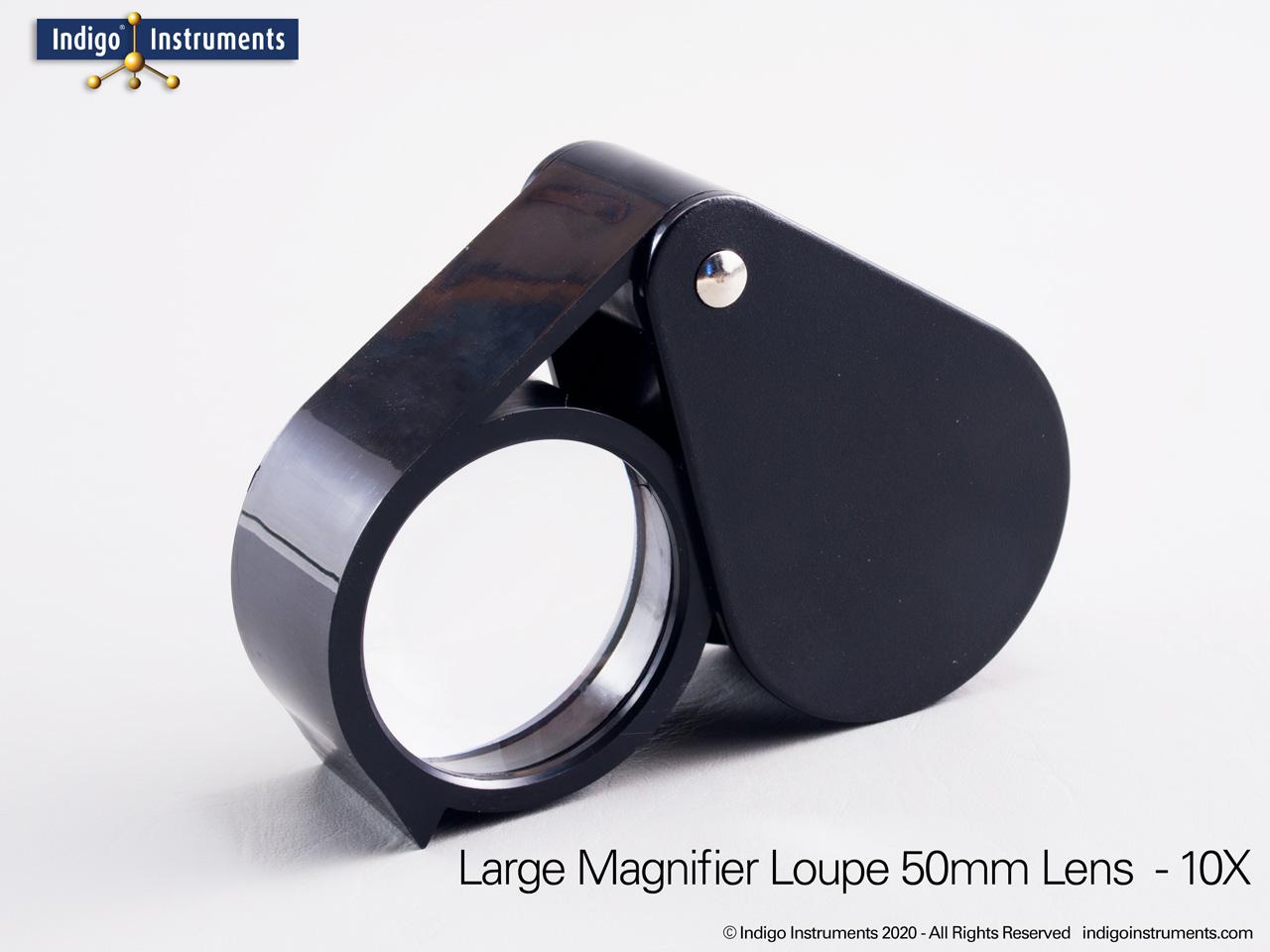
Bryophyte-Lichen Identification 10X Loupe

SKU: 23201-5
$9.95USD or lower Each

Save More When You Buy More!
Quantity1+10+ 100+ 
Price for each$9.95USD$9.30USD$8.00USD
Your savings - 6.53%19.6%
Qty:
[4.6]   4 Reviews    | Write a Review

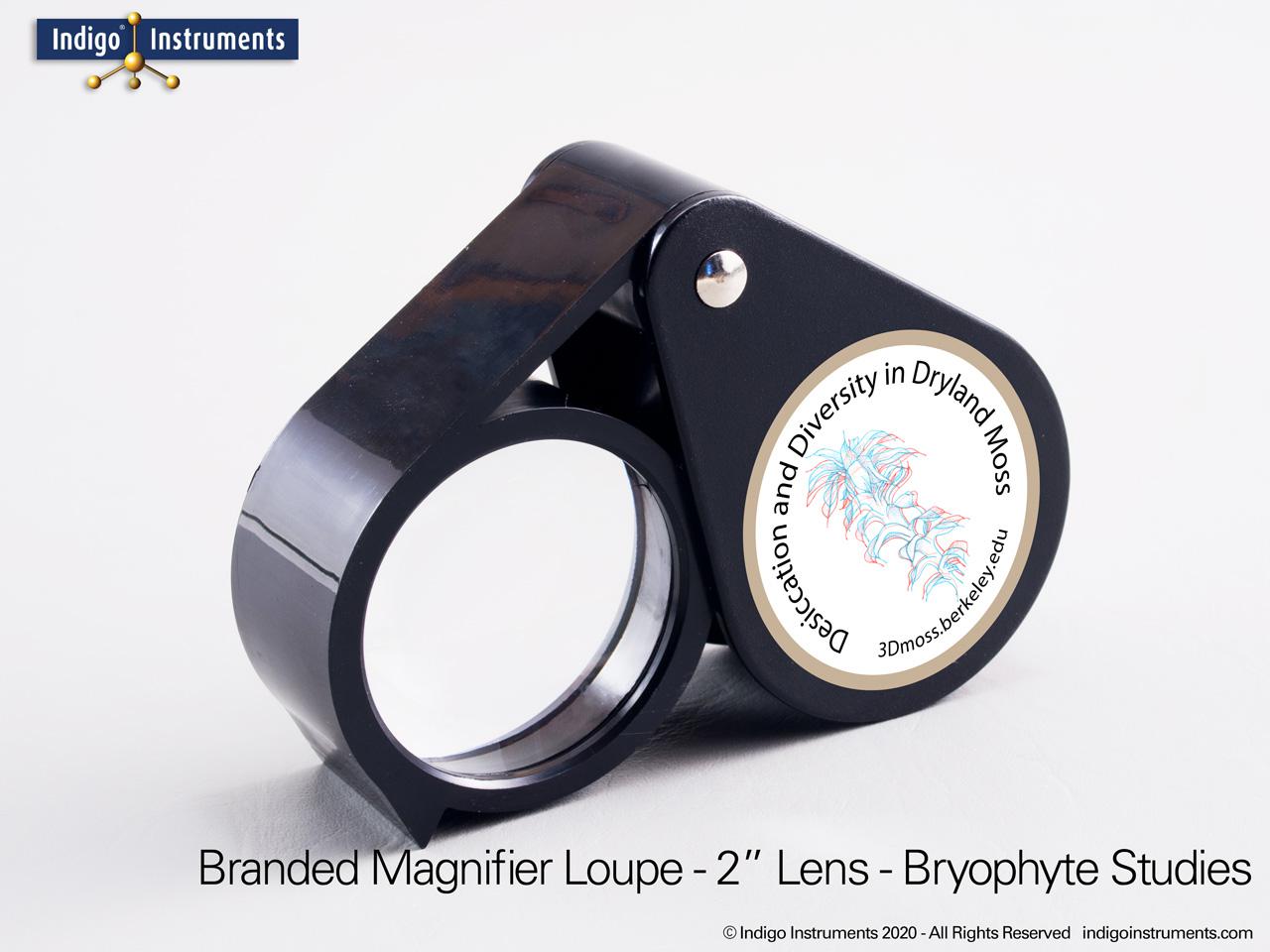
Prof. Kirsten Fisher at Cal. State in LA ran a workshop where she & colleagues studied lichens and mosses in situ using our 10X 50mm folding magnifier. Brytophytes are non-vascular plants that include the liverworts, hornworts and mosses. In Prof. Fisher's words: "We didn't want to collect anything or disturb the crusts, so the large lenses were perfect for non-destructive observations." In particular, the ecophysiology & desiccation tolerance of desert mosses in the genus Syntrichia. They also useful in examining translucent quartz pebbles that shade bryophytes.

Lichens are identified largely by examining their thalluses, the main vegetative body similar to leaves in plants. This 10X loupe is more than adequate for distinguishing between the major growth forms: foliose (leaf-like and lobed), fruticose (bushy or branching), crustose (tightly adherent), and squamulose (scaly or plate-like).

Magnification reveals key diagnostic features such as soredia and isidia as well as apothecia and perithecia. Surface textures, margins, and attachment structures like rhizines can also be observed, all of which contribute to accurate identification at the genus or even species level in the field.

Bryophyte-Lichen Science Meetings

Schools that offer botany, ecology, and environmental sciences & exhibit at conferences & trade shows about lichens and bryophytes will want to distribute this handy 10X magnifier. It makes an ideal tool for academics, conservationists, and environmentalists. Here are a few the best events where these topics are regularly explored:

  • International Association of Lichenology (IAL) Symposium is held every 4-5 years in different locations around the world. This premier event covers the taxonomy, ecology, conservation, and physiology of lichens. Researchers that attend include lichenologists, ecologists, taxonomists, and environmental scientists.
  • International Botanical Congress (IBC) is held every 6 years & varies by host country. It draws large gatherings of people with interests in plant science with topics including bryophyte and lichen research. It covers the latest in taxonomy, ecology, and biogeography & appeals to botanists, ecologists, conservationists, and plant science researchers.
  • Bryology Conference (International Association of Bryologists - IAB) is a global meeting held in different places every few years. This conference is dedicated to bryophyte research, covering topics like moss and liverwort biology, ecology, evolution, and conservation. This event is ideal for anyone focusing on bryophyte science & attracts bryologists, ecologists, plant biologists, and conservationists.
  • British Lichen Society (BLS) Meetings are in the UK & sometimes other parts of Europe. The BLS organizes field meetings, workshops, and symposia focused on lichen biology, identification, and ecology. Great for networking with experts and amateurs who are lichen enthusiasts, researchers, and conservationists.
  • American Bryological and Lichenological Society (ABLS) Annual Meeting is held in the US & often in conjunction with the Botanical Society of America annual conference. ABLS is primarily concerned with bryology and lichenology as it relates to recent research and conservation efforts with topics that cover bryophyte and lichen biodiversity, physiology, and ecology. Attendees include bryologists, lichenologists, ecologists, and students of botany.
  • Ecological Society of America (ESA) Annual Meeting is held in the US and covers all aspects of ecology with sessions on lichens and bryophytes in relation to ecosystem roles, biodiversity, and climate change.


Pros & Cons of Different Field Magnifiers

While a 10× 50?mm single-lens magnifier is excellent for general field use, there are some situations where a doublet or triplet loupe offers a clear advantage, especially when greater optical fidelity is required.

Feature Why It Matters in Identification
Color Accuracy (Chromatic Aberration Reduction) Color reactions during chemical spot tests (e.g., KOH or bleach tests on the thallus) may show subtle shifts (yellow to red, etc.) that are easier to see with corrected optics.
Sharper Image Across the Field Structures like apothecia, perithecia, or isidia may appear clearer edge-to-edge—especially if they’re small or densely packed.
Less Distortion (Spherical Aberration) Enables easier reading of fine surface detail (e.g., wrinkling, cilia on margins, tiny soredia clusters) without curvature at the edges of the viewing field.
Smaller Field of View with High Clarity Useful for inspecting one or two minute features—especially in crustose lichens where structures are very compact and flat against the substrate.
Precision Spot Identification Helps confirm species-level traits that depend on structure symmetry, fissures, or granule shapes under even magnification.

Read the full, genuine Google Review from Gene H. "I rarely provide a review, but...service and quality of the loupes...are of outstanding quality."

We've offered this quality loupe since 2002 & our delivered cost beats "free" shipping!
Details

Ideal for School Science Clubs & Lichen Enthusiasts

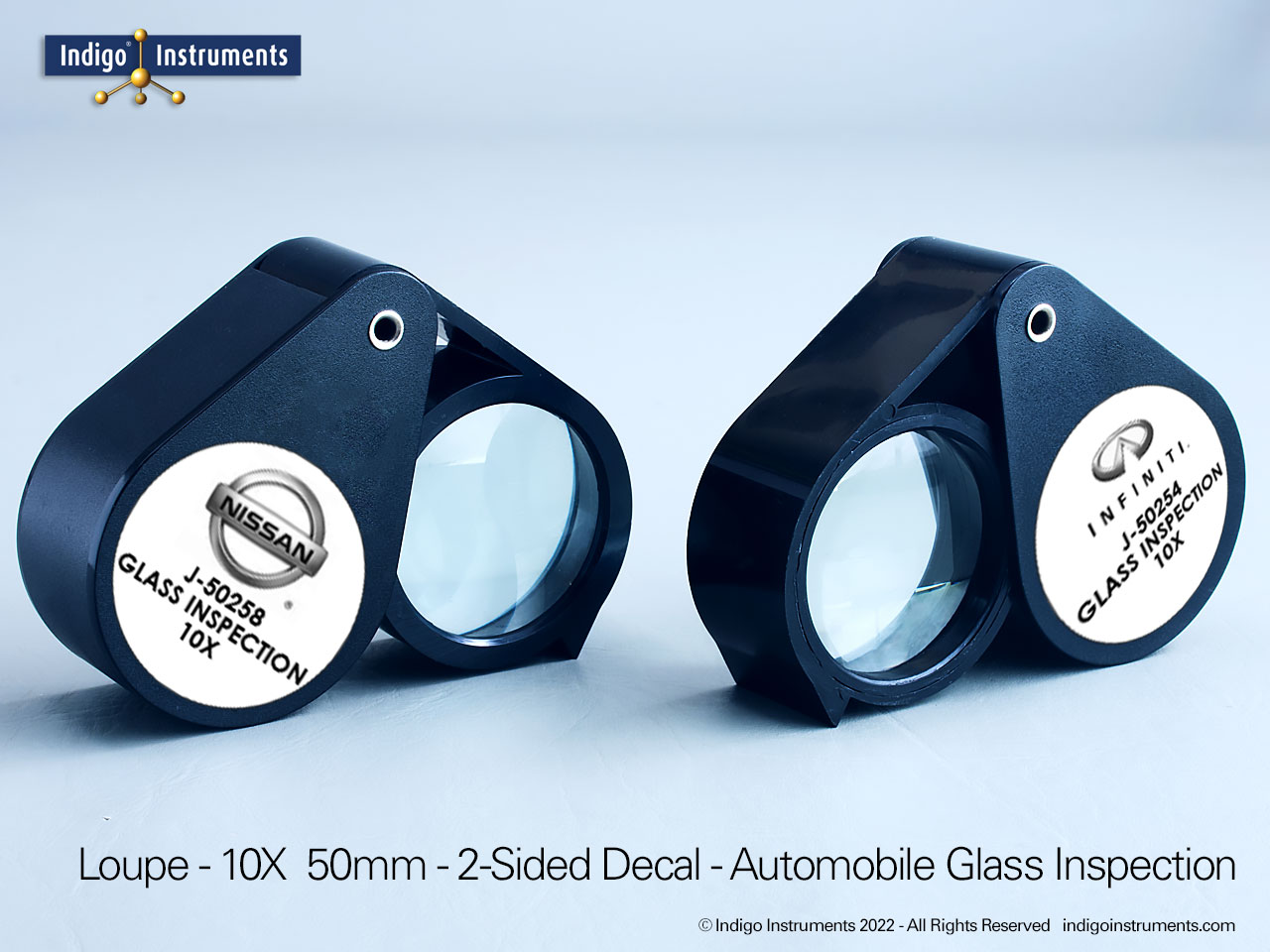
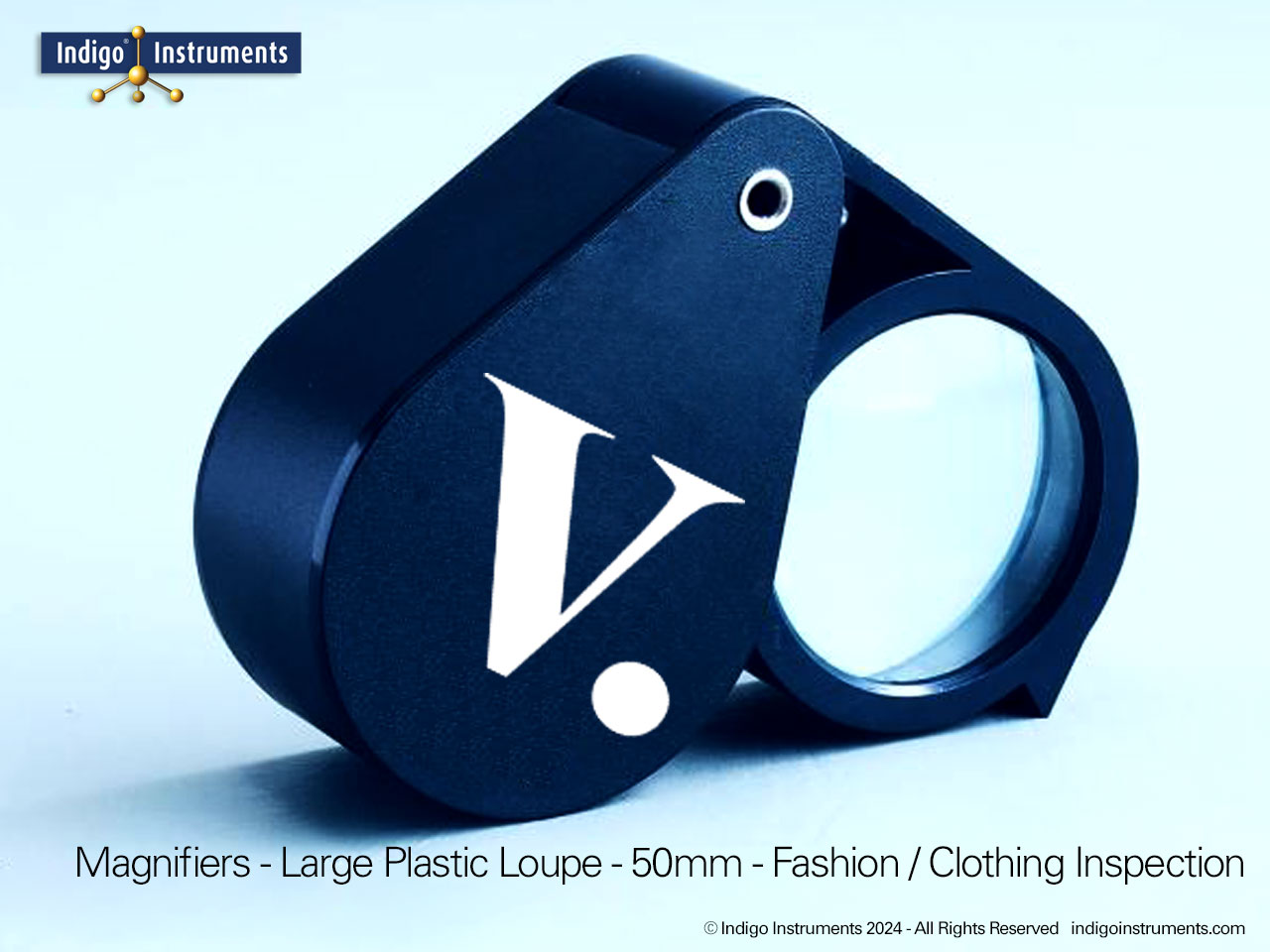
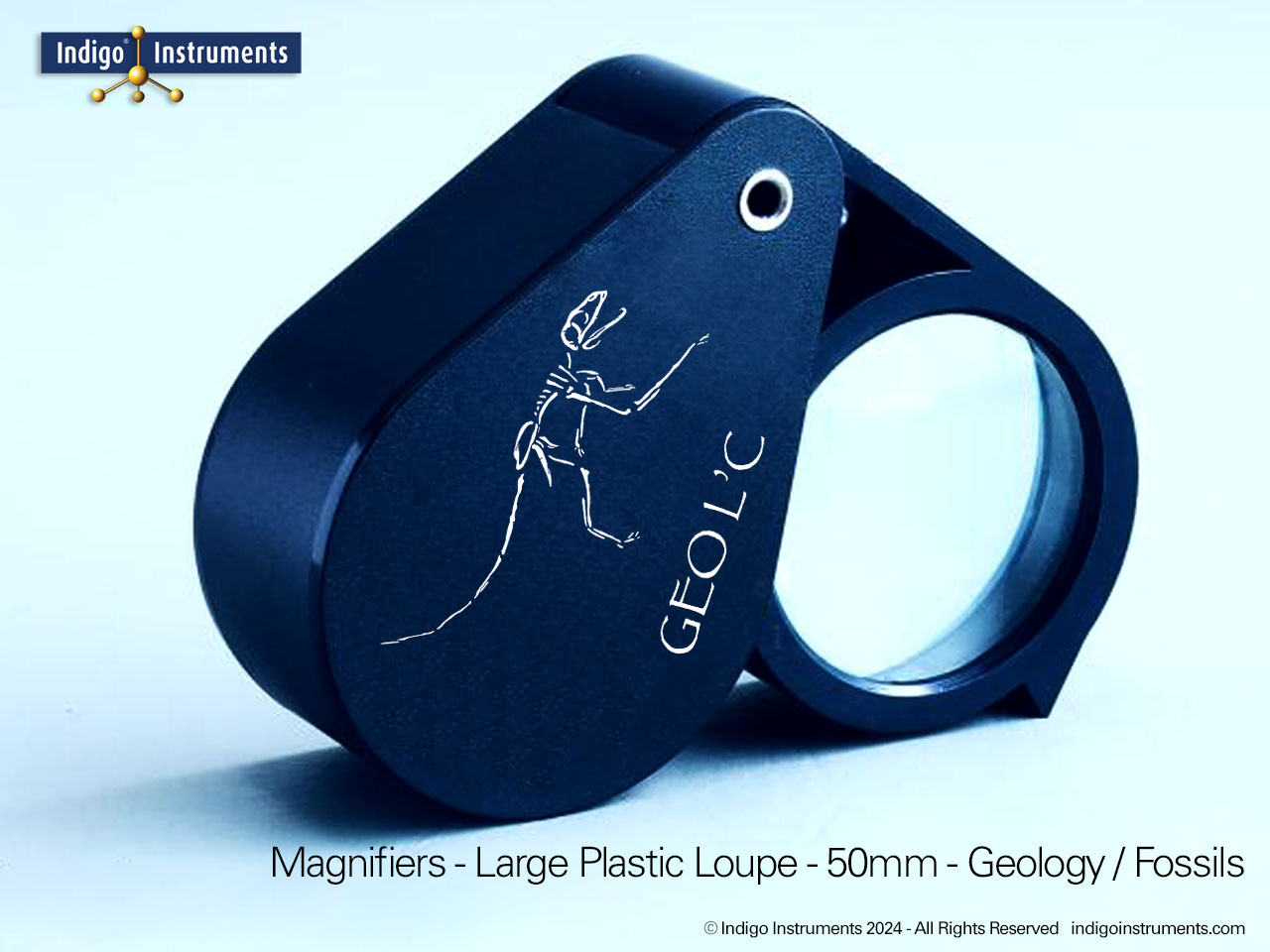
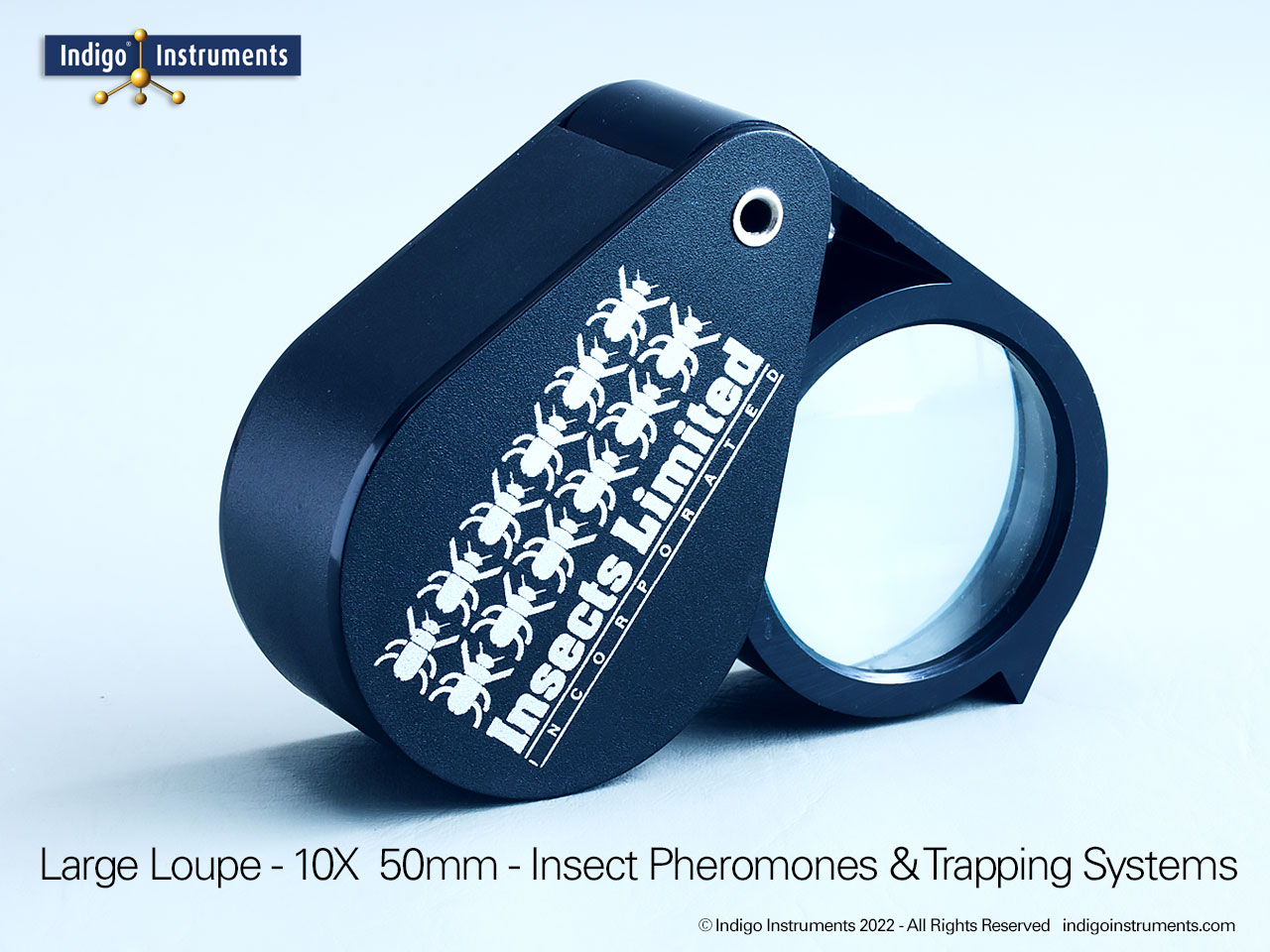
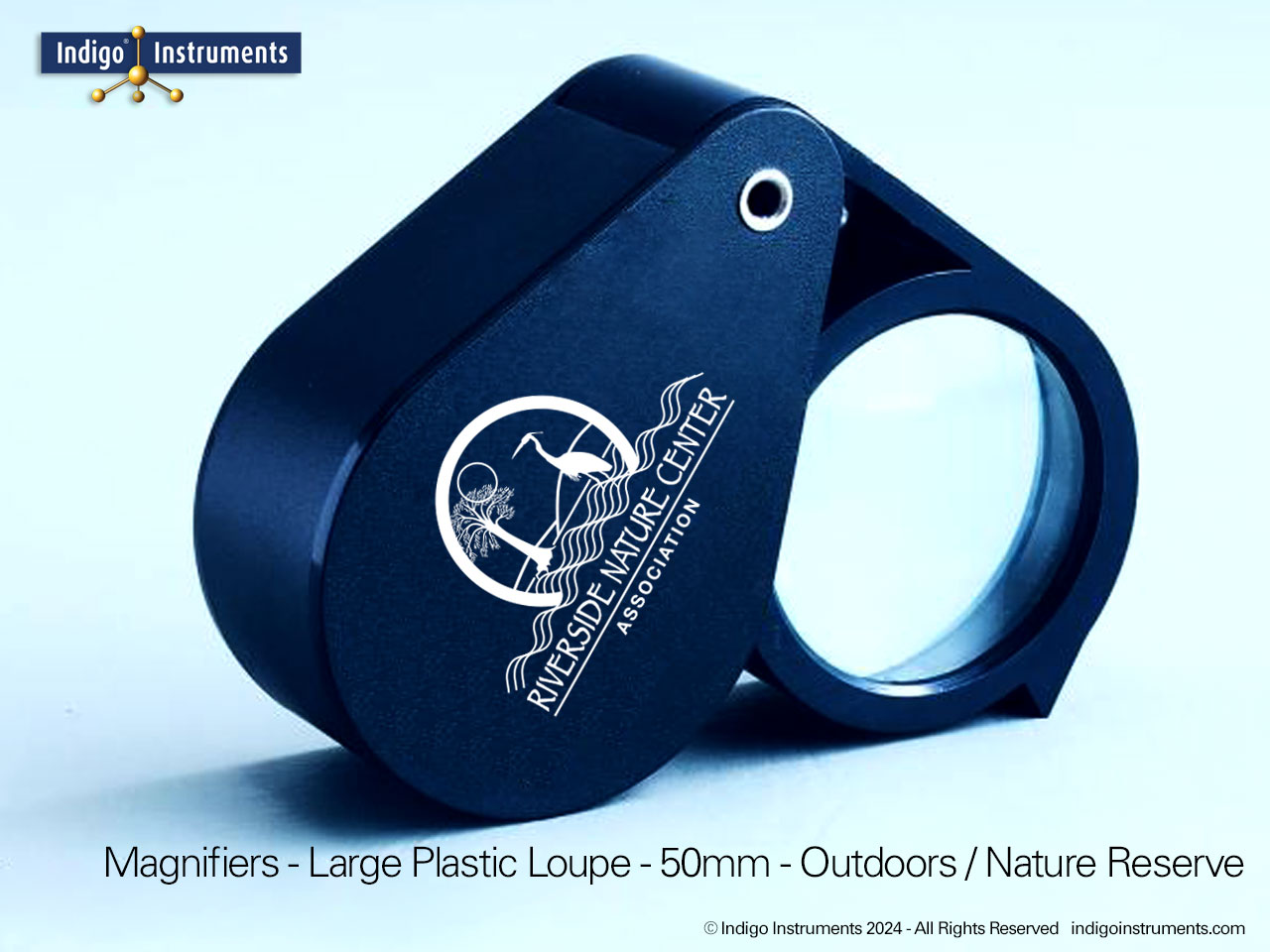
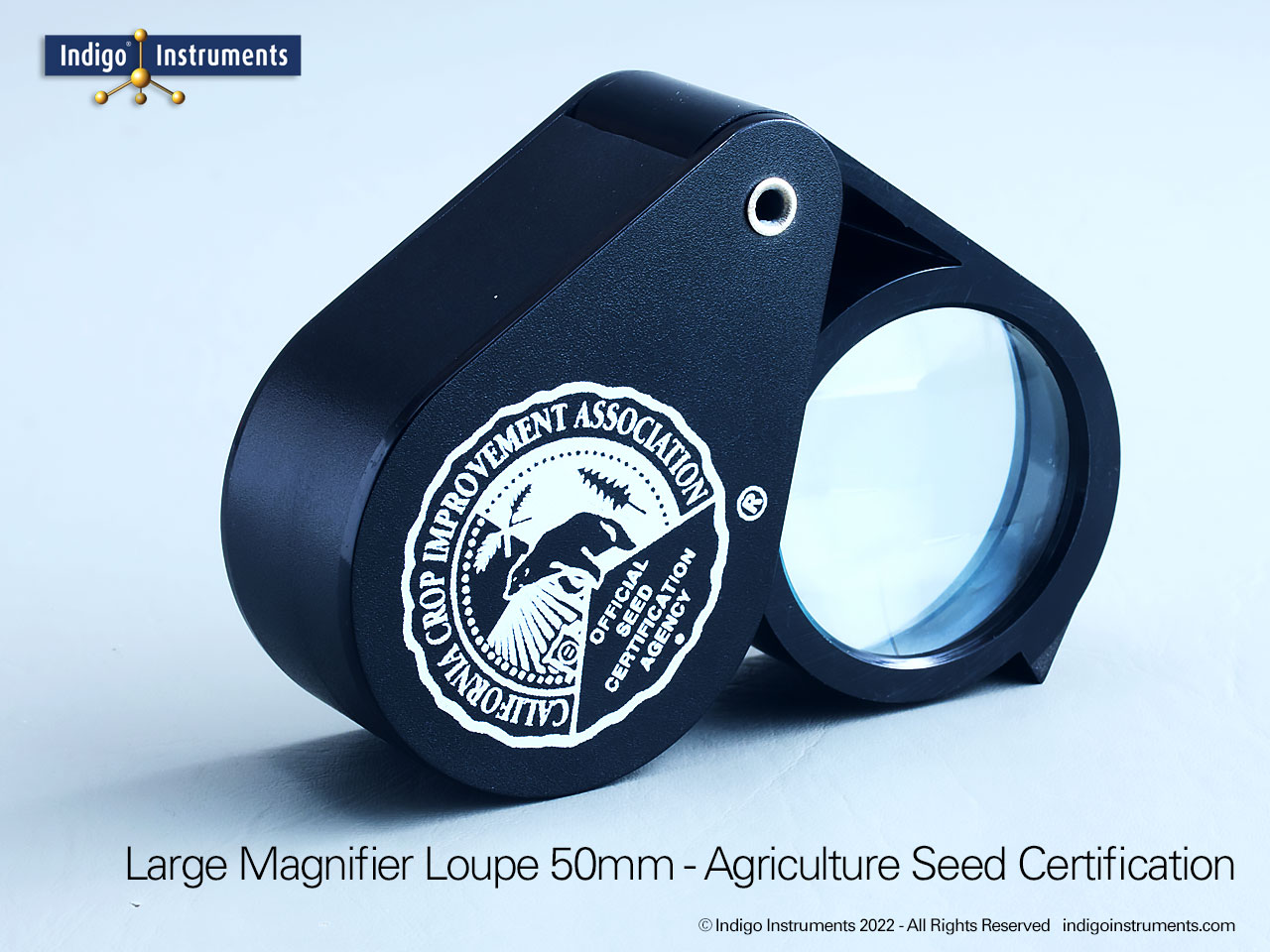
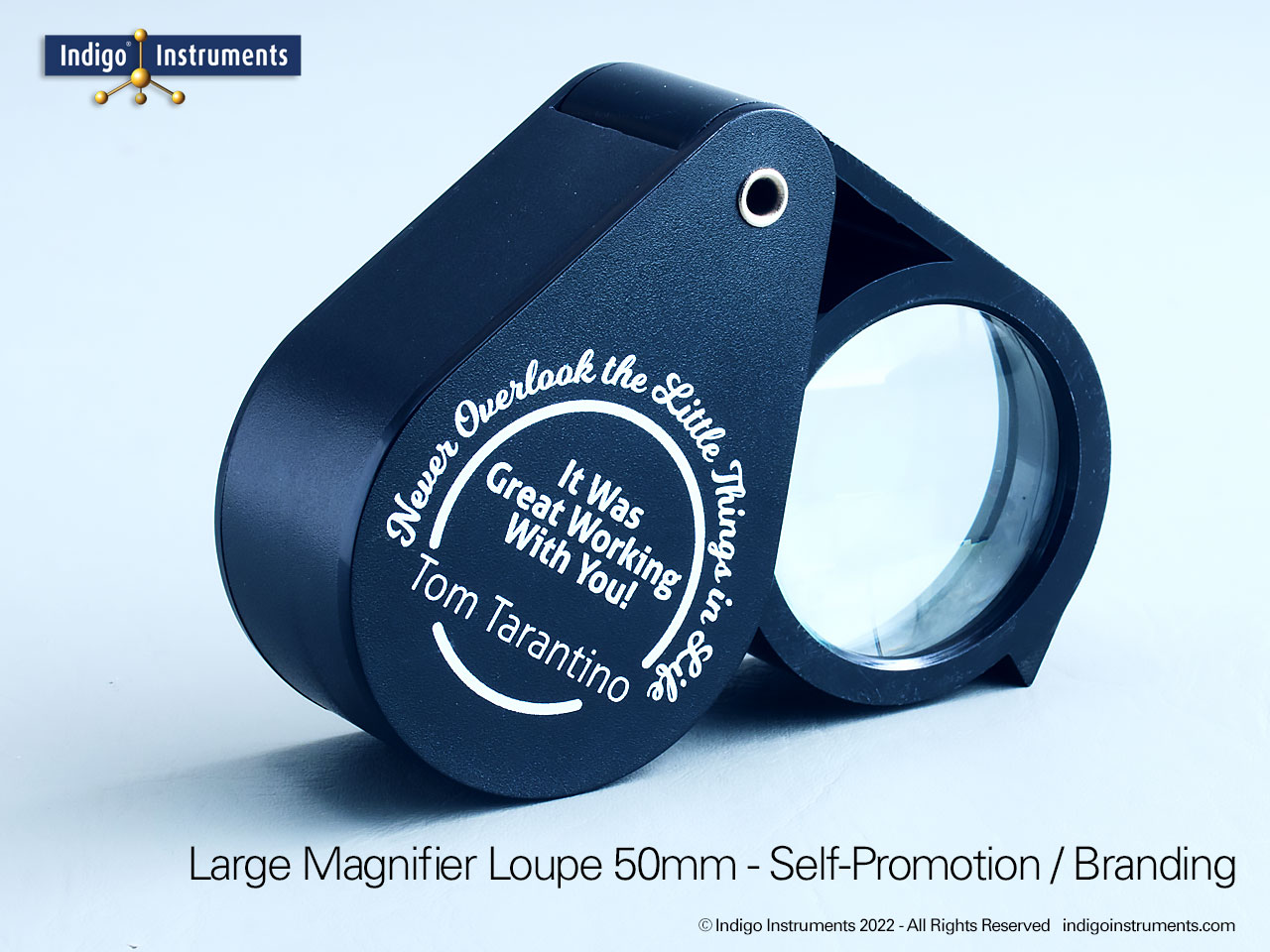
This 5X 50mm magnifier can be custom-branded with school &/or club names, making it a perfect promotional tool for biology clubs, environmental science groups, or student societies focused on bryophytes & lichens. Offer these loupes at open houses or field trips to promote scientific curiosity and recruit new members with a hands-on introduction to the micro-world of lichens.

See more examples and Branding Instructions below for details. Pricing for custom branding (not included) is listed in Related Products at the bottom of the page.


Need even greater detail &/or a visual record? You can couple our 10X/23mm geology loupe with a smartphone camera for up to 50× through digital zoom. This allows for clearer observation of fine structures and makes it easy to capture high-resolution images for documentation or later analysis. For more, read: Phone Camera Loupe “Dissecting Microscope”. See also: Promotional Product Ideas.

Related information or images
In Kits
Branding

Branding Instructions-Print & Decal

  • 50 mm (2") diameter area for printing logo
  • Print: 1, 2, or 3 colors; Add from Related Products below
  • Decal: full color; Add from Related Products below
  • Minimums: 50 print impressions; 250 decals but can be a different version on other side
  • Pantone matching charge per color for print; included in decal
  • Send vector art file (ai, eps, pdf, svg) as e-mail attachment w/ order #
  • Click on Artwork Instructions for more details
  • No Set Up Charge but Graphics Charge may apply if your art file needs work
  • Digital proof provided free!
  • Decal application not included, add separately, cost below in Related Products.


Specifications

Physical Specifications

  • Plastic frame with foldout lenses
  • 10 times magnification with both lenses
  • Two glass lenses stacked; 50mm/2" diameter
  • 50mm-2" diameter area for print or decal logo; both sides possible
  • Metal rivet hinge
  • LxWxT: 95x60x45mm (3 11/16 x 2 5/16 x 1 3/4")
  • Weight: 91g (~3.25oz)
  • No lanyard clip


Reviews (4)
2021-03-27

Not for field use but great for the lab or at your desk. Great deal for the price.

— WWW
— Indigo:

Thanks for review & feedback. This is an unusual magnifier since 10X loupes are only ~20mm diameter. We have an older blog,?What Magnifying Glass Do I Need for Biology?, that some might find useful.

2020-07-02
I have used this 50mm 10X loupe for over a decade examining a variety of aerospace components for potential defects. The large field greatly reduces the inspection time to visually inspect large surface areas - much more efficiently than the standard jewelers loupe one would use. I have had many people ask what is that and then when they use it become converts. I recently purchased 50 of these for my teams including a printed insignia on the outer surface. They came out great! It was also a pleasure working with Chris as he was very responsive and helpful throughout the process of finalizing the insignia and also expediting the delivery. I would highly recommend not only this product but also this company - Indigo Instruments! Tom
— Tom
— Indigo: Thank you for very informative review Tom, we appreciate it.
2019-07-28
This is a great product. I use it for teaching with all ages, indoors and out, and it has stood up to heavy use. The 10X lens allows viewing of specimens that are just too small to see with the naked eye. As the lens is plastic do not bring it to the beach or sand will scratch it, but for all other purposes it is excellent. I added a loop of ribbon so that children can carry it around their necks, and unfold it when they want to use it.
— Ingrid
2017-09-04
This item was exactly as I hoped it would be and arrived in a timely manner.
— Roger
Review This Product Now!