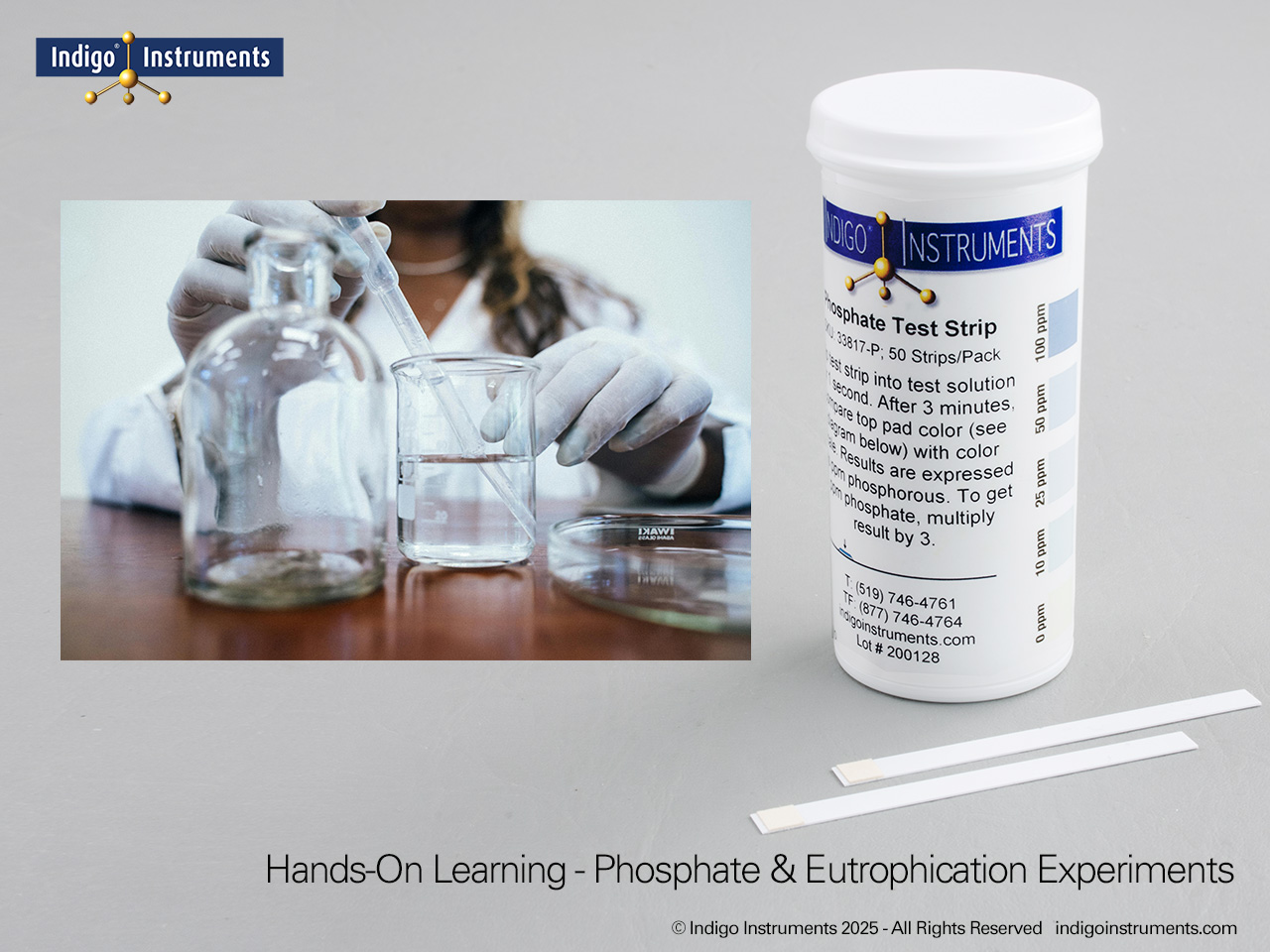
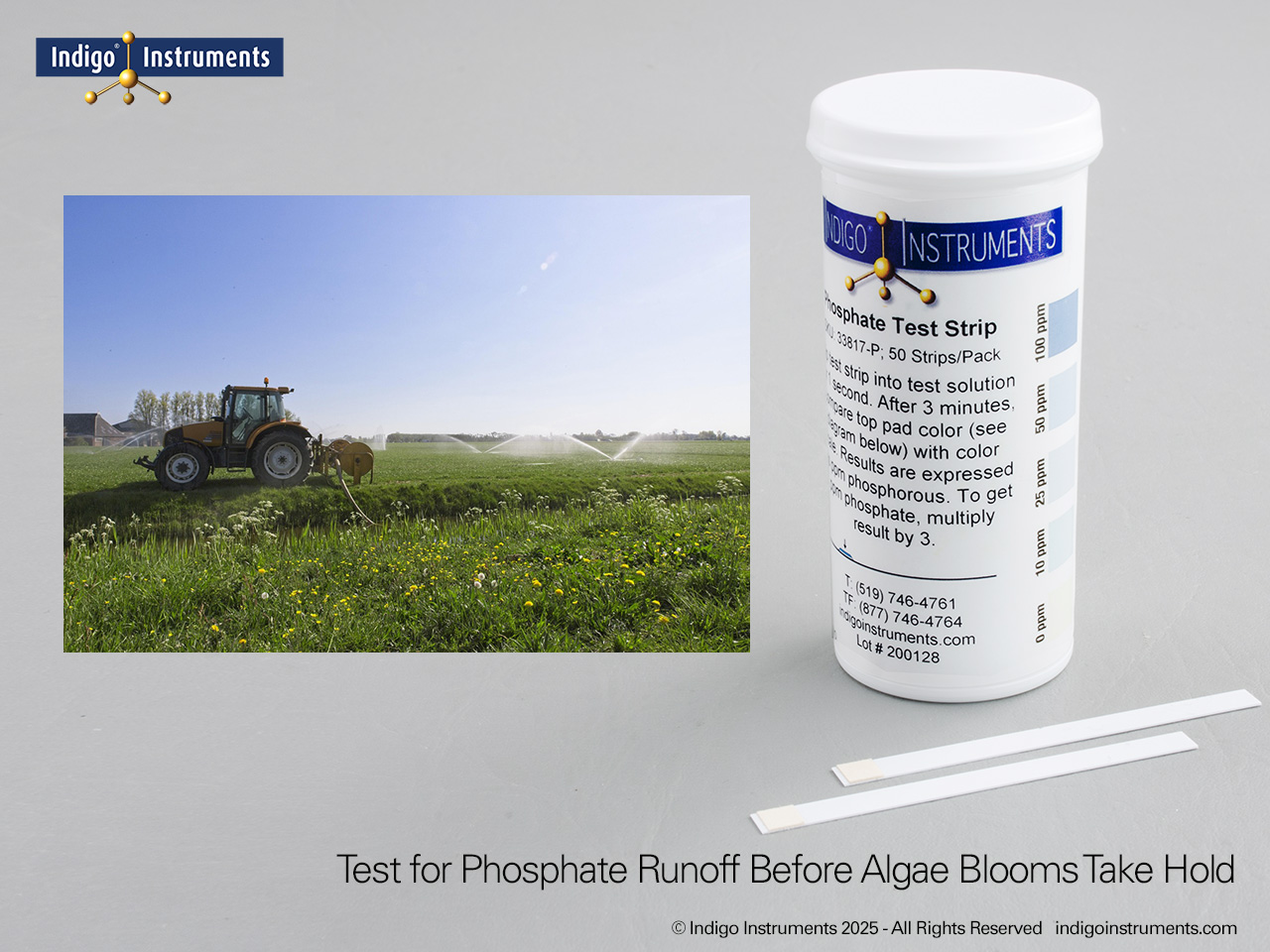
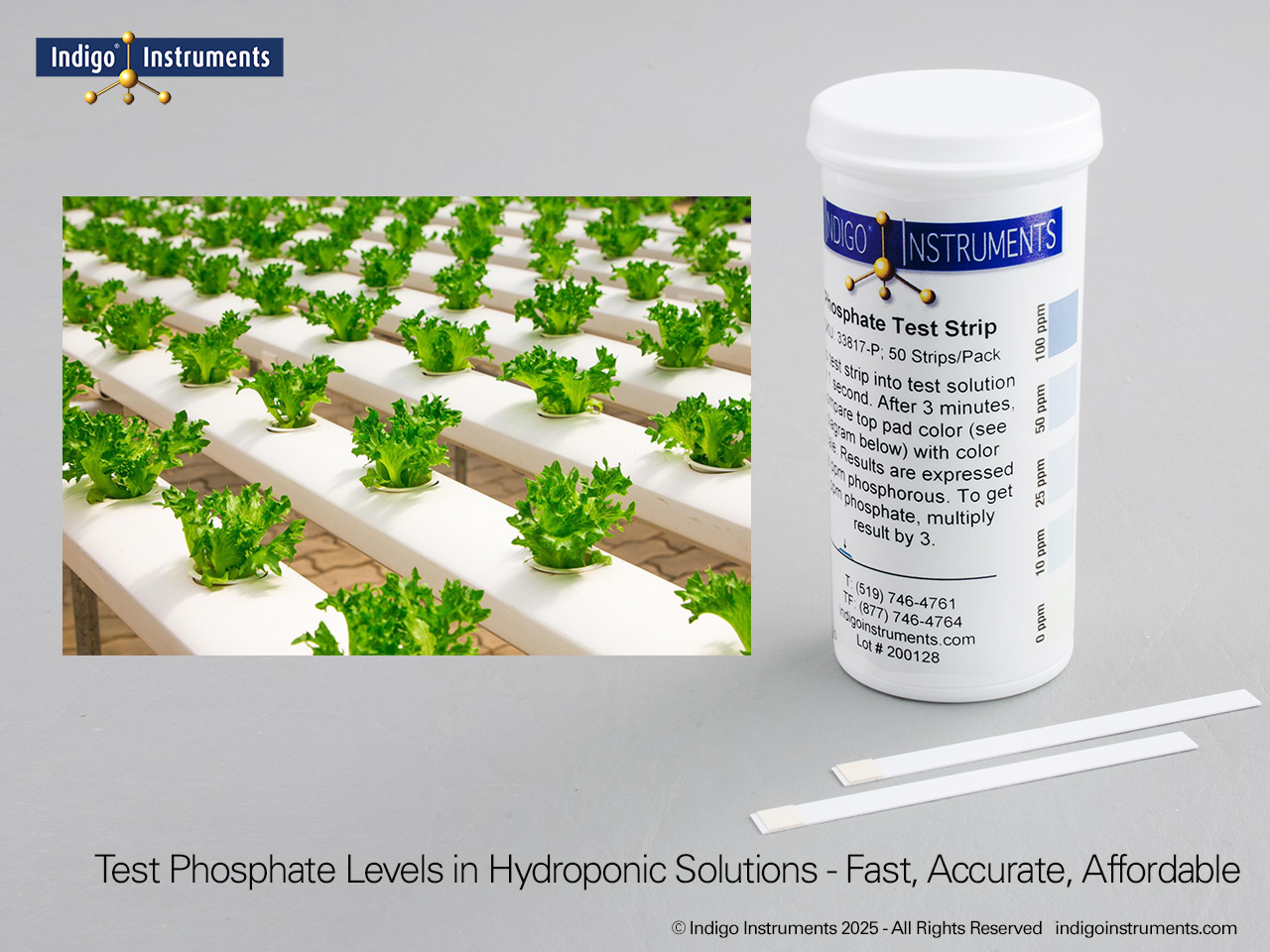
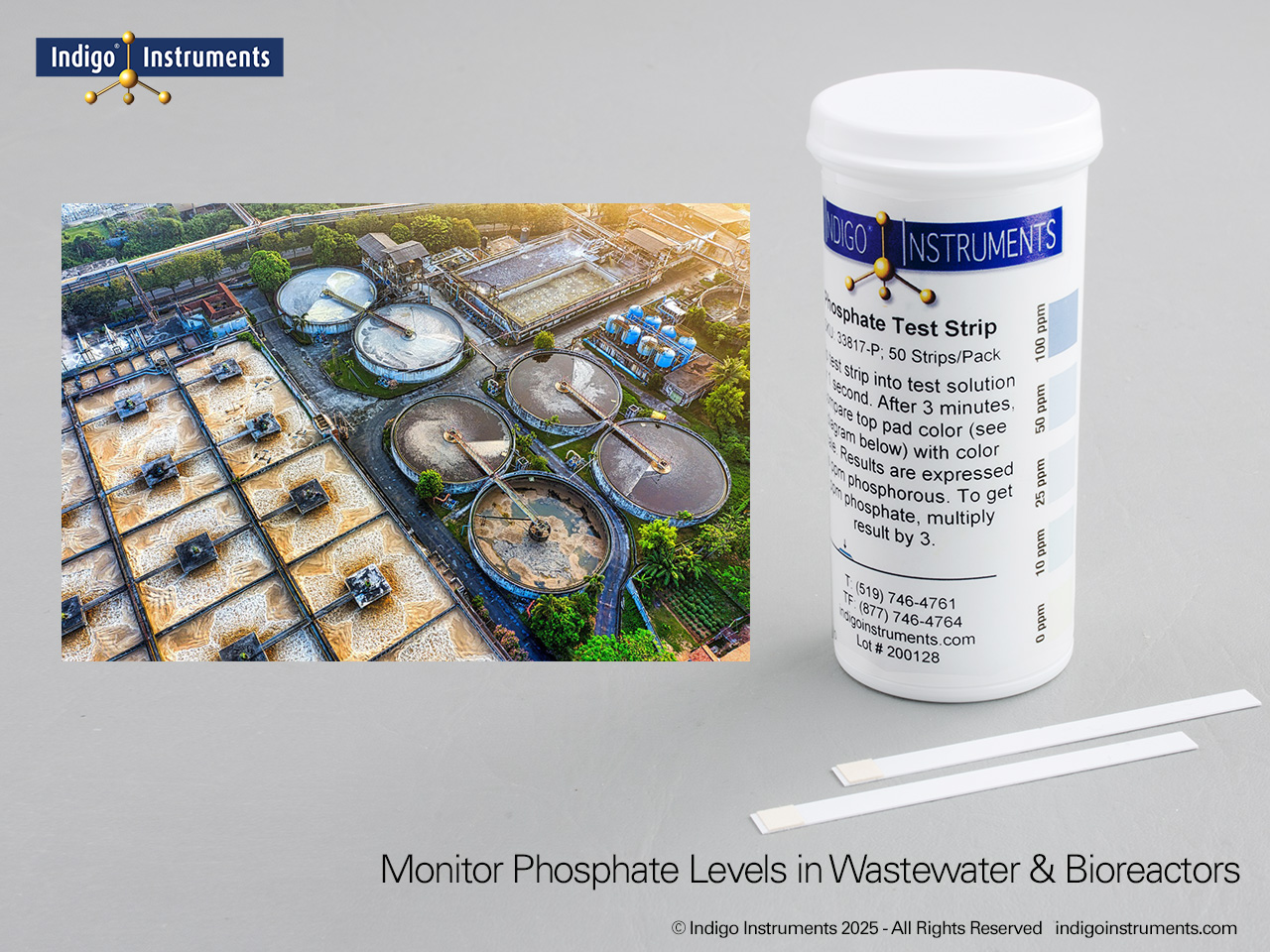
Use Indigo® phosphate test strips for clear, safe classroom demos of the phosphorus cycle, water pollution, and eutrophication. Ideal for chemistry or biology labs.
Phosphate testing provides a clear, hands-on way for students to explore the phosphorus cycle and its role in natural and human-influenced systems. Indigo® Phosphate Test Strips allow learners to visualize nutrient movement and accumulation through simple colorimetric changes, helping connect chemical measurements to real-world concepts such as eutrophication, algal blooms, and oxygen depletion. The straightforward dip-and-read format makes these strips well suited for classroom and teaching laboratory use.
These phosphate test strips are widely used in chemistry, biology, and environmental science education to support experiments on water pollution, nutrient loading, and ecosystem balance. Common activities include simulated watershed studies, comparisons of clean versus nutrient-enriched water, and demonstrations linking phosphorus chemistry to environmental impact. Because no reagents or instrumentation are required, they are ideal for safe, repeatable lab exercises and outreach demonstrations.
Test results appear within seconds, allowing side-by-side comparisons of clean vs. polluted samples or tap vs. runoff water. When paired with nitrate or ammonia tests, this becomes a compelling demonstration of nutrient balance and environmental stewardship.
Consistent manufacturing, lot identification, and defined shelf life support repeatable experiments, curriculum planning, and standardized lab activities in academic and institutional teaching environments.
We've been selling phosphate test strips since 2009. Buy fully documented Indigo® phosphate test strips, 50 strips/vial. Guaranteed 3 year shelf life (dated back from expiration date "yyyy.mm.dd").
| Discipline | Learning Outcomes / Key Features |
|---|---|
| Chemistry |
|
| Biology |
|
| Environmental Science |
|
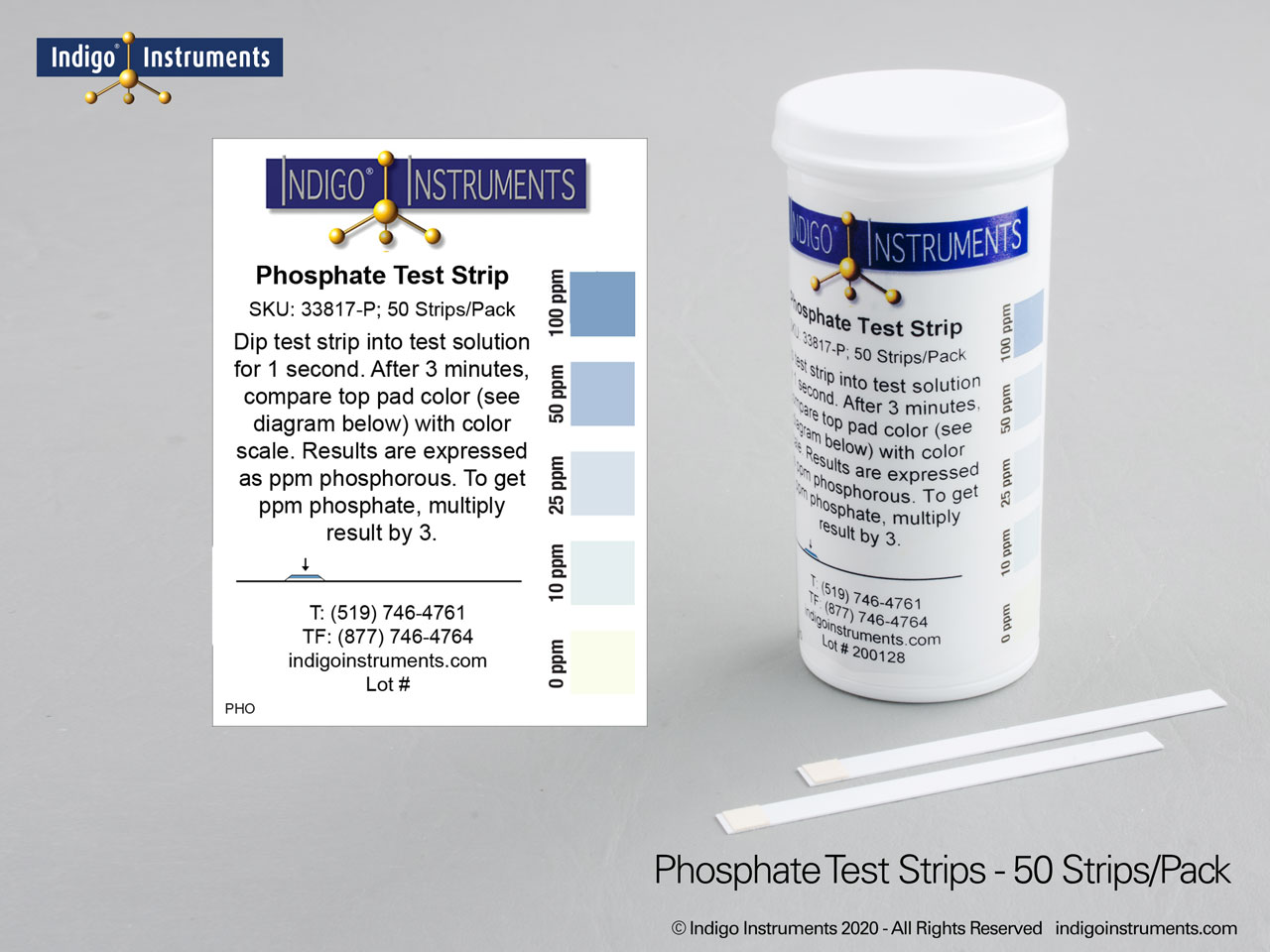
This Indigo® test strip indicates the presence of phosphate. Results for ranges shown below can be read in 30 seconds.
Yes. They're perfect for testing natural or artificial water samples, with results visible in under a minute.
Absolutely. They contain no hazardous chemicals and require no liquid reagents or waste disposal.
Prepare two clear containers: one with tap water and one with “fertilized” water (a small amount of phosphate fertilizer). Place both near light for several days, algae will grow faster in the fertilized sample.
Students can describe the phosphate cycle, interpret concentration data, and explain how nutrient runoff impacts ecosystems.