Quaternary Ammonium Disinfectant Compounds

Quaternary Ammonium Compound Test Strips

For disinfection & sanitizing in restaurants, hospitals, organic farming & more
Quaternary Ammonium Compound Test Strips

Buy Indigo® quaternary ammonium compound test strips for for your disinfectant solution monitoring in restaurants, hospitals, organic farming & more. We provide Certificates of Analysis & Stability & SDS Statements on-line; Certificates of Conformance on request.

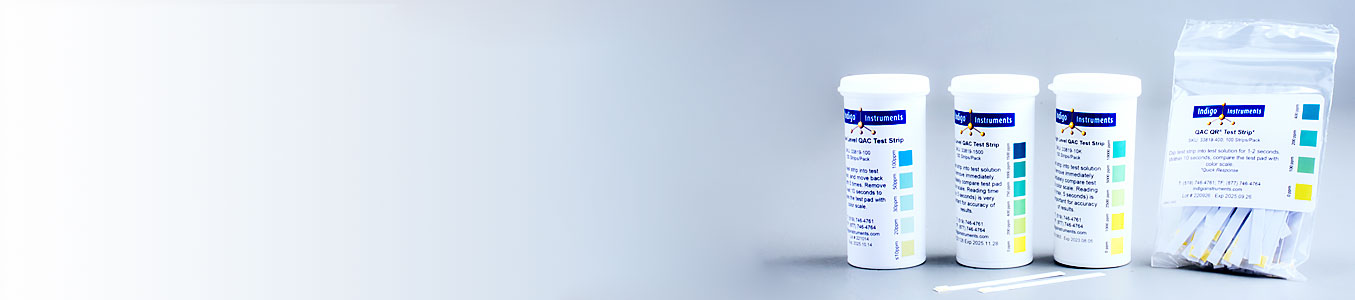
Choose from 4 Indigo® Quat test strips for your specific disinfection & sanitizing needs. All Indigo® disinfectant/sanitizer test strips come with 100 test strips/vial and a minimum guaranteed 3 year shelf life (from date of manufacture). Our delivered costs beat "free" shipping"!

Optional next day delivery in any quantity of most items. Call us toll free at (877)746-4764 for immediate assistance (8-4 EST M-F). Emailed questions are typically answered within an hour.

Quaternary Ammonium Compounds

Quats are effective germ-killers and a key ingredient in many cleaning, disinfection & infection control products. They are found in every day products such as household toilet cleaners, antibacterial hand soaps, dish washing liquids, baby wipes, body washes, disinfectant sprays & more. Quats are especially effective on hard, non-porous environmental surfaces. They are used in hospitals, long-term care facilities, households & food processing plants to name a few.

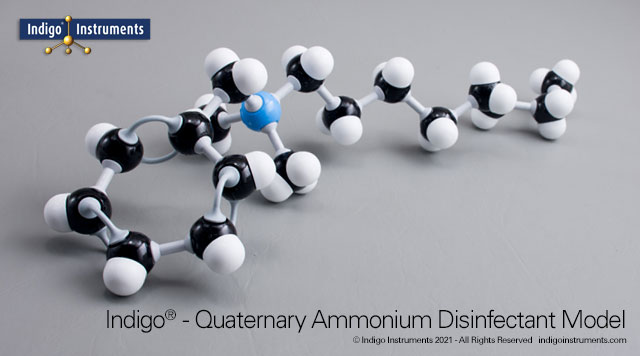
Quaternary ammonium compounds (quaternary ammonium salts) are cationic biocides (positively charged surface-active agents) that are more chemically complex than other disinfectants. Their name derives from the central nitrogen (quaternary ammonia) that is bound to four organic groups. They interfere with the metabolism of Gram-negative & Gram-positive vegetative bacteria and lipophilic viruses.

They have several advantages in the fight against antimicrobial resistance. Unlike antibiotics, disinfectants like quats are non-specific in their targeting of microorganisms. Their amphiphilic nature (having both hydrophobic & hydrophilic properties) allows for enhanced binding affinity that can disrupt bacterial cell membranes causing cell lysis.

Whatever formulation of quaternary ammonium you use, Indigo® quat test strips can confirm your disinfectant solutions are correctly diluted for optimum effectiveness.

Indigo® Quat/QAC Test Strip Ranges

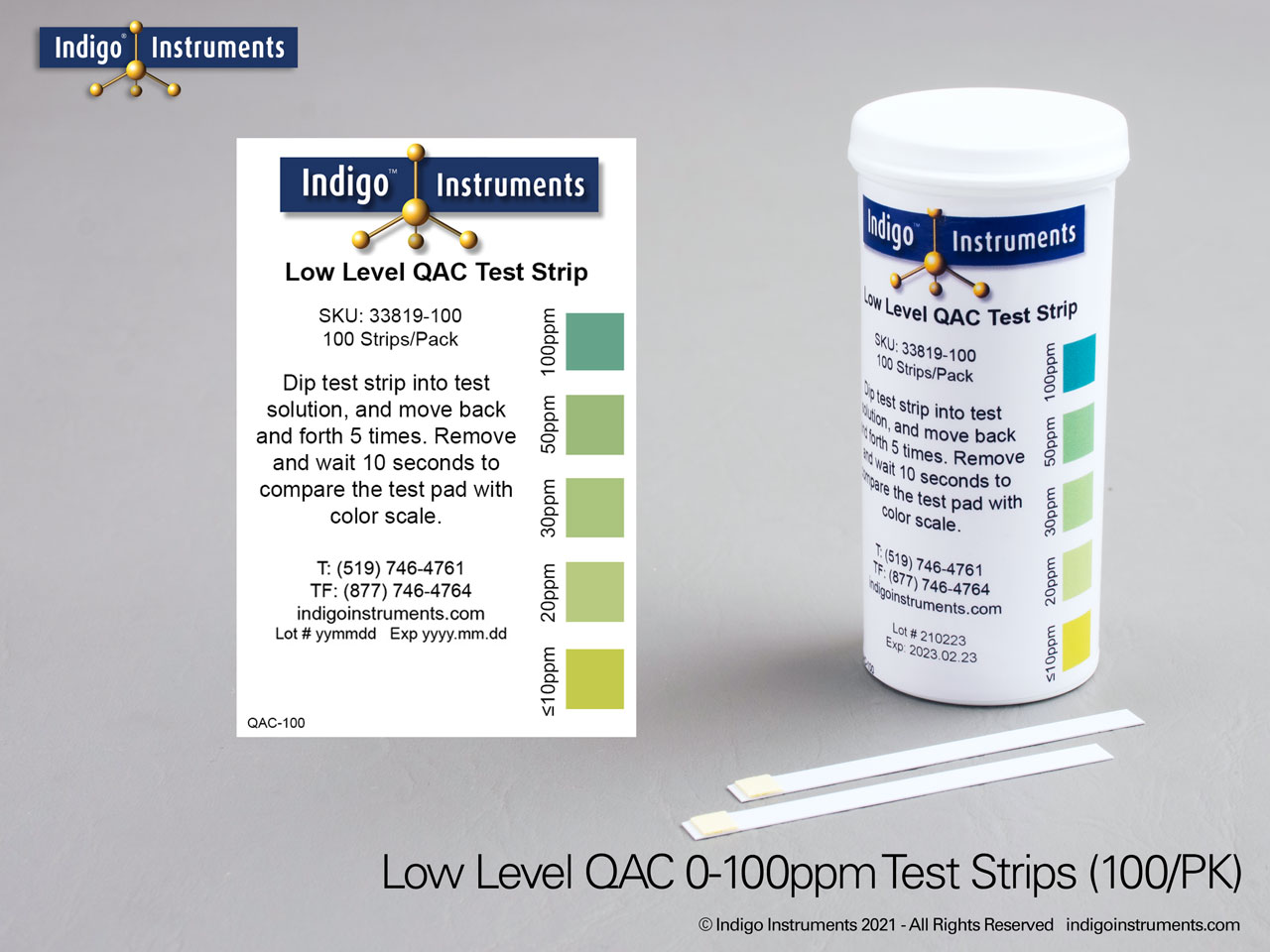
  • 10-100ppm: ≤10-20-30-50-100ppm; read results in 10 seconds
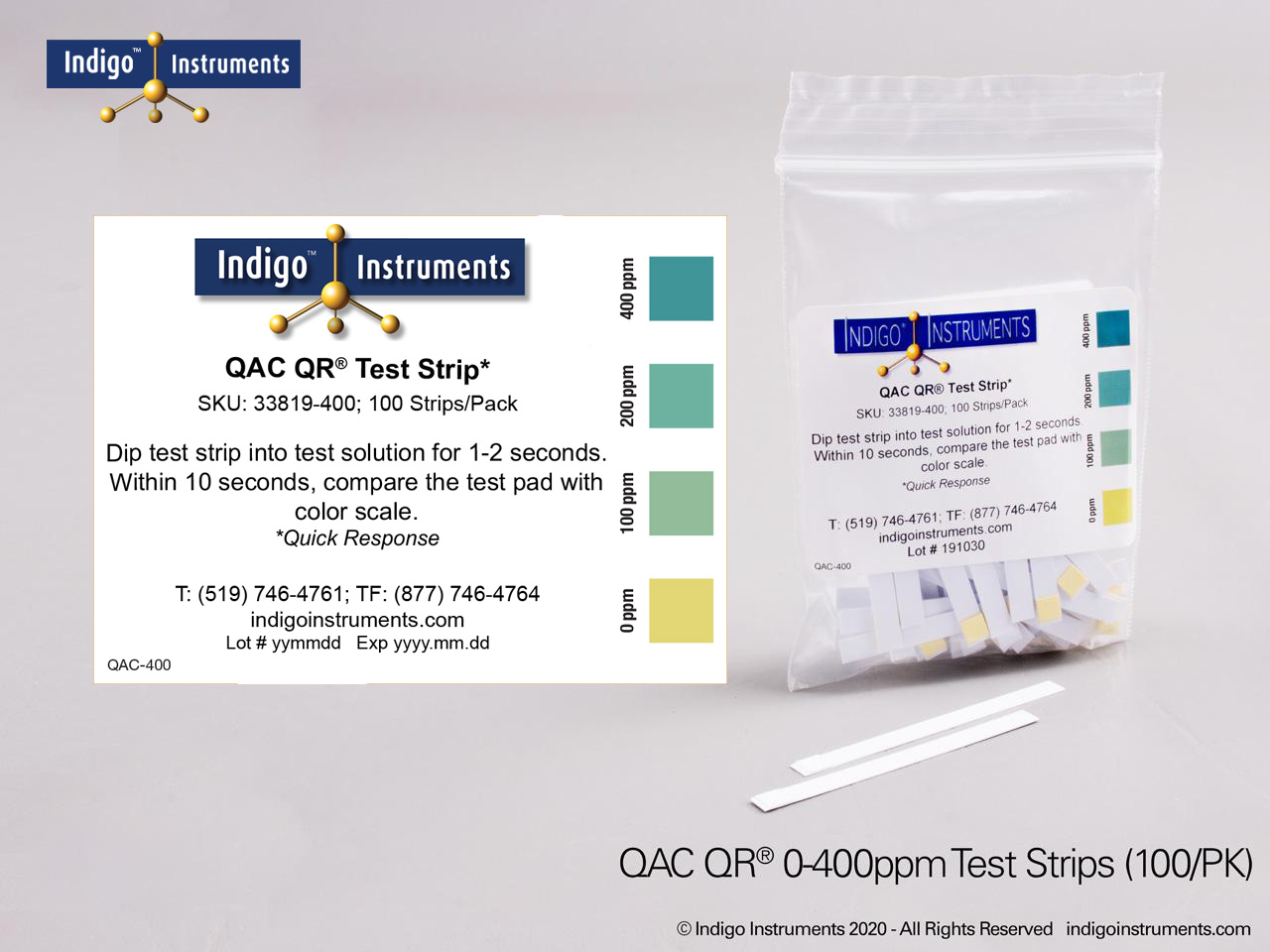
  • 0-400ppm: 0-100-200-300-400ppm; read results in 10 seconds
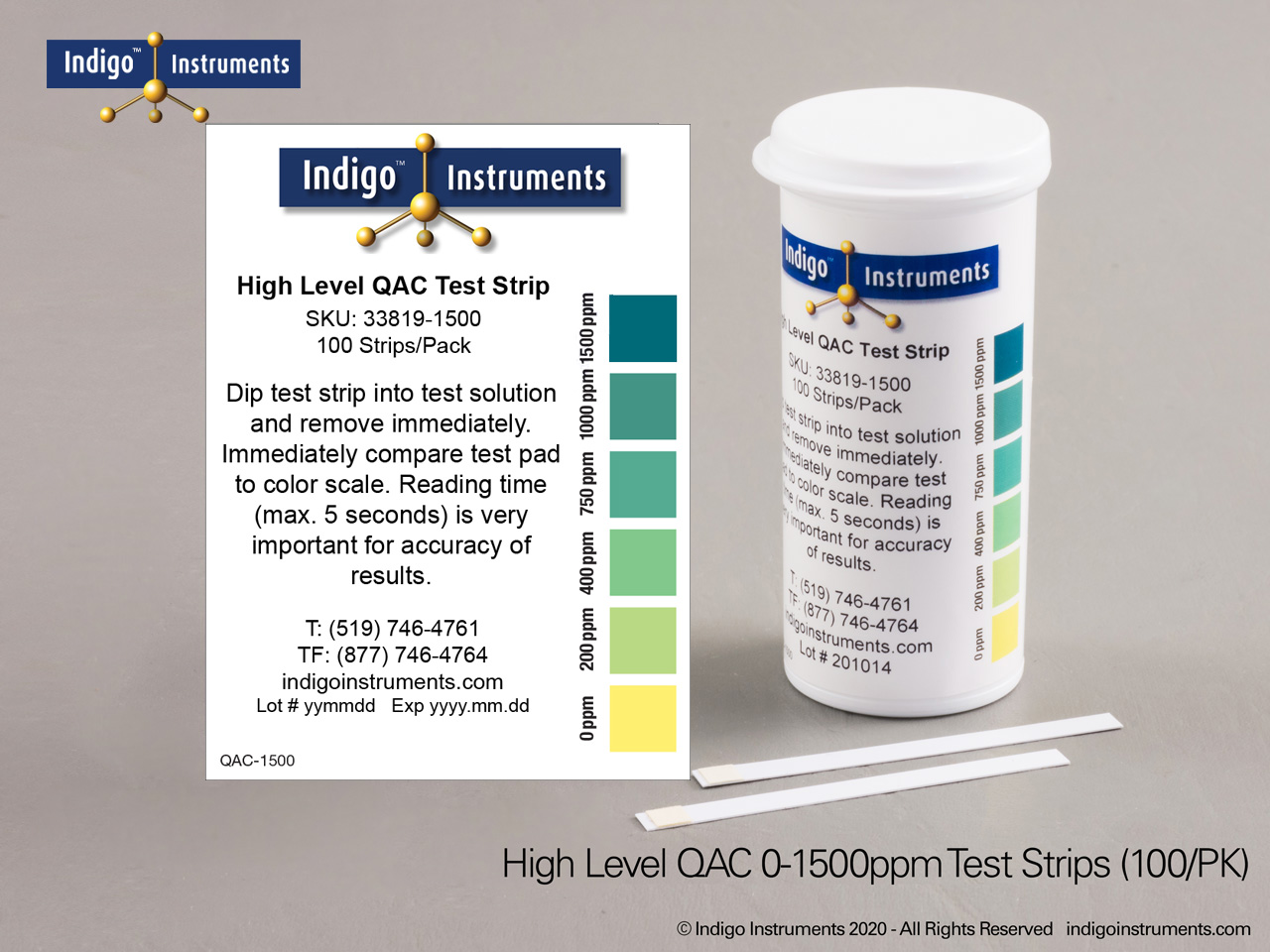
  • 0-1500ppm: 0-200-400-750-1000ppm; read results in 5 seconds
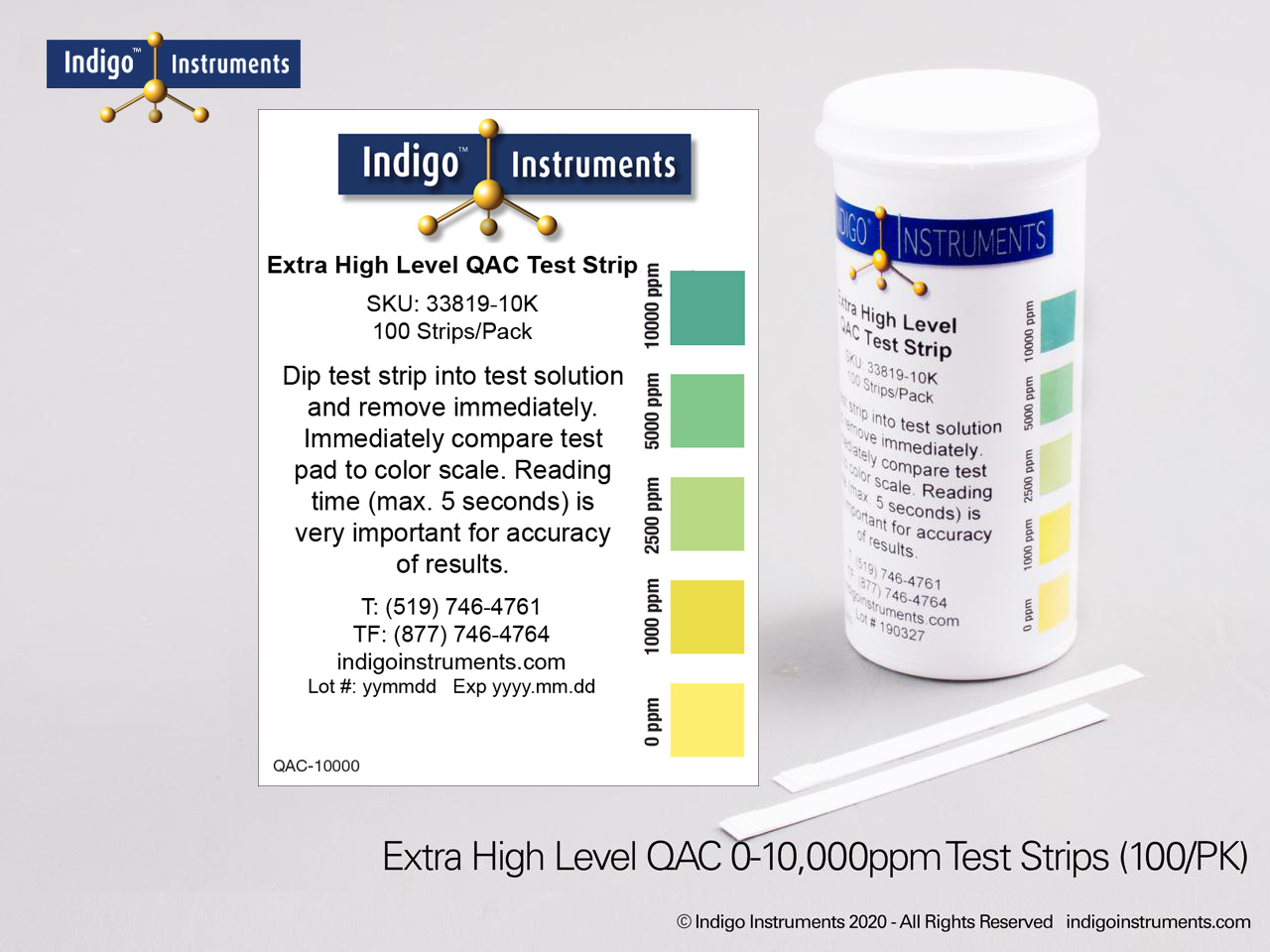
  • 0-10000ppm:0-1000-2500-5000-10000ppm; read results in 5 second

Common Features of Indigo® QAC Test Strips

  • clear instructions with the labeled color chart
  • indicators on high contrast plastic for accurate readings
  • stiff plastic strips can be dipped into tubes
  • accurate from 5-45oC (50-110oF)
  • 3 year guaranteed shelf life (from date of manufacture shown as yyyy.mm.dd)
  • Certificate of Analysis & Stability Statement, SDS online;
    Certificate of Conformance on request.
     

Note: All test strips Made in the USA & are Q/A'd against NIST standards.

What our Customers Say

(Real Reviews-Not AI Generated Fakes; Click on the name to view the source at Google.)

Roberta Vigil: Indigo Instruments defines the purpose for the test strips and places them in easy to recognize categories. ...The BONUS is the qty of strips in each vial (100 vs the typical 50), fast and consistently accurate all for a price that beats other sellers!

Ronald Rosenberg: ...The sales person I spoke with was excellent and I received the items exactly when she said I would. Best of all the product was excellent. There was a clear delineation of the colors on the test strip so you could differentiate the different ppm. I would definitely repurchase this item.

Helen Kees:  ...I loved the quality at a cost less than Amazon. But the real deal that drove me to leave a review was that I called back a week or so after receiving the product and asked for spec sheets requested by my organic inspector. I was treated like I had spent a million bucks and the info was at my fingertips within a minute. This kind of service is invaluable.
Displaying 1 to 4 (of 4 products)

400ppm QAC Test Strips Foodservice/Sanitation

SKU: 33819-400
$11.95USD or lower Each

Quat Sanitizer Test Strips-High Level 1500ppm

SKU: 33819-1500
$15.75USD or lower Each

Quat Test Strips Very High Level 10000ppm

SKU: 33819-10K
$17.95USD or lower Each

Residual Quat 10-100 ppm

SKU: 33819-100
$16.75USD or lower Each
More Information

Quaternary Ammonium Disinfection Compound Chemical Structures

Quaternary ammonium compounds are cationic surfactants (positively charged surface-active agents) that are more chemically complex than other disinfectants. Their name derives from the central nitrogen that is bound to four (quaternary) organic groups. Indigo® QAC test strips are calibrated for Oasis 146 but can accurately test any single or multi-quat based disinfectant. Many vary only in the length of their alkyl chains.

Quaternary ammonium compound chemical structure

Differences in aromatic & alkyl side groups & aliphatic chain lengths affect bactericidal activity with otherwise antibiotic resistant bacteria. Chemistry, microbiology & pharmacology instructors & researchers can click on the links below to view the various quat compounds in our 3D Molecular Model Builder:

Advantages & Disadvantages of Quaternary Ammonium Compounds

Pros

  • Generally low odor, colorless, and noncorrosive at use concentrations
  • Relatively stable in the presence of organic matter
  • Active over a wide pH range, with optimal activity in the range of pH 8–11
  • Good surface compatibility for routine sanitation applications

Cons

  • Slower at killing some microorganisms and not effective against spores and some non-enveloped viruses
  • Inactivated by anionic detergents and soaps
  • Reduced effectiveness in hard water
  • Can adsorb to organic materials and some surfaces, reducing available active concentration
  • Color charts may deviate at temperatures of 45oC (110oF) and above

Quat Usage Summary by Concentration Range

  • ~150–400 ppm quats: food contact surfaces following approved sanitation procedures.
  • ~400–1,500 ppm quats: non-food contact surfaces, janitorial applications, mop buckets, spray bottles, and cleaning cloths (surface binding considerations).
  • ~5,000–10,000 ppm quats: disinfectant concentrates and specialty applications (e.g., immersion disinfectants, industrial or controlled-use treatments).

Additional Reading

  1. Quaternary Ammonium Compounds-Organic Disinfectants. What are quats & how do they disinfect?
  2. Test Strip Expiration Dates; Good Today, Dead Tomorrow? Don't toss good test strips away. Good today doesn't mean bad tomorrow.
  3. How to Dilute Quats. Buy concentrates & save money. Examples include simple & multiquat formulations
  4. Diluting Chlorine, Peroxide, Quats is Easy. Understanding metric makes it very easy to dilute disinfectant to any ppm from bottles to bucketfuls.
  5. Can 10ppm of Sulfite & Quat Really Mean Zero? Test strips can detect residual QACs down to 10ppm which is considered safe.
Technical

How Quat Test Strips Work

Quat test strips do not measure the concentration of dissolved quaternary ammonium compounds (QACs) directly. They actually use acidobasic indicators (normally used for pH determination), buffers, surfactants, and other ingredients to create a micro-environment on the test pad where the indicator dyes react to the presence of the quat and not to the pH of the test solution. It is as a consequence of the interaction between the molecules of the indicator dyes and quat that results in a different color of the test pad that we observe.

This is based on what is known as the "pH indicator error" (when the indicators change color without a change in solution pH) which relies on a carefully calculated amount of buffer on the test strip that excludes any contribution to pH other than the quat itself. It is this "error" that is utilized for the detection of compounds of interest (The QACs in this case). In other words, the assumption is the quat has been dissolved in tap water that might be slightly acidic, neutral or slightly alkaline. "Alkaline water" for example would have absolutely no effect. However, some quat formulations have additives such as tetrasodium EDTA which strongly shifts pH towards an alkaline level of 11-12 that completely throws off the test strip reading.

Overall, this is a reliable semi quantitative test method that is accurate typically to +/- 10% & suitable for confirming the correct dilution of quat concentrates in the "field". For more precise lab work, instruments such as GC/MS can deliver quantitative results on the order of several magnitudes greater & over a wider dynamic range.

Temperature and QAC Strips PPM Reading Relationship

(Results for Hyamine 1622 (Fluka) warmed up from 35oC to 60oC (95-140oF))

T (oC)  vs QAC strips readings at: 0; 50; 100; 200; 400 ppm

35oC: Readings ok for 0-400ppm
40oC: Readings ok for 0-400ppm
45oC: 0, 50, 100 ppm readings ok; 200 & 400 ppm read~ 1/2 color square higher
50oC: 50, 100 ppm read~ 1/2 color square higher; 200, 400 ppm read 1 color square higher
55oC: Readings 1 color square higher across whole range
60oC: Readings 1 color square higher across whole range


Instructions/Safety

Follow the directions on the label. All our quat strips are "quick response". Dip the strip & compare to the color chart within 5-10 seconds. If you wait a minute as with other strips, the color will develop further & give a false high reading.

Some sources have raised concerns about the safety of quaternary ammonium compounds. Handling concentrated QACs may merit wearing PPC such as gloves, eye protection and even a respirator.