| Aspect |
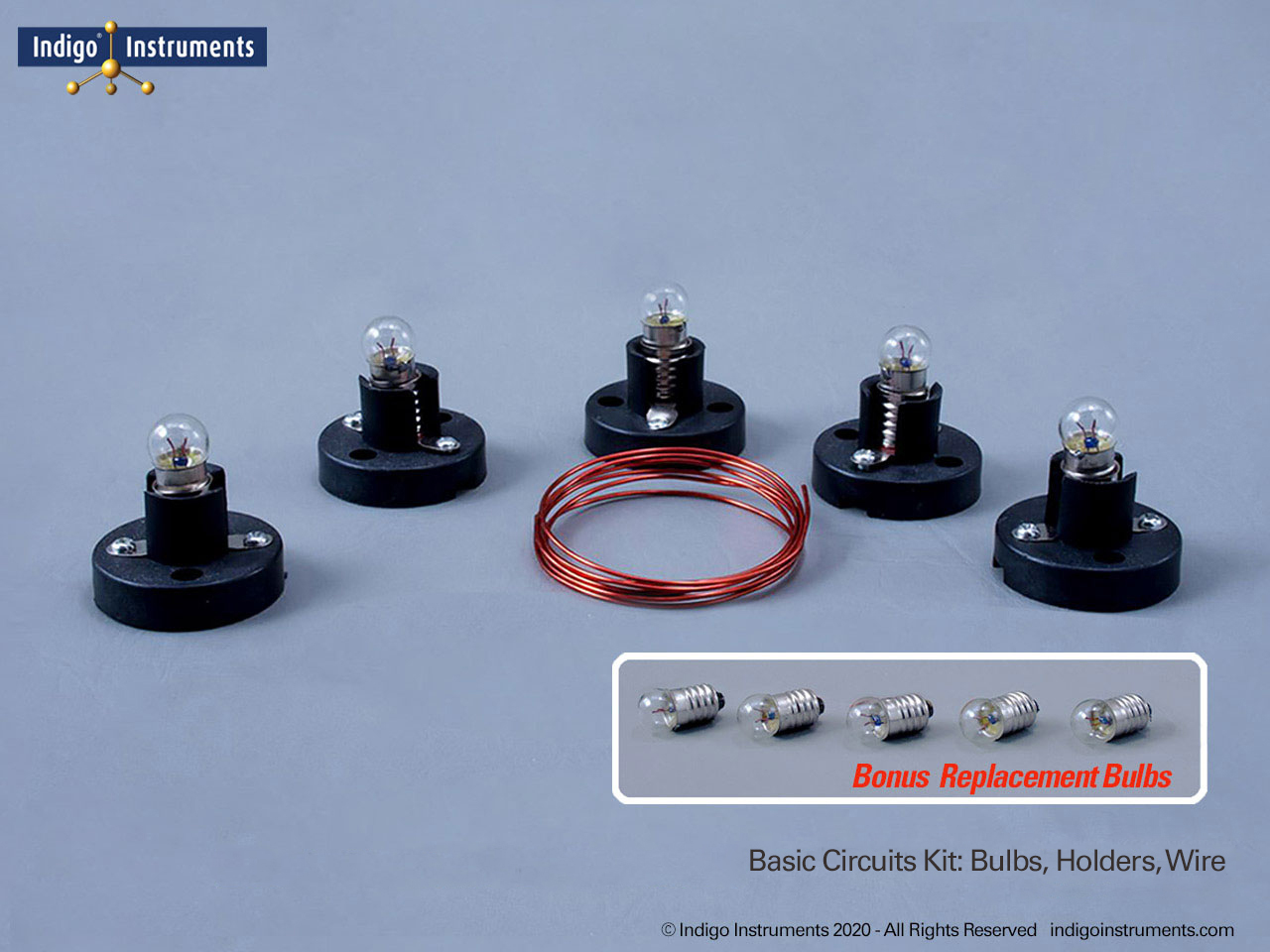
Incandescent (2.5 V, 0.3 A bulbs) |
LED |
Teaching implication |
| Visual & Physical Clarity |
Immediate, continuous brightness change with voltage; visible dimming makes series/parallel effects intuitive. No polarity to worry about. |
Often either on or off without added control; less visible gradation unless PWM or resistors are used. Polarity must be correct. |
Incandescents are easier for first-time students to see and predict circuit behavior; LEDs require extra explanation about polarity and control methods. |
| Robustness for Experimentation |
Simple voltage handling and tolerant to wiring orientation; easily replaced and inexpensive per unit. |
More fragile to reverse polarity and sensitive to over-current without resistors or drivers; longer-lived in normal use. |
Incandescents reduce setup errors in beginner labs; LEDs are better for repeated demos where long life and low power matter. |
| Teaching of Electrical Principles |
Filament temperature dependence of resistance provides a real demonstration of non-ideal components and Ohm’s Law in practice. |
Highlights semiconductor behavior, forward voltage, and the need for current limiting; useful for more advanced lessons. |
Start with incandescents to teach basic current/voltage relationships; introduce LEDs when covering semiconductor devices and efficiency. |
| Energy & Heat |
Converts significant electrical energy to heat; easy to demonstrate energy loss and inefficiency, but requires simple heat-safety guidance. |
Highly efficient (light with minimal heat), demonstrating modern energy-saving technology. |
Use side-by-side comparison to teach energy efficiency, heat management, and real-world design tradeoffs. |
| Cost & Practicality |
Low upfront cost; compatible with legacy kits and easy to source; quick replacements keep labs running. |
Higher upfront cost per component but longer lifetime and lower power draw overall. |
Incandescents are practical for short lessons and budget kits; LEDs are ideal for frequent, long-term classroom use. |
| Safety & Limitations |
Shorter lifespan and generates heat (minor safety consideration); higher current draw may limit number of bulbs per battery pack. |
Requires correct polarity and current limiting; very low heat, safer for touch, but can suffer from flicker or inconsistent dimming without proper drivers. |
Teach safe handling (heat, correct battery selection) for incandescents; teach polarity and current-limiting basics for LEDs. |